A salvaged pine door, its paint softened by decades of use, can bring more character to a hallway than a roomful of newly bought furniture. Knowing how to decorate with salvage is less about making a home look old and more about recognising the beauty in useful materials that have already lived a life. The key is to give each piece a purpose, enough breathing room, and a setting that respects its original character.
Architectural salvage can suit a Georgian cottage, a Victorian terrace, a modern Hertfordshire family home or a converted industrial space. What changes is the scale, finish and restraint with which it is used. A well-chosen reclaimed object should feel like part of the room’s story, not a theatrical prop.
Start with one salvaged focal point
The easiest way to introduce salvage is through one substantial piece that grounds the scheme. This might be a weathered mantel, a set of old cupboard doors, a stone trough, cast-iron railings or a reclaimed timber beam. Let it lead the decisions around it.
A large architectural element has visual weight, even when its colour is quiet. If a stripped pine workbench becomes a kitchen island, for example, keep surrounding cabinetry simple and consider contemporary stools with clean lines. In a sitting room, an antique fireplace surround can carry a plain plaster wall, linen curtains and a restrained arrangement of artwork.
Trying to use every interesting find at once is where salvage schemes can become cluttered. One aged door used as a headboard has much greater presence than several small, unrelated offcuts displayed around the same room. Begin with the item you would miss if it were removed, then build quietly around it.
How to decorate with salvage without making a room feel staged
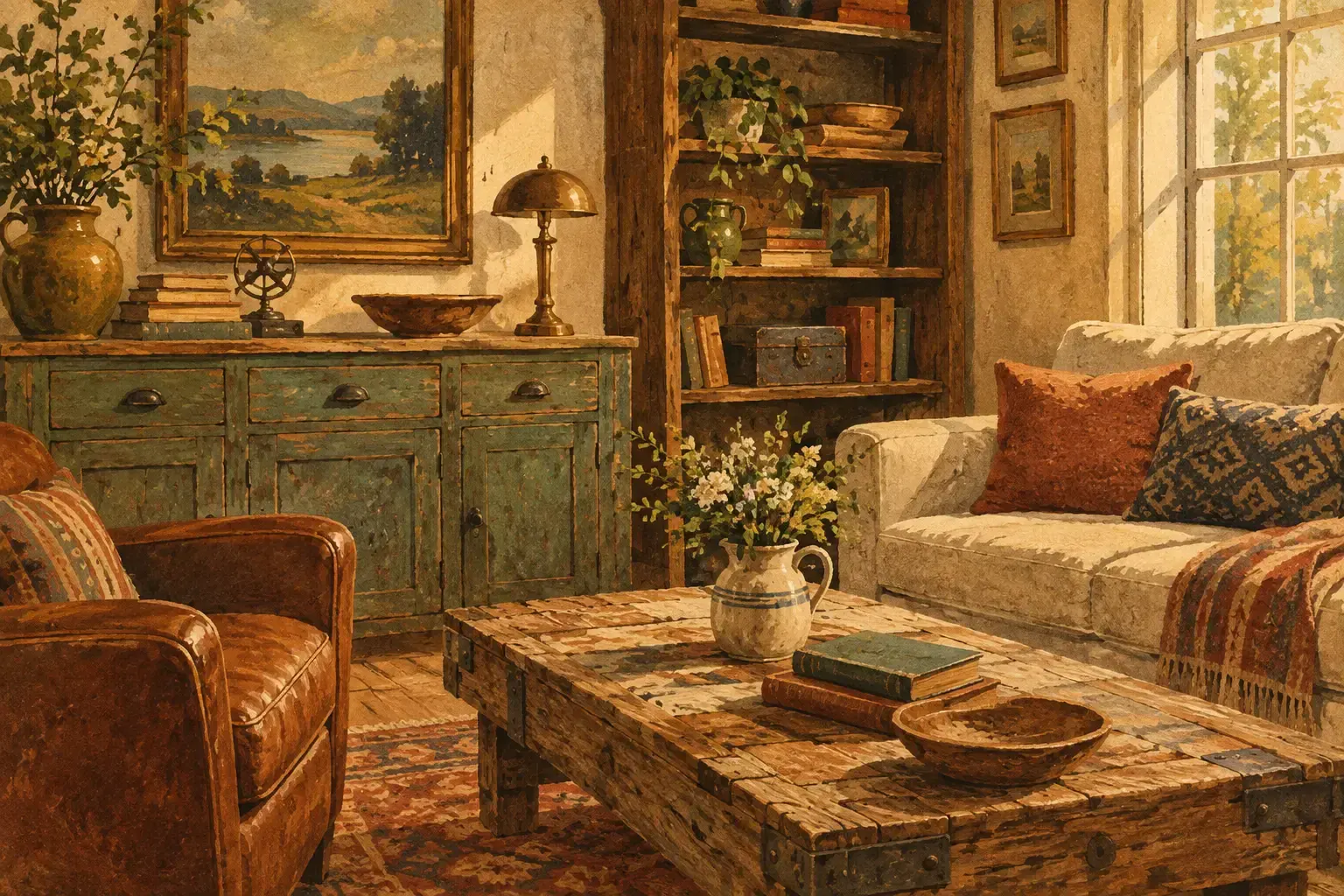
The most successful salvaged interiors balance patina with comfort. Chipped paint, oxidised metal and old timber bring texture, but people still need soft light, useful surfaces and somewhere comfortable to sit. Pair rough materials with finishes that add ease: wool upholstery beside a reclaimed oak table, a linen lampshade on a vintage brass lamp, or antique ceramics arranged on a painted shelf.
Avoid matching every finish. A room of uniformly distressed wood can feel more like a set than a home. Instead, introduce contrast. The deep grain of an old elm bench may sit beautifully against limewashed walls, while a smooth marble-top washstand can soften a brick floor. Mid-century furniture is especially useful here, as its clear silhouettes and warm woods bring order to more irregular architectural pieces.
Age should look honest. Resist sanding away every mark or applying an artificial distressed finish to new furniture in an attempt to make it belong. Scratches, repairs and uneven colour are part of the appeal, provided the object is clean, stable and fit for its new use.
Give reclaimed pieces a practical second life
Salvage works best when it earns its place. A set of old coat hooks can become an entrance hall rack; an industrial drawer unit can hold paperwork, tools or table linen; reclaimed shelving can turn an awkward alcove into a useful display. These are not merely decorative gestures. They make daily life more considered.
Doors offer particular flexibility. A panelled door can be fixed to a wall as a dramatic headboard, used as a sliding pantry door, or adapted into a dining table with a properly made base. Before repurposing it, assess its condition. Check for warping, woodworm damage, loose joints and previous coatings. Older painted surfaces may require specialist advice, particularly if lead paint is suspected.
Stone and iron need similar thought. A carved stone trough may make a memorable planter near a front door, but it will be extremely heavy and needs a secure, level surface. Cast-iron grilles can become wall art or be used as screens, although sharp edges, rust and mounting weight all need attention. In some cases, professional fitting is not an indulgence but the sensible choice.
Use salvage to create texture in overlooked spaces
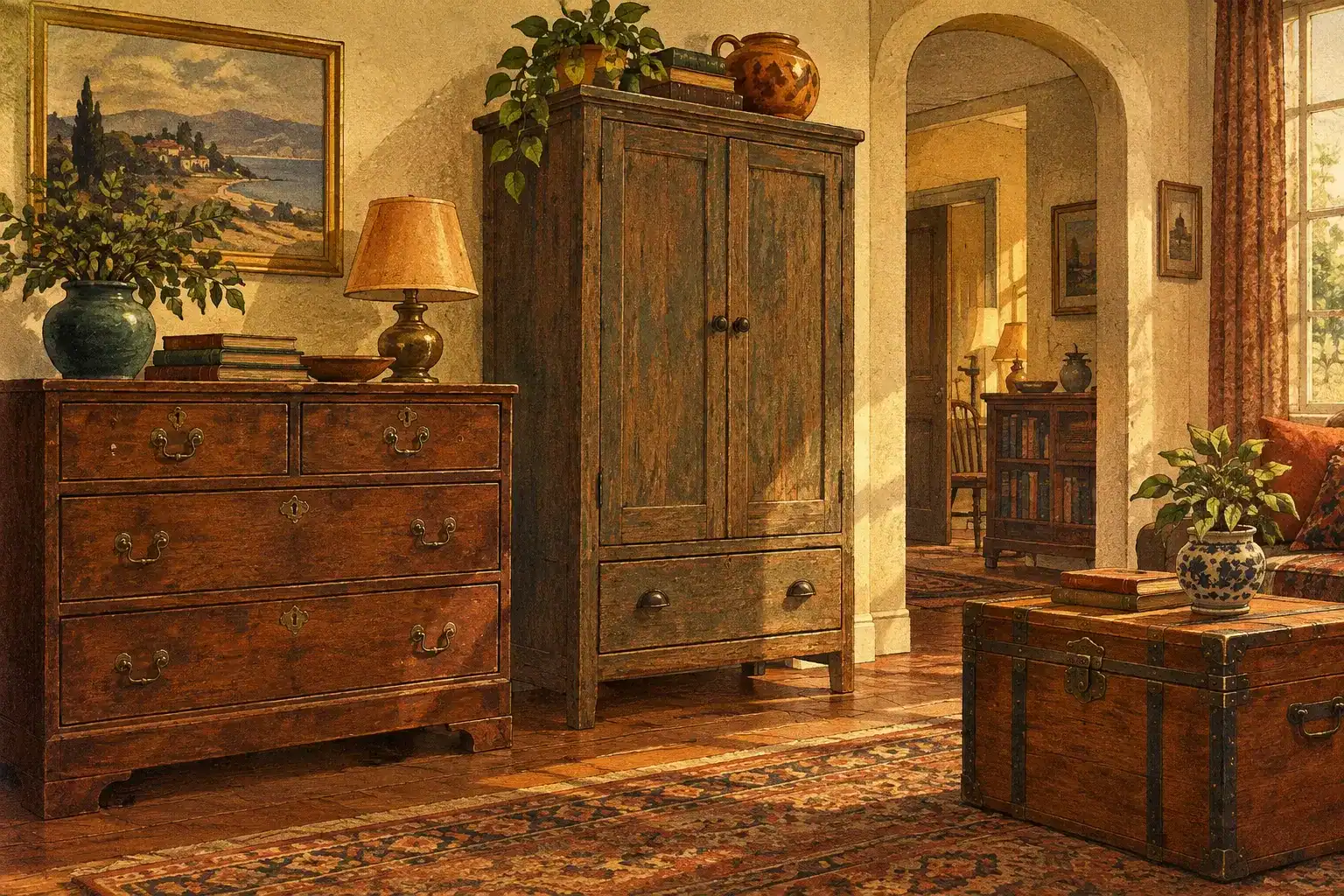
Hallways, utility rooms and cloakrooms are ideal places for architectural finds because they benefit from hard-wearing materials and often need a little identity. A reclaimed shelf on original brackets, an old school locker, a copper vessel for umbrellas or a framed piece of decorative ironwork can make these practical areas feel intentional.
Kitchens respond well to smaller layers of salvage. Consider a vintage butcher’s block at one end of the room, old brass drawer pulls on otherwise plain cabinetry, or a collection of antique ceramics on open shelving. West German pottery, with its rich glazes and sculptural forms, can add colour without introducing a modern print or bright painted wall.
In bathrooms, it depends on the material and ventilation. An antique cabinet can become a basin stand only if it is properly sealed and altered to accommodate plumbing. Decorative mirrors, wall lights and small timber stools are lower-risk ways to bring history into a humid room without asking a fragile object to do too much.
Choose materials that suit the room
Salvage is not a single look. Timber brings warmth and is forgiving in bedrooms, kitchens and living spaces. Iron lends definition, particularly in gardens, hallways and more industrial interiors. Stone feels permanent and works best where it can be appreciated for its mass, such as around fireplaces, entrances or outdoor spaces.
Think about proportion as much as material. A tiny cottage kitchen may not accommodate a grand Victorian shop counter, however beautiful it is. It may be better served by one narrow antique shelf or a well-proportioned stool. Conversely, a large open-plan room often needs a substantial reclaimed piece to prevent it feeling sparse.
Colour matters too. Salvaged surfaces tend to carry muted, complex tones: faded green, tobacco brown, chalky white, old black and the reddish cast of terracotta. These sit naturally with earthy paint colours and neutral textiles. If you prefer a bolder interior, use salvage as the grounding layer, then add colour through artwork, upholstery or a carefully selected vintage lamp.
Look beyond the obvious architectural pieces
Not every salvaged accent needs to come from a building. Old wooden moulds, workshop stools, enamel signs, woven baskets and farm tools can bring shape and narrative to a room. The distinction is in the edit. A single object with a strong form is often more decorative than a crowded shelf of curiosities.
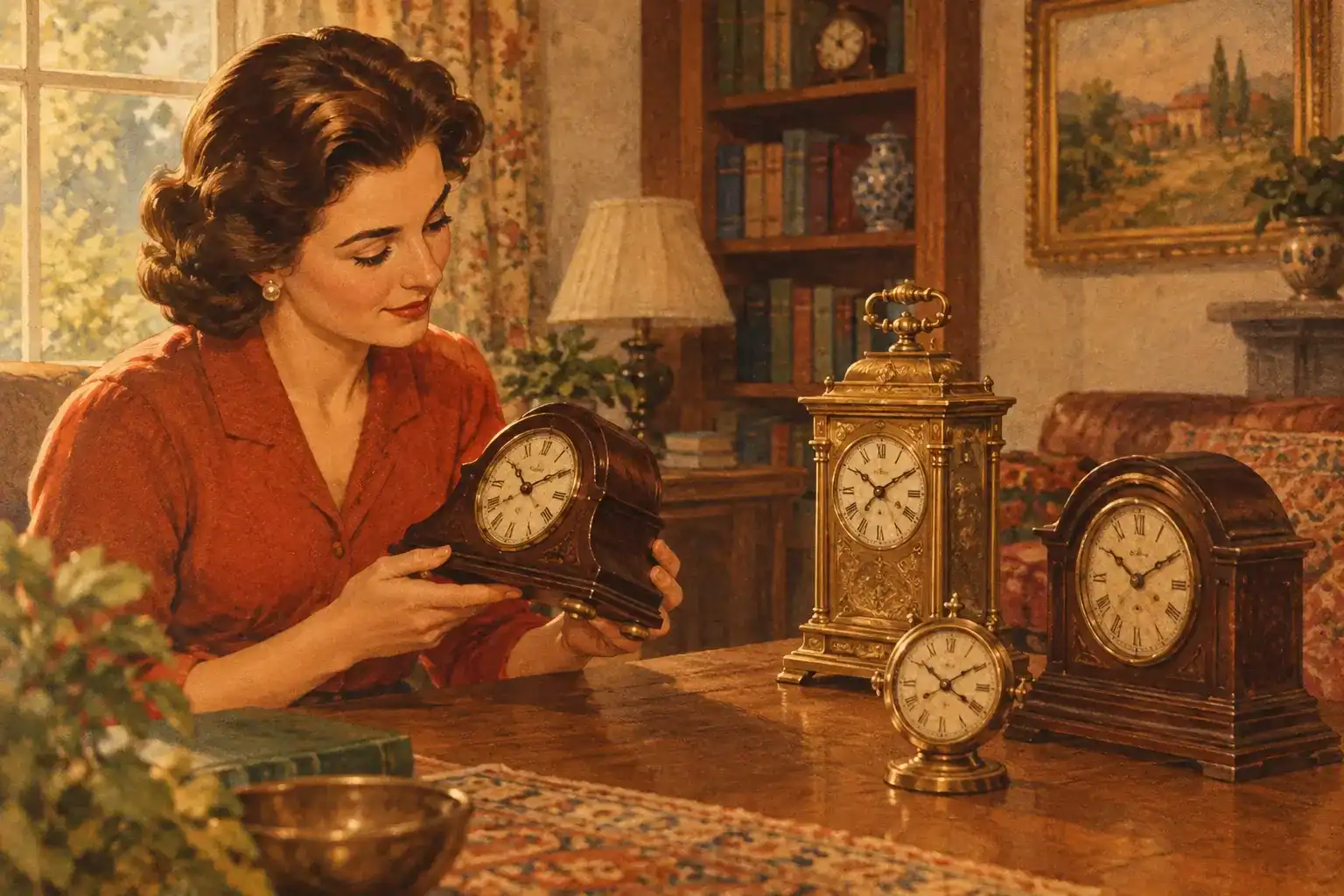
Collectible pieces can add a finer layer to heavier materials. A group of antique ceramics on a reclaimed console, Bakelite jewellery displayed in a glazed cabinet, or a pair of vintage wall lights beside a plain mirror gives the eye something more delicate to settle on. This mix of architectural weight and smaller-scale craftsmanship is what makes a room feel collected over time.
When buying, ask useful questions rather than focusing only on appearance. Is the item structurally sound? Has it been restored, and if so, how? Are repairs visible or sympathetic? Does it have provenance, or at least a credible account of its age and former use? A knowledgeable dealer should be able to describe condition honestly, especially where an object will be used rather than simply displayed.
Keep the patina, manage the maintenance
A gentle clean is generally preferable to aggressive restoration. Dust timber with a soft cloth, use appropriate wax or oil sparingly where needed, and avoid soaking old wood. Metal may benefit from careful cleaning and a protective finish, but removing all oxidation can erase the surface character that made the piece appealing in the first place.
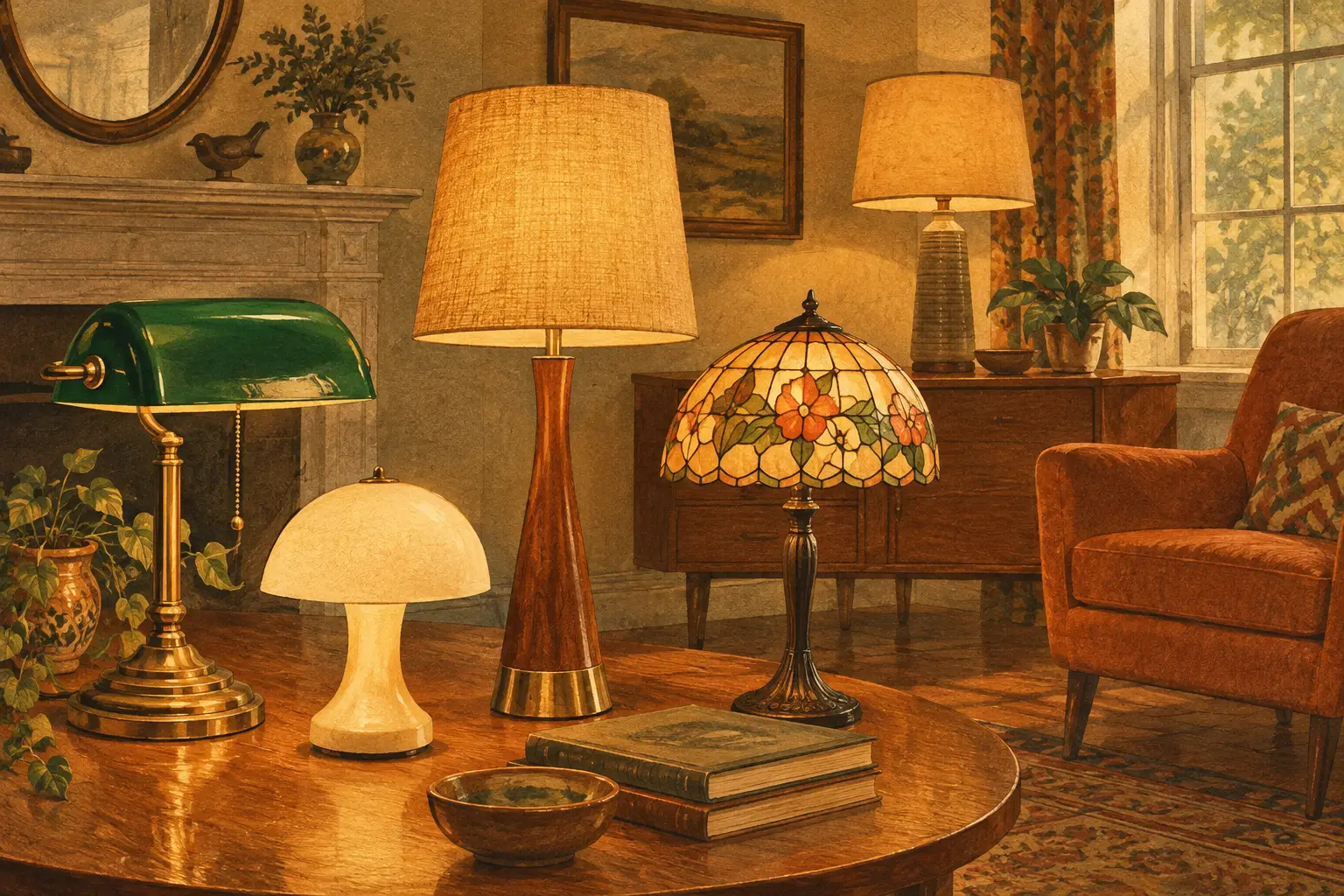
For items with moving parts, check hinges, drawers and fixings before installation. Electrical pieces should be rewired and tested by a qualified professional before use. Vintage lighting brings an exceptional warmth to a room, but safety always comes ahead of originality.
The pleasure of salvage lies partly in its imperfections: the filled knot in a table top, the softened corner of a stone step, the faint outline where a door handle once sat. Allow those details to remain visible. Choose one piece with genuine presence, place it where it can be used and noticed, and let the rest of the room make space for its story to continue.