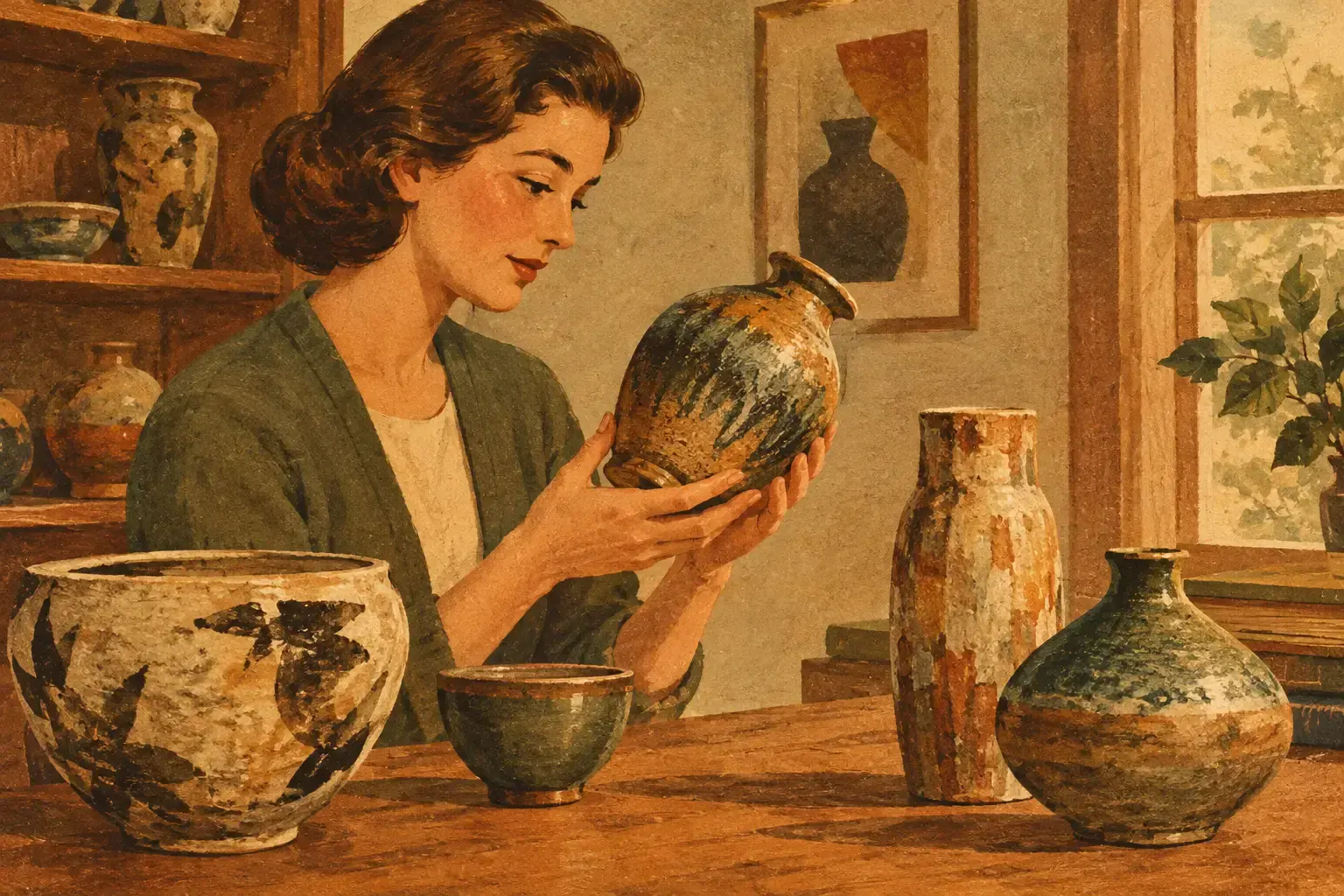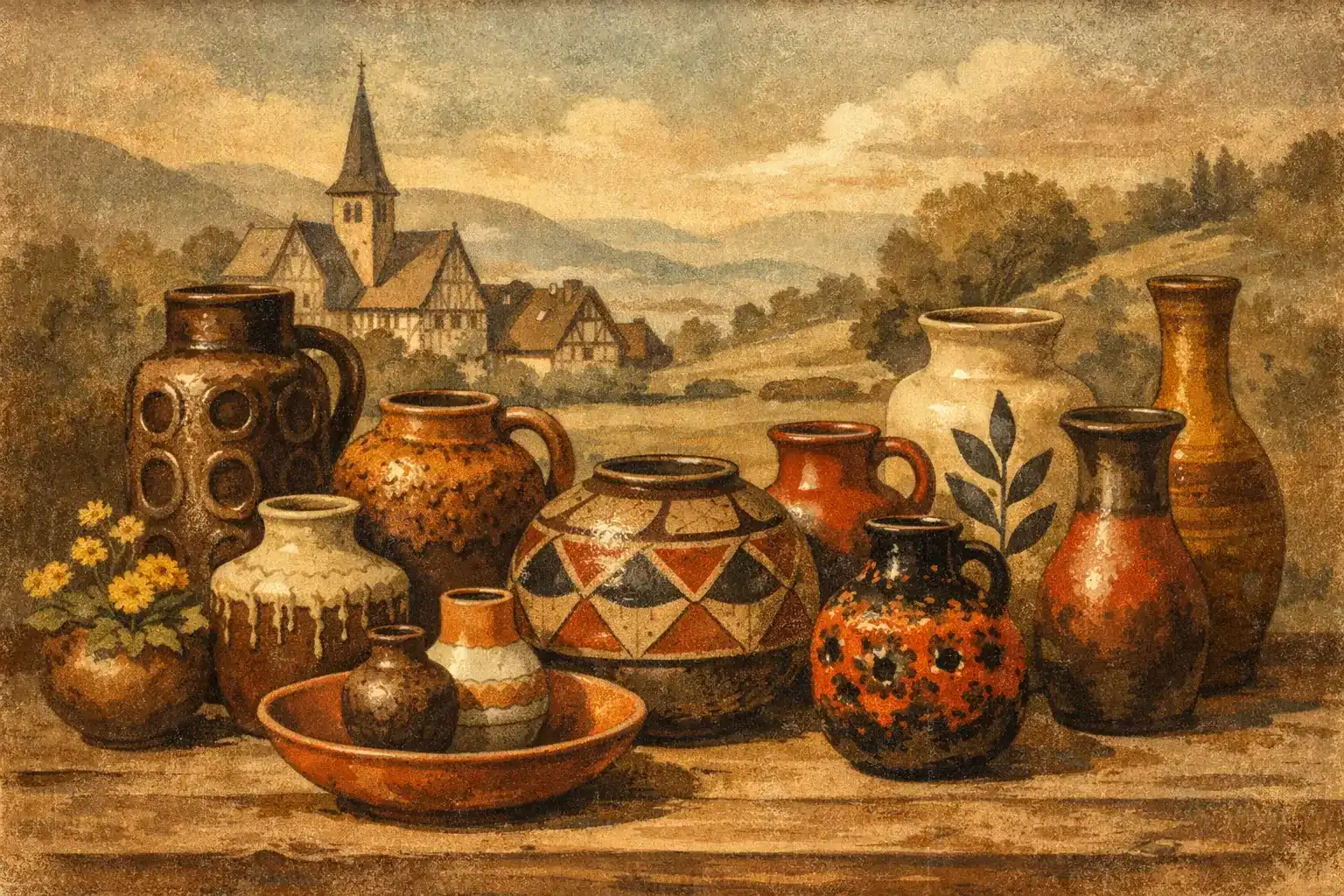
A single West German vase can change the character of a shelf, fireplace or dining table. The best West German pottery has an assured presence: sculptural silhouettes, richly textured surfaces and glazes that seem to shift with the light. Made largely between the 1950s and 1970s, these pieces offer far more than a pleasing retro accent. They are a record of post-war European design, when ceramic factories pursued bold form and expressive colour at an accessible scale.
For collectors and homeowners alike, the appeal lies in variety. Some pieces are dramatic and volcanic, with thick lava-like glazes; others are quietly modern, relying on a spare shape, a tactile matte finish or a finely controlled band of colour. The right choice depends less on chasing a single fashionable look and more on recognising good design, authentic manufacture and the character that suits your room.
What makes the best West German pottery?
West German pottery is a broad collecting category rather than one visual style. Following the Second World War, a number of manufacturers in West Germany produced decorative ceramics for an international market. Their work ranged from studio-inspired art pottery to well-designed factory production, usually carrying impressed marks, foil labels or moulded model numbers on the base.
The strongest examples pair a memorable form with a glaze that feels integral to it. A tall handled jug with a dense brown and orange volcanic finish, for instance, has a deliberately architectural quality. A low, rounded vase in moss green, cream and charcoal may feel more restrained, yet can be just as distinctive. Neither is automatically more valuable. Condition, rarity, maker, model and decorative impact all matter.
The term “Fat Lava” is often used for the thick, cratered and bubbling glazes associated with the period. It is useful shorthand, but it should not be treated as a catch-all. Many of the most elegant West German ceramics are not lava-glazed at all. Collecting only the loudest pieces can overlook handsome striped, speckled, geometric and satin-glazed designs.
The best West German pottery makers to know
A maker’s name offers a helpful starting point, although the finest piece for a particular interior may come from a less celebrated factory. These are the names most often worth looking for when building a thoughtful collection.
Scheurich
Scheurich is perhaps the most recognisable name in the category. The company produced an enormous range of vases, jugs and planters, from dramatic handled forms to simple cylindrical shapes. Its model numbers are often moulded into the base, making pieces relatively straightforward to identify.
Look for strong proportions first. Scheurich’s best designs are convincing even before the glaze is considered: a narrow-necked floor vase, a generously curved jug, or a sharply shouldered vessel. Textured amber, red, dark brown and blue glazes remain particularly effective in mid-century rooms, though quieter cream and olive examples are often easier to live with.
Bay Keramik
Bay Keramik made pieces with a bolder, more playful character. Many have heavily textured volcanic finishes, vivid colour contrasts and energetic shapes. The factory’s output is widely available, which makes it a good entry point, but unusual forms and successful glaze combinations still stand apart.
A Bay vase works especially well where an interior needs warmth and movement: alongside walnut furniture, against a pale plaster wall, or on open shelving with books and natural materials. As with all lava-glazed ceramics, inspect the surface closely. Texture is desirable; chips along the rim, hairline cracks and poorly disguised restoration are not.
Dümler & Breiden
Dümler & Breiden is valued for a more refined, sometimes architectural approach. Its pieces can be wonderfully sculptural, with long necks, angular handles, ribbed bodies and carefully layered glazes. The maker’s work often appeals to buyers who enjoy West German pottery but prefer a less overtly retro effect.
Its striped and softly graduated glazes are particularly versatile. A well-chosen Dümler & Breiden vase can sit comfortably with antique oak, twentieth-century lighting or contemporary artwork without making the room feel like a period set.
Ruscha
Ruscha is a rewarding maker for collectors drawn to unusual surfaces. Its designs include graphic motifs, cratered glazes and experimental colourways that feel distinctly of their era. Some examples are unmistakably 1960s, while others have a more timeless, almost archaeological quality.
Because the name covers a wide output, condition and visual balance are crucial. A striking Ruscha piece should look intentional rather than merely busy. Seek out forms where the glaze follows the contours of the vessel and gives the eye a place to rest.
Jasba
Jasba is known for expressive ceramic work, including distinctive decorative vases and planters. Its pieces can be more adventurous in shape than many mass-market contemporaries, making them satisfying focal points. The best examples have a sculptural, almost hand-built quality, even where they were factory made.
Jasba is particularly attractive for buyers who want one outstanding object rather than a uniform run of matching vases. Place a single substantial example on a console or mantelpiece and allow it room around it. These forms lose some of their force when crowded by smaller ornaments.
Carstens Tönnieshof
Carstens produced a vast range, including designs with graphic, modernist appeal. Markings may include Carstens, Tönnieshof or model information, and the company’s varied output means that research is useful when a piece seems unusual.
Look beyond the most common brown lava finishes. Carstens produced handsome blue, turquoise, white and geometric designs that can bring a cleaner note to a collection. They are often a fine choice for interiors where colour is present but controlled.
How to choose West German pottery for your home
Start with scale. A 40cm floor vase can anchor a quiet corner, but it needs visual breathing room and will usually look best empty or with a few tall architectural stems. Smaller vases are more flexible on a mantelpiece, sideboard or bedside table. A group can work beautifully, provided the pieces share either a colour family, a material quality or a clear variation in height.
Then consider the glaze against its surroundings. Dark brown, rust and ochre lava glazes bring depth to pale rooms and sit naturally with timber, leather and aged brass. Cooler blues, greens and creamy whites can lighten a scheme with glass, chrome or painted furniture. The aim is contrast with sympathy, not a display that feels over-coordinated.
There is also a practical trade-off between statement pieces and collectability. The largest, loudest vase is not always the one you will enjoy for years. A beautifully proportioned medium-sized vessel with a restrained glaze may move easily from room to room as your interiors evolve. Buy the piece you would miss if somebody else took it home.
Marks, condition and authenticity
Turn a vase over before buying. Many authentic examples have an impressed maker’s mark, a form number and a height marking such as 289-20, though conventions vary. Paper labels are welcome but should not be the only proof of origin, since they can be lost, copied or added later. An unmarked piece is not necessarily inauthentic, but it should be priced and described with appropriate caution.
Examine rims, handles, bases and raised areas of glaze under good light. Small signs of age are normal on vintage ceramics, particularly light shelf wear beneath the base. More serious concerns include cracks, glued repairs, rim chips and hairlines concealed by a thick glaze. Crazing can occur and is not always a fault, but a vase intended to hold water should be tested carefully or used with a liner.
Do not confuse factory variation with damage. West German pottery was made to have individuality: glaze runs, pinholes, uneven texture and tonal shifts are often part of its appeal. The question is whether the feature belongs to the original firing process or interrupts the integrity of the piece.
Building a collection with character
A thoughtful collection need not follow a single maker or glaze. One route is to collect a family of earthy volcanic pieces in different forms. Another is to mix a tall handled jug, a compact round vase and a low planter, linked by one recurring colour. For a more considered interior, combine West German ceramics with antique furniture, vintage lighting and natural textiles rather than relying on ceramics alone to create atmosphere.
At MN Interior Antiques, West German pottery is chosen for its form, finish and decorative conviction, not simply because it carries a desirable mark. That distinction matters. A well-made vintage vase should feel like an object with a story to tell, but it should also earn its place in your home every day.
The most satisfying piece may be the one that does not fit a collector’s checklist at all: a modestly sized vase, a slightly unusual glaze, and a silhouette that makes the room feel more settled the moment you place it down.