A good antique mirror changes more than a wall. It catches the shifting light in a hallway, lends depth to a small dining room and gives a carefully chosen chest, mantel or console a proper sense of occasion. This antique mirror styles guide is designed to help you identify the details worth looking for, understand which periods suit your home, and buy with an eye for both beauty and condition.
Unlike a newly made mirror, an older piece carries visual evidence of its life: gentle foxing in the plate, wear to the gilding, a softened edge to carved timber or the small irregularities of hand-cut glass. These are often part of its appeal. The key is knowing when age adds character and when condition affects value, safety or everyday use.
Antique Mirror Styles Guide: The Main Periods
Georgian mirrors: balanced, architectural and quietly grand
Georgian mirrors, broadly dating from the early 18th century to the 1830s, are defined by proportion and ornament used with restraint. Mahogany, walnut and giltwood frames were common, often with a shaped or broken pediment, carved swags, shell motifs or delicate reeded borders. Many overmantel examples were made in sections, with narrow plates and fine glazing bars that create an architectural look.
A Georgian mirror is particularly effective above a fireplace, where its formal symmetry feels at home, but it can also bring discipline to an otherwise relaxed room. In a modern setting, a simple mahogany example above a sideboard can provide a handsome counterpoint to contemporary art and clean-lined furniture.
Original plates can be beautifully imperfect, with soft grey clouding or faint sparkle around the edges. A completely clear, modern replacement plate is not automatically a problem, especially in a practical family space, but it does alter the piece’s originality and should be reflected in its value.
Regency mirrors: gilded detail and decorative confidence
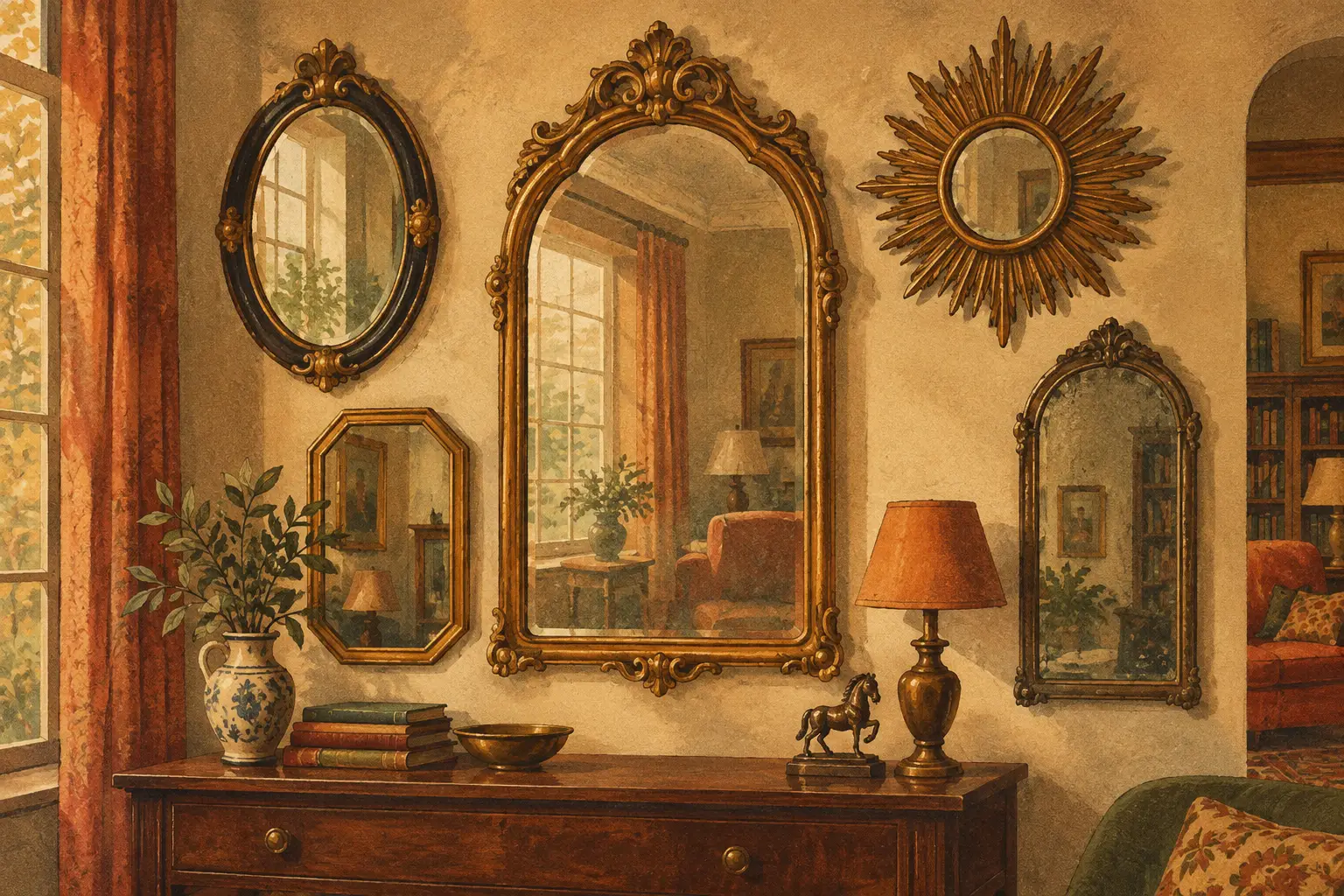
Regency design favoured a more expressive silhouette. Mirrors from this period, roughly 1811 to 1820, often feature ebonised or gilded frames, ball ornament, anthemion leaves, columns, gilt slips and striking convex forms. The famous Regency convex mirror, sometimes called a bullseye mirror, is instantly recognisable for its round plate and radiating frame.
These designs have an easy glamour without needing a heavily traditional interior. A convex gilt mirror can animate a dark-painted hall or sit above a pared-back console, while a taller pier glass brings welcome height to a room with low ceilings. Look closely at the surface: old gilding may show rubbing, red bole beneath the gold leaf or small losses. Honest wear is usually more appealing than a thick, overly shiny repaint.
Victorian mirrors: rich carving and dramatic scale
Victorian mirrors cover a long period, so their appearance varies considerably. Early examples may retain Regency influence, while later pieces often become more ornate and substantial. Deep walnut frames, carved foliage, arched tops, blackened ebonised finishes and elaborate overmantel arrangements are all familiar Victorian forms.
A large Victorian overmantel mirror can be transformative in a reception room, dining room or above a period fireplace. Yet scale needs care. A frame with heavy carving can overwhelm a narrow wall, and a very dark walnut example may need pale surroundings or good natural light to show its detail. In smaller rooms, a slim Victorian gilt mirror or a simple oval frame can offer the same sense of history without visual weight.
Edwardian and Arts and Crafts mirrors: craft over display
The Edwardian period brought lighter proportions, while the Arts and Crafts movement placed emphasis on honest materials and skilled workmanship. Oak is especially associated with Arts and Crafts furniture and mirrors, often finished simply to show the grain. Look for hammered metal mounts, copper or pewter details, hand-worked joinery and a restrained, hand-made quality.
These mirrors suit homes that favour natural textures, studio pottery, woven textiles and well-made furniture. They sit comfortably with antique ceramics and architectural salvage because the appeal is material rather than ornament alone. A modest oak wall mirror can be every bit as characterful as a grand gilt example when the timber and construction are right.
Art Nouveau and Art Deco mirrors: line, curve and geometry
Art Nouveau mirrors, popular around 1890 to 1910, tend towards flowing curves, stylised flowers and sinuous outlines. Their decorative language can be quite specific, so they work best when chosen for a genuine love of the period rather than simply as a filler above a basin or dressing table.
Art Deco, by contrast, is sharper and more geometric. Sunburst mirrors, stepped frames, bevelled glass and bold symmetry belong to the style, which flourished from the 1920s into the 1930s. A Deco mirror can bring crispness to a bedroom or glamour to a hallway, particularly when paired with vintage lighting in chrome, brass or opaline glass. Original mirror plates with bevelled edges are especially desirable, though small chips to a bevel should be assessed carefully.
Mid-century mirrors: sculptural forms for relaxed interiors
Mid-century mirrors are often less about historical revival and more about silhouette. Teak, rosewood, brass and rattan frames appear alongside pebble-shaped, organic or sunburst designs. Scandinavian-influenced pieces are typically clean and understated, while Italian examples can be more playful or glamorous.
For buyers looking at mid-century furniture in Hertfordshire, a mirror is often the element that brings a scheme together. A warm teak frame above a Danish-style sideboard feels coherent without becoming overly matched. A brass sunburst, meanwhile, can give a plain wall a more sculptural focal point. As with all periods, construction matters: check that the frame is sound, the hanging points are secure and the glass sits properly within its rebate.
How to Choose the Right Antique Mirror Style
Start with the wall, not the mirror. Measure the available width and height, then consider what the mirror will reflect. A mirror opposite a window can brighten a room, but one facing clutter, a television or an awkward doorway may magnify the wrong feature. In a hallway, a vertical piece is often useful as well as decorative. Above a mantel, the mirror should usually relate to the width of the fireplace rather than stretch from edge to edge.
Then consider the existing furniture. A period-perfect interior is not the only route. A Georgian giltwood mirror above a mid-century chest can look considered because both have strong craftsmanship and clear form. The connection might be colour, material or scale rather than date. What tends not to work is choosing a mirror solely because it is old, only to place it where its frame fights every other element in the room.
Be realistic about surface condition. Light foxing, tiny black spots and gentle desilvering can create atmosphere and are common in older glass. If you need a mirror for daily grooming, however, extensive deterioration may be frustrating. Likewise, old repairs, replaced backboards and minor frame restoration are often sensible signs of care. Serious worm damage, active movement in joints, loose glass or substantial losses to carving demand closer inspection and appropriate restoration.
What to Check Before You Buy
Provenance is valuable, but it does not always mean a long paper trail. A dealer should be able to describe the likely date, materials, construction, alterations and visible condition clearly. On a genuine older mirror, look for signs consistent with age: old tool marks, wear in natural contact areas, a backboard appropriate to the period and a plate that fits the frame rather than looking newly forced into it.
Take special care with gilded pieces. Water-gilded surfaces are delicate, and their tonal variation is part of the finish. Fresh gold paint can make a frame look flat and can conceal repairs. This does not make a restored mirror unsuitable, but transparency matters. The same is true of replacement glass. A sympathetic antique plate can be preferable to modern glass in a decorative piece, while a replacement may be the practical choice for a bathroom or heavily used hallway.
Weight is another practical consideration. Large overmantel mirrors and thick giltwood frames can be unexpectedly heavy. Ensure your wall fixing is suitable for the construction of the wall, particularly in older properties with lath and plaster. A beautiful mirror should feel secure, not precariously displayed.
Giving an Old Mirror a Place in a Modern Home
The most convincing interiors allow an antique mirror to be itself. Avoid trying to make every mark disappear. Let a softly foxed plate sit above a contemporary console, or use a carved Victorian frame to add depth to a room of plain plaster, linen and oak. The contrast is often what makes the arrangement feel collected rather than staged.
At MN Interior Antiques, the most memorable mirrors are not simply decorative objects. They are pieces of craftsmanship with a story held in their materials, surfaces and proportions. Choose the one that makes the room feel more like yours, and its age will become part of the pleasure of living with it.