A drawer can tell you more than a glossy catalogue photograph ever will. Pull it open and look at the timber: the tool marks, the slight unevenness, the wear at the runners and the joinery at each corner. These are often the most convincing authentic antique furniture signs – quiet details that show how a piece was made, used and cared for over decades.
For anyone furnishing a home with character, the aim is not to find furniture that looks old. It is to choose a piece with honest age, sound construction and a presence that makes a room feel considered. That requires looking beyond surface patina. Reproductions can be beautifully made and useful in their own right, but they should be described and priced as such. A genuine antique earns its appeal through materials, methods and history.
Start with construction, not colour
Dark wood, brass handles and a distressed finish can all be added later. Construction is much harder to fake convincingly. Before focusing on the decorative details, examine how the furniture has been put together.
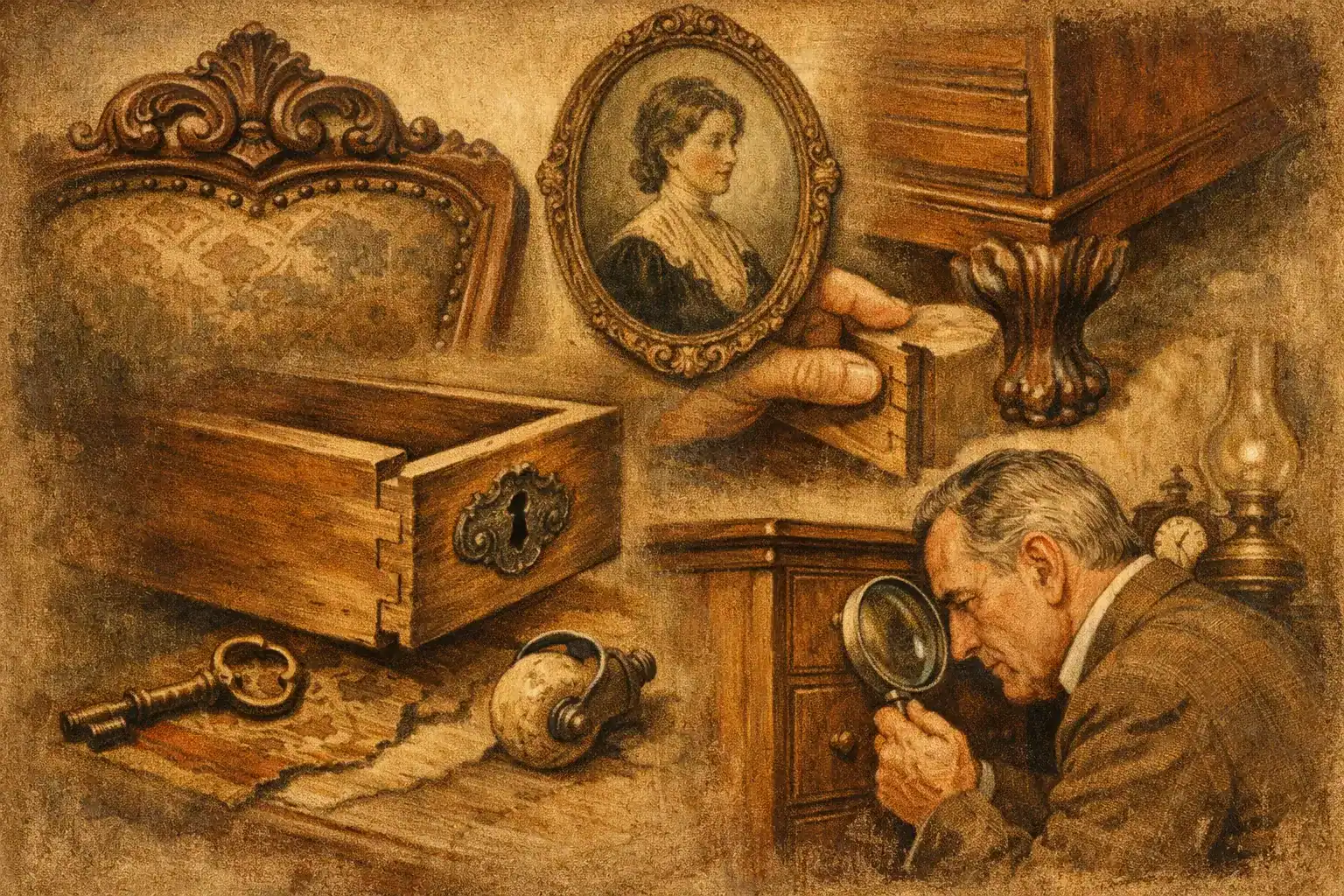
Hand-cut dovetails are a particularly helpful clue on drawers. On much 18th- and early 19th-century furniture, they are usually irregular in size and spacing, with fine pins cut by hand. Later machine-cut dovetails tend to be more uniform and may be broader. This does not automatically make a piece modern: manufacturing methods changed gradually, and quality workshops continued to use traditional techniques. It is one part of a wider picture.
Look, too, at the underside and back. Early furniture was often made with plain, less-finished timber in areas not intended to be seen, while the show surfaces received more attention. Saw marks can be informative. Straight, uneven marks may point to pit-sawn boards, while perfectly regular circular marks suggest later machinery. Again, no single mark dates an object in isolation, but the evidence should make sense together.
Timber should suit the claimed period
The species, cut and character of the wood matter. Oak is common in early English country furniture, while walnut became fashionable in the late 17th and early 18th centuries. Mahogany, often richly coloured and dense, became widely used from the Georgian period onwards. Pine, deal and other secondary woods frequently appear on carcasses, drawer bottoms and backs.
A dealer should be able to explain what you are seeing. A Victorian chest with pine drawer linings can be entirely plausible; a supposedly Georgian piece made wholly from timber that looks freshly machined deserves closer examination. Old timber does not have to be dark, however. Sunlight, cleaning, storage and restoration all change colour over time.
Examine wear where hands and feet meet the piece
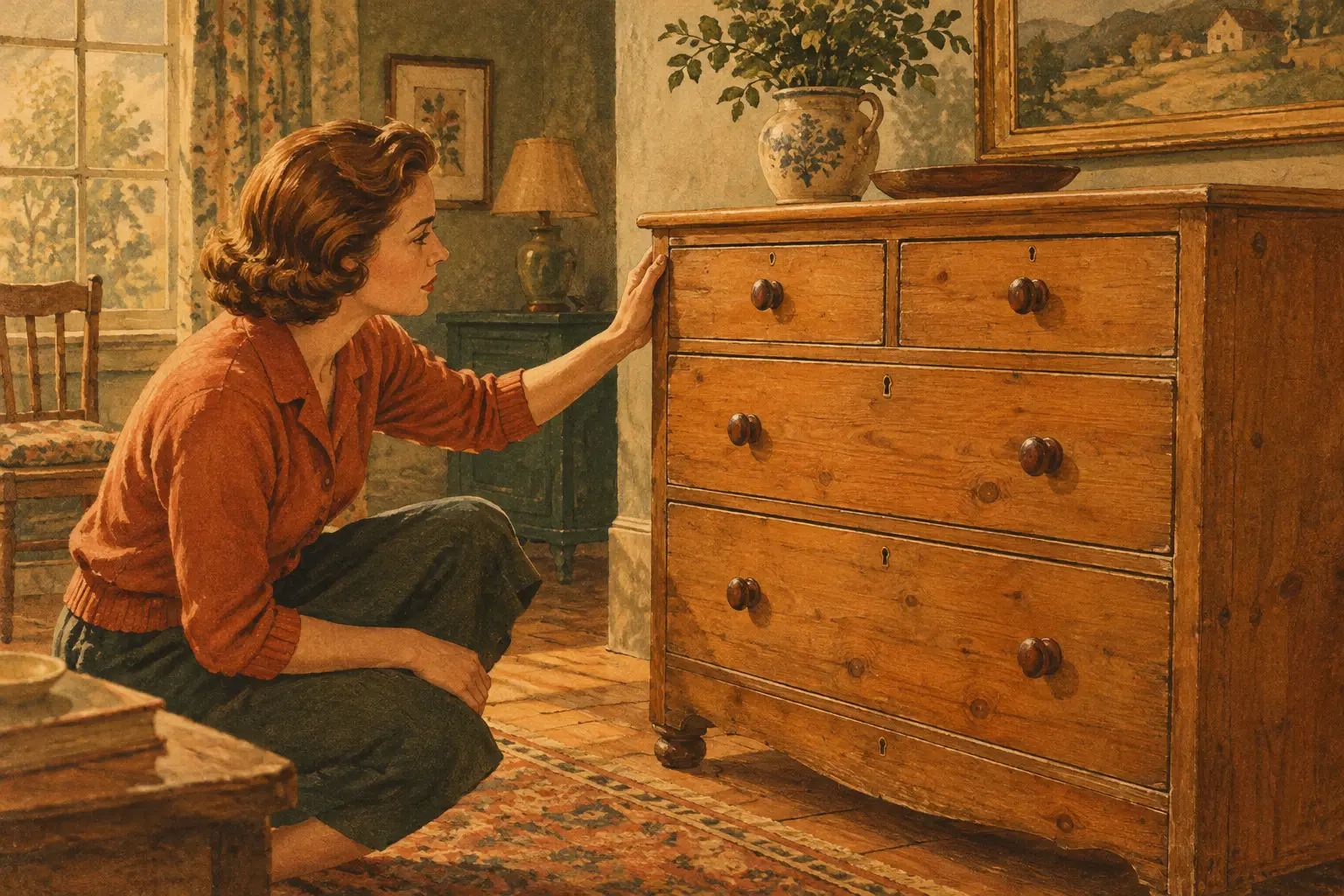
Genuine age tends to appear where daily use naturally occurs: around handles and escutcheons, along drawer edges, on chair arms, at table corners and beneath feet. This wear is rarely identical from one side to the other. A desk may be softer at the edge where generations of forearms rested; a chest may show small dents around a keyhole from habitual use.
Artificial distressing often looks too evenly distributed. It may present as repeated scratches on large flat surfaces, dark stain pressed into random dents, or sharp wear marks that do not correspond with how the piece functions. A perfectly uniform “aged” finish across an entire cabinet is less persuasive than varied, modest evidence of use.
Do not confuse genuine wear with neglect. Worm holes, loose joints, water damage and failing veneer are condition issues, not proof of special value. Honest wear can be attractive and appropriate, but furniture still needs to function safely in a modern home.
Hardware gives useful clues, with qualifications
Handles, locks, screws and hinges can reveal a great deal, provided they are considered carefully. Early screws were handmade, with irregular slots and off-centre points. Later screws became increasingly standardised. Hand-forged nails and hinges may have small variations in shape, whereas modern hardware is more consistent.
Yet fittings are also among the parts most often replaced. A chest may retain its original carcass but have later handles, either because the originals were lost or because a previous owner updated the look. That does not make the whole piece inauthentic. It simply affects originality and, sometimes, value.
The key question is whether the replacement is honest, sympathetic and clearly described. A well-restored antique with suitable period-style handles can be a far better buy for daily use than an untouched piece with structural problems. The distinction between authenticity and untouched condition matters.
Look beneath the polish for an honest surface
Patina is one of the qualities people love most in antique furniture, but it is also one of the most misunderstood. Real patina is not merely a dark shine. It is a layered surface created by age, handling, polishing, oxidation and small repairs. It can include subtle shifts in colour, softened edges and areas where the timber’s grain has become more visible.
Original finish is desirable, particularly on finely made Georgian, Regency or Arts and Crafts furniture. Still, an over-cleaned or stripped surface is not always a reason to walk away. Some pieces were restored long ago and have acquired a new, settled character. Others were refinished because their condition demanded it.
What should raise concern is a surface that seems designed to imitate age rather than reflect it. Thick modern varnish over old-looking wood can obscure construction details. A uniform dark stain may conceal mixed timbers or recent repairs. If the finish feels too slick, too orange or too deliberately theatrical, inspect the less visible areas before deciding.
Authentic antique furniture signs in repairs and alterations
Most antiques have lived more than one life. A dining table may have had its leaves altered, a chair may have been reupholstered, and a wardrobe may have gained a replacement back. Such work is normal, especially for furniture made to be used rather than displayed behind glass.
Good restoration respects the original design and protects the object’s future. Look for repairs that are structurally sound, proportionate and appropriate to the materials. A neatly executed veneer repair or a professionally strengthened chair joint can be reassuring. Crude blocks of new timber, mismatched mouldings or unstable glue repairs should be reflected in the price and may affect suitability for everyday use.
Alteration is more consequential when it changes the form or scale of a piece. A tall Victorian chest cut down to fit a low ceiling may still be decorative, but it is no longer intact. A converted commode, painted cupboard or adapted worktable can be a charming and practical choice, provided its history is presented plainly.
Provenance helps, but should not replace close looking
A family history, auction label, maker’s stamp or old receipt can add confidence and interest. Labels from retailers, transport firms and exhibitions are often worth preserving, even when they do not prove an exact date. A recognised maker’s mark may significantly affect collectability.
However, provenance ranges from carefully documented to fondly remembered. “It came from a country house” is not, by itself, a guarantee of age or quality. The physical object must support the story. The strongest purchases combine credible provenance with construction, materials and condition that align with the claimed era.
For buyers seeking antique furniture in Stevenage or across Hertfordshire, viewing in person is valuable whenever possible. Open the drawers, check the backboards, test the stability and ask direct questions about repairs, finish and origin. Clear photographs of these details are equally essential when buying online.
Buy the piece, not just the label
Period labels can be helpful, but a home does not need to be arranged as a museum. A modest late Victorian pine cupboard with superb proportions may bring more warmth to a kitchen than a more formally important piece. Likewise, an early 20th-century oak desk can sit beautifully alongside mid-century lighting and contemporary art.
Choose furniture that has the scale, condition and practical function your room requires. Check dimensions carefully, especially on large wardrobes, dining tables and chests. Consider whether a delicate original surface suits a busy family hallway, or whether a sympathetically restored piece will give you greater freedom to use and enjoy it.
The best antiques do not need a dramatic story invented for them. Their timber, workmanship and small signs of a life well lived are enough. When those details are present and honestly described, you are not simply buying furniture – you are giving a well-made object another useful chapter.