A well-chosen vintage light changes more than the brightness of a room. It throws a pool of warmth across a reading chair, lends weight to a dining table, or gives a quiet hallway a sense of arrival. This vintage lighting buyers guide is for choosing pieces with real presence – and ensuring that their age, condition and proportions work beautifully in a modern home.
Vintage lighting rewards a slower approach than buying new. A shade may have been replaced, a fitting may need attention, and a lamp that looks modest online can prove wonderfully sculptural in person. Those are not reasons to avoid it. They are the details that turn a functional object into a piece of interior history.
Vintage Lighting Buyers Guide: Start With the Room
Before falling for a particular lamp or pendant, consider the job it needs to do. Decorative lighting and task lighting are not always the same thing. A small 1960s table lamp with a richly glazed ceramic base may provide wonderful atmosphere on a sideboard, but it may not offer enough focused light beside a favourite armchair.
Think about the existing layers of light in the room. Most welcoming interiors combine an overhead source with lower pools of light from table lamps, floor lamps and wall lights. Vintage pieces are particularly effective in these lower layers, where their materials and silhouettes can be appreciated rather than lost against a ceiling.
Scale deserves equal attention. A substantial brass or smoked-glass pendant can anchor a dining table, while an oversized floor lamp may balance a generous sofa or an empty corner. In a compact room, a delicate opaline glass shade, a slim teak lamp, or a pair of small bedside lights may be the better choice. Measure the available surface, note the height of nearby furniture, and consider sightlines from the doorway. A light should feel intentional, not simply squeezed into a gap.
Choose an Era You Genuinely Want to Live With
There is no need to recreate a period room. The most convincing interiors often combine pieces from different decades, connected by material, colour or character. A 1930s chrome table lamp can look striking against an older oak chest, while a mid-century ceramic base brings softness to clean-lined contemporary furniture.
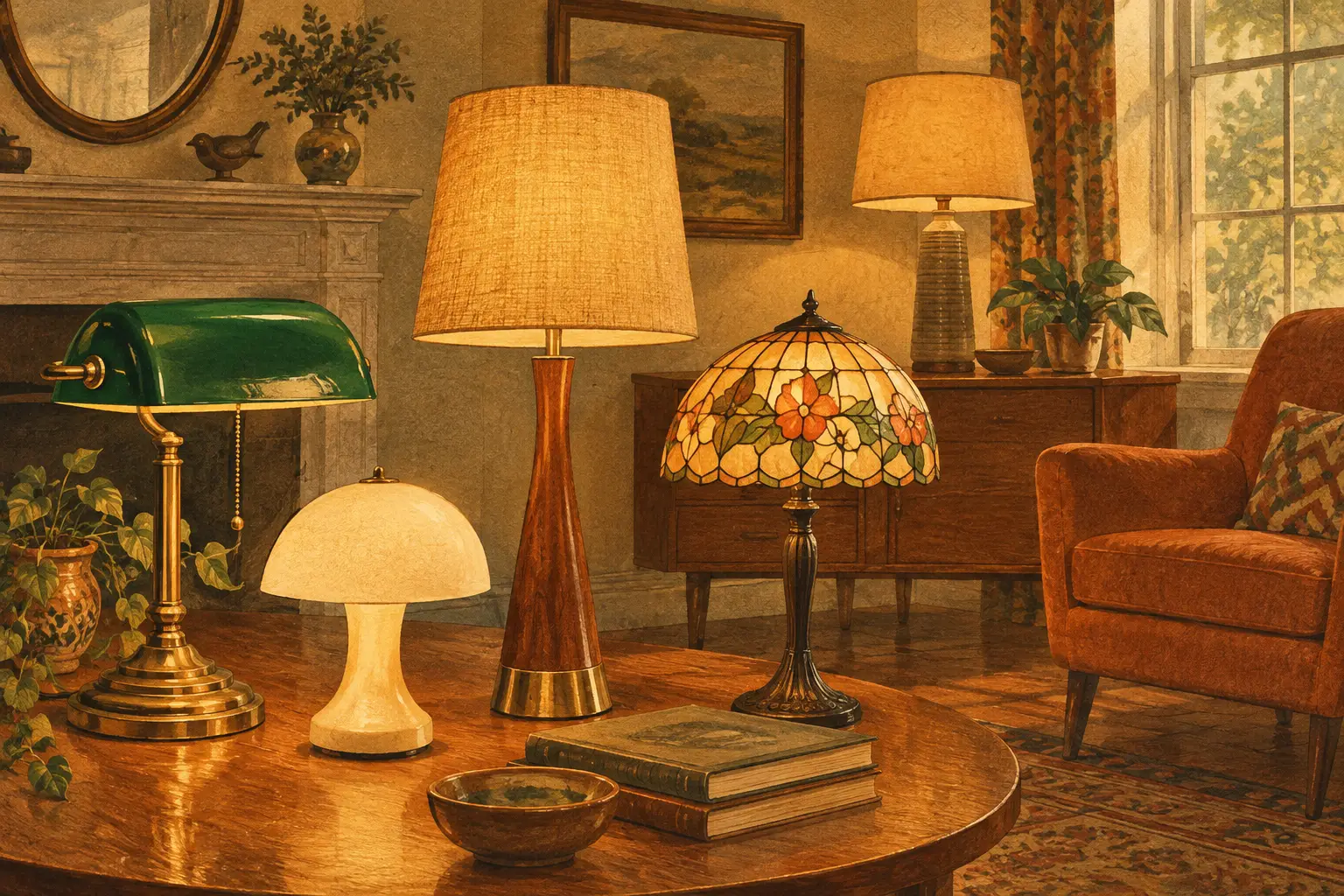
For buyers drawn to mid-century design, look for well-considered forms in teak, brass, spun aluminium, smoked glass and ceramic. Scandinavian-influenced lamps often have calm proportions and tactile natural materials. British and continental designs from the 1950s to 1970s can be more playful, with bold glazes, coloured glass and expressive shades.
Earlier lighting offers a different kind of presence. Brass wall lights, converted oil lamps, painted toleware and decorative chandeliers can introduce patina and formal detail without making a room feel overly traditional. Architectural salvage, meanwhile, suits spaces that benefit from a little grit: workshop pendants, enamel shades and industrial fittings bring useful contrast to softer furnishings.
The question is less, “Does every piece come from the same era?” and more, “Does this object add a note the room is missing?” A warm ceramic lamp can temper a polished scheme. A crisp metal pendant can stop a room of antique timber from becoming too heavy.
Learn to Read Materials, Patina and Construction
Authenticity is not always about a maker’s mark. Many excellent vintage lights were produced without a label, and some labels have disappeared over decades of use. Instead, look closely at materials, construction and finish.
Brass develops a softened, mellow surface that is difficult to imitate convincingly. It may show small areas of rubbing, darker crevices or uneven colour where it has been handled. That gentle variation is often desirable. Avoid assuming every aged surface needs polishing: aggressive cleaning can erase the very patina that gives an older fitting its depth.
Ceramic and pottery bases should be checked for hairline cracks, chips around the neck or base, and repairs. A small, stable firing flaw is quite different from a crack that affects strength. With glass, inspect the rim, shade fitter and edges for nibbles or chips. Older opaline and coloured glass can carry tiny bubbles, faint mould lines or slight irregularities, all of which may be consistent with traditional manufacture rather than defects.
For metal lamps, examine joins, screws and moving parts. Adjustable arms and articulated shades should move securely without excessive looseness. Timber bases should sit flat, without active woodworm or severe splitting. Honest wear is part of the appeal; structural weakness is not.
Wiring Is Part of the Purchase, Not an Afterthought
A vintage lamp can be visually exceptional and still require electrical work. This is common, manageable and often sensible. Original flex, plugs and lamp holders may no longer meet current expectations, particularly on pieces that have been used for many years.
Ask whether the item has been rewired, whether a plug is fitted, and whether the switch and bulb holder operate correctly. Rewiring with an appropriate modern cable and fitting can make a lamp safer for daily use while retaining its original base, stem, shade carrier and overall character. For ceiling lights and wall lights, use a qualified electrician for installation, especially where older fittings, exposed metal parts or unfamiliar wiring arrangements are involved.
Do not treat a new-looking cable as proof that every element is sound. Equally, do not dismiss a beautiful lamp simply because it needs rewiring. The right approach depends on the price, rarity and condition of the piece. A straightforward rewire is often a worthwhile part of bringing a historic object back into use.
Shades Can Transform the Piece
A shade is not merely a finishing touch. It controls the quality of light, changes the lamp’s proportions and can either respect or obscure its period character. Original shades are appealing when they are clean, sound and well suited to the base. They can also be fragile, faded or too damaged for everyday use.
Replacement shades are often a practical choice, particularly for table and floor lamps. Consider material first. Linen and silk offer a warm, softly diffused glow; parchment-style shades feel crisp and mid-century; pleated shades can bring decorative texture to traditional lamps. The shade’s diameter should relate to the base rather than overwhelm it, while its height should allow the neck and upper form of the lamp to remain visible.
For pendant lights, the shade is usually integral to the design. Check that it is appropriate to the gallery or fitting and that it hangs level. A replacement ceiling rose, chain or flex may be necessary, but it should be chosen with restraint. Overly ornate new components can make an otherwise honest industrial pendant feel contrived.
Consider Light Quality, Not Just the Fixture
Vintage lighting was made for bulb technology very different from today’s. Modern LED bulbs make it easier to use older pieces efficiently, but bulb choice affects the result. Choose a warm white temperature for living rooms, bedrooms and dining spaces if you want the amber, gentle atmosphere usually associated with vintage interiors. Cooler light can make brass appear harsh and can flatten the depth of timber and ceramics.
Visible-filament LED bulbs can suit exposed bulb fittings, but their shape matters. A large globe bulb may suit a sculptural 1970s lamp yet look clumsy in a narrow 1930s wall light. Where a shade hides the bulb, prioritise a comfortable spread of light and the correct fitting over novelty.
Dimmers are useful in reception rooms, provided the bulb and electrical installation are compatible. They allow one beautiful lamp to shift from practical illumination to evening atmosphere, which is often where vintage lighting is at its best.
Buying With Confidence From a Specialist Dealer
Good descriptions should give you more than a pleasing photograph. Look for dimensions, materials, an approximate date or period, notes on condition, and clear information about wiring or restoration. Images of the base, label, shade, fittings and any visible wear help you judge a piece properly.
Condition should be described honestly rather than dressed up as perfection. A carefully restored vintage lamp may be a better home purchase than an untouched example with brittle wiring or a weakened shade. Conversely, a rare original feature may matter greatly to a collector. The value lies in understanding which compromises are sensible for the way you intend to use the item.
For buyers seeking vintage lighting in Hertfordshire, viewing a curated piece where possible can be particularly helpful. You can judge the warmth of a glaze, the weight of a brass base and the true scale of a pendant far more easily when it is in front of you. At MN Interior Antiques, that attention to material, provenance and decorative usefulness is central to selecting objects with a story to tell.
Give It a Place, Then Let It Earn Its Keep
Once home, resist the temptation to place a vintage lamp where it merely fills an empty surface. Give it a role. Let a ceramic lamp illuminate a small collection of books and West German pottery. Use a pair of wall lights to frame a mirror or artwork. Hang a salvaged pendant slightly lower over a kitchen table to make daily meals feel more considered.
The finest vintage light is not the one that looks oldest or rarest in isolation. It is the one that makes the room feel more personal when evening falls.