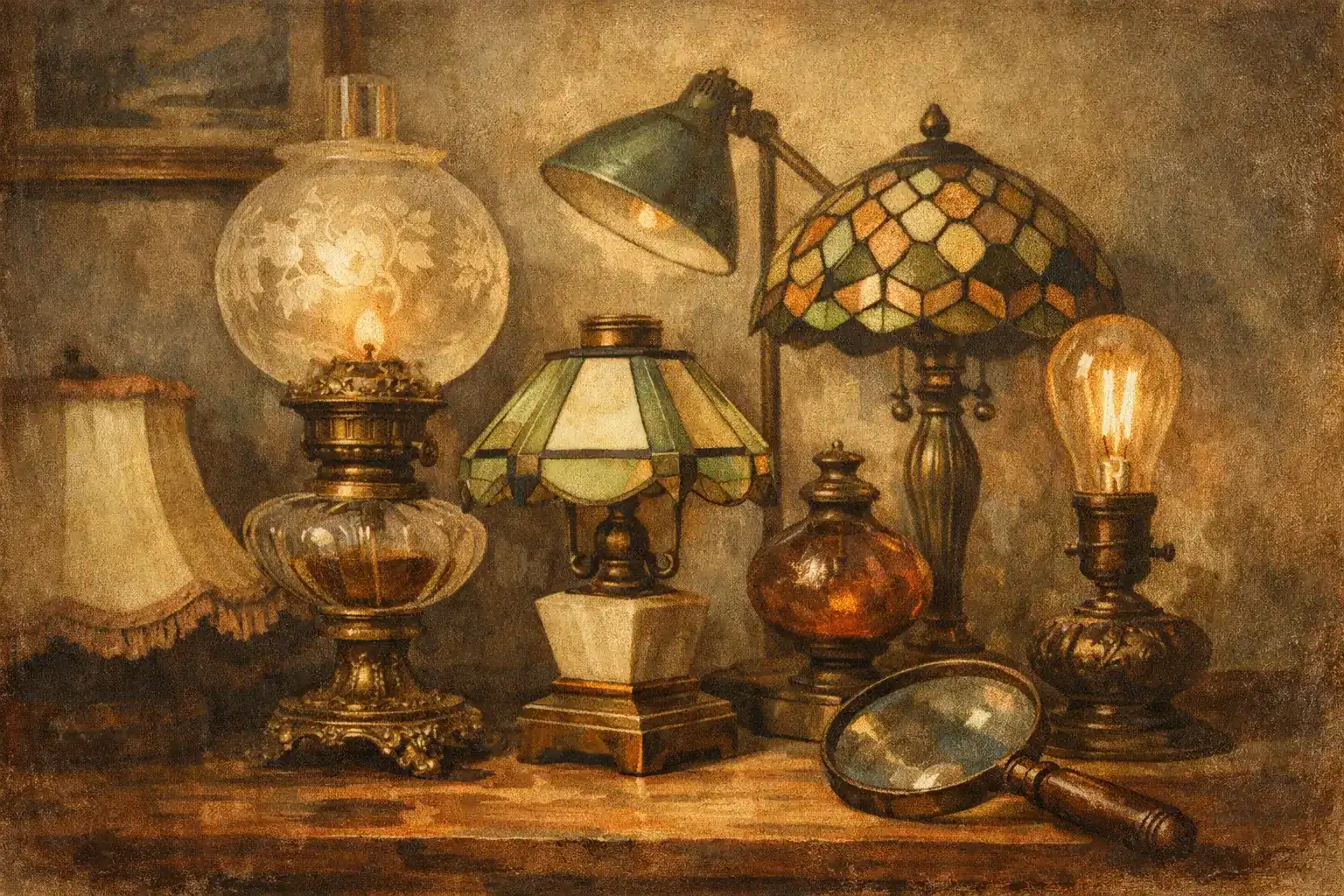
A beautifully made lamp can transform a room long before it is switched on. The weight of a brass base, the soft crazing on a ceramic body or the sculptural line of a mid-century shade all bring character that new lighting rarely replicates. But are old lamps safe? The honest answer is that age alone does not make a lamp dangerous. Its condition, wiring history and intended use are what matter.
An antique or vintage lamp deserves the same considered attention as any other working object in the home. Many were made to a high standard and can give decades of useful service. Others have original cables, plugs or fittings that belong in a display cabinet rather than a daily reading corner. Knowing the difference allows you to enjoy historic lighting without compromising on safety.
Are old lamps safe to use every day?
Old lamps can be perfectly safe when their electrical components are sound, suitable for modern use and properly maintained. The decorative part of the piece may be one hundred years old, while the cable, plug and lampholder have been professionally replaced. This is often the ideal balance for a lamp intended for regular use: original character retained, with the working parts brought up to an appropriate modern standard.
The reverse is also true. A lamp may look immaculate yet have brittle rubber insulation beneath a smart fabric covering, a loose lampholder, or a plug fitted decades ago. These are not flaws to overlook in the name of authenticity. Electrical restoration is a practical form of conservation. It protects the object, the home and the person using it.
There is also a distinction between a portable table or floor lamp and a fixed wall light or ceiling fitting. Fixed lighting may require more involved installation and should be assessed and fitted by a qualified electrician. A portable lamp can be easier to inspect, but it still needs proper attention before being put into service.
Start with the wiring, not the surface
When considering a vintage lamp, look beyond its patina. A little rubbing to gilt metal, a time-softened shade or minor marks to a ceramic base may add to its appeal. The electrical elements call for a much less romantic eye.
Begin with the flex. If it is cracked, frayed, stiff, flattened, sticky or discoloured, do not plug the lamp in. Old rubber and plastic insulation can deteriorate even when a lamp has spent years unused in a loft or cupboard. Fabric-covered flex can be entirely appropriate on an older piece, but the visible braid is not proof that the inner insulation is sound.
Check the plug and cable entry point as well. The cable should sit securely where it enters both the plug and the lamp, without exposed wire or a split grommet. A loose cable can pull against internal connections, particularly on a heavy table lamp that is moved often. If the lamp has a switch on the flex, it should operate cleanly without crackling, heat or looseness.
The lampholder deserves close inspection. It should hold the bulb firmly and show no cracks, scorch marks, corrosion or movement. A bayonet fitting should not feel worn or allow a bulb to sit crookedly. With older metal lamps, proper earthing can be essential, depending on the construction and wiring arrangement. This is not something to guess at from appearance alone.
If any part raises a question, treat rewiring as the sensible next step rather than an inconvenience. It is usually a modest intervention compared with the value, usefulness and longevity it brings to a cherished piece.
Signs a lamp should not be switched on
Some warning signs are immediate. A burning smell, buzzing, flickering, a hot plug, a tingling sensation on touching metalwork or a fuse that repeatedly trips all mean the lamp should be unplugged and removed from use. Do not try a higher-rated fuse or continue testing it with different bulbs. The issue needs diagnosis.
Other concerns are quieter. A lamp that has been stored in a damp outbuilding may have corrosion inside the fitting. A ceramic lamp with a hairline crack around the cable hole could be structurally vulnerable. A wooden lamp base may have movement around its fixing, while a metal stem can conceal a damaged cable where it passes through a sharp edge.
Be especially cautious with lamps that have been altered by an unknown owner. A period base may have been converted from an oil lamp, vase or decorative object, sometimes skilfully and sometimes not. Conversion is not inherently a problem, but it should be assessed on the quality and condition of the electrical work rather than the charm of the finished object.
Professional rewiring preserves the right things
For collectors, the thought of replacing original parts can feel uncomfortable. Yet a cable or plug is rarely the element that gives an antique lamp its historical value. The design of the base, the maker’s mark, the finish, the proportions and the shade are usually what tell its story.
A sympathetic rewire keeps those features intact while replacing ageing components with suitable new ones. Depending on the lamp, this may include a new flex, plug, switch, lampholder and cable restraint. A specialist can also advise on earthing, insulation and the most appropriate route for the cable through the base or stem.
The choice of flex matters aesthetically. A modern white plastic cable can look out of place on an Arts and Crafts copper lamp or a richly glazed ceramic table lamp. Period-appropriate fabric flex is available in restrained colours and can complement the object without pretending the wiring is original. For a clean-lined 1960s or 1970s design, a discreet modern flex may be the more faithful visual choice.
Ask whether the lamp has been rewired, when the work was done and what components were replaced. A careful seller should be able to describe the condition plainly. At MN Interior Antiques, vintage lighting is valued for both its decorative presence and its practical place in a lived-in interior, so clarity about condition is part of buying with confidence.
Bulbs, shades and heat: the overlooked details
A safely rewired lamp can still become problematic if it is paired with the wrong bulb or shade. Older fittings were often designed around incandescent bulbs, which produce considerable heat. Modern LED bulbs use far less energy and run much cooler, making them a particularly sensible choice for vintage lamps.
Follow the maximum wattage marked on the lampholder where one is present, and do not exceed it. If no marking remains, choose a low-wattage LED and seek advice if the fitting is unfamiliar. The aim is not simply to avoid an electrical fault. Excessive heat can fade a hand-painted shade, dry out old card or fabric, damage a lacquered finish and make a lamp uncomfortable to use.
Shades should sit securely, clear of the bulb and without scorching or brittleness around the fitting. Original paper, parchment or silk shades are often fragile and may be better preserved for occasional use, with a replacement shade used day to day. This is a trade-off worth making when the original shade is rare or integral to the lamp’s design.
Placement matters too. Keep lamps away from curtains, shelving crowded with textiles and areas where cables can be trapped under furniture. A floor lamp in a busy hallway may be visually striking, but a trailing cable is not a good fit for a household with children, pets or frequent visitors.
What to ask before buying vintage lighting
A good buying decision starts with a few direct questions. Has the lamp been tested? Has it been rewired, and if so, by whom? Are there any known faults to the fitting, switch, plug or cable? Is the shade original, and does it have any heat damage or fragility? These details are more useful than a vague assurance that an item is “working”.
For online purchases, study photographs of the plug, cable, lampholder and underside of the base as closely as you would the front view. Look for clear condition descriptions that separate cosmetic wear from electrical condition. A reputable dealer will not present a lamp as ready for everyday use if it needs work, and will be open about restoration already carried out.
Collectors may occasionally choose to buy an unrestored lamp because its original fittings are of interest. That can be entirely reasonable, provided it is treated as a display object or sent for assessment before use. Decorative authenticity and domestic safety do not have to compete, but they do need to be considered separately.
A considered place for old lighting at home
The pleasure of antique and vintage lighting lies partly in its softness. A well-chosen table lamp can bring warmth to a painted chest, define a reading chair or give a modern room the visual depth of something collected over time. Its age is not a liability when it has been properly cared for.
If a lamp is structurally sound, electrically checked and fitted with an appropriate LED bulb, it can be used with confidence while remaining true to its period character. Let its patina show, preserve original details where they are safe to retain, and allow skilled restoration to handle the parts that should quietly do their job in the background.