A narrow Victorian hallway with shoes piled beneath a console, or a living room softened by books and records without a proper home, calls for more than another anonymous cupboard. The best antique storage furniture solves a practical problem while adding material depth, proportion and a visible sense of history. A well-made chest, glazed bookcase or painted cupboard earns its place twice: once for what it holds, and again for the character it brings to the room.
How to choose the best antique storage furniture
Start with the objects you need to put away, rather than the gap you would like to fill. Table linen, paperwork, vinyl, coats and everyday crockery all ask different things of a piece. This is where antique furniture is often more thoughtful than it first appears. A Victorian linen press has deep, broad shelves; a campaign chest offers compact drawers; a mid-century sideboard combines generous cupboards with a useful serving surface.
Then consider access. Storage that is used daily needs doors and drawers that open comfortably in the available space. In a tight entrance hall, a shallow cupboard or chest is usually more useful than a handsome but projecting armoire. For a dining room, depth is less troublesome, so a sideboard can carry the visual weight of the room while concealing glassware, serving dishes and less decorative essentials.
Age should not be confused with fragility. A solid oak dresser that has already served several generations may be exceptionally capable of doing so again. What matters is condition, construction and whether the piece suits its next purpose. Original wear is part of the appeal; a loose joint, persistent damp smell or weakened back panel deserves closer attention.
The storage pieces worth looking for
Linen presses for bedrooms and landings
A linen press is one of the most versatile large antique cupboards. Traditionally, its upper section was fitted with shelves for folded sheets and household textiles, while the base often held deep drawers. In a bedroom, it brings calm and order to bedding, towels and seasonal clothes. In a generous landing, it can make useful storage of an otherwise neglected area.
Many Georgian and Victorian examples are tall, so measure ceiling height carefully, including any cornice or pendant light. Their scale is magnificent in a period house but can dominate a smaller room. If the original sliding trays survive, treat them as a particular virtue: they are practical, increasingly scarce and reveal the craftsmanship behind the exterior.
Chests of drawers for flexible everyday storage
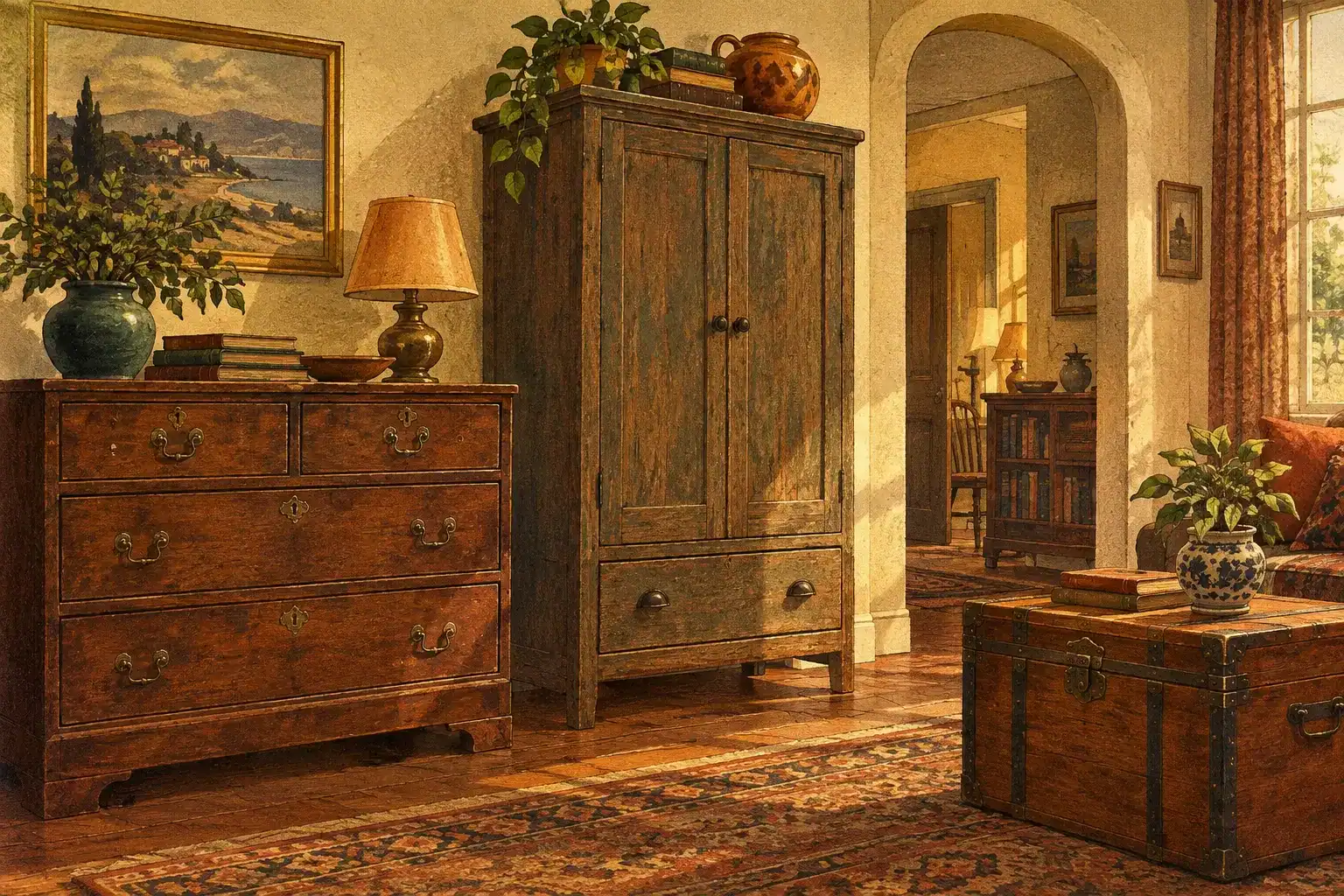
The chest of drawers remains one of the most useful forms in antique furniture because it does not dictate its role. A low chest can sit below a window in a bedroom or serve as a hall surface for keys and post. A taller, narrower example provides excellent vertical storage where floor space is limited.
Look beyond matching bedroom suites. A walnut Victorian chest can bring warmth to a pale contemporary room, while a simple pine chest feels at home in a cottage kitchen or guest room. Drawer interiors should be dry and reasonably clean, but do not expect machine-perfect movement from hand-cut runners. Drawers should open without excessive force and sit squarely when closed.
Sideboards and credenzas for dining and living rooms
For households that entertain, a sideboard is hard to better. It stores the pieces that rarely fit neatly in modern kitchen cabinets: serving platters, tablecloths, candlesticks, glasses and the good set of crockery. The top provides a natural place for a lamp, framed art or a changing arrangement of antique ceramics.
Mid-century furniture is particularly strong in this category. Teak and rosewood sideboards tend to offer clean lines, low proportions and well-planned interior compartments, making them easy to place in homes that favour a more restrained look. Earlier oak or mahogany examples are often more ornate and more formal. Neither is inherently the better choice. The room, the existing furniture and the amount you need to store should decide it.
Glazed bookcases and display cabinets
Not all storage should disappear behind solid doors. A glazed bookcase protects books, collected objects and smaller decorative pieces while allowing them to remain part of the room. It is especially useful for collectors who want to display West German pottery, small folk art or a considered group of ceramics without creating visual clutter.
Check that the glass is sound, the shelves are not bowing and any locks have a key if that matters to you. Original wavy glass, minor surface marks and aged brass fittings often add more charm than they detract. A cabinet with a painted or papered interior can be particularly effective, giving displayed objects a quiet backdrop rather than leaving them to float against a dark void.
Hall cupboards, benches and architectural pieces
Entrance storage has to work hard. It receives umbrellas, boots, bags, dog leads and the general drift of daily life, yet sets the tone for the rest of the house. An old school cupboard, compact pine cabinet or reclaimed architectural unit can offer practical containment without the uniform look of fitted hallway furniture.
A bench with enclosed storage is valuable where there is room to sit while taking off shoes. However, check its lid supports and hinges if it will be used frequently. Architectural salvage can make a persuasive choice for unusual spaces, but measure with care. Old doors, shop fittings and built-in sections were not made to standard modern dimensions, which is exactly why they can be so distinctive.
Materials, construction and honest condition
The most successful purchase is rarely the most polished one. Timber with a deep patina, old handles, slight variations in colour and the evidence of careful repair give antique storage furniture its authority. Those details should feel coherent with the age of the piece, not like a cosmetic shortcut intended to disguise a later reproduction.
Examine the carcass as closely as the frontage. Solid timber sides, dovetailed drawers, sturdy shelf supports and a back panel that remains secure are encouraging signs. Veneered furniture deserves no less respect, particularly on fine nineteenth-century and mid-century pieces, but look for lifting veneer, losses around edges and signs that the substrate has warped. These may be repairable, though they affect both cost and long-term use.
A faint old scent is common in furniture that has spent decades in a house. A strong musty odour can suggest damp storage, and should be investigated before it enters a bedroom or living room. Likewise, old worm holes may be historic rather than active. Fresh dust around holes or new-looking flight holes warrant professional advice.
Make proportion do the decorative work
Antique storage looks most convincing when it has enough space around it to be read properly. Do not force a grand wardrobe into a room that cannot accommodate its doors, or fill every wall with cabinets simply because storage is needed. One generous, beautifully made piece often gives more presence than several smaller units competing for attention.
Balance is equally important when mixing periods. A carved Victorian chest can sit wonderfully beneath a graphic contemporary print. A streamlined Danish-influenced sideboard can anchor a room with older oak chairs and a traditional fireplace. Repeat one or two visual links, such as warm timber tones, blackened metal or soft cream ceramics, and the combination will feel collected rather than accidental.
For buyers seeking antique furniture in Stevenage and across Hertfordshire, viewing dimensions, internal layouts and condition details with a dealer’s eye is especially useful when shopping online. MN Interior Antiques curates pieces for their individual decorative value, but the right choice still begins with an honest assessment of your room and how you live in it.
A few measurements to take before buying
Measure the intended wall, the depth available with doors or drawers open, and the route from entrance to room. Stair turns, low ceilings and narrow doorways can rule out an otherwise perfect linen press or bookcase. Include skirting boards, radiators and plug sockets in your plan, as these small obstructions often decide whether furniture can sit flush to the wall.
Also measure what will go inside. Record sleeves, albums and files need specific heights; large dinner plates need deeper shelves than everyday bowls. A cupboard that is slightly less dramatic but properly proportioned for its contents will be valued long after the excitement of the purchase has passed.
Choose the piece whose workmanship you admire even when its doors are shut. The finest antique storage furniture does not merely hide a household’s necessities: it makes the ordinary rituals of putting things away feel considered, and leaves the room with a story that no flat-pack cabinet can provide.