A solid oak sideboard from your grandparents might look impressive, but age alone does not guarantee demand. If you are asking, is antique furniture worth anything, the honest answer is yes – sometimes very much so – but value depends on a mix of craftsmanship, condition, rarity, provenance, and how well a piece fits the way people live now.
That distinction matters. Plenty of old furniture is beautifully made and still modestly priced, while certain pieces from the right maker, period, or style can command serious interest. The market rewards quality and character, not simply years.
Is antique furniture worth anything in today’s market?
The antique furniture market is not flat. It has strong pockets, soft categories, and a growing divide between pieces that feel useful in modern interiors and those that do not. A finely proportioned chest, a sculptural console, or a well-made farmhouse table can appeal to buyers quickly. A large Victorian dining suite or heavy brown case furniture, even if genuinely old, may attract less interest simply because fewer homes have the space or appetite for it.
This is why broad statements about value usually miss the point. An antique can be historically interesting and still sell for less than expected. Another can be decorative rather than academically important and still be highly desirable because it has presence, scale, and versatility.
Collectors and design-led buyers tend to respond to pieces that offer at least one of three things: strong craftsmanship, visual distinction, or a clear story. The most appealing furniture often offers all three.
What actually makes antique furniture valuable?
Craftsmanship and materials
Quality is usually the first place to look. Solid hardwoods, hand-cut joinery, rich figuring in the timber, carved details, original veneers, and thoughtful construction all suggest a better piece. Furniture made by skilled cabinetmakers tends to age with more grace than factory-made imitations.
Materials matter too. Mahogany, walnut, oak, rosewood, and fruitwoods can all add appeal, especially when the grain and finish are attractive. But material on its own is not enough. A plain mahogany piece from a common period may be worth less than a more unusual pine or painted example with real decorative charm.
Age, rarity, and authenticity
True antiques are generally considered to be at least 100 years old, but age is only one part of the equation. A rare Georgian chest with original bracket feet is a very different proposition from a mass-produced late Victorian wardrobe. Older can help, but scarcity and authenticity are more important.
Original features count for a lot. Handles, locks, feet, shelves, backs, and surfaces all help tell the story of a piece. Replacements are common and not always disastrous, but the more untouched a piece remains, the more confidence it can give buyers.
Provenance and maker
If a piece can be connected to a known maker, workshop, estate, or documented history, value often improves. Provenance does not need to be aristocratic to matter. A clear label, invoice, stamp, or traceable background can reassure buyers that a piece is what it claims to be.
Named makers, specialist regional furniture, and design-led periods often hold attention better than anonymous furniture. That said, many buyers furnish by eye rather than footnote. Good form still wins.
Condition and restoration
Condition has a direct effect on price, but this is where nuance matters. Antique furniture is expected to show age. Small marks, gentle wear, mellow surfaces, and signs of use are part of the appeal. They give depth and honesty.
Serious damage is another matter. Structural weakness, active woodworm, warped tops, severe veneer loss, bad repairs, and stripped surfaces can reduce value significantly. Thoughtful restoration can protect value, while over-restoration can flatten it. A piece polished to within an inch of its life may lose the very character buyers wanted.
Why some antiques are worth less than people expect
One of the hardest truths in the trade is that sentimental value and market value rarely align. Families often remember what a piece cost, where it came from, or who owned it. Buyers focus on scale, usefulness, style, and condition.
Large furniture has been affected most. Tall wardrobes, oversized dining tables, dark sideboards, and formal sets can be difficult to place in contemporary homes. Apartments are smaller, layouts are looser, and many people prefer rooms that feel collected rather than matched.
This does not make those pieces worthless. It simply means the buyer pool is narrower. Decorative, compact, and adaptable antiques usually perform better because they fit modern life more easily.
Is antique furniture worth anything if it needs repair?
Often yes, but the gap between worthwhile restoration and throwing good money after bad can be wide. A well-made chest with beautiful proportions and original hardware may deserve expert work. A common piece with major structural issues may not.
The key question is whether the repair preserves a piece people already want. If restoration costs more than the likely resale value, the decision becomes personal rather than commercial. Some furniture is worth saving because it is useful, handsome, and part of your home. Not every decision has to be an investment decision.
If you are planning to sell, get an informed opinion before starting repairs. Amateur fixes, modern stains, and incorrect replacement parts can make a good antique less appealing.
Categories that tend to hold value better
There are no absolute rules, but certain types of furniture tend to remain more desirable. Smaller-scale storage pieces, interesting occasional tables, original painted furniture, campaign furniture, folk pieces, country house fragments, and well-proportioned seating often draw stronger interest than bulkier formal pieces.
Design also matters. Georgian and earlier furniture, Arts and Crafts, Aesthetic Movement pieces, certain Edwardian forms, and early 20th-century pieces with clean lines can all attract buyers who want history without heaviness. Furniture that works comfortably alongside mid-century lighting, vintage ceramics, or contemporary art often has a particular advantage.
This is where a curated eye matters. Buyers are not always chasing the oldest object in the room. They are looking for furniture with decorative authority – something that adds texture, shape, and a sense of permanence.
How to tell whether your antique furniture has real value
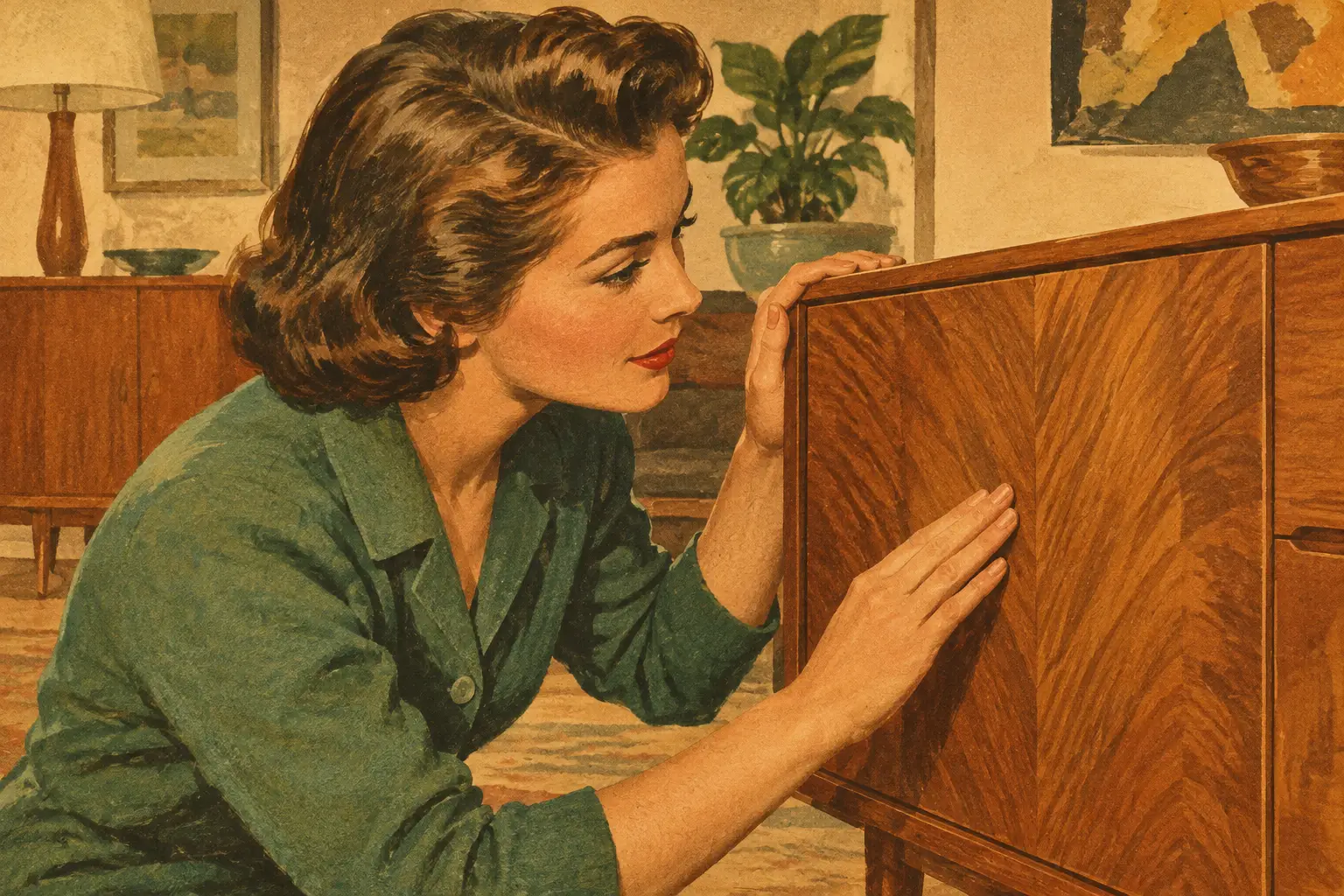
Start by looking closely, not just generally. Pull drawers out and inspect the joinery. Check the backboards, locks, hardware, and underside. Look for labels, stamps, repairs, worm holes, and signs of later alteration. Measure the piece properly. Good proportions can be part of the value.
Then compare it to actual sold prices for similar pieces, not optimistic asking prices. This is where many expectations drift upward. Retail pricing, auction pricing, and private sale pricing are not the same thing. A dealer may charge more because they have cleaned, researched, photographed, stored, and stood behind the piece. Auction results may be lower because buyers are taking on risk.
If a piece appears unusual, signed, or particularly well made, a specialist opinion is worthwhile. A dealer who handles curated antique interiors can often tell you quickly whether you have a truly collectible piece, a decorative piece with saleable appeal, or something with mostly practical value.
Decorative value still counts
Not every antique needs to be museum-grade to be worth owning or selling. Some pieces earn their place because they make a room feel layered and personal. A simple scrub-top table, a worn pine chest, or an elegantly faded armchair may never be rare in the scholarly sense, but they can be exactly what buyers want.
That is especially true for people building interiors with warmth and individuality. They are not shopping for antiques as a category. They are shopping for pieces that hold their own among art, lighting, textiles, and modern life.
At MN Interior Antiques, that idea sits at the heart of good buying. The best pieces are not just old. They bring craftsmanship, authenticity, and a story that still reads clearly in a home today.
Should you sell, restore, or keep it?
If the piece is rare, beautifully made, or in strong original condition, selling through a knowledgeable antique dealer can make sense. If it has more decorative appeal than collector appeal, it may still sell well when properly presented. If the market is soft for that category, keeping and using it may be the better choice.
Furniture does not need to be headline-expensive to be worth something. Sometimes its value lies in resale price. Sometimes it lies in utility, atmosphere, and the quiet authority that only age and craftsmanship can bring.
If you are standing in front of an old piece and wondering whether it matters, look beyond the date. Ask whether it is well made, well proportioned, honest in its materials, and compelling in a room. That is usually where real value begins.