A studio pottery vase earns its place differently from a factory-made decorative object. Its appeal may lie in a thumbprint beneath the glaze, the slight irregularity of a hand-thrown neck, or a colour that shifts where fire and minerals have met in the kiln. These are not faults to overlook. They are often the very evidence of the maker’s hand, and the reason a modest vessel can give a room far more character than something perfectly uniform.
For collectors and homeowners alike, studio pottery sits comfortably between useful object and small-scale sculpture. It can hold a few stems from the garden, but it can also stand empty on a mantel, sideboard or open shelf. Choosing well means looking beyond colour alone and considering form, surface, maker, condition and the atmosphere the piece will bring to your home.
What Makes a Studio Pottery Vase Special?
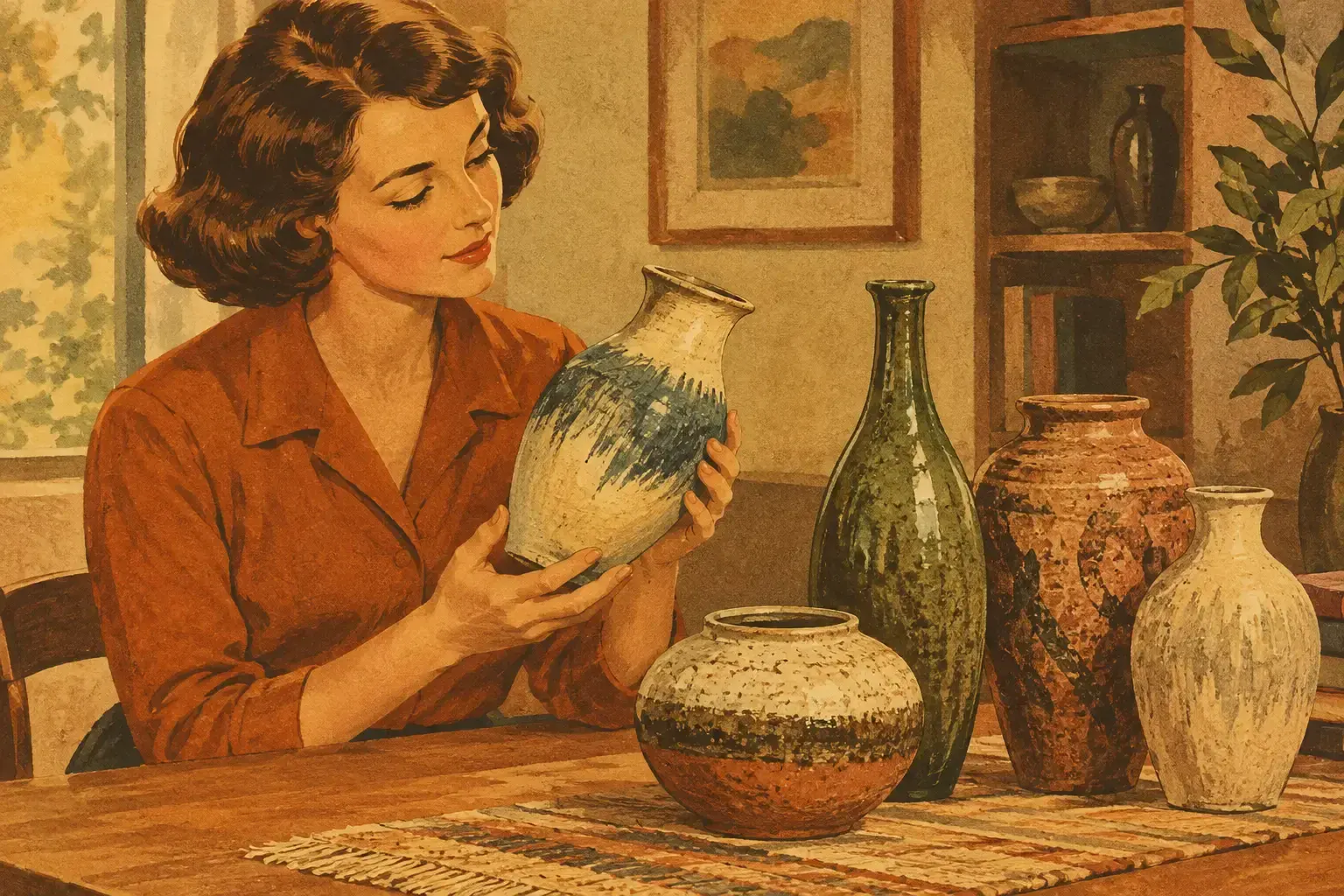
Studio pottery is generally made in small quantities by an individual potter or a small workshop, rather than produced on an industrial production line. The term covers a broad field. A quietly glazed stoneware bottle by a British potter will have a very different presence from a dramatic mid-century West German Fat Lava form, yet both reveal an interest in material, firing and individual expression.
The distinction is not simply that one object is handmade and another is not. A good studio-made vase carries decisions: the weight of the clay, the profile of the shoulder, the point at which a glaze ends, or the restraint of an unglazed base. It has been made with attention, and it asks to be looked at closely.
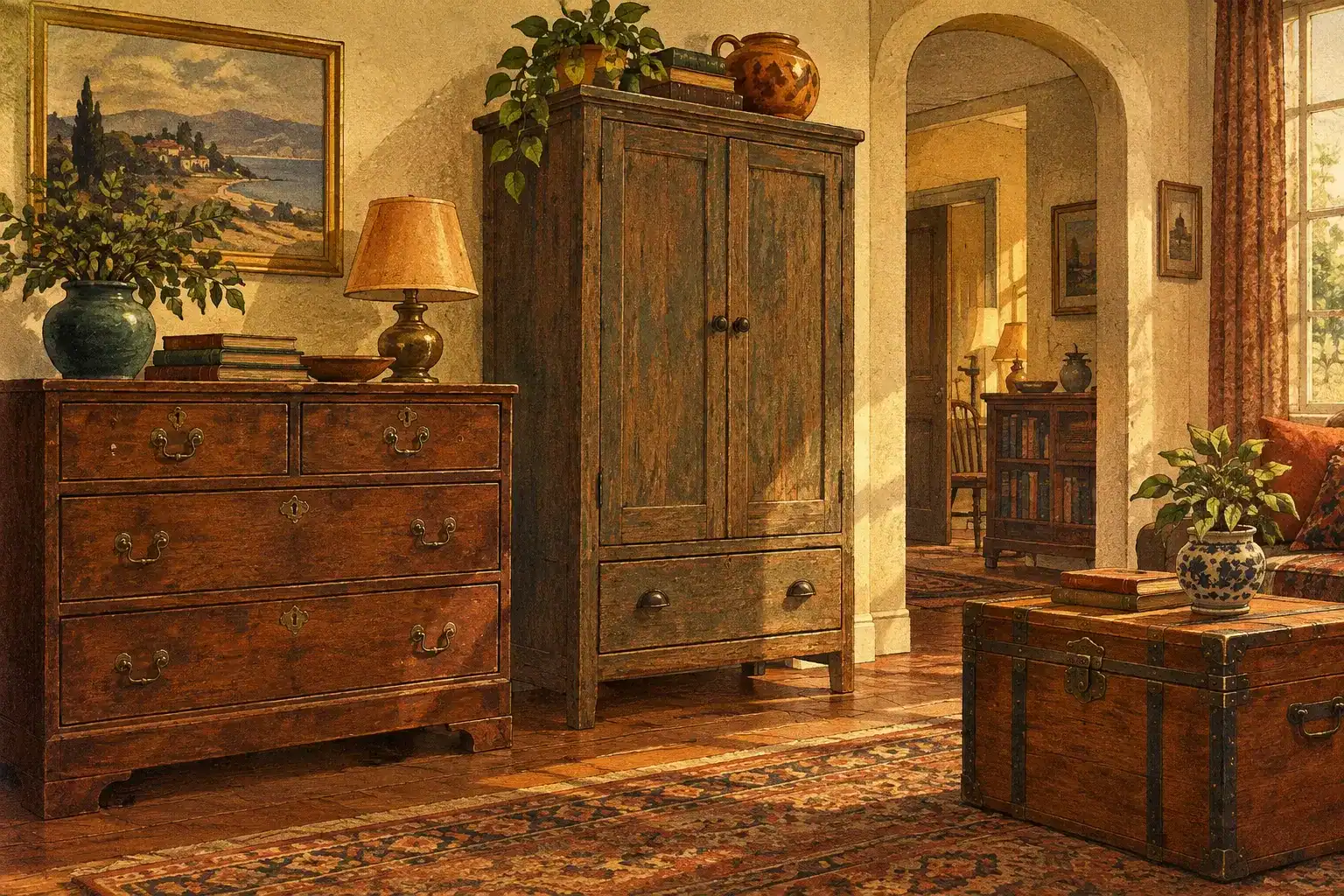
This also makes studio ceramics particularly rewarding in layered interiors. A Georgian chest, a mid-century cabinet or a contemporary kitchen shelf can all benefit from the warmth of clay. The vase need not match its surroundings. A contrast in period, finish or colour often makes the arrangement feel collected rather than decorated all at once.
Choosing a Studio Pottery Vase by Form
Start with silhouette. The most successful vase is one whose form works with both its intended position and, if relevant, the flowers it will hold. Tall bottle shapes bring height without demanding much visual width, making them useful on narrow mantels and hall tables. Rounded moon jars and squat vessels offer softness on a low coffee table or sideboard. Cylindrical forms can feel architectural and are often effective in pairs, particularly where furniture has clean mid-century lines.
Consider the opening as carefully as the body. A narrow neck supports a small number of stems and makes even simple foliage look deliberate. A wider mouth suits fuller arrangements, though flowers may need a frog or support inside to avoid collapsing outwards. If the vase is primarily decorative, the opening becomes part of the design: a dark, deeply recessed mouth can give a vessel welcome depth.
Scale is where many otherwise good choices falter. A small vase can disappear on a large dining table, while a substantial form may overwhelm a delicate occasional table. Before buying, picture the surrounding furniture and leave enough clear space for the vase’s outline to read. A piece does not need to be large to be significant, but it should have enough presence for its setting.
The value of useful imperfection
Hand-thrown pottery rarely offers strict symmetry. One side may sit a little fuller, a rim may soften as it turns, and a glaze may pool differently around the foot. These details should feel intentional and harmonious rather than unstable or poorly finished. Turn the vase slowly in your hands or study images from more than one angle. The best forms continue to hold attention as they rotate.
Glaze, Clay and Kiln Character
Surface is often the first thing that draws people to antique ceramics, but it deserves more than a quick judgement of whether it suits a room’s colour scheme. A matte oatmeal glaze can introduce calm texture against dark timber. Ash glaze may produce delicate runs and natural variation. A high-fired tenmoku or dark iron glaze brings depth, especially where a room needs a grounding note. Speckled clay, visible brushwork and carved decoration can add movement without relying on bright colour.
The firing process is part of the story. Reduction-fired pieces may have smoky, subdued tones, while oxidation firing can produce clearer, more direct colour. With West German pottery, bold volcanic textures and richly coloured glazes often reflect a different decorative ambition: confident, sculptural and distinctly post-war. Neither restrained British studio pottery nor expressive continental ceramics is inherently better. It depends on whether the room calls for a quiet companion or a focal point.
Look at the base, too. An unglazed foot can reveal the clay body and sometimes the maker’s mark. This is useful evidence when dating or identifying a piece, although an unsigned vase should not automatically be dismissed. Many attractive and well-made examples were produced by regional studios and independent potters whose work is not widely documented.
Condition and Authenticity Matter
With vintage and antique pottery, condition should always be considered in relation to age, rarity and price. A small firing crack formed in the kiln may be part of the making process and may not affect stability. A later hairline crack, chip to the rim or restoration is different. These issues do not make an object worthless, but they should be clearly described and reflected in how it is valued.
Examine the rim, handles, foot and any raised decoration, as these are the most vulnerable areas. Run a fingertip carefully around the edge if handling is possible. Old repairs can be visible through changes in glaze sheen, uneven colour or a faint line under strong light. For a vase intended to hold water, it is sensible to establish whether it remains watertight. Decorative vessels with historic repairs are often best enjoyed with dried stems or simply displayed empty.
Authenticity is not always about a famous name. It is about honest identification and a clear understanding of what is being offered. Provenance, maker’s marks, period, material and condition all build a more complete picture. This is why curated antique ceramics are worth seeking out: a considered description gives buyers the confidence to choose a piece for its real qualities, not a vague promise of age.
Styling Studio Pottery in a Collected Interior
A studio pottery vase is most convincing when it is allowed room to breathe. On a mantelpiece, try one substantial vase with a small framed work, a brass candlestick or a weathered timber object. On a shelf, group it by relationship rather than by exact matching: perhaps shared earth tones, a similar curve, or a contrast between glossy and matte surfaces.
Flowers are optional. A single branch, seed head or stem of seasonal foliage can emphasise the line of the vessel without hiding it. In autumn and winter, dried hydrangea, honesty or sculptural twigs can work beautifully. In spring, a few tulips may be enough. Avoid forcing a large bouquet into a vase whose shape is clearly designed for a smaller gesture.
For those furnishing with vintage interiors in Hertfordshire, pottery can be a useful bridge between larger pieces. It softens the geometry of mid-century furniture, adds tactility to antique wood and gives a more personal finish to a room that might otherwise feel overly polished. MN Interior Antiques values these objects for precisely that reason: a well-chosen vase can carry history without making an interior feel like a period set.
A Piece to Live With, Not Just Look At
The best studio pottery is not always the loudest, rarest or most recognisable example. It is often the vase that continues to reward notice: the one whose glaze changes in morning light, whose shape feels right beside a favourite chair, or whose small marks of making become more familiar over time.
Choose a piece with a form you genuinely enjoy, condition you understand and a surface that gives something back to the room. Whether it holds fresh stems or stands quietly empty, it will bring the particular pleasure of an object made by hand and kept for a reason.