A sideboard has to earn its footprint in a flat. It may need to hold table linen, glassware and paperwork, act as a serving surface when friends come round, and make an ordinary wall feel intentional rather than temporary. The best antique sideboards for flats bring all of that utility while adding the patina, proportion and quiet confidence that new furniture often lacks.
The key is not to search for the smallest possible piece. A narrow, well-made antique sideboard with sensible internal storage can be far more useful than a bulky modern cabinet, while its character gives a compact room a stronger sense of permanence. The right choice depends on how you live, the dimensions of the room and whether you want the piece to recede or become part of the decorative story.
What makes a sideboard work in a flat?
Before falling for a handsome timber, start with the practical measurements. Depth is usually the deciding factor. A traditional dining-room sideboard can project too far into a narrow living room or hallway, whereas a piece around 35 to 45cm deep often offers meaningful storage without interrupting the route through the room. Measure from the wall to the point where you need clear passage, then allow for open cupboard doors and drawers.
Height matters too. A lower sideboard can make a room feel wider and provides an excellent surface for a lamp, framed artwork or a small collection of antique ceramics. A taller cabinet may suit a room with limited floor space, but it will carry more visual weight. In a flat with standard ceiling heights, a long, low line is frequently the easier choice.
Do not overlook access. Measure the communal entrance, stairwell, lift and every turn between the front door and the intended room. Antique furniture is often more solidly constructed than contemporary flat-pack pieces, which is precisely why it lasts, but it is not always easily manoeuvred. A sideboard with a removable top, separate upper section or modest overall length can make delivery considerably simpler.
The best antique sideboards for flats by style
Mid-century teak sideboards
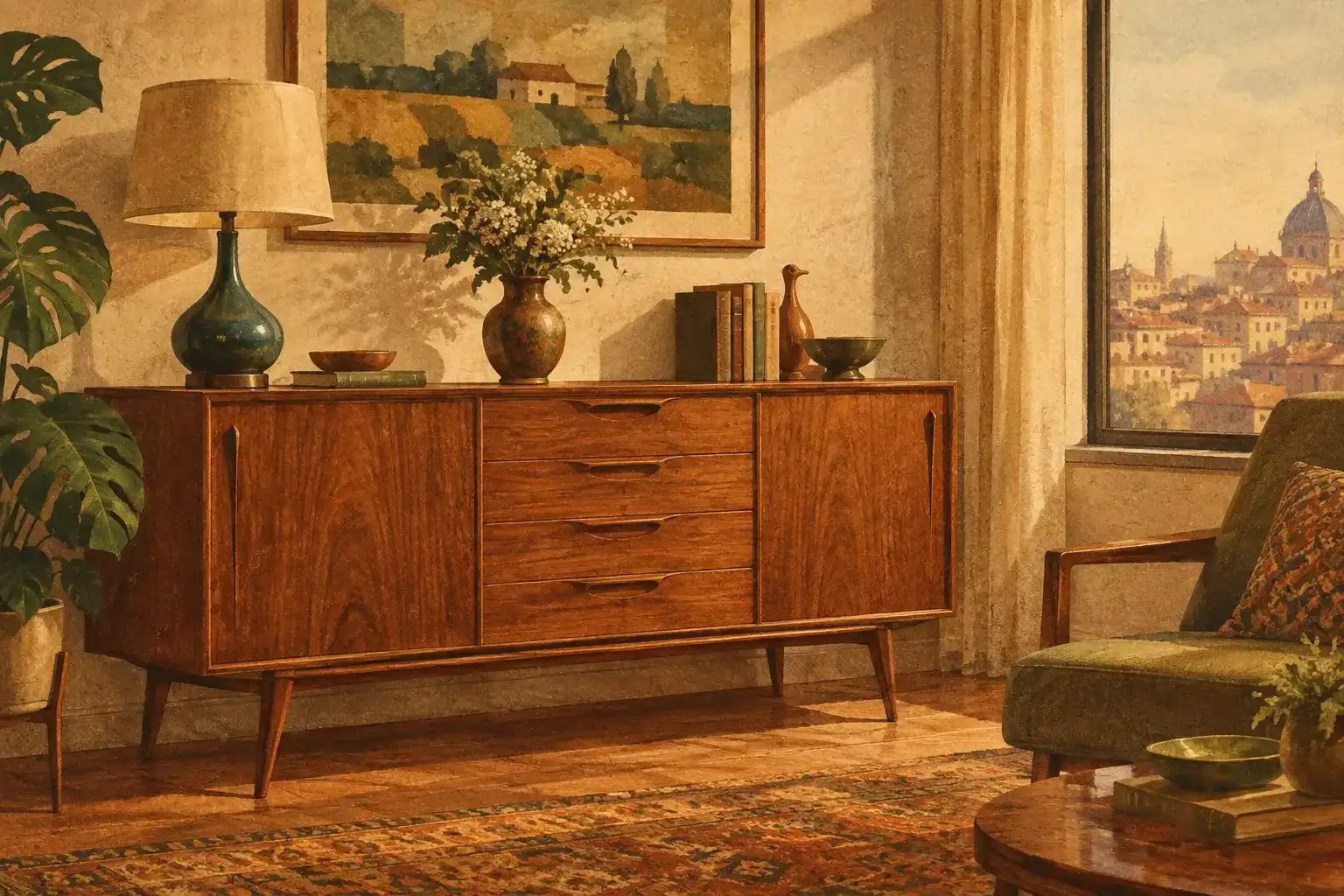
For many flats, a mid-century teak sideboard is the most adaptable answer. Its long, restrained profile, tapered legs and sliding doors create an airy appearance even when the cabinet itself offers generous storage. The raised base is particularly valuable in a smaller sitting room because it leaves visible floor beneath, making the space feel less crowded.
Look for designs from the 1950s to 1970s with a depth under 45cm and a length that sits comfortably within the wall rather than consuming it. Sliding doors are a practical advantage where there is little clearance in front of the piece. Internal drawers for cutlery and smaller objects are also worth seeking out, as they prevent the cabinet becoming a catch-all.
Teak works especially well beside softer contemporary materials: wool upholstery, linen curtains, chalky painted walls and warm brass lighting. It can also provide a disciplined backdrop for more expressive objects, from West German pottery to colourful vintage home décor. For buyers seeking mid-century furniture in Hertfordshire, this is a category where condition and original details matter greatly. Check that handles, legs and shelves are present and that the warm timber tone has not been obscured by heavy varnish.
Victorian and Edwardian chiffoniers
A chiffonier is often a better flat-friendly alternative to the grand Victorian sideboard. These cabinets were made as useful dining-room storage, usually with a lower cupboard and a more decorative upper section, but many are narrower than their imposing cousins. An example with a marble or timber top can bring real architectural presence to a modest dining nook.
This choice suits someone who wants formality and depth of character rather than a pared-back look. It is not the best option for every room: elaborate carved decoration and dark mahogany can feel heavy in a flat with little natural light. Yet a simple walnut, oak or painted chiffonier, thoughtfully placed against a pale wall, can feel collected rather than crowded.
Prioritise a piece with sound doors, stable shelves and a usable surface height. The upper backboard should be secure, particularly if it incorporates a mirror. If the room is already visually busy, choose a restrained example with clean mouldings instead of ornate carving.
Arts and Crafts oak cupboards
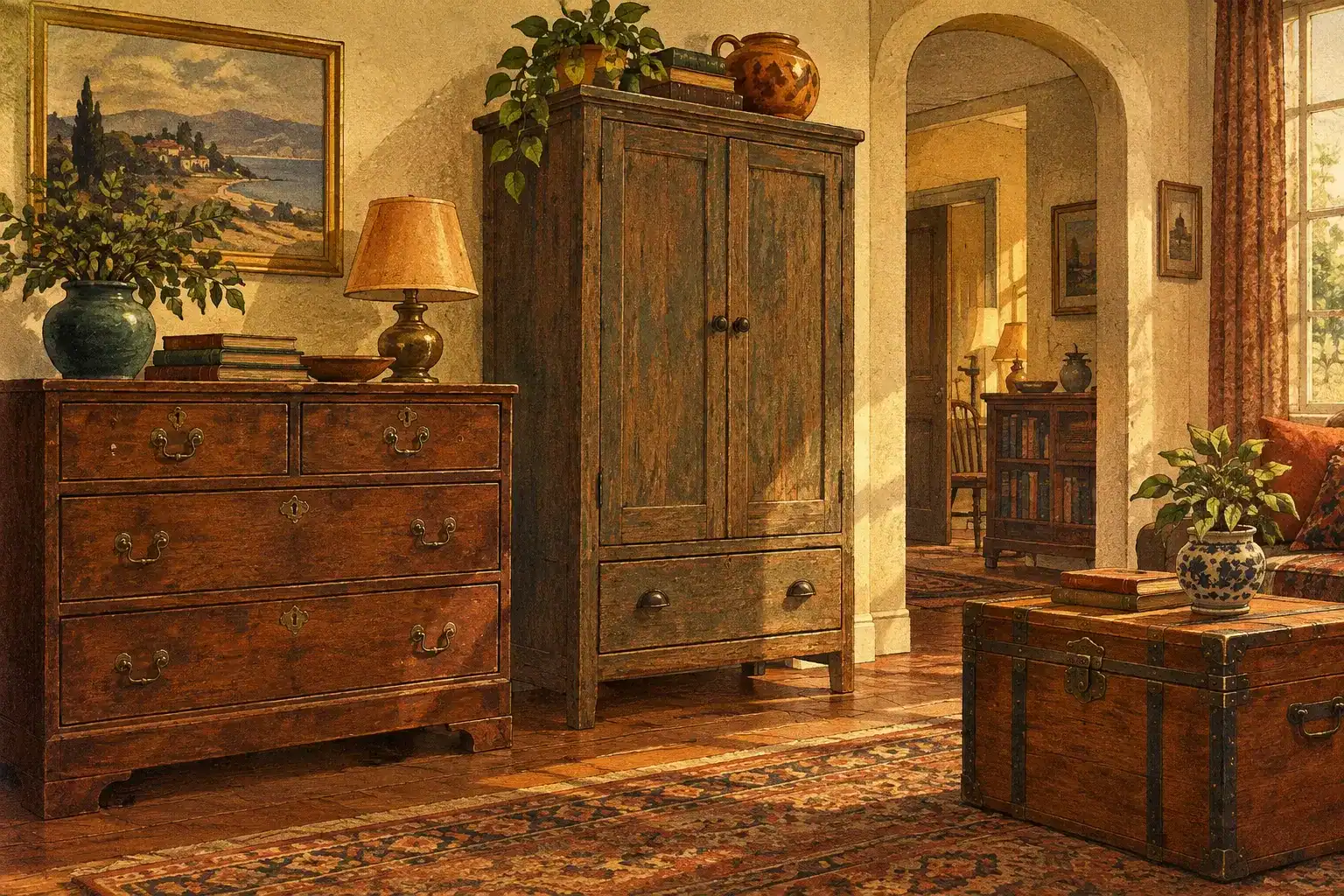
Arts and Crafts furniture offers a welcome middle ground between Victorian richness and modern simplicity. The best cupboards from this period are plainly made but never plain in character: quarter-sawn oak, hand-worked joints, honest iron or copper fittings, and proportions designed around function.
A compact oak cupboard or small sideboard can be particularly effective in a kitchen-diner or entrance hall, where its durable surface will be used daily. The grain has enough visual movement to hold a room together, but the straightforward construction avoids fuss. Pieces with one or two cupboards, rather than a run of tiny drawers, tend to be more versatile for modern storage.
Oak is undeniably weighty, both physically and visually. In a darker flat, balance it with light walls, a simple lamp and open space around it. A pale rug underneath can also prevent the room feeling anchored by one dark mass.
Painted country sideboards
A painted antique sideboard offers the softness that many compact period flats need. Original paint is desirable when it survives well, but later painted finishes can be equally attractive if they have been carefully applied and suit the age of the piece. Muted stone, sage, cream and deep blue tones can sit comfortably in kitchens and living rooms without making the furniture disappear.
This style is often more forgiving of small marks and everyday use than highly polished mahogany. It also allows the form of the cabinet to do the work: panelled doors, turned feet and time-softened edges still tell their story beneath the paint. Be clear about what you are buying, however. A genuinely antique cupboard with a later decorative finish is not the same as an untouched original, and an accurate description should distinguish the two.
Choose one with a shallow depth and plinth base if you want a grounded, built-in effect. If the room needs more air beneath the furniture, a painted sideboard on legs may be the better balance.
Small continental buffet cabinets
French, Belgian and Scandinavian buffet cabinets can offer excellent dimensions for flats, especially where a conventional British sideboard feels too long. Many have a compact width, practical enclosed storage and a pleasing vertical emphasis. A small bleached oak buffet, for instance, can sit naturally in a dining corner while still accommodating serving pieces, candles and tableware.
Their appeal lies in detail: shaped feet, modest carving, original locks, aged brassware or a beautifully worn finish. That detail should be enjoyed in moderation. A highly ornate provincial cabinet can dominate a studio flat, whereas a simpler late 19th-century example will layer in character without taking over.
Choose storage for the life you actually lead
A sideboard becomes useful when its interior matches its job. For dining storage, adjustable shelves and a cutlery drawer are more valuable than a succession of shallow compartments. In a living room, a cupboard that conceals routers, records, board games or paperwork may matter more. For an entrance hall, look for a robust top and enough depth for baskets, gloves and the objects that otherwise migrate across every available surface.
Think also about what will live on top. A narrow sideboard does not need a crowded display. One vintage lamp, a small group of ceramics and a framed picture can give it presence while preserving the practical surface. This is where an antique piece earns its place: it can be storage, furniture and a setting for the things you have chosen to keep.
Condition, restoration and honest age
An antique sideboard does not need to look new. Small marks, mellowed timber and gentle fading are part of its appeal, provided the structure is sound. Check for active woodworm, loose joints, warped doors, missing veneers and drawers that bind badly. Old repairs are not automatically a problem. A neat, sympathetic repair often indicates that a piece has been valued and kept in use.
Restoration should support the furniture rather than erase its history. Replacing a missing handle with an appropriate period example, securing a loose leg or waxing a dry surface can make a sideboard ready for everyday life. Stripping away original finish, over-sanding edges or applying a glossy modern coating may reduce the very character that made the piece worth choosing.
A carefully curated dealer should be clear about dimensions, condition and any restoration undertaken. At MN Interior Antiques, that clarity is central to buying furniture with confidence, especially when you are judging a one-off piece for a particular flat.
Give the piece room to breathe
The most successful antique sideboards in flats are not always the most decorative ones. They are the pieces with a clear purpose, a proportion that respects the room and enough presence to make a home feel assembled over time. Choose the cabinet that solves a storage problem, then let its timber, hardware and honest wear bring the warmth no mass-produced alternative can imitate.