A good antique rarely announces itself from across a room. The best pieces tend to reveal their quality slowly: the figuring in a walnut veneer, a hand-cut dovetail, the soft crazing on an old ceramic glaze, or the pleasing weight of a properly made brass lamp. If you are considering where to buy antiques in Hertfordshire, the answer is less about finding the largest stockroom and more about finding a dealer whose eye aligns with your own.
Hertfordshire has long been a rewarding county for antique and vintage buying. Its market towns, country houses and well-connected villages have produced a varied supply of furniture, decorative arts and useful domestic pieces. For buyers furnishing a period property, adding warmth to a newer home, or building a focused collection, the county offers far more than the predictable brown furniture of antique-shop caricature.
Where to buy antiques in Hertfordshire with confidence
Start with a specialist dealer or curated antique retailer, particularly when you want a piece that needs to work in a real interior rather than simply fill a space. A considered dealer will have already made decisions about condition, style, quality and decorative potential. That saves time, but it also gives you a clearer sense of what you are buying.
This matters most with statement pieces. An early oak chest, a mid-century sideboard or a pair of vintage wall lights can alter the character of an entire room. Buying from a source that provides accurate measurements, condition notes and clear photographs lets you judge whether the piece will suit your home before arranging collection or delivery.
A curated selection does not mean every object must be rare or expensive. Often, the most satisfying purchases are well-designed everyday items: a 1960s table lamp, a weathered fruitwood stool, a studio pottery vase, or a small gilt mirror with just enough age to bring depth to a hallway. Their value lies in material, form and presence, not merely a label.
Choose the buying route to match the piece
Antique shopping is not one experience. The right place depends on whether you are looking for a particular period, a practical furniture piece, or the surprise of an object you did not know you needed.
Curated dealers and online antique shops
For a more focused search, a specialist dealer is usually the strongest starting point. This is especially true for antique furniture in Stevenage and the surrounding area, where buyers may be looking for a particular scale, finish or era without wanting to spend every weekend trawling fairs.
A good online shop should make buying remotely feel considered rather than risky. Look for several photographs, dimensions in centimetres, an honest account of wear, and an indication of restoration where relevant. Age-related marks are part of an antique’s life, but a loose joint, woodworm damage or a later structural alteration should be described plainly.
Online buying is particularly useful for lighting, ceramics, jewellery and smaller decorative objects. You can compare forms and periods at your own pace, then choose pieces with a clear purpose in mind. A glazed West German pottery vessel might add colour to a mantelpiece; a Bakelite object may appeal as much for its design history as its surface; a salvaged architectural element may become the one unexpected detail in a pared-back room.
MN Interior Antiques brings this edited approach to antique and vintage interiors, selecting furniture, lighting and collectible design pieces for buyers who value both provenance and decorative character.
Antique centres, fairs and markets
Antique centres and fairs are useful when you want breadth. You can handle objects, compare prices and train your eye across several dealers in one visit. They are particularly enjoyable for smalls – ceramics, prints, brassware, textiles, mirrors and objects with no immediate practical purpose but considerable visual appeal.
The trade-off is that stock can be uneven. A large fair may offer dozens of tables but few that are right for your room, and condition can vary greatly between stands. Go with approximate measurements, a few photographs of your space and a realistic budget. It is far easier to walk away from an appealing piece than to make a beautiful but oversized purchase work at home.
Markets can offer genuine finds, though they reward patience and a willingness to assess condition quickly. They are best approached with an open brief rather than a highly specific shopping list. If you need a matching pair of lamps or a particular width of bookcase, a specialist retailer is generally more efficient.
Auctions and house-clearance sales
Auctions can be excellent for experienced buyers and collectors who enjoy research. They can also be a route to unusual country furniture, estate ceramics and decorative objects with compelling histories. Yet the hammer price is only part of the cost. Factor in the buyer’s premium, transport, possible restoration and the practical challenge of inspecting an item before bidding.
A beautifully photographed chest of drawers may have a warped top, tired runners or a surprisingly strong smell from years in storage. None of these issues necessarily rules it out, but they affect value and usability. Buy at auction when you are comfortable taking on some uncertainty, not because the estimate looks tempting.
What makes an antique worth bringing home?
The most useful question is not whether an item is old enough to be called antique. Ask whether it is well made, visually convincing and right for its intended use. Age alone does not guarantee quality, while a later vintage piece with strong lines and honest materials may be precisely what a room needs.
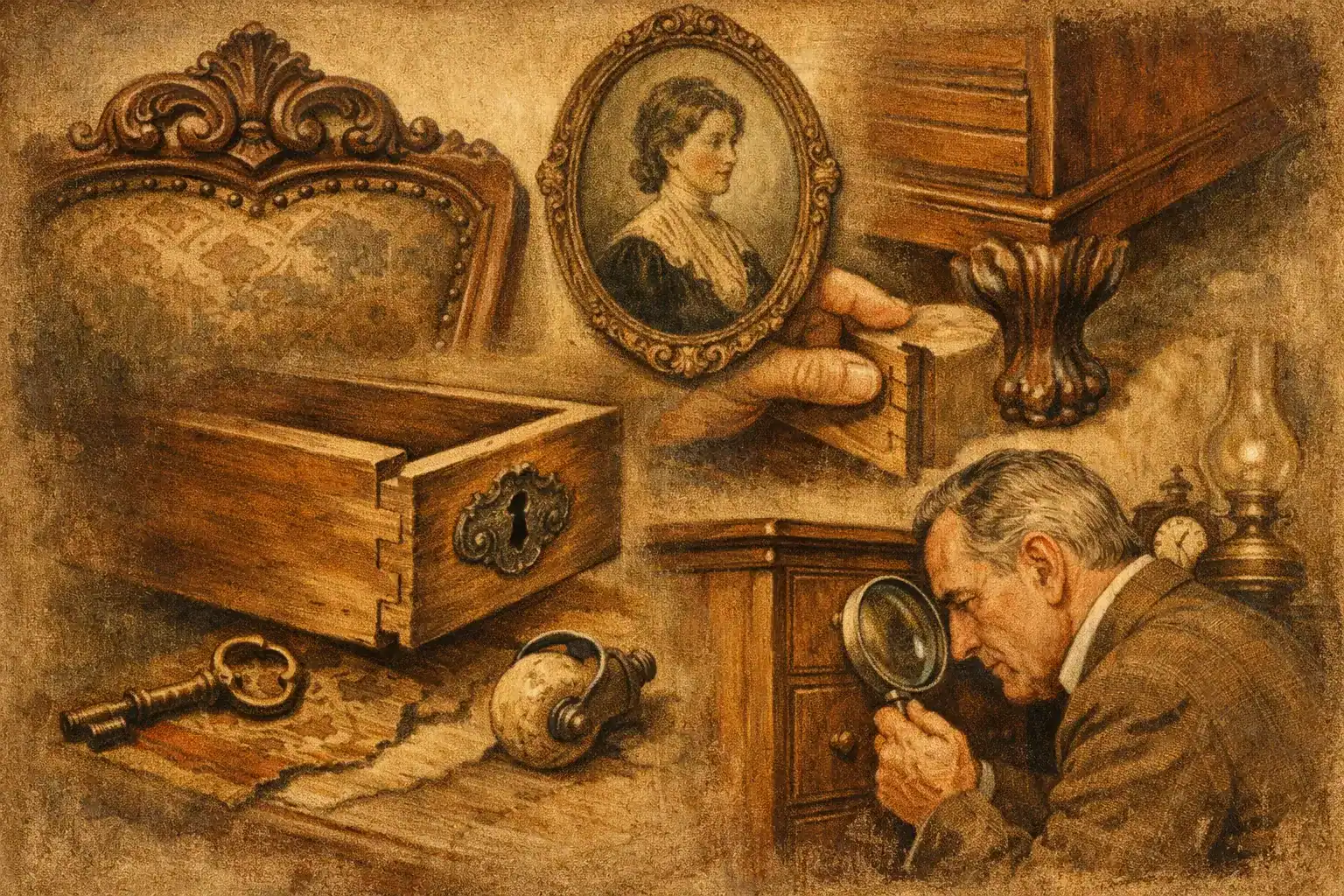
With furniture, inspect construction first. Solid timber, well-proportioned drawers, sensible repairs and stable frames are more important than a perfect surface. Original patina can be highly desirable, but it should not conceal a weakness that will become obvious after a few months of daily use. A dining table can carry old marks with grace; it cannot compensate for an unstable base.
With decorative pieces, condition is more nuanced. A small chip to an early ceramic vessel may be acceptable if it is rare, beautifully shaped or modestly priced. A crack running through a lamp base is more serious, especially where wiring and safety are involved. Vintage lighting in Welwyn Garden City or elsewhere should be checked and, where required, rewired by a qualified professional before use.
Provenance adds interest, but it need not be grand. A known maker, original label, old retail mark or clear regional origin can help establish a piece’s story. Equally, an object can earn its place through craftsmanship alone. The hand-planed underside of a table, the particular green of a 1970s glaze, or the worn edge of a painted cupboard can tell you plenty about how it was made and lived with.
Buying for a home, not a museum
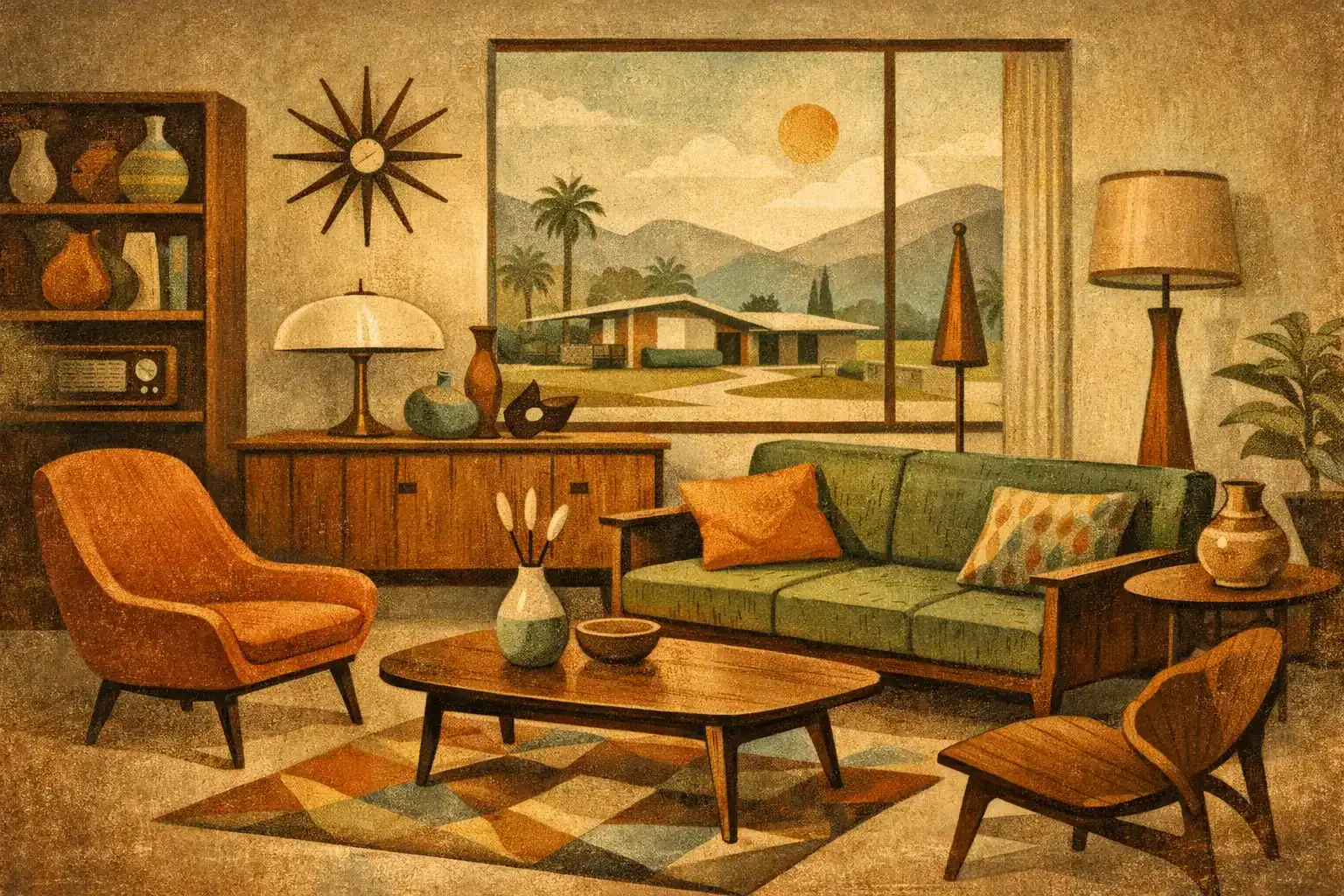
The most layered interiors are rarely assembled in one style or one afternoon. A Georgian occasional table can sit comfortably beside a low mid-century chair. A restrained modern room often benefits from the irregularity of folk art or the warm reflectivity of old brass. The point is not to recreate a period room, but to choose objects that create tension, texture and a sense of continuity.
Be honest about proportion. A tall Victorian cupboard can be magnificent, but only if the ceiling height and circulation allow it to breathe. In a compact sitting room, a slim vintage cabinet, occasional chair or richly coloured ceramic may make a stronger contribution than a dominant wardrobe. Measure doorways and staircases as carefully as you measure the intended spot.
It also helps to decide what you are willing to live with. Some buyers want furniture restored to a clean, ready-to-use finish. Others actively seek original paint, faded polish and evidence of repair. Neither preference is more correct. The important thing is that the condition is understood and reflected in the price.
Questions worth asking before you buy
A reputable seller should be happy to discuss condition, materials, estimated date and restoration. Ask whether a piece is structurally sound, whether any repairs are old or recent, and whether the dimensions include projecting handles, cornices or shades. For upholstered furniture, ask about the condition beneath the fabric and budget for reupholstery if necessary.
For lighting, establish whether it has been tested and whether it needs rewiring. For antique furniture, ask how it has been stored and whether there are signs of past woodworm activity. For ceramics and glass, request confirmation of chips, cracks and repairs. Clear questions are not fussy – they are how you buy objects you will enjoy for years.
The pleasure of antiques is that they ask you to look more closely. Take your time, trust the evidence as much as the first impression, and choose the piece that still feels right once you have considered its condition, scale and story. That is usually the object that will give your home character long after a quick purchase has lost its appeal.