A well-made teak sideboard changes more than the storage in a room. Its warm grain, carefully shaped handles and quietly elegant proportions can make an ordinary wall feel considered. That is the enduring appeal behind this mid century furniture guide: these pieces were designed for everyday life, but made with a level of material confidence and visual clarity that still feels fresh.
Mid-century furniture is often used as a catch-all term, and that can make buying it confusing. A 1960s British G-Plan cabinet, a Danish rosewood desk and a later reproduction may all share a clean-lined silhouette, yet they differ greatly in construction, condition and long-term value. Buying well starts with knowing what you are looking at, then choosing the pieces that genuinely suit your home.
What mid-century furniture really means
Broadly, mid-century furniture refers to design produced from the late 1940s through the 1960s, with some collections extending into the 1970s. It responded to changing post-war homes: lighter rooms, new materials, smaller footprints and a desire for furniture that was practical without being plain.
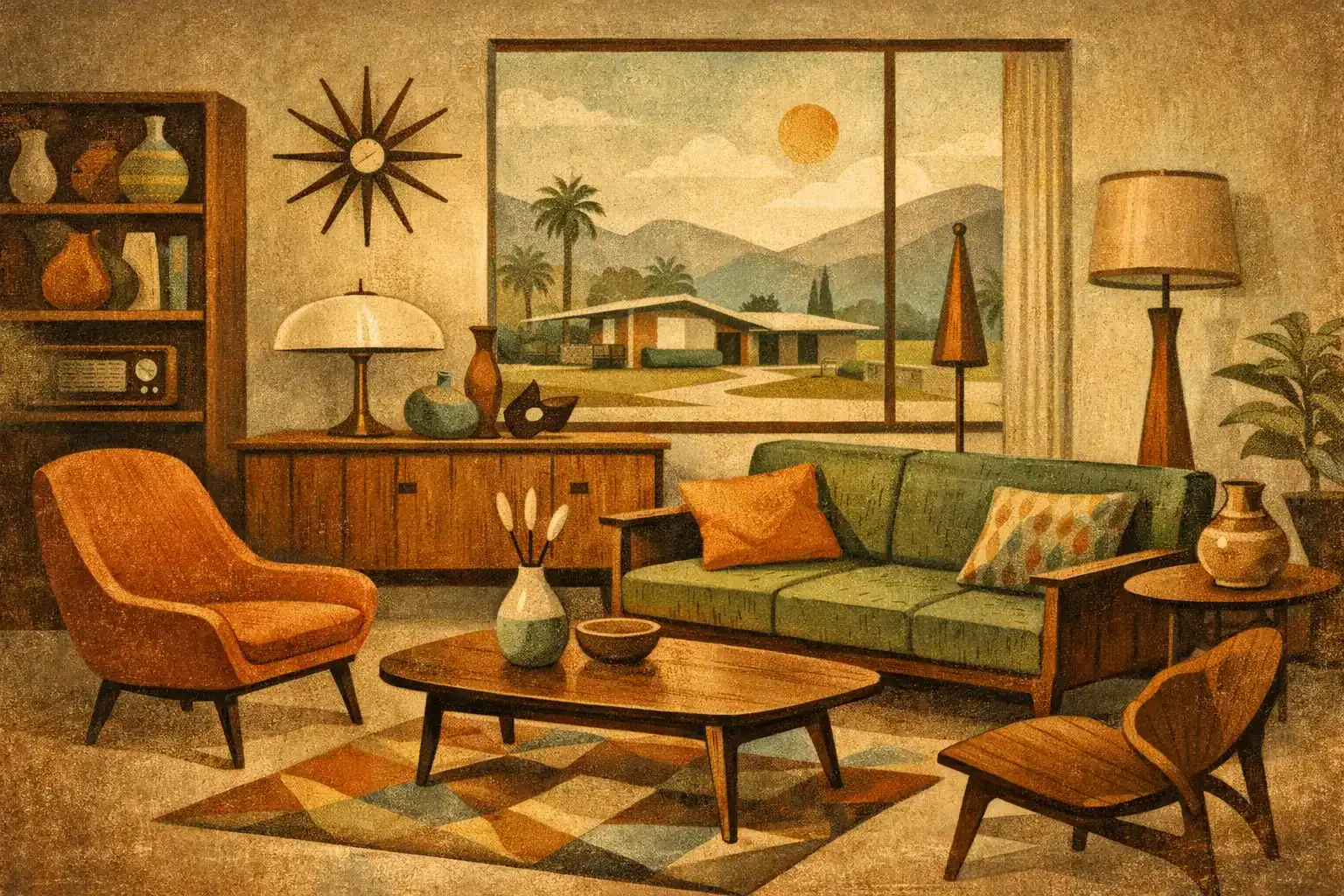
The style is recognised by balanced proportions, tapered legs, organic curves and an emphasis on visible materials. Teak, walnut, oak and rosewood were widely used, alongside chrome, glass, moulded plywood and upholstery in wool or leather. Good examples rarely rely on ornament. Instead, the detail is found in a recessed drawer pull, a sculptural armrest or the way a cabinet appears to float above its legs.
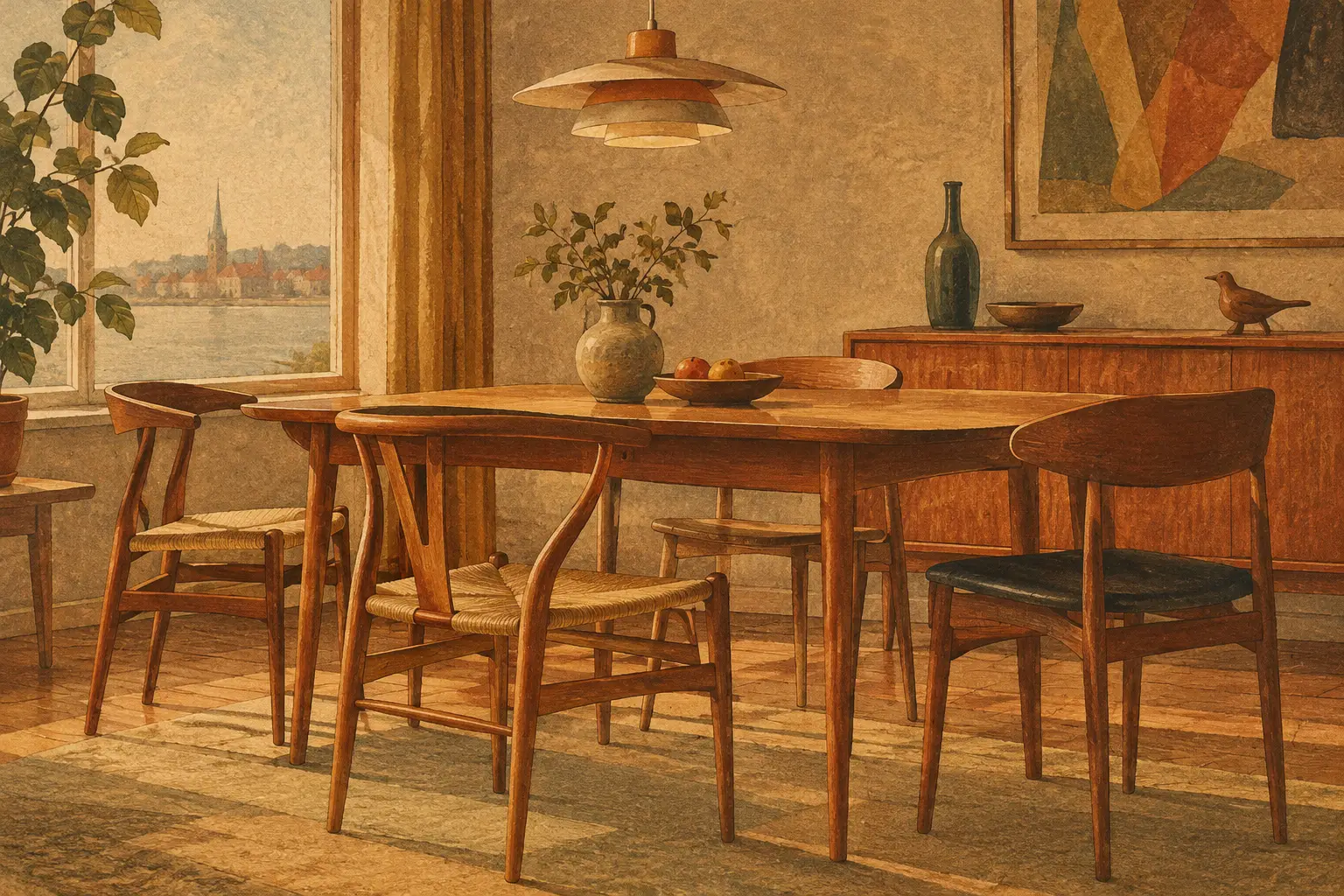
There is no single mid-century look. Scandinavian design tends towards pale woods, restraint and softly rounded forms. British makers often combined practical storage with a slightly richer, more architectural feel. Italian pieces can be more expressive, with brass, lacquer and dramatic profiles. Recognising these differences helps you avoid building a room that feels like a showroom set rather than a home collected over time.
A mid century furniture guide to buying with confidence
The first question is not whether a piece photographs well. It is whether it has been made well enough to live with for another generation. Start by looking at the structure before the finish.
Check materials and construction
Solid timber and quality veneer are both entirely appropriate in original mid-century furniture. Veneer was not necessarily a shortcut: it allowed makers to display a striking, continuous grain across large surfaces while keeping cabinets stable. What matters is its condition. Look closely along edges and corners for lifting, chips or areas where a veneer has been poorly patched.
Drawers should run reasonably smoothly and sit square within the frame. Traditional timber drawer runners may be less effortless than modern metal mechanisms, but they should not bind severely or feel unstable. Examine joints on chairs and tables for movement. A slight amount of age-related wear is expected; wobble, split timber and fresh glue residue deserve a closer inspection.
Turn a piece around where possible. The back, underside and interior often reveal more than the polished front. Original backs, old maker labels, consistent timber colour and well-finished internal details are encouraging signs. Uneven staining, new screws in awkward places or a surface that looks unusually thick and glossy can indicate extensive later intervention.
Learn the difference between patina and damage
Authentic vintage furniture has lived a life. Gentle fading, small marks, a softened edge on a handle and a little variation in timber tone form part of its character. Chasing perfection can lead buyers towards heavily refinished pieces that have lost the very surface that makes them interesting.
That said, patina is not a polite name for every fault. Water rings, deep burns, missing veneer, woodworm damage and persistent odours may require specialist work. Some restoration is sensible and often necessary, particularly for chairs, lamps and surfaces that will see daily use. The key is sympathetic restoration: repairs that preserve the design, retain as much original material as possible and do not disguise significant damage.
For a dining table, a professionally restored top can be a practical choice. For a rare cabinet with an exceptional original finish, a light clean and wax may be preferable. The right decision depends on rarity, intended use and the condition in front of you.
Ask about provenance, maker and condition
A label can add useful context, but it should not be the only reason to buy. Pieces by respected makers such as Ercol, G-Plan, Nathan, McIntosh or Danish manufacturers are often sought after because their construction and design language have earned that reputation. Yet an unlabelled side table with beautiful proportions and honest craftsmanship can be every bit as rewarding in a lived-in interior.
When considering a purchase, seek clear information about dimensions, materials, visible wear, restoration and any missing original components. This is especially important with vintage lighting, where rewiring, fitting type and electrical safety need to be understood before a lamp takes its place in your home. Accurate descriptions allow you to buy an object for what it is, rather than what you hope it might be.
Choosing pieces that work in real rooms
Mid-century design is admired for its lightness, but scale still matters. A long sideboard can anchor a dining room beautifully, while overpowering a narrow hallway. Measure the room, doorways and stair turns before falling for a large cabinet. Then consider the space around it: furniture needs breathing room for its silhouette to register.
Begin with a useful piece rather than trying to furnish every corner in one style. A compact chest of drawers, a pair of bedside tables, a reading chair or a well-proportioned coffee table can establish the mood without making the room feel themed. Once you understand the timber tone and scale that suits your space, additional pieces become easier to choose.
Mixing eras is usually more convincing than strict period matching. A mid-century teak desk can sit comfortably beside an older pine cupboard, contemporary linen curtains and a hand-thrown ceramic lamp base. The connection may be colour, craft or line rather than date. A room gains depth when it contains objects with different histories that share a sense of purpose.
Timber, colour and the danger of over-matching
Teak is the familiar choice for many British mid-century interiors. It has a rich, golden-brown warmth that pairs naturally with off-white walls, olive green, tobacco leather, russet and deep blue. Walnut is darker and often more formal, while pale oak can create a quieter Scandinavian feel.
Avoid trying to match every wooden item exactly. A teak sideboard and walnut dining chairs can work well if the upholstery, rug or artwork brings them into conversation. The same principle applies to metal. A brass lamp, black steel frame and chrome detail can coexist when each appears deliberate rather than accidental.
Textiles keep clean-lined furniture from feeling austere. Consider woven wool, natural linen, boucle, velvet or a patterned kilim. These materials introduce softness without competing with the furniture’s grain. In rooms with lots of timber, a large rug is particularly useful: it grounds the arrangement and prevents a collection of legs from appearing visually scattered.
Mid-century seating deserves extra scrutiny
Chairs are among the most attractive vintage purchases and among the easiest to underestimate. They must be comfortable, stable and suitable for the way you actually live. A sculptural occasional chair may be ideal by a window, but not necessarily for long evenings of reading. Dining chairs need sound frames and upholstery that can cope with regular use.
Original fabric is a pleasure when it is clean, intact and distinctive. However, professional reupholstery can give a strong frame a new purpose. Choose fabric with respect for the period, rather than treating it as a museum rule. A textured wool or durable linen often suits the form more convincingly than a shiny synthetic, and it can allow a classic chair to belong to a contemporary room.
When vintage is preferable to reproduction
Reproduction mid-century furniture can be useful when budget, lead time or a specific dimension is the priority. It may offer a practical solution for a busy family room or a space needing several matching dining chairs. But it tends to lack the material variation, joinery and accumulated character found in original pieces.
Vintage is preferable when you value the particularity of the object: an unusually figured veneer, a maker’s small design decision, an aged brass fitting or the knowledge that no neighbour has the same cabinet. It can also be a more thoughtful way to furnish, extending the life of something already made rather than buying furniture designed for a short cycle of replacement.
For buyers seeking mid-century furniture in Hitchin and across Hertfordshire, viewing carefully curated pieces in person can be valuable. You can judge timber tone in natural light, test a drawer, check chair comfort and see the scale that photographs cannot always convey. At MN Interior Antiques, the aim is not to fill a room with labels, but to find objects with the integrity and presence to earn their place there.
The best mid-century purchase is rarely the one that follows every trend. Choose the cabinet whose timber makes you pause, the chair you will genuinely use, or the lamp that gives the room its evening character. Let it live alongside the things you already love, gather its own small marks over time and become part of the story of your home.