A good vintage shop in Hertfordshire offers something that flat-pack furniture and trend-led décor cannot: objects with presence. A walnut sideboard with a softened patina, a hand-thrown vase in volcanic West German glaze, or a pendant light with age in its brass can change the feeling of a room before anything else has been added.
For those furnishing a period property, a new-build, or simply a home that needs more personality, vintage buying is not about recreating a museum. It is about choosing pieces with sound design, useful lives still ahead of them, and details that reward a closer look. The best finds feel considered rather than contrived.
What a Curated Vintage Shop Brings to Your Home
There is a difference between browsing a large quantity of old things and buying from a carefully selected collection. Curation means that a piece has been chosen for more than its age. Its proportion, material, construction, condition and decorative value all matter.
At MN Interior Antiques, that approach spans antique furniture, mid-century design, lighting, ceramics, architectural salvage and smaller collectible objects. The common thread is not one rigid look. It is an eye for honest materials, distinctive form and the quiet evidence of a former life.
That matters when you are building an interior over time. A room with a Georgian chest, a 1960s chair and contemporary upholstery can feel more natural than one furnished entirely from a single catalogue. Contrast gives a home depth, provided the individual pieces have enough quality to hold their own.
Character is not the same as clutter
Vintage interiors work best when each object earns its place. A single sculptural table lamp can bring more atmosphere to a sitting room than several generic accessories. A well-made oak cupboard may offer practical storage while adding texture that a painted modern unit cannot replicate.
The aim is not to fill every surface with nostalgia. Leave space around a strong object, let its material show, and mix periods with intention. An aged finish, an unusual handle or a hand-cut join can be a focal point in its own right.
How to Buy Vintage Furniture With Confidence
A beautiful photograph is only the beginning. When choosing vintage or antique furniture, it helps to look past the headline style and consider how the piece will live in your home.
Start with scale. Measure doorways, staircases and the intended position, allowing room to open drawers, doors and cupboards. Older furniture can be unexpectedly generous in proportion, while mid-century pieces often sit lower than modern equivalents. A cabinet that is perfect in a wide Victorian hallway may overwhelm a compact dining area.
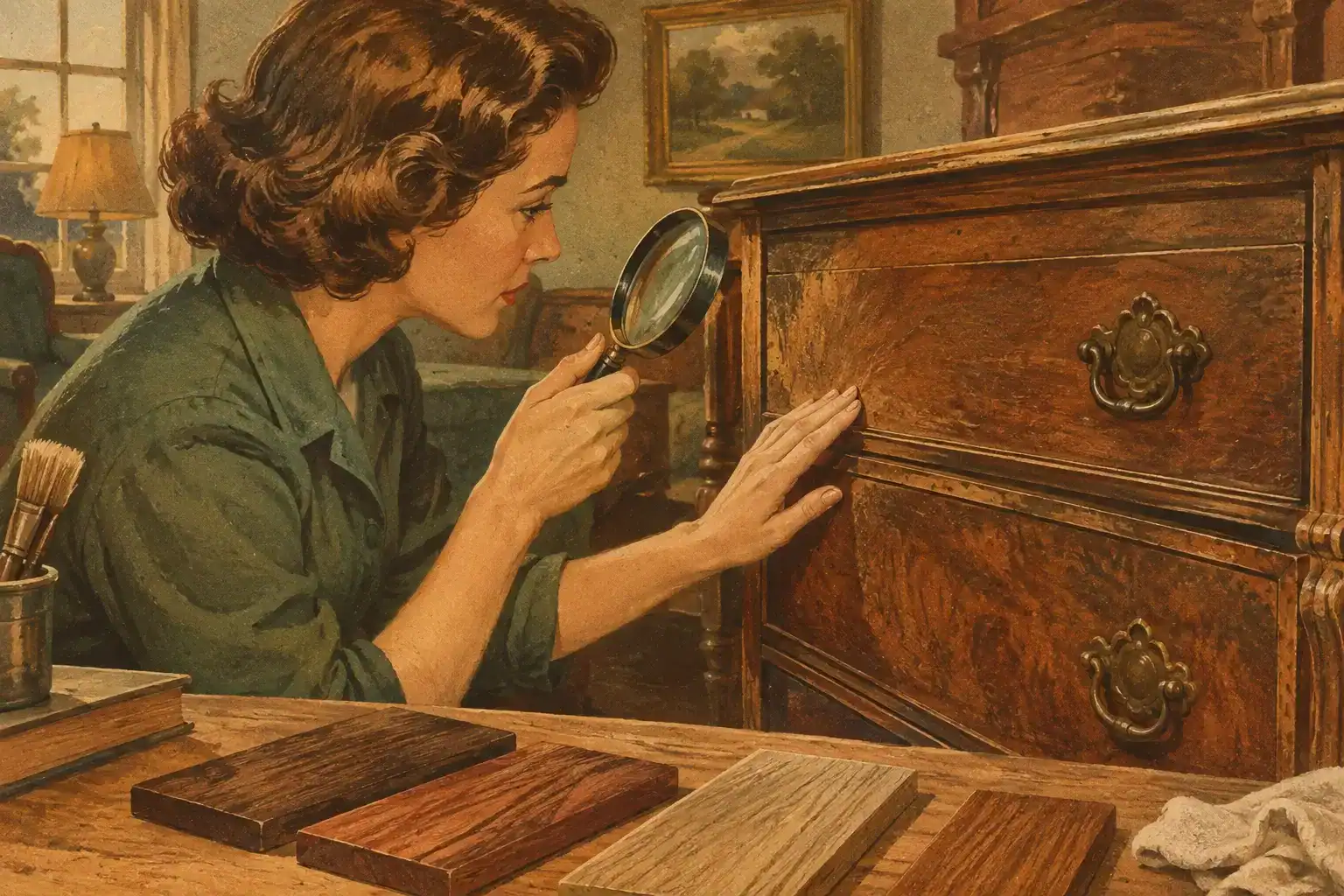
Then consider construction and condition. Solid timber, proper joinery and original fittings are usually encouraging signs, though honest wear should be expected. A few marks, colour variation or a carefully repaired area can be part of an item’s story. The more useful question is whether the wear is stable, sympathetic and accurately described.
Restoration is not automatically a virtue or a flaw. A chair may need fresh upholstery to be comfortable and safe, while a table might be better left with its original surface, minor signs of use included. It depends on the object, its rarity and how you plan to use it. Sensitive restoration preserves character; over-restoration can remove it.
The appeal of antique furniture in Stevenage homes
For buyers looking for antique furniture in Stevenage, the opportunity is to soften both older and newer houses with material warmth. A painted farmhouse table can bring ease to a family kitchen, while a compact oak chest or Victorian mirror gives a hallway a sense of arrival.
Practicality should guide the choice. A delicate occasional table may suit a quiet corner, but a dining table used every day needs a sturdier surface and a finish you can live with. Antique furniture was often made to be repaired, which is one reason well-chosen pieces continue to serve households generations later.
Mid-Century Pieces Offer More Than a Familiar Silhouette
The popularity of mid-century furniture has made recognisable shapes easy to find, but quality varies widely. When looking for mid-century furniture in Hitchin or the surrounding area, look beyond the tapered legs and teak tone. Study the timber, the line of the frame, the drawer construction and whether the proportions feel balanced.
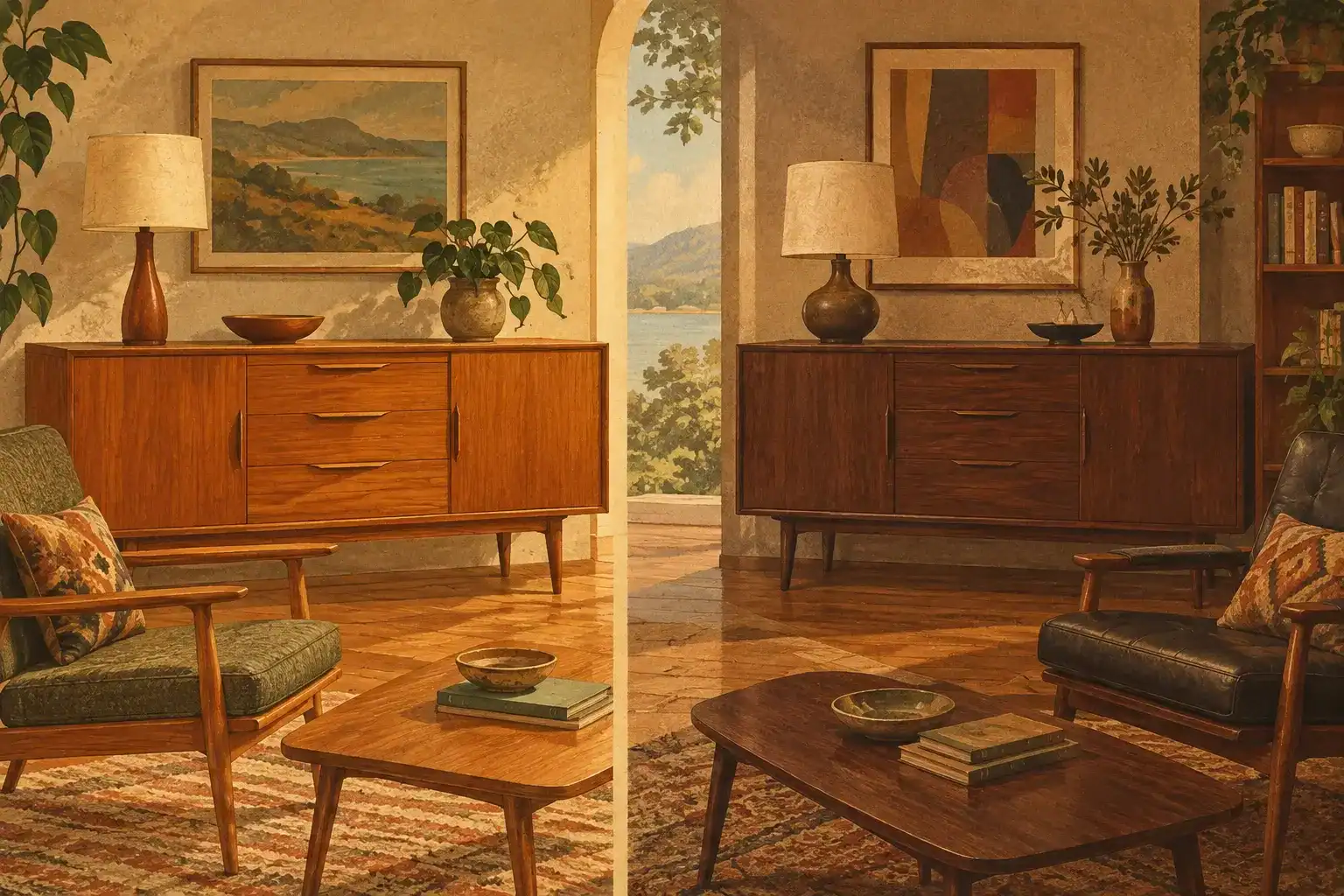
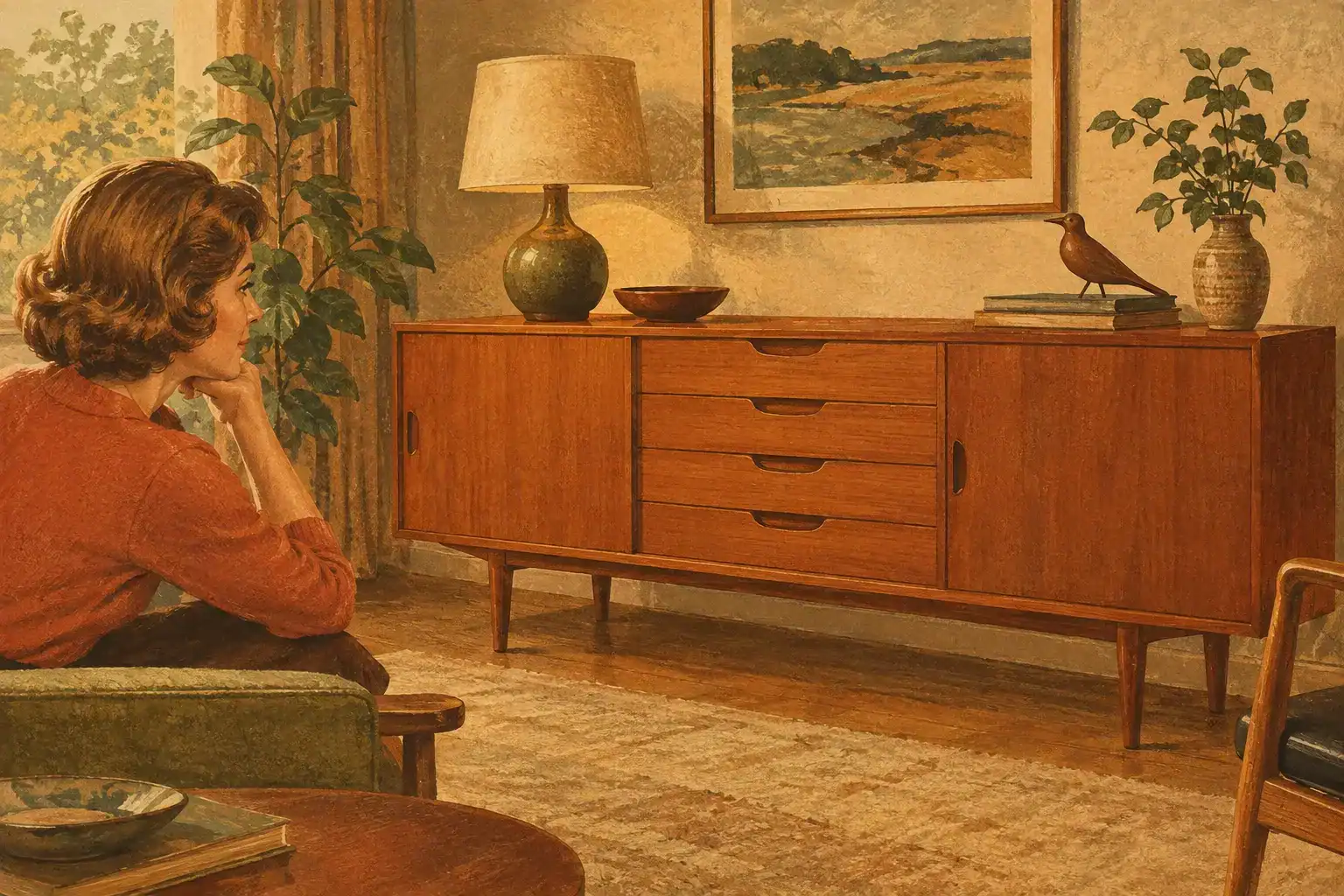
The strongest pieces have a clarity of purpose. A well-designed 1950s or 1960s sideboard offers useful storage without visual heaviness. A Danish-influenced lounge chair can introduce sculptural comfort, particularly when set against the mouldings and fireplaces of an older home. These are objects made in an era that valued practical design, but they need not make a room feel like a period set.
Mix them with softer elements: linen curtains, an antique rug, books and hand-finished ceramics. This prevents a scheme from becoming overly polished or predictable. It also allows a single standout piece to retain its impact.
Lighting and Ceramics Create the Atmosphere
Furniture establishes the framework of a room; lighting and objects give it mood. Vintage lighting is particularly effective because it combines function with sculpture. A coloured glass shade, a pair of wall lights or an industrial enamel pendant can change the temperature and focus of a space even when switched off.
When considering vintage lighting in Welwyn Garden City, it is sensible to ask how a fitting will be used. A statement ceiling light may provide ambient light but still need table lamps for reading. Wall lights can free up space on bedside tables and work especially well in a narrow hall. Any older electrical fitting should be checked, rewired or installed as appropriate by a qualified electrician before use.
Ceramics offer a smaller, more flexible route into collecting. West German pottery, especially the richly textured and expressive glazes often associated with Fat Lava, can bring colour and shape to a mantelpiece or dining table. One large vessel may be enough. A grouped display can work too, but vary height, profile and finish rather than collecting matching objects for the sake of it.
Provenance, Patina and Honest Descriptions
Buying vintage requires a little trust. Age is not always easy to determine from a glance, and words such as ‘retro’ can cover a wide range of origins and quality. This is where a knowledgeable dealer adds real value.
Look for clear details about period, material, dimensions, condition and any restoration. Good descriptions acknowledge imperfections rather than disguising them. They should also explain what makes an object worth considering, whether that is a maker’s mark, original glass, unusual craftsmanship or a compelling decorative form.
Provenance can mean documented ownership or maker history, but it can also be the more modest story of an object’s era, construction and survival. Not every purchase needs famous origins to be meaningful. A modest folk-art carving or Bakelite box can have enormous character because it retains the hand, taste and daily rituals of the time that made it.
Building a Collection Slowly is Often the Best Approach
The most convincing interiors are rarely bought in one afternoon. Begin with the piece you need most – perhaps a dining table, a chest of drawers or a light for a dark corner – then let later finds respond to it. This makes room for judgement to develop and avoids buying objects that only work when displayed together in a shop.
Be prepared to wait for the right example. The trade-off with one-of-a-kind stock is that a similar item may not appear again soon. Yet that scarcity is precisely what makes a vintage home personal. You are choosing pieces because they are right for your space, not because they were manufactured in vast numbers.
A well-chosen vintage object should not feel like a finishing touch. It should feel as though it has always had a place in the room, bringing craft, history and a little more of you into the everyday.