A drawer that glides with a slight catch, a deepened edge where generations of hands have rested, a timber surface that seems to hold light rather than reflect it – these are the details that reward a closer look. To identify antique wood well, look beyond a pleasing dark finish. The wood species, cut, construction and pattern of wear should all tell a consistent story.
For anyone choosing furniture with history, timber is often the first clue, but it is rarely the final verdict. A nineteenth-century chest may have later handles, a Georgian table may have a sympathetic replacement leaf, and a twentieth-century piece may be deliberately made from reclaimed oak. The aim is not to find one decisive sign. It is to recognise an honest combination of materials, workmanship and age.
Identify Antique Wood by Looking Past the Finish
Many old pieces have been polished, waxed, stripped or restored over the years. Colour alone can therefore mislead. Mahogany may appear almost black beneath old shellac, while oak can be stained a warm walnut brown. A modern pine cupboard can also be darkened to imitate an earlier country piece.
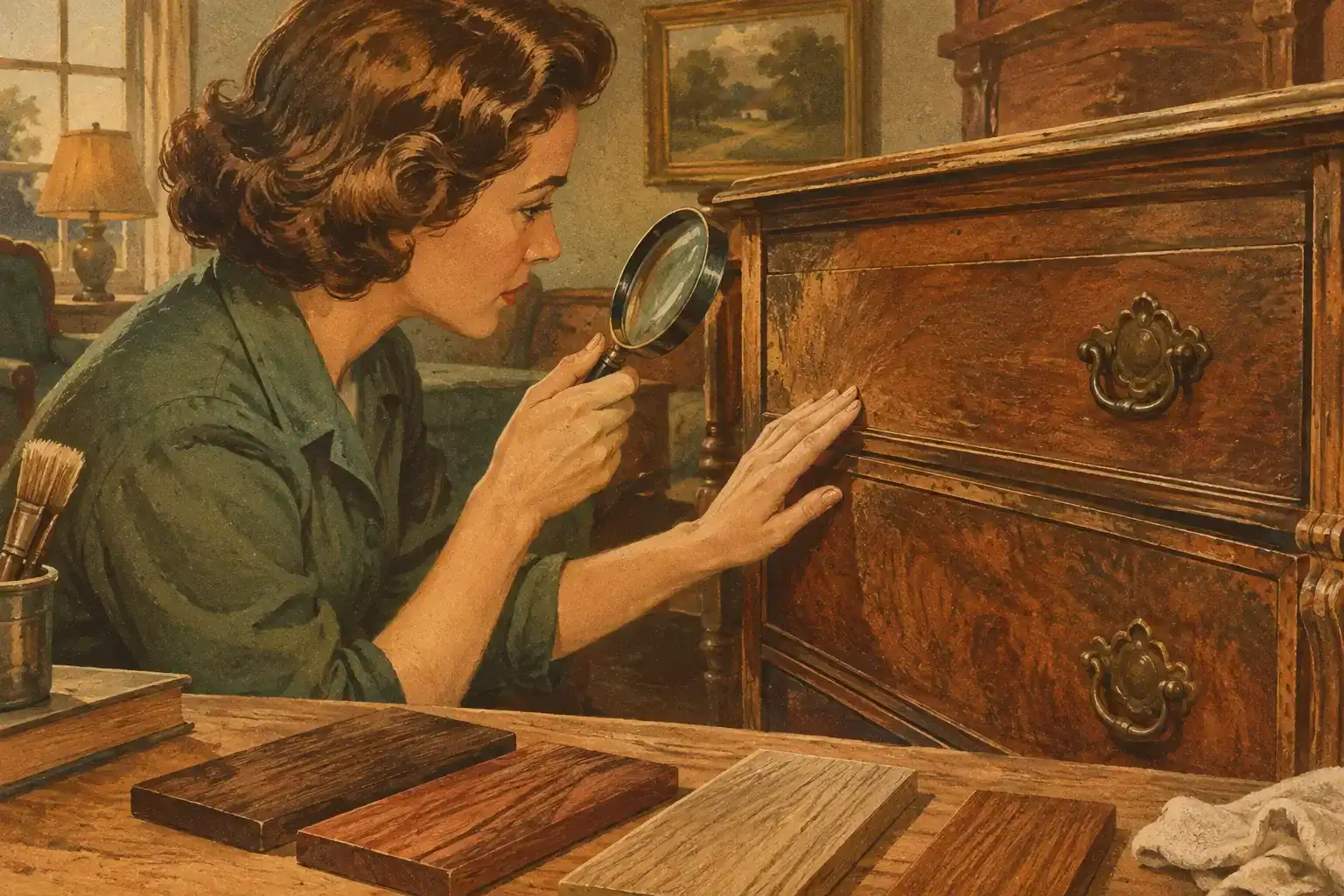
Start with an area that has received less attention: the underside of a table, the interior of a drawer, the back of a cabinet or the unpolished edge beneath a lid. Here, the timber is more likely to show its natural colour and grain. Compare this concealed surface with the visible finish. A gentle difference is normal. A dramatic contrast may simply indicate polishing, but it can also reveal later staining or a replacement component.
Old wood tends to develop depth rather than a flat, uniform colour. This comes from oxidation, handling, wax and the gradual settling of dust into pores and corners. It should not look like a single painted shade applied all at once. That said, genuine antique furniture is not required to be untouched. Careful restoration can preserve a piece beautifully, particularly where a finish has become dry or unstable.
Recognising Common Woods in Antique Furniture
The species can help place furniture within a period, region and price bracket, although availability changed over time and cabinetmakers frequently used more than one timber in the same object.
Oak
Oak is central to British furniture history. Earlier oak, particularly from the seventeenth and early eighteenth centuries, often has a bold, open grain and a strong, weighty presence. Look for medullary rays – pale, shimmering flecks or ribbons visible on quarter-sawn surfaces. They are especially clear on old oak panels, drawer fronts and table tops.
Later Victorian oak furniture can be darker, more heavily carved and sometimes machine-finished. Do not assume that every dark oak piece is early. Its construction and overall design matter just as much as its timber.
Mahogany
Mahogany became highly desirable in the eighteenth century and remained prominent through Regency, Victorian and Edwardian furniture. It is generally dense, close-grained and capable of a rich reddish-brown glow. On quality pieces, the grain may show fine stripes, flame-like figuring or a subtle mottled movement.
A useful distinction is that antique mahogany often feels visually warm and varied. Modern mahogany-coloured finishes can look too even, too red or unusually glossy. Veneered mahogany was widely used on refined furniture, so inspect edges and damaged areas for a thin decorative layer over a secondary timber.
Walnut
Walnut was especially fashionable in late seventeenth-century and early eighteenth-century furniture, then returned in later revival styles. It has a softer, more flowing grain than mahogany, ranging from honey brown to grey-brown, often with attractive curls and burr figuring.
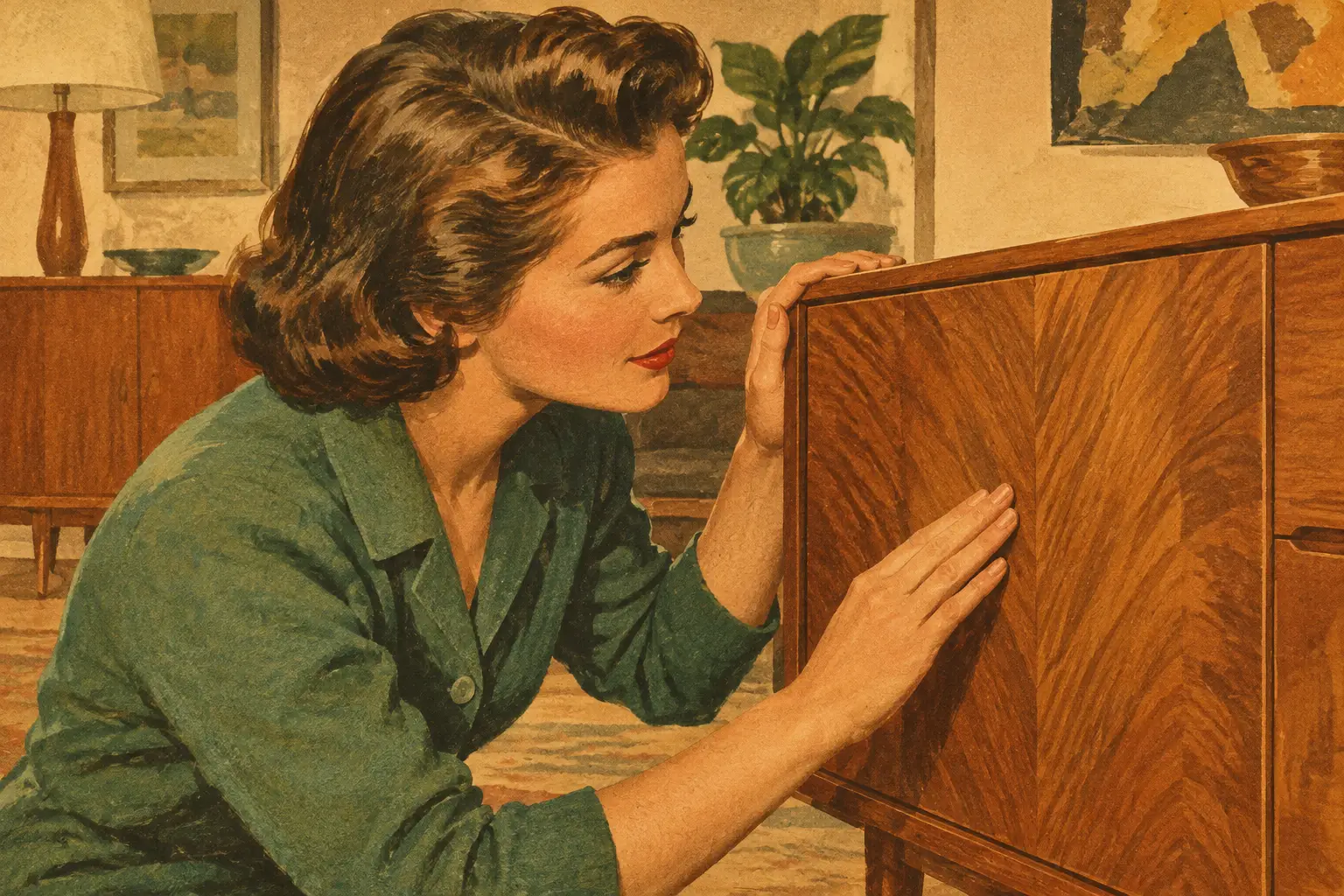
Walnut veneers were valued for their decorative movement. A well-made walnut chest or cabinet may use carefully matched veneer sections to create a mirrored pattern across drawer fronts. This is not a modern trick in itself. It can be a mark of accomplished historic cabinetmaking.
Pine, elm and fruitwood
Pine is common in country furniture and in the secondary construction of more formal pieces. Genuine old pine usually has a mellow, golden cast, visible knots and a characterful grain, but it is widely reproduced. Seek corroboration in hand-cut joinery, old tool marks and sensible wear rather than relying on colour.
Elm is often found in rustic tables, stools and Windsor chairs. Its interlocking grain can be dramatic and irregular, while its strength made it useful for chair seats and wheel hubs. Fruitwoods such as cherry and pear are finer-grained and were often used for smaller domestic pieces, turned details and veneers. They can age to a gentle reddish or honeyed brown.
Examine Grain, Boards and Timber Movement
Wood is never completely still. Over decades, it expands and contracts with changes in humidity, leaving small signs that are difficult to manufacture convincingly. On a solid plank top, look for slight cupping, tiny separations between boards, or old shrinkage around pegs and fastenings. These should feel structurally believable, not theatrical.
Wide boards can be particularly revealing. Earlier furniture was often made using broader cuts of timber than are commonly available today, though reclaimed wood complicates this rule. The grain should also continue naturally around a solid edge. If a highly figured surface stops abruptly at the corner, it may be veneer.
Veneer is not a flaw. It was an expensive and sophisticated decorative technique, allowing makers to use rare figured woods economically and create complex patterns. What matters is whether the veneer suits the piece and its date. Thick, hand-cut veneer with small irregularities is different from the very thin, uniform veneer often found on later factory furniture.
Construction Gives the Wood Context
If you want to identify antique wood accurately, turn the furniture over and open every drawer you are permitted to inspect. Timber and joinery belong together.
Hand-cut dovetails tend to vary slightly in size and spacing, with a more individual character than machine-made examples. This does not automatically make a piece Georgian – hand work continued long after machinery arrived – but it is valuable supporting evidence. Drawer bottoms may be made from thin boards running front to back, often with signs of shrinkage or old plane marks.
Look inside carcasses as well. Fine furniture frequently uses a show wood on visible surfaces and a plainer secondary wood in hidden areas. Mahogany furniture, for example, may have pine drawer linings or deal backs. A piece made entirely from one timber is not necessarily suspect, but an unexpectedly modern board material, such as chipboard or MDF, clearly points to later manufacture or major alteration.
Screws provide another useful clue. Earlier screws may have off-centre slots, irregular threads and slightly uneven heads. Bright, identical crosshead screws are usually replacements. Replacement hardware is common and can be entirely practical, but it should be reflected in the value and description.
Read Wear Without Being Taken In by It
Authentic wear occurs where furniture has been used. Expect softened edges on armrests, faded patches near windows, scuffs around chair legs and darkened handles or pulls. The pattern should make sense for the object. A table top may carry old ring marks and faint scratches; a chest may show wear around keyholes and drawer edges.
Be wary of damage distributed too neatly across every surface. Artificial distressing often creates identical dark marks in corners, exaggerated wormholes, or scratches that cut through a finish without any corresponding softness in the timber. Real age is uneven. One side of a cabinet may be faded, while another remains richer because it spent decades against a wall.
Woodworm deserves a calm assessment. Small holes can be historic and inactive, especially on furniture stored in older houses or barns. Fresh, pale dust beneath holes is more concerning. Where there is doubt, seek professional advice before bringing a piece into a home with other timber furniture.
Be Alert to Marriages, Repairs and Reproductions
The most interesting furniture is not always pristine. A repaired chair, a replaced escutcheon or a new leather writing surface can be part of a piece’s working life. Honest repairs do not remove all value, particularly if they are well executed and clearly described.
The concern is inconsistency. If the top is a different species from the base, the finish changes abruptly, or the proportions feel slightly wrong, the item may be a marriage made from components of different dates. Sometimes this creates a handsome, useful object. It simply should not be priced or represented as wholly original.
Reproductions also deserve a fair reading. A good-quality twentieth-century reproduction can offer excellent craftsmanship and visual appeal, while a genuinely old piece may require more care and live with more movement. Choose according to how you intend to use it. A dining table for daily family life needs a different level of resilience from a delicate walnut writing table chosen for a quiet corner.
A More Confident Eye Takes Time
Photographs can reveal grain, colour and form, but they cannot always show weight, smell, surface texture or the quiet evidence inside a drawer. Ask for clear images of undersides, backs, joints and any flaws. A trustworthy antique dealer will describe restoration, replacements and condition with the same care used to describe beauty.
At MN Interior Antiques, that approach is part of the pleasure of buying curated antiques with a story to tell. Let the wood draw you in, then allow construction, condition and provenance to earn your confidence. The best piece is not merely old-looking; it is one whose materials and details continue to make sense each time you look closer.