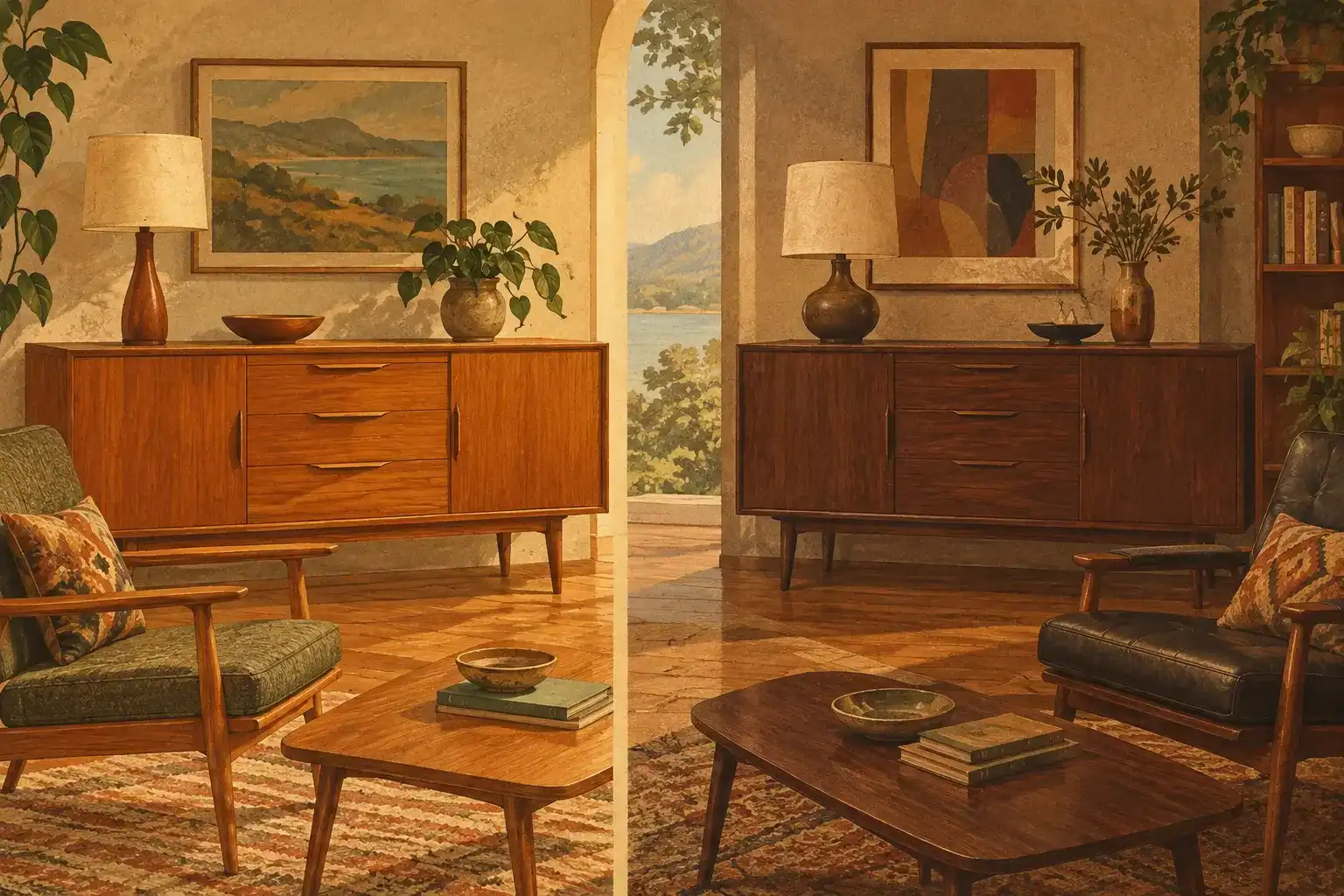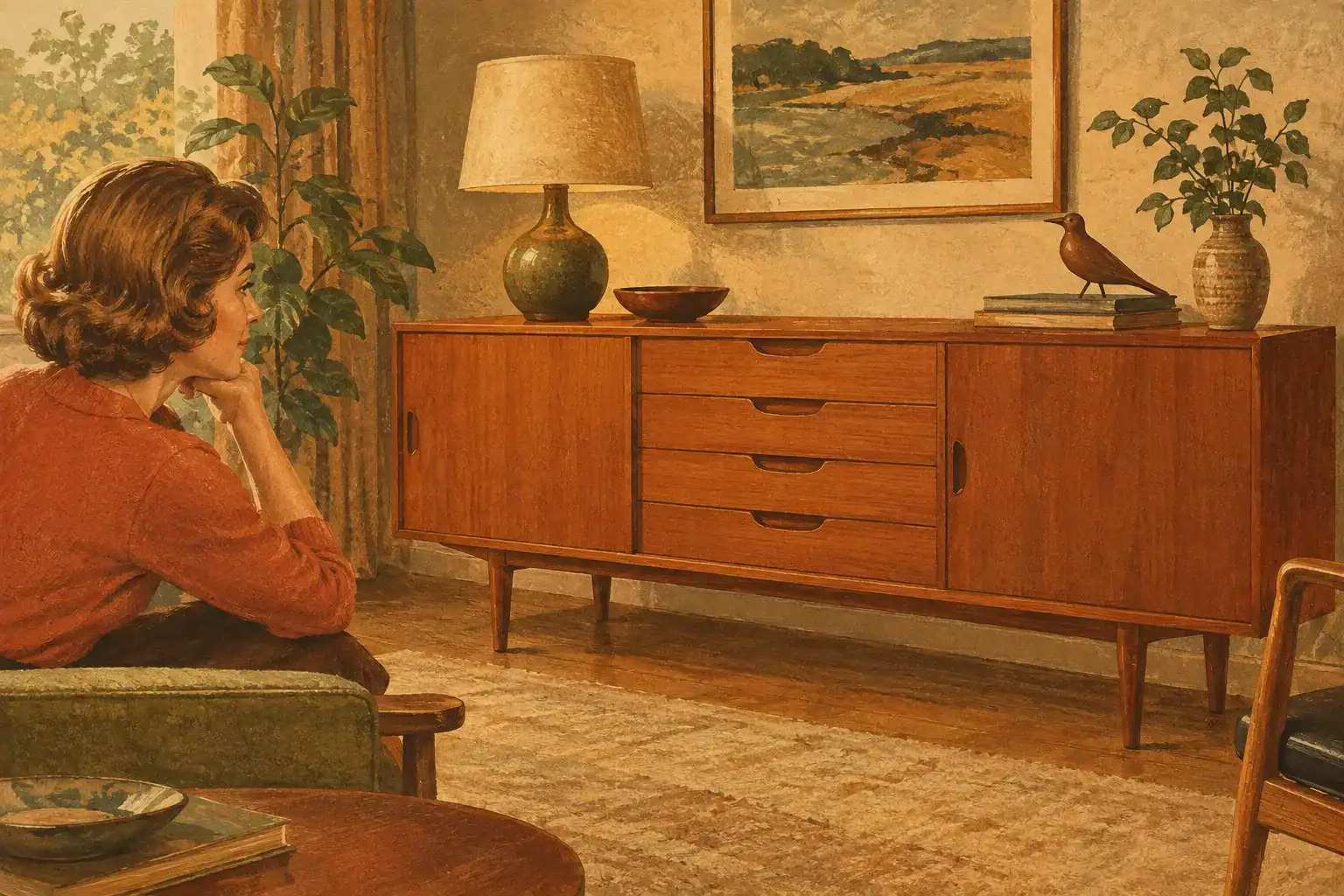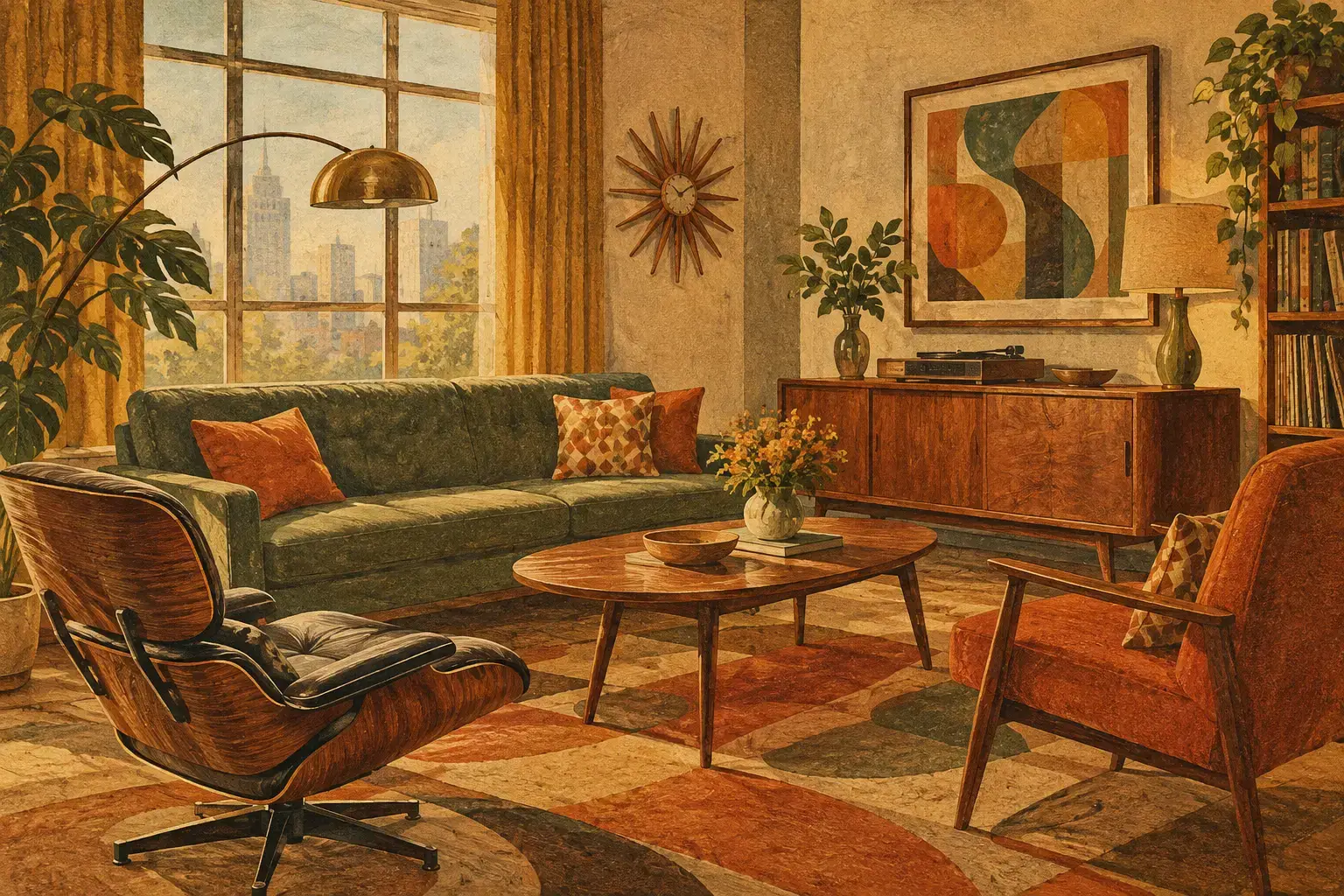
A room can look newly finished without looking new. That distinction sits at the heart of vintage interiors trends 2026: a move away from homes assembled in one shopping trip and towards spaces shaped gradually by material, memory and a discerning eye. The most compelling rooms are not recreations of a single decade. They combine useful antique furniture, expressive lighting, handmade ceramics and the occasional unexpected object, with enough breathing room for each piece to be seen.
For collectors and homeowners alike, this is encouraging news. The appetite is not simply for ‘vintage style’, but for objects with genuine age, good construction and a story to tell. A walnut sideboard with a beautifully figured grain, a pair of brass wall lights or a bold West German vase can give a modern room the depth that new décor often struggles to achieve.
Vintage interiors trends 2026: less matching, more meaning
The uniform, highly coordinated scheme is giving way to the collected interior. This does not mean clutter, nor does it require a house full of antiques. It means choosing pieces because they bring something particular: a pleasing proportion, a trace of handwork, an honest surface, or a connection to a period of design.
A Victorian pine chest can sit comfortably beneath a contemporary artwork. A mid-century armchair can soften the formality of an older dining table. The link is rarely a matching timber or a strict date. It is more often a shared quality of line, colour or craftsmanship.
This approach rewards patience. A room assembled over time has natural variation, which is precisely what makes it convincing. Rather than buying several objects that all announce the same era, begin with one piece of real presence and allow the surrounding scheme to develop around it.
The return of warm, lived-in materials
Cool grey interiors and ultra-slick finishes continue to lose ground to warmer, more tactile surfaces. In 2026, expect to see timber with visible grain, worn leather, aged brass, textured plaster, rattan, stoneware and richly coloured glass used with confidence. These materials absorb light differently throughout the day and make a room feel settled rather than staged.
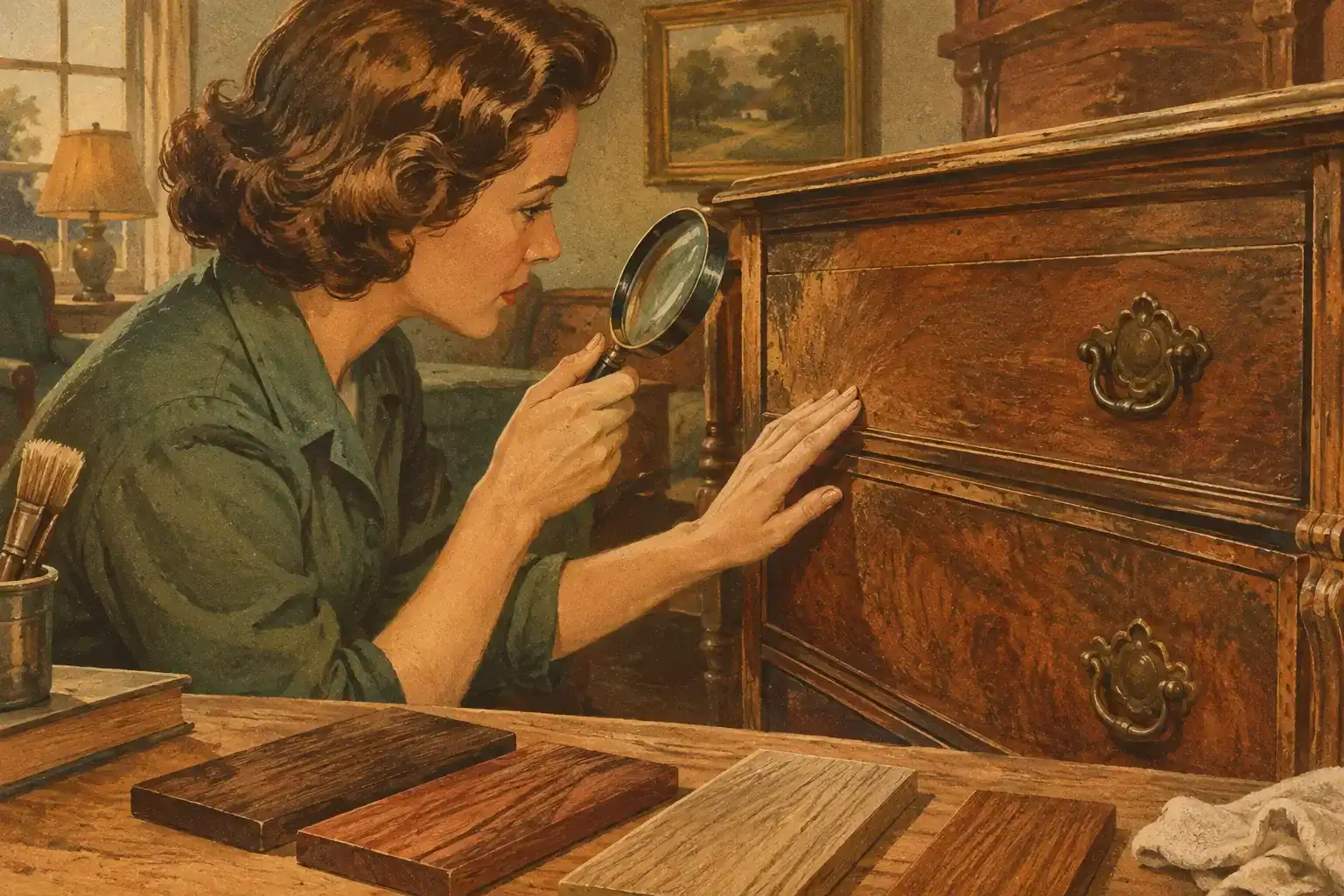
Patina is central to this shift. Marks from use, gentle fading and small irregularities are no longer details to disguise automatically. On the right piece, they are evidence of a life well lived. This is not a licence to overlook damage: loose joints, active woodworm, unstable finishes and unsuitable rewiring should always be addressed. But honest wear is often part of the appeal, particularly on furniture made to serve for decades.
The best buying decision is usually not the most pristine object, but the one whose condition suits its role. A carefully restored chest of drawers may be right for daily bedroom use, while an untouched folk-art figure may be valued precisely for its original surface.
Sculptural vintage lighting takes centre stage
Lighting is becoming less of an afterthought and more of a defining decorative layer. Vintage lighting Hertfordshire buyers are increasingly drawn to lamps and fittings that work as small sculptures even before they are switched on. Think pleated shades, opaline glass, ceramic bases, turned wood, painted metal and the warm gleam of aged brass.
A single well-chosen table lamp can change the character of a sitting room more effectively than another cushion or print. It introduces height, casts a gentler pool of light and gives an evening room a sense of intimacy. In dining spaces, a period pendant or pair of wall lights can make a plain table feel considered and inviting.
There is, however, a practical point that should never be treated as optional. Older electrical fittings need appropriate inspection and, where required, professional rewiring or conversion for modern use. Originality matters, but safety and everyday functionality matter too. A sympathetic restoration preserves the visual character while allowing a piece to earn its place in a working home.
Ceramics as colour, form and conversation
Ceramics remain one of the easiest ways to introduce collectible character without committing to a large furniture purchase. The 2026 preference is for pieces with visual weight: hand-thrown stoneware, studio pottery, lustrous glazed vessels and the energetic forms of West German pottery. Their appeal lies in their individuality. A vase may be useful, but it is also a study in silhouette, glaze and gesture.
West German pottery works particularly well in rooms that need a stronger note of colour. Deep volcanic browns, orange, mustard, cobalt and vivid green can bring warmth to oak shelving, a painted mantlepiece or a simple sideboard. One substantial vessel often makes more impact than a row of smaller ornaments.
Grouping works best when there is a reason for it. You might unite pieces through a related earthy palette, a shared glaze finish or contrasting heights. Avoid arranging every shelf with equal spacing and identical scale. The small variations are what prevent a collection from feeling like a display in a shop.
The renewed value of character furniture
Furniture is moving towards pieces with purpose and permanence. That includes antique cupboards, library tables, chestnut benches, utilitarian drawers and mid-century furniture with clean, useful proportions. The common thread is not nostalgia. It is the desire to own furniture that has substance, repairability and a visual identity beyond a seasonal trend.
Mid-century furniture remains especially relevant, though the best interiors avoid turning it into a set. A teak cabinet can bring order to a living room, while a single Danish-inspired chair might offer a crisp counterpoint to older architectural details. Buyers looking for mid-century furniture Hitchin and across Hertfordshire should pay close attention to construction, veneer condition, drawer movement and the quality of any restoration. Good lines cannot compensate for poor repairs or structural weakness.
Antique furniture asks for a similarly thoughtful assessment. Look at the back as well as the front, check for replaced elements, and ask whether the dimensions genuinely work in the intended room. A handsome cupboard that overwhelms a narrow hallway will not become more useful because it is old. Provenance and beauty are valuable, but proportion is what allows a piece to live well with you.
Architectural salvage gives rooms their bones
Architectural salvage is increasingly used not as a theatrical flourish, but to lend ordinary spaces a sense of permanence. An old mirror, reclaimed hooks, a carved panel, ironwork or a painted door can offer a room a focal point that feels rooted rather than manufactured.
Restraint is essential. Salvage has more impact when used where the eye naturally pauses: above a fireplace, at an entrance, beside a bed or in a quiet corner that needs height and texture. A large reclaimed element can carry a wall on its own. Surrounding it with too many competing objects risks losing the architectural quality that made it special.
How to make the trend personal rather than period-perfect
The strongest vintage interiors are edited. Start by deciding what you need a room to do, then introduce objects that support that purpose. A dining room needs comfortable seating, useful lighting and a surface that can cope with daily life. A hallway needs storage, a mirror and perhaps one memorable object. Once those foundations are established, the decorative pieces have room to matter.
Colour can help different eras sit together. Earthy reds, tobacco, moss, ochre, deep blue and chalky neutrals create a generous backdrop for timber, brass and ceramics. If a room already has bold pattern or original period features, simpler furniture may be the wiser choice. If the shell is plain, a richly grained cabinet or colourful vase can provide the visual anchor.
Above all, buy selectively. An object should earn its place through usefulness, material beauty or emotional pull. MN Interior Antiques curates antiques with that principle in mind: pieces selected not merely because they are old, but because they have the craftsmanship and decorative character to become part of another home’s story.
Let the room evolve at its own pace. The most enduring interiors are not finished when the paint dries; they become more interesting each time a well-made, well-loved object is brought through the door.