A well-chosen antique rarely announces itself with a perfect photograph or an immaculate surface. It may have a softened edge, a repaired drawer, a patina earned over decades, or a slightly eccentric proportion that becomes the making of a room. This online antique shop guide is designed to help you look past the screen and buy with the confidence of someone who understands both the story and the practical reality of an old object.
Shopping antiques online offers access to a far wider and more considered selection than a hurried weekend search. It also asks more of the buyer. You cannot open the cupboard, run a hand over the timber, or stand back to judge a lamp in person. The answer is not to seek perfection. It is to learn what details matter, what questions to ask, and which signs suggest a piece will bring lasting character to your home.
Begin with the role the piece must play
Before falling for a silhouette or a glaze, decide how the object will live in your room. An antique chest might be a useful bedside table, a hallway anchor or simply a sculptural presence beneath a mirror. The same applies to vintage lighting: a large 1960s floor lamp can transform a reading corner, but it may overwhelm a compact sitting room with a low ceiling.
Measure the available space carefully, including doorways, stairwells and turns on the route into the house. For furniture, note not only width and height but depth. A handsome Victorian sideboard can look modest in a listing yet project much further into a dining room than expected. For tables and desks, think about clearance for chairs, knees and daily movement around the piece.
It also helps to consider visual weight. Dark carved oak, painted pine, tubular chrome and pale teak all occupy a room differently. A heavy antique cabinet can ground a modern scheme; a slender mid-century occasional table may offer contrast without making the space feel crowded. Neither approach is inherently better. It depends on the architecture of the room and the atmosphere you want to create.
How to read an online antique shop listing
A considered listing should do more than describe an item as old, beautiful or unique. It should give you enough information to understand what it is, how it has aged and whether it suits your needs. When browsing an online antique shop, look for clear photographs from several angles, accurate dimensions, materials, condition notes and, where known, a sensible account of age, origin or maker.
Study the photographs for evidence, not just style
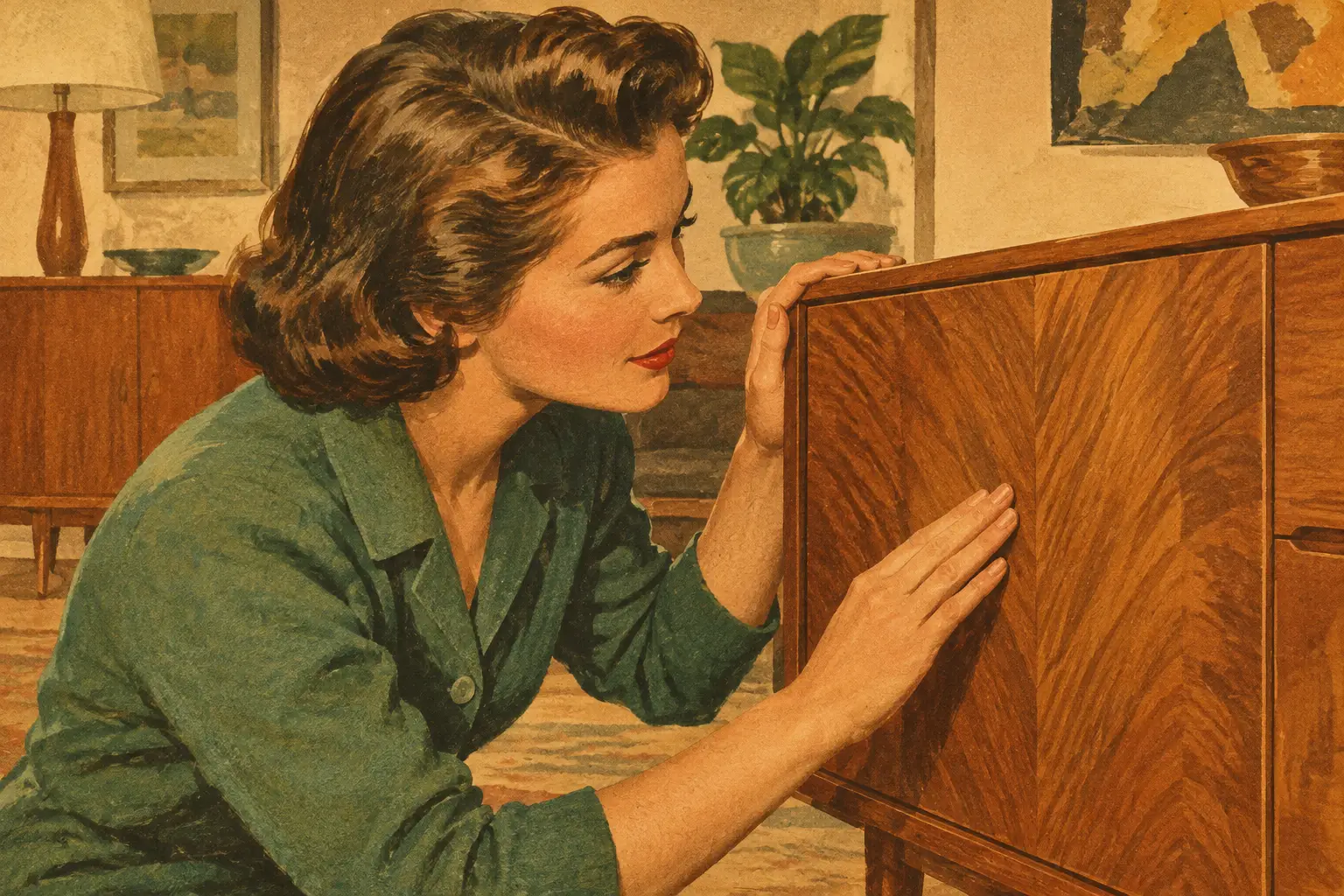
Photographs are where much of the buying decision happens. Start with the full view, then look for close-ups of corners, feet, handles, joints, drawer interiors and the reverse. These areas often reveal construction, wear and later alterations more clearly than the front of a piece.
A few marks are not automatically a concern. Light scuffs on a farmhouse table, crazing to antique ceramics, a small age-related chip to the underside of a vase, or mellow fading to a textile may be entirely consistent with genuine use and age. In fact, removing every trace of wear can strip an object of the very surface that gives it presence.
What matters is whether the wear is stable and honestly presented. Look carefully for active woodworm, serious splits, loose joints, structural distortion, missing sections or damage that compromises safe use. On decorative objects, check whether chips sit on a prominent rim or are discreetly placed beneath a base. On a statement lamp, establish whether the shade is included and whether the wiring has been checked or will require attention.
Read condition language with proportion
Words such as “good antique condition” or “commensurate with age” should be supported by specifics. A good dealer will distinguish between sympathetic restoration and concealment. A cleaned and waxed chest, a re-polished brass fitting or a professionally repaired chair can be entirely appropriate, especially if the piece is intended for everyday life.
The trade-off is simple: untouched condition can be especially appealing to collectors, while sensitive restoration often makes furniture more usable in a home. A rare design object with original paint may be worth preserving exactly as found. A dining chair with a weak seat rail, however, needs sound repair before it can be enjoyed safely. Buy the condition that suits your purpose, rather than treating one approach as universally superior.
Look for construction and provenance
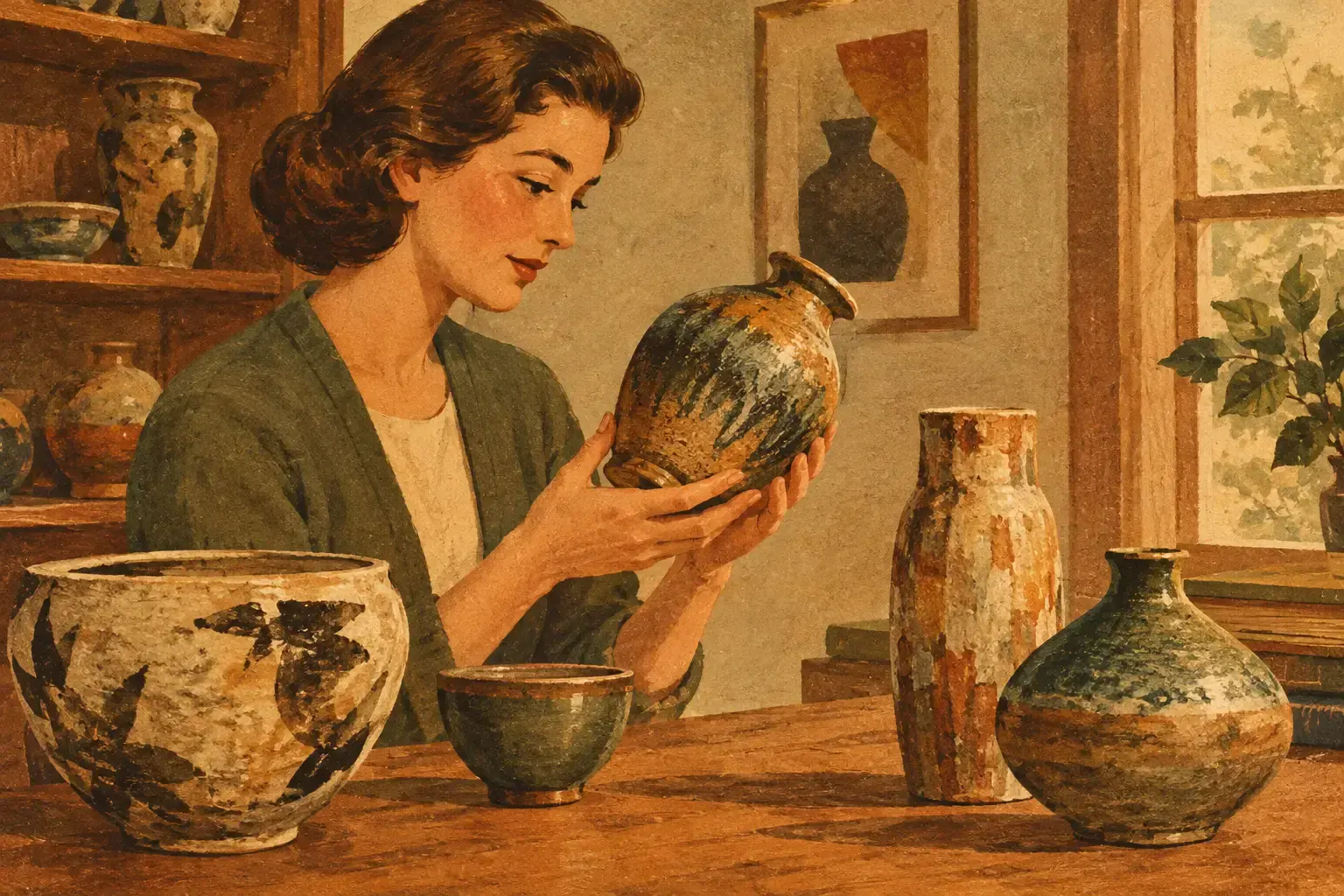
Provenance does not always mean a grand house name or a famous previous owner. It can be a maker’s stamp, a retail label, a country of origin, a recognisable design period or a clear chain of collection. For mid-century furniture, details such as timber species, joinery, manufacturer marks and original hardware can be particularly useful. For West German pottery, the form number, base marks and glaze are part of the appeal as well as clues to identification.
Not every attractive item will carry extensive history, and that is fine. Decorative merit remains a valid reason to buy. The key is that a listing should not make claims it cannot support. An object described carefully as mid-century, in the manner of a known designer, is more trustworthy than one given an unsupported attribution.
Choose character over catalogue matching
The most memorable interiors are rarely built from objects all belonging to one period. A Georgian oak stool can bring depth to a clean-lined kitchen. A pair of 1970s ceramic lamps can make a traditional sitting room feel more personal. Architectural salvage, such as an old corbel, painted door or carved panel, can be used as wall decoration rather than treated as a building project.
Begin with a connecting thread rather than a strict era. It might be warm timber tones, earthy glazes, graphic forms, brass details or a preference for handmade surfaces. This gives you freedom to combine antique furniture with mid-century pieces and contemporary upholstery without creating a room that feels staged.
Scale is the quiet discipline behind successful mixing. A diminutive Bakelite jewellery box can get lost on a large sideboard unless grouped with other small pieces. A substantial glazed vessel needs enough breathing space to be seen. Group decorative objects by material, tone or shape, then leave room around them. A collection looks more confident when it has been edited.
Questions worth asking before you buy
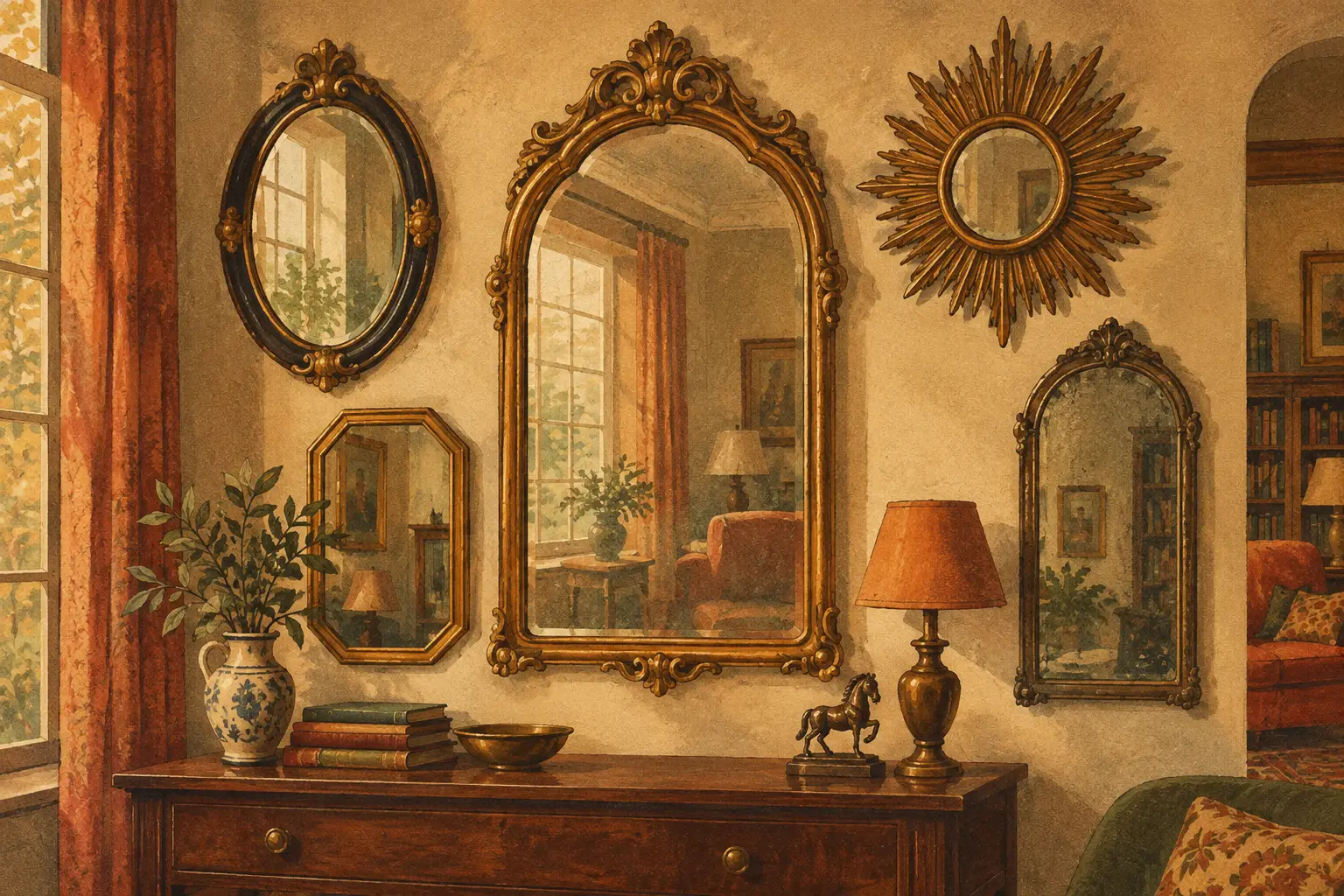
When a listing leaves a practical detail unanswered, ask. A reputable dealer expects thoughtful questions, particularly for furniture, lighting and fragile decorative pieces. It is reasonable to ask whether drawers run smoothly, whether a cabinet sits level, whether a mirror plate is original, whether upholstery has a particular odour, or whether the electrical components of a lamp have been tested.
For larger items, confirm delivery arrangements, access requirements and whether the piece can be collected. Buyers looking for antique furniture in Stevenage or elsewhere in Hertfordshire may find local collection especially useful for seeing scale in person and simplifying the journey home. For more distant purchases, ask how fragile elements will be packed and whether a courier is experienced with antiques.
You should also ask for additional photographs if a particular detail matters to you. This is not being difficult; it is part of buying thoughtfully. The best purchases are usually made when expectation and reality are allowed to meet before delivery day.
Make room for the unexpected
It is tempting to search only for the exact object imagined at the start: a teak sideboard of a particular width, a blue vase, a brass lamp with the right shade. Clear criteria are useful, but antiques reward flexibility. The object that changes a room may be a painted cupboard in an unplanned colour, a modest folk-art figure, or a ceramic vessel with an unusual volcanic glaze.
This is where curation matters. A specialist selection saves you from wading through endless generic listings and allows individual pieces to be judged for design, craftsmanship and decorative potential. At MN Interior Antiques, the aim is not to fill a catalogue with interchangeable stock, but to present antiques and vintage interiors with a story to tell and enough detail to be understood properly.
Give yourself time with a listing you love. Return to the measurements, imagine it beside what you already own, and accept the honest signs of its earlier life. The right antique need not be flawless to feel at home. It simply needs to be well made, well described and capable of becoming part of your own history.