An Edwardian piece can bring a room into focus without making it feel like a period set. The best examples have a lightness that suits contemporary living: finely inlaid wood, elegant proportions, useful storage and a gentler decorative touch than the Victorian furniture that came before. This Edwardian furniture buying guide will help you recognise the era, judge condition honestly and select pieces with lasting presence.
What makes Edwardian furniture distinctive?
The Edwardian period broadly covers 1901 to 1910, although its design language continued into the years before the First World War. It arrived after the richer, heavier fashions of late Victorian interiors and favoured airier forms. Furniture makers retained exceptional cabinetmaking skills, but often used them with more restraint.
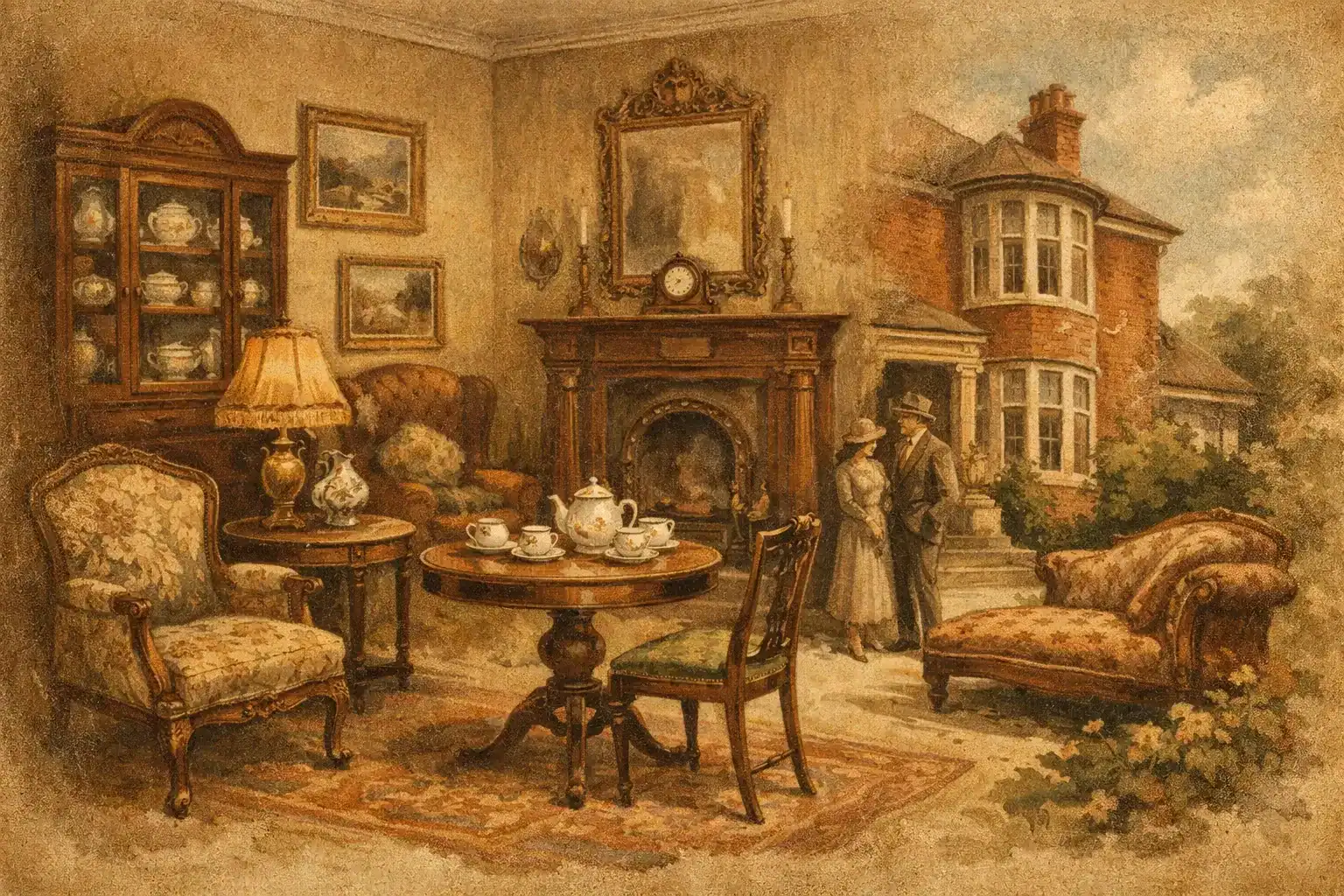
Look for satinwood, mahogany, walnut and oak, sometimes enlivened with boxwood, ebony or mother-of-pearl stringing. Sheraton and Hepplewhite revivals were influential, so delicate crossbanding, tapering legs, oval or shield-shaped motifs, fan inlay and refined brass handles are all familiar details. Dining tables, display cabinets and occasional furniture were frequently designed to look graceful from every angle rather than simply imposing against a wall.
Not every Edwardian piece is delicate. Arts and Crafts furniture of the same period can be sturdy and architectural, often in quarter-sawn oak with exposed joinery and little applied ornament. This distinction matters when buying. A bow-fronted mahogany bedside cabinet belongs easily in a soft, layered bedroom, while a well-made oak bureau may provide the structure a more pared-back interior needs.
Start with the room, not the label
An object’s date is only part of its appeal. Before concentrating on terminology, decide what the room is missing. A compact Edwardian chest can introduce warmth to a newer-build bedroom; a glazed display cabinet can give ceramics or small collections a proper setting; a writing table can make a hall or landing feel considered rather than merely functional.
Measure with the doors, drawers and daily route through the room in mind. Edwardian furniture is often more slender than Victorian furniture, but it was still made for houses with generous proportions. A handsome sideboard that restricts a dining room is not a successful purchase, however original its handles or beautifully figured its veneer.
Consider visual weight as well. Mahogany has depth and polish, while satinwood brings a paler, almost luminous quality. Oak offers texture and solidity. In a room already filled with strong pattern or dark timber, one finely proportioned inlaid table may have more effect than a suite of matching furniture. Mixing periods is usually more convincing than recreating an Edwardian parlour wholesale.
An Edwardian furniture buying guide to authenticity
Authenticity is not a single yes-or-no question. Many pieces from this period were made in revival styles, and some were later copies of the same forms. The aim is to understand what you are looking at, pay a fair price for it and avoid buying a piece whose construction does not support the seller’s description.
Start with the carcass and joinery. Drawer fronts on quality furniture are usually solid timber or well-executed veneer, with dovetailed drawer construction. Earlier Edwardian examples may show hand-cut dovetails that vary slightly in size, while machine-cut dovetails became increasingly common during the period. Neither automatically confirms or disproves age, but crude staples, chipboard or uniform modern fixings are clear warnings of later manufacture or significant alteration.
Turned screws, old screw holes, aged timber on the underside and a mellow surface inside drawers can all be useful clues. So can the backboards. Original backs often show shrinkage, old nail holes and timber that looks consistent with the rest of the piece. A replacement back is not necessarily a reason to walk away, particularly if it has been sensitively fitted, but it should be disclosed and reflected in the price.
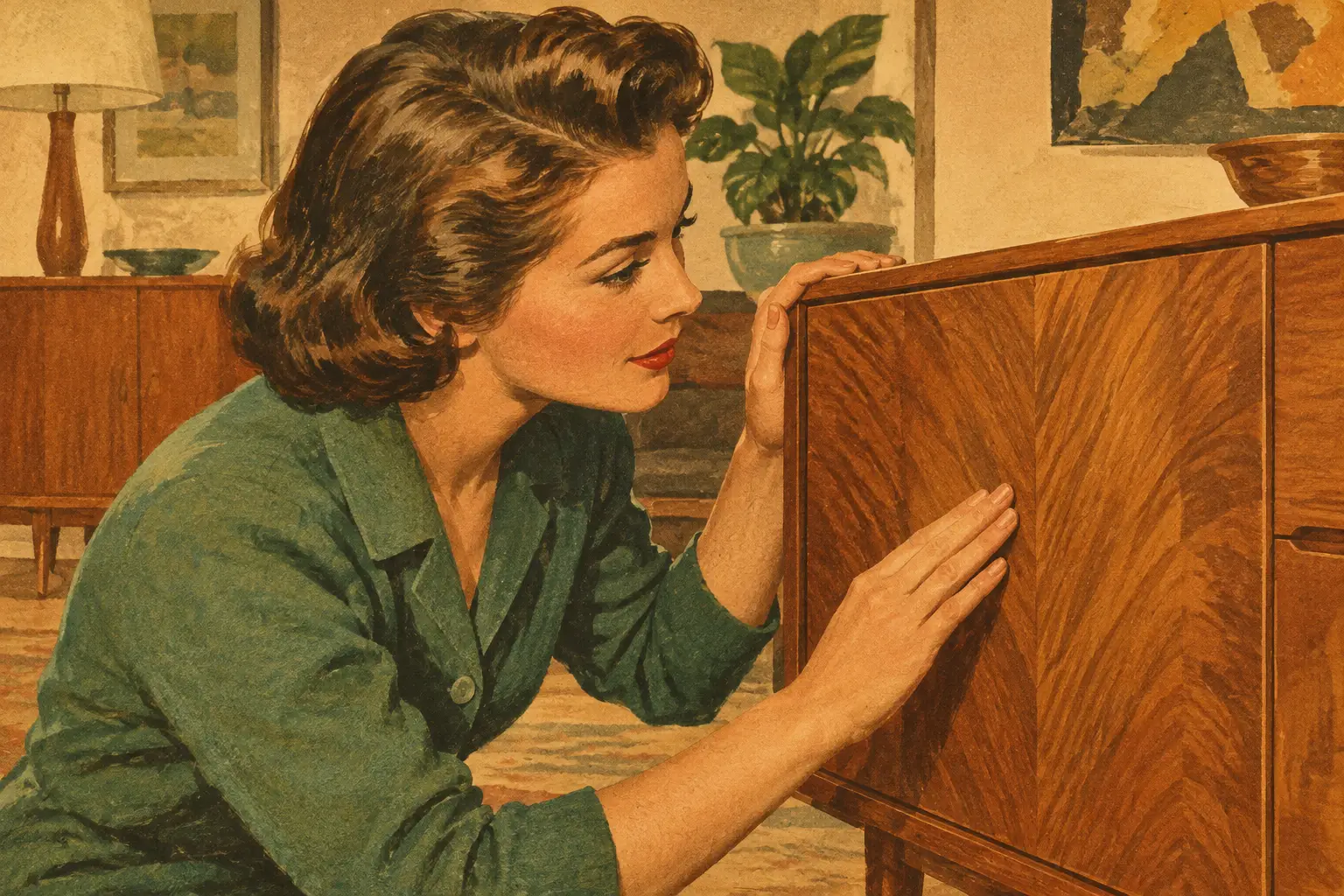
Veneer deserves close attention. Edwardian makers used it beautifully, especially on mahogany and satinwood furniture. Check for lifting, bubbling, missing sections and dark lines around repairs. Small, stable losses may be acceptable on a piece with appealing scale and colour. Extensive damage around edges, drawers or curved fronts can be expensive to resolve well.
Labels, stamps and provenance
A retailer’s label, maker’s stamp or inventory mark adds interest and may increase value, particularly where it links a piece to a known workshop. It is not essential. Much sound Edwardian furniture was made by capable regional makers and survives without a name attached.
Provenance can take several forms: a family history, a receipt, an old sale catalogue or a convincing maker’s label. Treat stories with warmth but proportion. Documentary evidence is valuable; an unverified account of a grand country house should never outweigh the furniture itself. Good design, sound construction and honest condition remain the foundations of a worthwhile purchase.
Condition: seek honest age, not artificial perfection
Antique furniture should not look factory-fresh. A small ring mark, a softened edge or gentle fading where the light has reached the timber is part of a piece’s history. These signs often give furniture the character that new reproduction pieces struggle to imitate.
The key question is whether wear is stable and sympathetic. Open every drawer. It should run reasonably freely, even if it has the slight resistance expected of old timber. Test doors for sagging or excessive movement, inspect legs for old breaks, and look underneath for woodworm holes. Old flight holes are common and usually harmless if there is no fresh dust, pale new holes or evidence of active infestation.
Be cautious with highly polished surfaces that look uniformly glossy. A later finish can disguise scratches and water marks, but it may also flatten the figure of the timber and reduce the softness built up over decades. Equally, do not dismiss a piece simply because it has been restored. Careful re-gluing, repairs to veneer and a sympathetic wax finish can make an antique fit for daily use. The difference lies in quality and disclosure.
If a table is intended for family meals, accept that perfection may be impractical. A restored top or a few old marks can be preferable to an untouched but fragile surface. For a collector’s cabinet or an occasional table, originality may matter more. It depends on how the piece will live in your home.
Choose the right scale of decoration
Edwardian furniture offers useful variety for interiors that need personality without visual clutter. For a quiet scheme, seek pale satinwood, modest inlay and slender legs. A mahogany envelope table, small side cabinet or oval occasional table can sit comfortably beside modern upholstery and contemporary art.
For a more collected room, choose a piece with stronger detail: marquetry panels, serpentine fronts, a shaped gallery or a glazed cabinet with decorative astragals. These elements need space around them. Their value is in the line and craftsmanship, not in being crowded by too many competing objects.
Display cabinets work especially well when styled selectively. A few pieces of antique ceramics, a favourite glass vessel or a small collection of jewellery boxes will allow the furniture’s proportions to remain visible. The same principle applies to a writing desk: keep its surface useful, but let the wood and brasswork do some of the talking.
Questions worth asking before you buy
When viewing or enquiring about a piece, clear questions help build confidence and prevent disappointment after delivery. Ask whether the item is believed to be original to the Edwardian period, whether there have been repairs or replacements, and whether the handles, locks and keys are present. Request the full dimensions, including depth at the widest point and the height of any gallery or mirror.
For larger pieces, ask how it separates for transport and whether access has been considered. A display cabinet may divide into two sections; a sideboard may not. Buyers furnishing period houses around Hertfordshire often have generous rooms but narrow staircases, turned landings or older door frames. Measuring access is as sensible as measuring the intended position.
It is also worth asking how the piece has been cleaned or restored. A trustworthy dealer should be comfortable describing condition in plain terms, including old repairs and areas of wear. At MN Interior Antiques, the aim of careful curation is not to pretend age has vanished, but to present furniture clearly enough for buyers to choose with confidence.
Caring for Edwardian furniture at home
Place antique timber away from radiators, open fires and persistent direct sunlight. Abrupt changes in temperature and humidity can encourage movement in veneer and joints. Use mats beneath drinks, lift rather than drag furniture, and avoid silicone-heavy sprays that can build up on old finishes.
For regular care, a soft dry cloth is often enough. Use a suitable wax sparingly only when the surface calls for it, and avoid aggressive polishing that creates a thick, artificial shine. If a joint loosens, veneer begins to lift or signs of active woodworm appear, seek advice before reaching for household glue or treatment. A small intervention made well is better than a rushed repair that compromises the piece.
The most satisfying Edwardian furniture is not bought to fill an empty corner. It is chosen for its scale, workmanship and the quiet sense of continuity it brings to everyday life. Let a piece earn its place, and it will continue telling its story long after fashions have moved on.