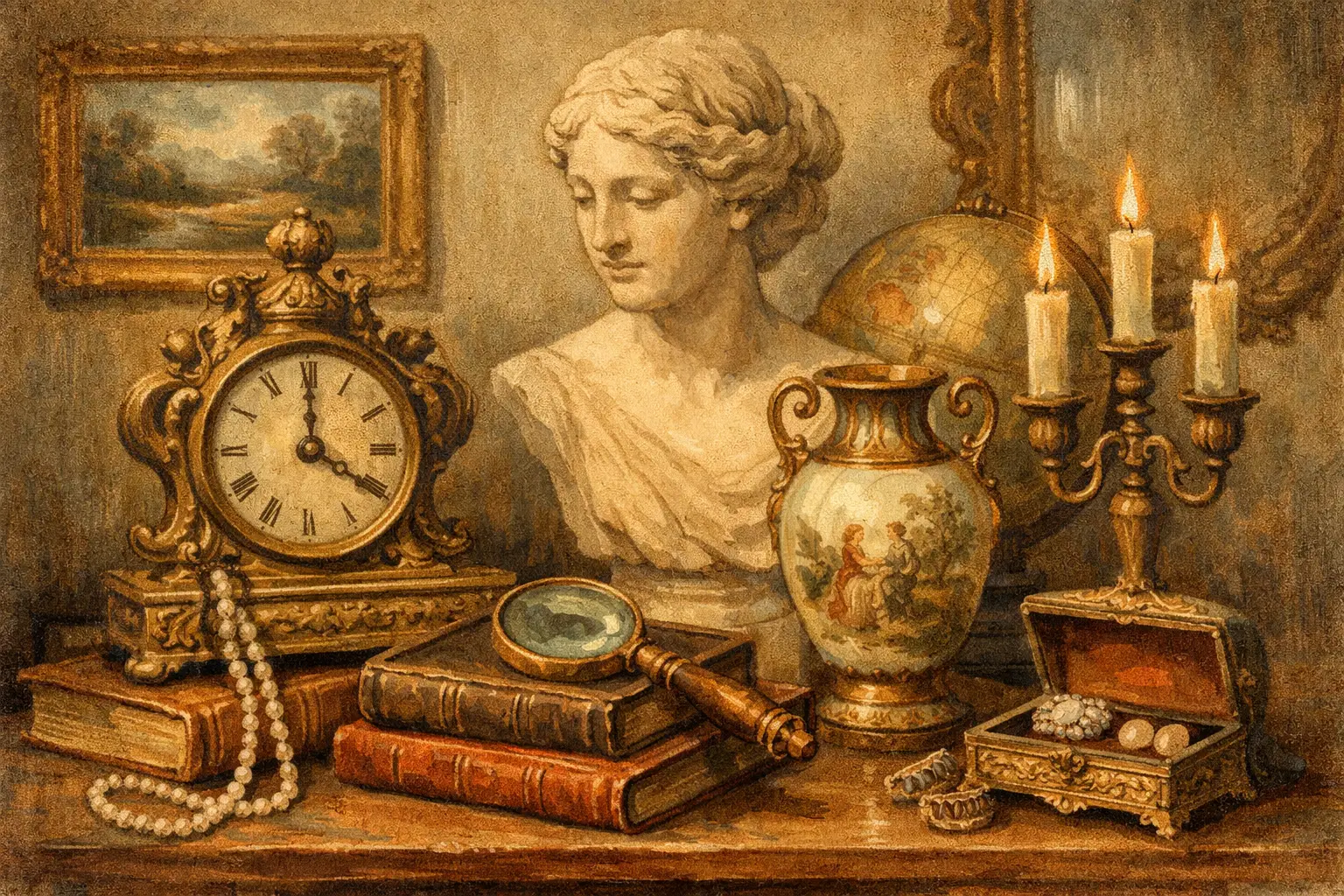
A room can be beautifully furnished and still feel unfinished. Often, what is missing is not another cushion or a larger artwork, but an object with enough presence to interrupt the expected. Decorative antique objects do exactly that: a worn bronze figure on a bookshelf, a slip-decorated jug on a kitchen dresser, a carved box by the bedside or a glazed vessel whose colour shifts with the daylight.
Unlike new accessories produced to fill a retail display, older objects arrive with material weight, useful imperfections and a visual language shaped by their era. They invite a second look. More importantly, they allow a home to feel collected rather than assembled all at once.
Why decorative antique objects change an interior
The appeal is partly emotional, but it is also practical. Antique and vintage decorative pieces introduce contrast. In a contemporary space of clean lines, pale plaster and simple upholstery, a time-softened wood candlestick or richly glazed ceramic gives the eye somewhere to rest. In a period house, the same object can reinforce architectural details without making the room feel like a set.
Age alone is not the point. The most successful pieces have a strong relationship between form, material and use. A nineteenth-century apothecary jar may be appealing for its lettering and proportions; a mid-century vase for its sculptural silhouette; a piece of architectural salvage for the worn paint that records decades of handling. Their decorative value comes from character, not simply from being old.
This is why curation matters. A small group of well-chosen objects tells a clearer story than a crowded arrangement of vaguely vintage things. It also means that an interior can evolve slowly. One exceptional bowl, lamp or frame can establish a direction, then make later choices easier.
Choosing decorative antique objects with conviction
Begin with what the room already needs. A quiet corner may need height or a pool of warm light. A large dining table may need a low, tactile centrepiece that does not obstruct conversation. An open shelf may need one object with an unusual outline rather than several small items competing for attention.
Scale is the first consideration. A modest object can disappear on an oversized sideboard, while a large urn or carved fragment can overwhelm a narrow mantelpiece. Before buying, measure the intended spot and consider the object from the doorway as well as up close. Decorative pieces should reward proximity, but they also need to read across the room.
Material is the next useful guide. Timber, brass, iron, earthenware, marble, glass and woven fibre all respond differently to light and touch. Pairing unlike surfaces often produces a richer result: a matte folk-art figure beside polished stone, or a glazed West German pottery vase against a weathered oak cabinet. If a room already contains plenty of patterned fabric and timber grain, a simple metal or stone object may provide welcome calm.
Colour need not be matched precisely. A deep oxblood vase can work in a blue-grey room because both colours have depth; a mustard glaze can bring warmth to a scheme built around cream and brown. Rather than chasing an exact shade, look for a tone that either echoes something already present or offers a deliberate contrast.
Finally, choose the objects you genuinely want to live with. Provenance, maker and period can all add significance, particularly for collectors, but a piece should still earn its place through its shape and atmosphere. The best purchases tend to feel right before they become easy to categorise.
Decorative value and collectible value are not always the same
Some objects are bought primarily for their rarity, condition or maker. Others are bought because they transform a shelf, hall table or fireplace. Occasionally, they are both. Understanding the distinction helps you buy wisely.
A signed studio ceramic in excellent condition may carry a stronger collector premium than an unsigned piece with a more dramatic glaze. Conversely, an imperfect early mirror or salvaged architectural element may be the more compelling decorative choice, despite having less formal rarity. Neither approach is wrong. The key is to be clear whether you are seeking a collection, an interior focal point or a little of each.
How to style antique objects without making a room feel staged
The most convincing arrangements leave breathing room. An antique object needs enough space around it for its outline and surface to be noticed. A single vessel on a console can have more impact than six objects arranged in a rigid row.
Grouping is useful when pieces share a conversation. This might be a cluster of three ceramic forms in related earthy glazes, or a small display of brass candlesticks with different heights and patinas. Vary scale and texture, but avoid making every item equally important. One piece should lead, while the others give it context.
Bookshelves benefit from restraint. Place objects at different depths, allowing a small bronze, box or framed miniature to break the horizontal rhythm of books. Leave some shelves partially empty. This creates pauses and keeps the display from becoming a storage solution disguised as decoration.
On a mantelpiece or sideboard, consider the backdrop. A heavily carved object may be lost against busy wallpaper, while a pale ceramic piece can look extraordinary against a dark wall. Mirrors are especially useful because they double light and allow the back of a sculptural object to become part of the view.
Do not reserve the best pieces for formal rooms. A hand-thrown pot can bring dignity to a kitchen; a small antique mirror can make a hallway more generous; an unusual ashtray or catchall can give an entrance table personality even if it is no longer used for its original purpose. Objects are often at their best when they remain part of daily life.
Let old and new sharpen each other
A home filled exclusively with antiques can be beautiful, but it requires care to avoid visual heaviness. Modern furniture, contemporary art and plain textiles give historic pieces room to speak. Equally, an all-new interior can feel anonymous without the irregularity of older materials.
This balance is particularly effective with mid-century furniture. The clean geometry of a teak sideboard or a simple lounge chair provides an excellent setting for antique ceramics, painted folk art or a more ornate gilded frame. The contrast makes both periods feel more intentional. Those looking for mid-century furniture in Hertfordshire often find that one or two earlier decorative pieces prevent the look from becoming too uniform.
Condition, restoration and the signs of a life well lived
Condition should always be read in relation to age, rarity and function. A tiny firing mark in an old ceramic bowl may be part of its making. Wear to the edges of a painted chest may add depth. A repaired handle, however, may affect both usability and value, depending on the piece.
Ask practical questions before buying. Is the object structurally stable? Are there cracks, chips, repairs or replacement parts? Does a lamp require rewiring? Has a metal surface been polished so aggressively that its original patina has been lost? Honest condition information is not a deterrent. It gives you the confidence to decide whether the piece suits your home and expectations.
Restoration is often appropriate when it preserves function or prevents further deterioration. A loose chair joint should be repaired; an unsafe electrical fitting should be updated by a qualified professional. Decorative surfaces are more nuanced. Over-restoring can erase the qualities that make an antique distinctive, including old paint, gentle tarnish and evidence of traditional workmanship.
Care should be similarly measured. Keep vulnerable textiles, paper and painted surfaces out of strong direct sunlight. Avoid displaying unprotected wood or metal where repeated splashes are likely. Dust with a soft dry cloth, use specialist advice for valuable finishes, and resist the urge to make every surface gleam. Patina is not dirt. It is often the visual record that gives an object its authority.
Building a collection that feels personal
There is no need to begin with a grand plan. Many memorable interiors grow from a single object that sparks curiosity: a Fat Lava vase with volcanic texture, a Bakelite brooch displayed in a shallow frame, a carved wooden bird or a fragment of old signage. From there, patterns emerge in the forms, periods and materials you are drawn to.
Keep an eye on repetition, but do not fear it. A collection of antique ceramics can be cohesive without being matched. Repeated silhouettes, related glazes or a shared country of origin create rhythm, while slight differences retain life. The same principle applies to vintage lighting, where varied shades and bases can create a layered, less showroom-like effect.
MN Interior Antiques approaches these choices through curation rather than volume, with an eye for pieces that carry both visual clarity and a story worth keeping. Whether you are searching for antique ceramics in Hertfordshire or simply one distinctive detail for a newly furnished room, take time with the object itself. Notice its weight, finish, proportion and signs of making. The piece that continues to hold your attention after the first glance is often the one that will make your room feel more like your own.


