A beautifully carved Bakelite bangle or a stack of richly coloured bangles can look wonderfully assured in a modern interior or wardrobe. Yet this early plastic is not indestructible. To care for Bakelite jewellery well is to preserve the small signs of age that make each piece compelling: its warm surface, saturated colour, hand-worked details and the evidence of a life already lived.
Bakelite jewellery was made to be worn, but many surviving pieces are now approaching a century old. They deserve a lighter touch than modern costume jewellery. The aim is not to make a vintage bangle look factory-new. It is to remove everyday dust and surface residue while protecting the finish, fittings and decorative value collectors appreciate.
Why Bakelite needs considered care
Bakelite is a thermosetting phenolic resin, popular from the 1920s onwards for its durability, bold colours and suitability for carving. It appeared in bangles, brooches, dress clips, beads and buttons, often in designs that remain remarkably contemporary. Unlike newer plastics, however, its surface can oxidise and change subtly over time.
That change is part of the material’s character. A formerly bright piece may develop a deeper, warmer cast, while areas protected from light can retain the original shade. Collectors may describe this as patina, though it can also include discolouration, fine marks and a softening of the original gloss. Trying to erase all of it can reduce both the visual honesty and appeal of the piece.
Bakelite jewellery is also frequently assembled from several elements. A brooch may have a metal pin mechanism, glued embellishments or inlaid decoration. Bead necklaces can have older stringing and clasps. Water, pressure and aggressive cleaning products may affect one part even if the Bakelite itself appears sound.
How to care for Bakelite jewellery day to day
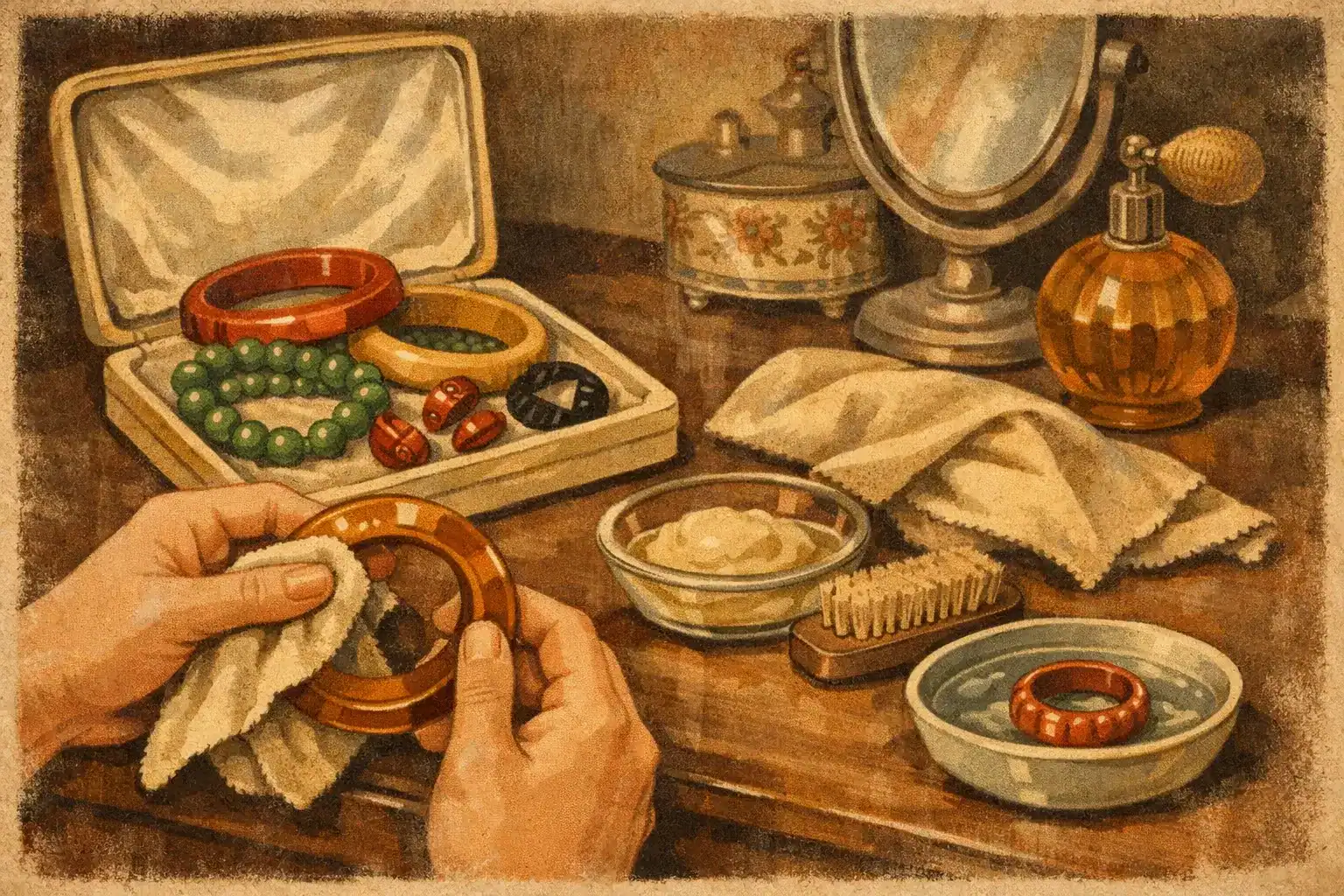
The safest routine is simple. After wearing a piece, wipe it gently with a clean, dry, soft cloth. A microfibre cloth works well, provided it is free of polish or cleaning-product residue. This removes fingerprints, skin oils and loose dust before they have a chance to dull the surface.
Put Bakelite jewellery on after perfume, hairspray, body lotion and make-up have settled. These products can leave a film, particularly in carved recesses, and repeated contact may alter the finish. Remove it before washing up, bathing, swimming, gardening or applying hand cream. A bangle may feel sturdy, but a knock against a stone worktop or sink can cause a chip, crack or break.
It is equally wise to take pieces off before extended sun exposure. Strong sunlight and heat can affect colour, especially on lighter or more translucent examples. Do not leave jewellery on a windowsill, in a conservatory, on a radiator or in a hot car.
Cleaning a sound, uncomplicated piece
For a solid bangle or a brooch without loose decoration, begin with a dry cloth. If it still looks grimy, use a slightly damp cloth with plain lukewarm water, then dry it immediately and thoroughly. The cloth should be barely damp, not wet enough to leave moisture sitting in carved lines or around fittings.
Work slowly rather than rubbing hard. Cotton buds, used dry or very lightly dampened, can lift dust from detailed carving, but avoid pushing moisture into joins. Once clean, leave the item on a dry towel for a short while before returning it to storage.
Avoid soaking Bakelite, putting it in an ultrasonic cleaner or using a dishwasher. These approaches are too forceful for old fittings, glued components and aged surfaces. They are particularly risky for bead necklaces, bracelets with metal hinges, and pieces incorporating rhinestones or foil-backed details.
What not to use
The temptation to restore a high shine can be strong, especially where a piece has a cloudy surface. Household cleaners, alcohol wipes, acetone, nail-varnish remover, bleach, abrasive creams and commercial plastic restorers should all stay well away. They can strip or alter a historic surface, leave a residue, damage embellishments or create uneven patches of shine.
Polishing compounds require caution too. Some collectors use specialist products sparingly on plain, stable Bakelite, but the result is not always predictable. A polish may make one area look brighter than another, catch in carving, or over-clean the piece’s established patina. For an exceptional, rare or deeply carved item, restraint is usually the more valuable choice.
If a piece has accumulated a stubborn film, is sticky to the touch, or appears to have been coated with an old polish, seek the opinion of a conservator or a knowledgeable vintage jewellery specialist before attempting a treatment. The right approach depends on its construction and condition, not simply on how dirty it appears.
Storing Bakelite jewellery without damage
Storage prevents many of the problems attributed to cleaning. Keep each item in a cool, dry, dark place, away from direct light and major changes in temperature. A lined drawer, jewellery box or lidded storage box is usually preferable to an open dish near a window.
Separate Bakelite from harder jewellery. Metal chains, sharp clasps, stones and even other bangles can leave scratches when pieces are moved around together. Soft individual pouches or acid-free tissue are useful, but do not wrap items tightly or seal them in plastic for long periods. They need protection from abrasion, not a damp microclimate.
For bangles, a compartmented box is often the most practical option. Store brooches flat with their pins secured, if doing so does not put tension on the hinge. Necklaces should lie loose rather than being hung, particularly where original stringing is present. If a necklace is already brittle, fraying or stretched, do not wear it until it has been assessed and restrung appropriately.
Respect repairs, cracks and original fittings
A fine hairline crack, a small chip or a slightly worn clasp does not automatically make Bakelite jewellery unwearable. It does, however, change how it should be handled. A cracked bangle should not be forced over the hand, and a brooch with a loose pin should not be worn on a delicate fabric where it could be lost.
Do not use household glue for a repair. Adhesives can discolour with age, seep into porous-looking areas, create a glossy patch and make future professional repair more difficult. They can also obscure a piece’s construction, which matters when assessing authenticity and value.
Original fittings are part of a piece’s story. Tarnish or gentle wear on a clasp is often preferable to an ill-matched replacement. Where a repair is necessary for safe wear, a sympathetic specialist can advise whether stabilisation, a discreet replacement component or simply retirement from regular use is the most appropriate route.
Wearing vintage Bakelite with confidence
There is no need to keep every piece hidden away. Bakelite was designed with colour and presence in mind, and a well-cared-for bangle or brooch is at its best when it brings personality to an outfit. The practical distinction is between occasional, thoughtful wear and treating a fragile vintage object as everyday throw-on jewellery.
Choose a sound piece for regular use, reserve delicate examples for quieter occasions, and inspect clasps, hinges and stringing from time to time. A quick check before leaving the house is far easier than searching for a lost dress clip later.
For collectors building a considered jewellery collection, condition should be read alongside design, rarity and provenance. A glorious carved apple-juice bangle with honest surface wear may be more interesting than a heavily polished example that has lost its period character. At MN Interior Antiques, that sense of material history is central to the appeal of curated antiques with a story to tell.
The best care for Bakelite jewellery is patient and proportionate: keep it clean, dry, protected from extremes and free from unnecessary intervention. Its colour may continue to mellow, and that is not a failure of care. It is part of what makes vintage Bakelite such a distinctive record of twentieth-century design.