A walnut chest with softened handles, a table marked by a century of use, a chair whose proportions were shaped by a skilled maker rather than a production line: these are details that cannot be copied entirely. When considering antique furniture vs reproduction, the question is rarely just whether one is older than the other. It is about what you want a piece to bring to your home: history, practicality, visual calm, investment potential, or simply the right shape for a particular corner.
A well-chosen reproduction can be useful and handsome. An authentic antique can offer depth that changes a room. The better choice depends on how you live, what you value, and how closely you are prepared to look.
Antique Furniture vs Reproduction: The Essential Difference
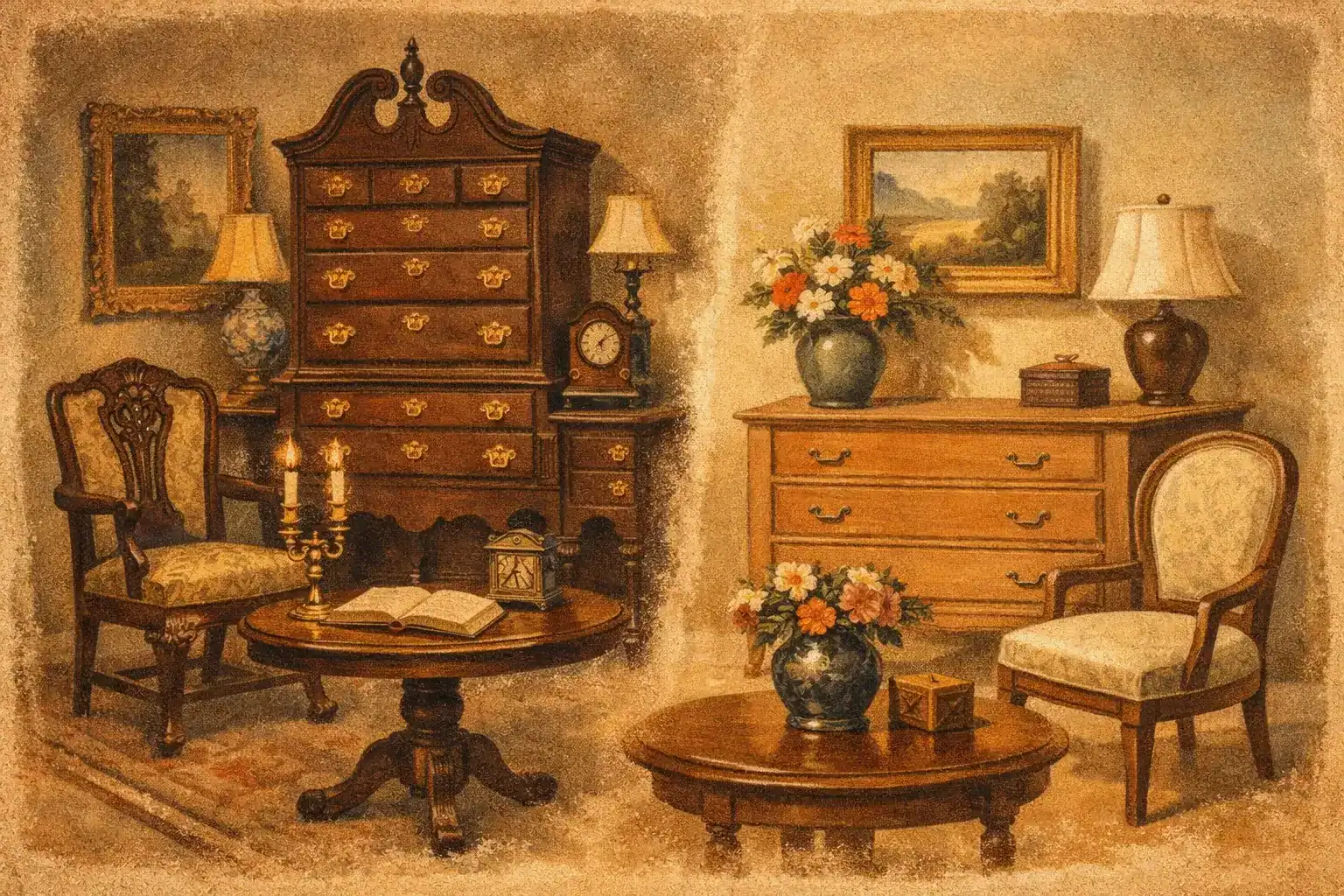
Antique furniture is generally understood to be at least 100 years old, although dealers and collectors may also use terms such as vintage, retro and mid-century to describe younger pieces with clear design value. It was made in its own period, using the materials, techniques and fashions of that time. Its surface, construction and wear form part of its identity.
Reproduction furniture is newly made in the style of an earlier period. It may take inspiration from Georgian cabinetry, Victorian dining chairs, Arts and Crafts joinery or 1960s Scandinavian forms. Quality varies enormously. Some reproductions are carefully made from solid timber with traditionally informed details; others are factory-produced pieces designed to create a period look at a lower price.
The distinction matters because age is not merely decorative. It affects construction, rarity, condition, value and the particular patina a piece develops over decades of use. A reproduction may resemble an antique from across a room. Up close, the story is usually in the details.
Why Genuine Age Has Decorative Value
Antique furniture carries evidence of its life. That might be a mellowed oak surface, old repairs beneath a table, tiny variations in hand-cut joinery, or brass that has worn softly where it has been handled. These are not automatically flaws. In many cases, they give a piece warmth and credibility that a newly distressed finish struggles to achieve.
There is also the matter of proportion. Older furniture was often made for specific purposes and interiors, so it can have unusual scale or pleasing restraint. A narrow Georgian side table, a compact Victorian occasional chair or a mid-century cabinet can introduce character without making a room feel over-furnished.
This does not mean every old item is beautiful, useful or valuable. Age alone is not a guarantee of quality. An over-restored chest, a heavily altered dresser or a tired piece with structural problems may be less desirable than a well-made modern alternative. The point is to buy with your eyes open, not simply to buy old.
Craftsmanship and construction
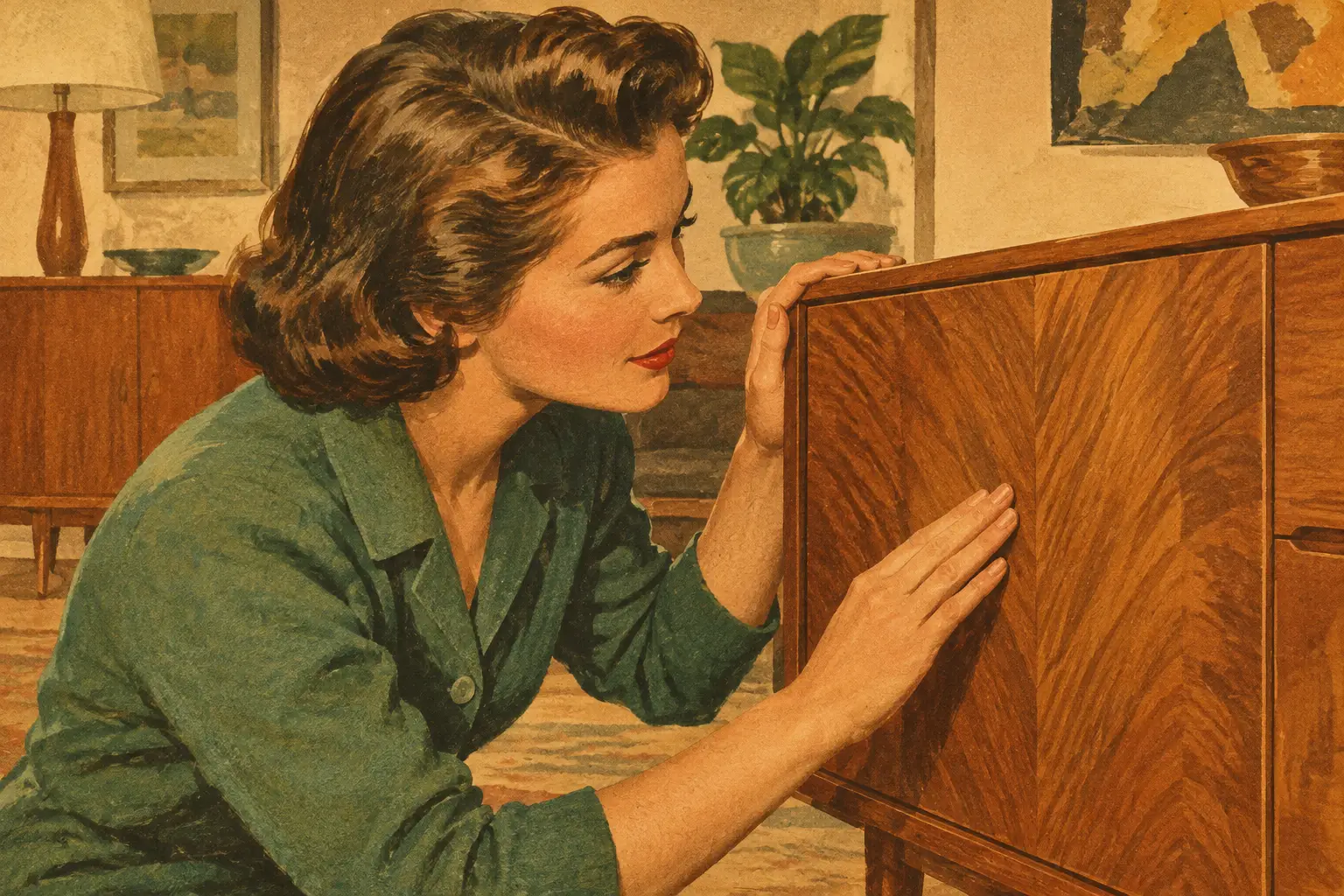
One of the clearest advantages of a good antique is the construction. Look for solid timber where appropriate, dovetail joints in drawers, well-fitted panels and hardware that sits naturally within the piece. Hand-cut dovetails can be slightly irregular, while later machine-cut joints tend to be more uniform. Neither detail alone proves a date, but together they help build a picture.
Reproductions often use modern fixings, engineered boards, newly cast handles or artificial ageing. Again, these are not necessarily faults if the price and description are honest. They do, however, place the piece in a different category. A reproduction is a furnishing solution; an antique is an original surviving object.
Patina cannot be rushed
Patina is often misunderstood as dirt, dark varnish or deliberate distressing. In its best form, it is the gentle change that timber, metal, leather and painted finishes acquire through time and handling. It gives an antique depth of colour and a softness at the edges.
A reproduction can be finished to imitate wear, but repeated use creates wear in logical places: around handles, chair arms, drawer fronts and table edges. Artificial marks often look scattered or overly even. If a finish appears theatrical, it probably is.
When Reproduction Furniture Is the Sensible Choice
Authenticity is desirable, but it is not the only consideration. Reproduction furniture can be a sensible choice in a busy family kitchen, a rental property, or a space where exact dimensions matter. A newly made dining table may better accommodate everyday use, matching chairs and modern seating heights. A reproduction upholstered bed may also be easier to specify in the fabric and size you need.
Budget can be another reason. Certain antique categories, especially well-proportioned Georgian furniture, original designer pieces and exceptional mid-century furniture, command prices that reflect rarity and demand. A good reproduction may allow you to achieve a particular period mood while reserving budget for one or two authentic focal pieces.
The key is not to treat reproduction as a substitute that must pretend to be antique. It works best when it is chosen for its own merits: solid materials, sound construction, sympathetic design and practical function. A reproduction that is honest about what it is can sit very comfortably beside antique lighting, ceramics or a one-of-a-kind cabinet.
Condition, Restoration and Everyday Living
Condition should influence every purchase, particularly with furniture intended for regular use. An antique table may have stains, small repairs and a gently uneven top, all of which can be entirely acceptable. More serious concerns include active woodworm, unstable joints, failing veneers, severe cracking or drawers that do not function properly.
Restoration is not automatically a negative. Sensitive restoration can preserve a piece for another generation: tightening a chair frame, repairing a drawer runner, rewiring a vintage lamp or replacing a damaged leather inset using appropriate materials. What matters is whether the work respects the object’s character and is reflected in its price.
For daily life, be realistic. A pale pine scrubbed table may welcome family suppers and the occasional water ring. A delicate marquetry writing table may be better placed away from enthusiastic children, houseplants and direct sunlight. Antiques need not be treated like museum exhibits, but they do reward thoughtful use.
How to Buy With Confidence
Start with the role the furniture must play. Measure the room, doorways and staircases before falling for a large wardrobe or dining table. Then consider the material, scale and period that will work with the rest of your interior. A single antique chest can bring more character to a contemporary room than an entire suite of matching reproduction furniture.
Ask clear questions about age, provenance, condition and restoration. A reputable dealer should describe notable repairs, signs of wear and any alterations plainly. Photographs should show the useful details, not only the most flattering angle. For higher-value pieces, particularly recognisable designer furniture, documentation and attribution deserve extra care.
It is also worth allowing your interior to evolve. A home rarely feels personal when every piece comes from one era or one shop. Pair a restrained contemporary sofa with an antique occasional table, or place a sculptural mid-century sideboard beneath older artwork. At MN Interior Antiques, the most compelling rooms are often built this way: curated antiques with a story to tell, chosen alongside pieces that make everyday life easier.
The Better Question Is What You Want to Keep
The most useful way to approach antique furniture vs reproduction is to think beyond the initial purchase. Will the piece still interest you after the room has changed? Can it be repaired rather than replaced? Does it have enough presence to move with you, earn a new role and remain part of the home?
Reproduction furniture may be exactly right when you need predictable dimensions, durability and a particular finish. But when a piece offers honest age, strong form and craftsmanship worth preserving, an antique can become more than furniture. It can be the object that gives a room its point of view.