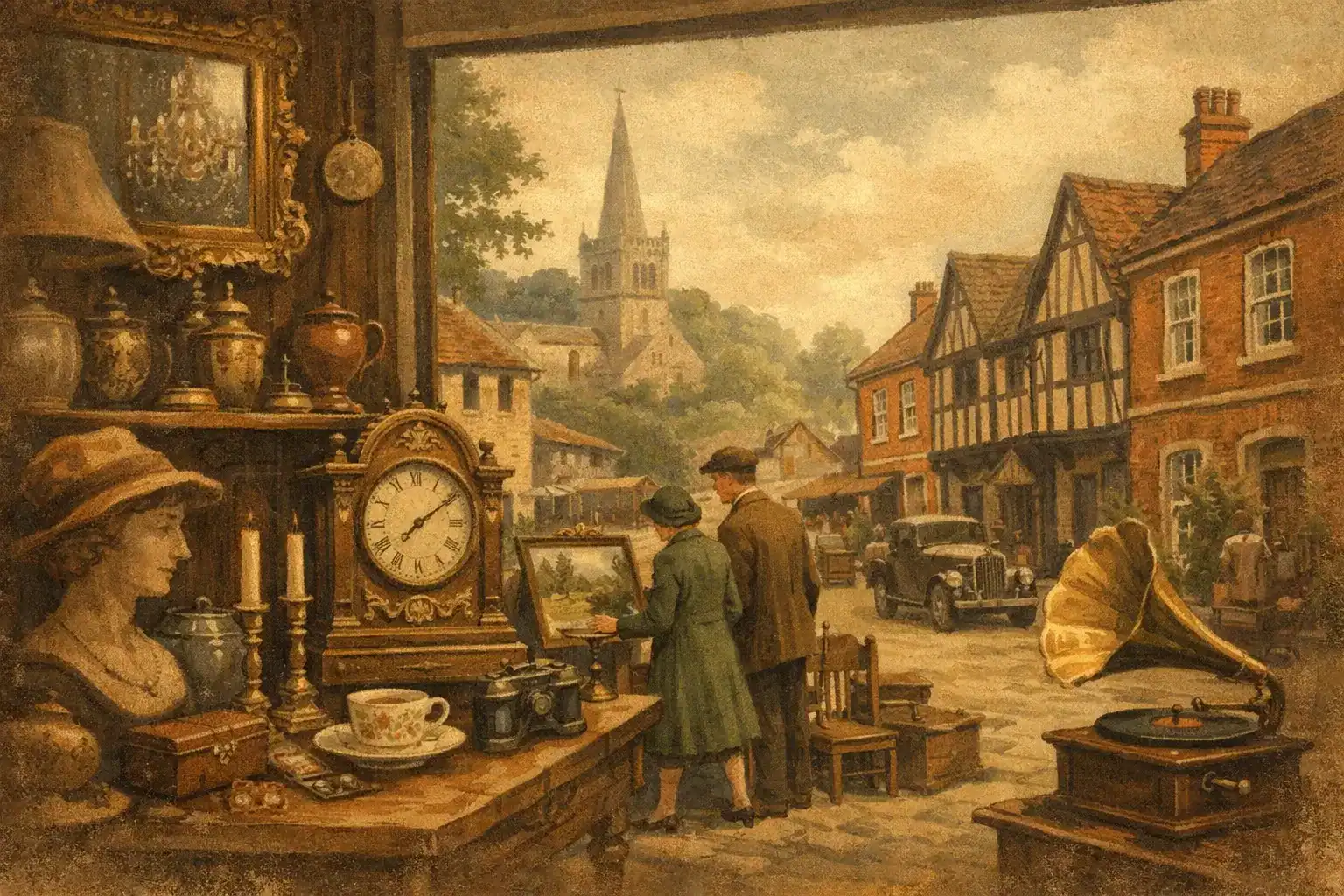
A well-made chest of drawers can outlast several decorating schemes, three house moves and a succession of flat-pack replacements. That is part of the appeal of antique furniture: it is not simply old. It has already proved its usefulness, carrying evidence of the hands that made it and the rooms in which it has lived.
For a home with character, an antique piece offers something difficult to manufacture from scratch – proportion, patina and a sense of permanence. The right table, cupboard or chair does not have to turn a room into a period set. It can make a contemporary space feel less prescribed, bringing warmth to clean lines, new paintwork and modern lighting.
What Makes Antique Furniture Worth Choosing?
Age alone is not a guarantee of quality. A piece earns attention through its construction, materials, condition and design. Solid timber, thoughtfully shaped mouldings, hand-cut joinery and original hardware are all signs that a maker gave proper consideration to the object. They also tend to make furniture more repairable than many newer alternatives.
Patina matters too. The softened sheen on walnut, the small marks around a drawer pull, or a worn edge on an oak farmhouse table can be visually rich because it is honest. These details should not be confused with neglect. A good antique retains its structure and function while showing the gentle evidence of use that gives it presence.
There is also a practical argument for buying older pieces. A well-proportioned Victorian chest can offer far more useful storage than a decorative but shallow modern cabinet. An elm dining table may be robust enough for daily meals, homework and occasional entertaining. Antique furniture is often bought for its beauty, but the pieces that become favourites are usually those that work hard as well.
Choosing Antique Furniture for Your Space
The most successful purchase begins with the room rather than the object. Measure the available footprint, but also consider circulation. A handsome sideboard is of little use if it narrows the route through a dining room or prevents cupboard doors from opening fully. Record height, width and depth, then compare those dimensions with the furniture in situ.
Scale is more subtle than measurement. A tall Georgian-style chest may fit physically beneath a ceiling but still overwhelm a low, compact bedroom. Conversely, a modest oak table can look lost in a large kitchen unless it is anchored by substantial chairs, a pendant light or a well-chosen rug. Look at leg thickness, drawer depth, the visual weight of the timber and how much air surrounds the piece.
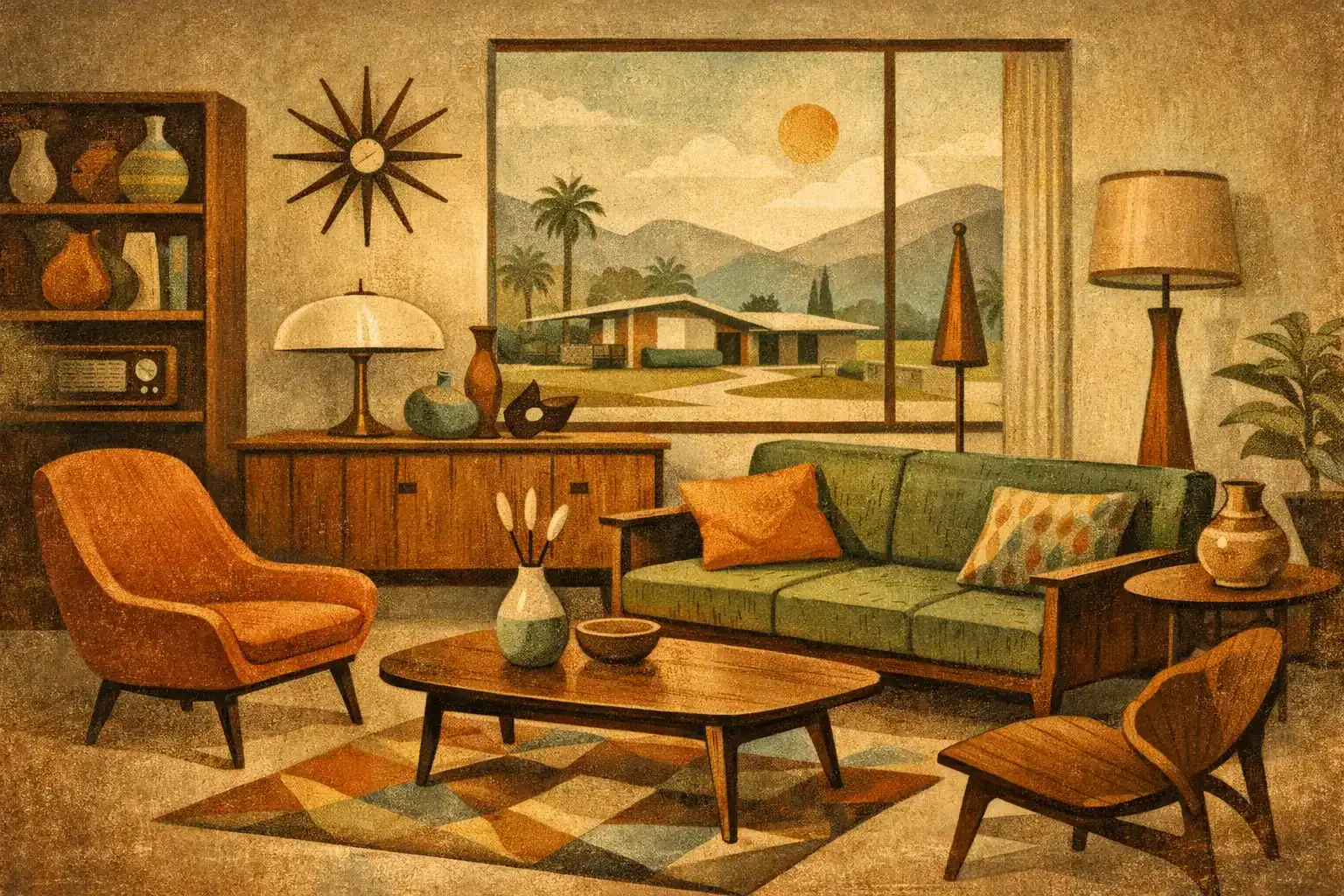
It is rarely necessary to match every era. A mid-century armchair can sit beautifully beside an earlier pine dresser, particularly when they share a material, colour or confident simplicity of form. A single antique piece in an otherwise contemporary room often has greater impact than a collection of loosely related reproductions. Let it be a point of contrast, not an obligation to recreate a historical interior.
Start with a useful anchor piece
For buyers beginning a collection, storage furniture and tables are often the soundest place to start. A chest of drawers, desk, occasional table or glazed cabinet brings immediate function and can establish the room’s character without demanding a full redesign. Chairs and upholstery can be rewarding, but they require closer attention to comfort, frame strength and fabric condition.
Dining tables deserve particular care. Check that the height suits the intended chairs, that any leaves or extensions operate correctly, and that the top is stable. Surface marks may be entirely acceptable on a table intended for family life; a warped top, active woodworm or loose base needs a more considered assessment.
How to Read Condition and Craftsmanship
Condition should always be judged in relation to age, rarity and intended use. A pristine surface is not automatically preferable. Over-restoration can erase the colour, texture and minor irregularities that make an older piece convincing. Equally, the phrase “full of character” should not disguise structural faults.
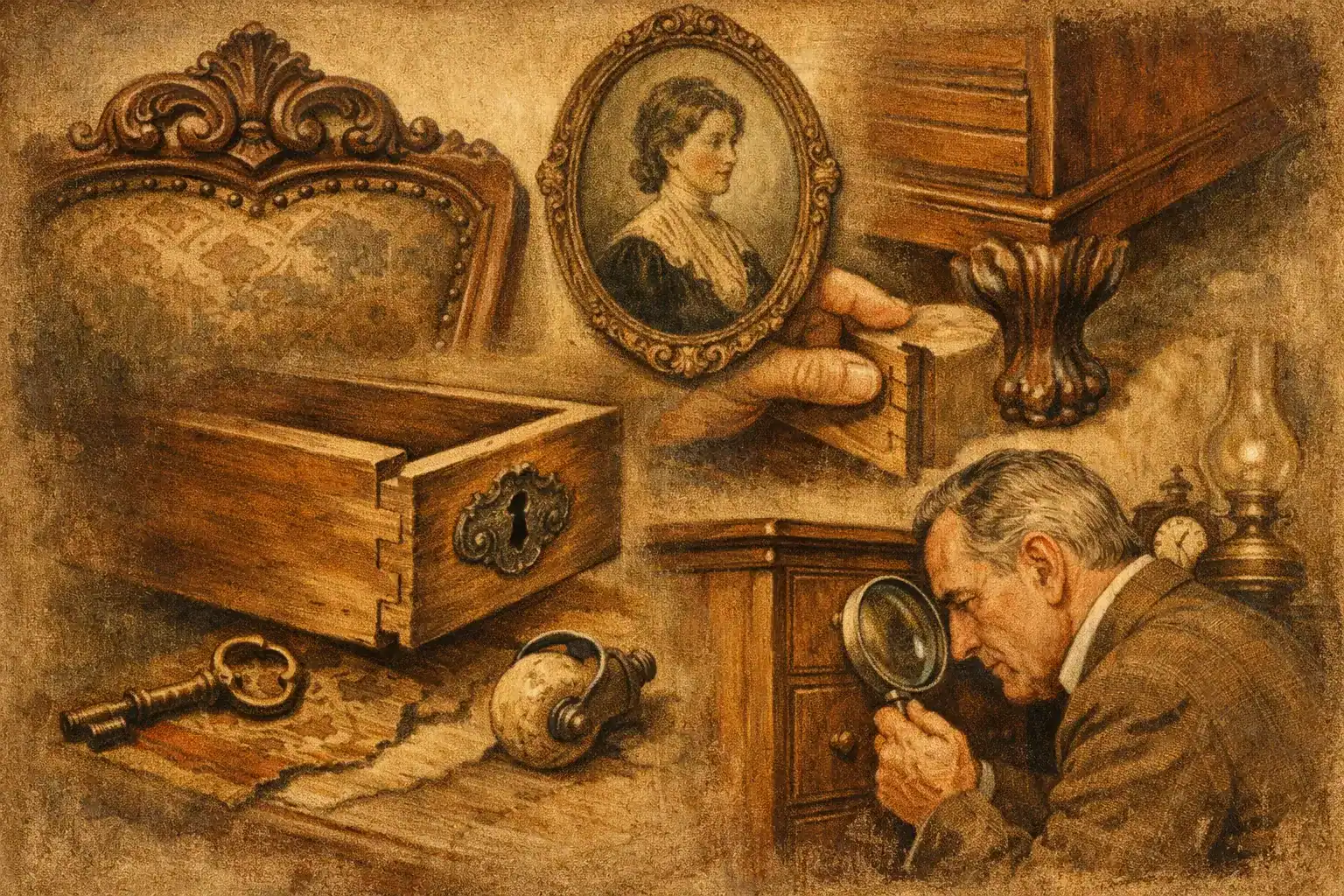
Open every drawer where possible. It should move without excessive force, even if it is not as smooth as a modern runner. Look for dovetail joints, either hand-cut or machine-cut depending on the period, and inspect the drawer bottoms for splits or later replacements. On cupboards, check hinges, catches and shelves. A faint smell of age is normal; persistent damp, mould or strong chemical odour is not.
Timber tells a story. Oak is often sturdy and richly grained, while mahogany can offer a deeper, more formal look. Pine has an ease that suits kitchens, bedrooms and country interiors, and walnut brings warmth without the visual heaviness of darker woods. Veneer is not inherently inferior – fine antique veneer work can be exceptionally skilled – but lifting, cracking and missing sections should be described clearly and priced accordingly.
Repairs are part of an object’s life. A sensitively restored leg, replaced handle or relined drawer may be entirely sensible, especially on furniture intended for everyday use. What matters is transparency and quality of work. Originality tends to carry greater weight for collectors, while a homeowner may reasonably prioritise stability, usability and a finish that sits comfortably in the room.
Placing Antiques in a Modern Interior
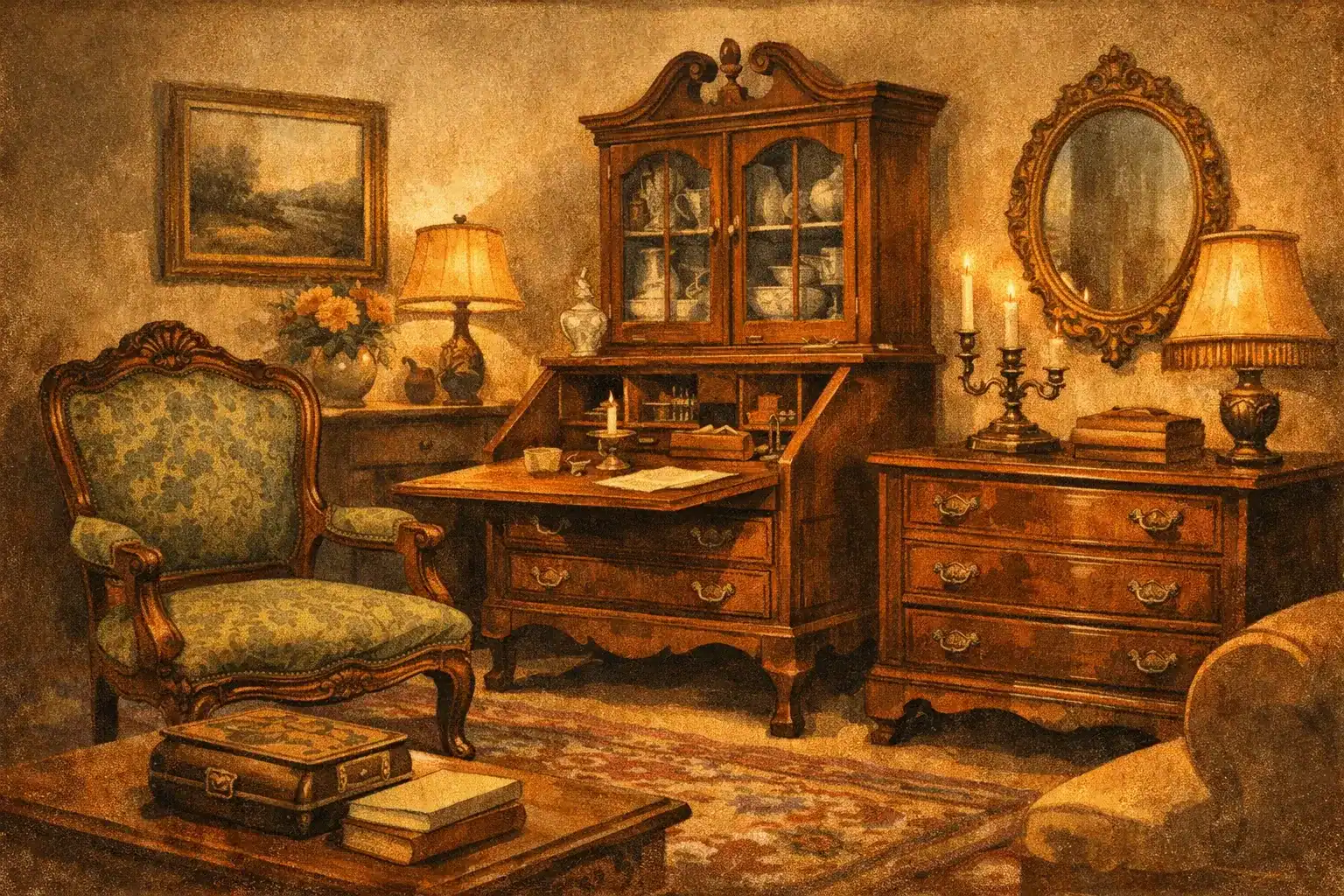
Antique furniture looks most at ease when it is allowed to be useful rather than treated as a museum exhibit. Place a small gilt mirror above a contemporary console, use an old cupboard for table linen, or give a carved occasional table a practical role beside a reading chair. Contrast makes both the antique and the newer elements more interesting.
Light is especially important. Strong direct sunlight can fade timber and textiles over time, while a shadowy corner can make even a beautiful piece feel heavy. Position furniture so its grain, handles and silhouette can be appreciated. A vintage lamp or carefully chosen wall light may reveal a carved surface far better than a single overhead fitting.
Avoid trying to make every surface look newly finished. A room needs a little visual variation: polished glass, woven fabric, painted plaster, aged timber and ceramics each reflect light differently. This layered approach is why an old oak stool beside a clean-lined sofa can feel intentional rather than accidental.
For homes around Stevenage, Hitchin and the wider Hertfordshire area, this mix often suits the architecture particularly well. A modern extension can benefit from the grounding presence of a country table or painted cupboard, while a Victorian terrace may feel fresher with one or two pieces of mid-century furniture rather than a wholly period scheme.
Caring for Furniture With a Past
Most antique furniture needs less intervention than owners assume. Dust with a soft, dry cloth and keep it away from sustained heat, radiators and abrupt changes in humidity. Use coasters and mats on vulnerable surfaces, particularly veneer, leather and polished dining tables. Never leave damp glasses or plant pots directly on timber.
Be cautious with supermarket sprays and silicone polishes. They can create a residue that attracts dust and complicates later conservation. If a finish looks dry, seek advice before applying wax or oil, as the right treatment depends on the timber and existing surface. A light, occasional approach is generally better than frequent polishing.
Woodworm holes are not always a sign of an active problem. Fresh dust around holes, known as frass, is a more meaningful warning than old exit marks alone. If there is any uncertainty, isolate the item and ask a specialist to assess it before bringing it into a room with other wooden furniture.
Buy for the Long View
The best antique purchases are not necessarily the rarest or most formal. They are the pieces whose proportions continue to please you, whose condition is honestly understood, and whose function makes sense in your life. A cabinet should hold what you need it to hold; a chair should invite use; a table should suit the people who gather around it.
At MN Interior Antiques, curation begins with that balance of decorative character and practical value. Whether you are drawn to an early oak stool, a nineteenth-century chest or a sculptural mid-century side table, choosing carefully gives the object its next chapter. Leave room for the marks, the craftsmanship and the small irregularities – they are often what make a home feel genuinely your own.