A teak sideboard with clean lines can look convincingly mid-century at first glance – until you turn it over and find machine-perfect joins, a fresh paper label, or wood veneer that feels too new to have lived through the 1950s. If you have ever wondered how to identify mid century modern furniture, the answer is rarely one single detail. It is a matter of proportion, materials, construction, wear, and the quiet confidence of good design.
For buyers who want homes with character, this matters. True mid-century modern furniture brings more than a look. It carries the design values of its period – utility, simplicity, craftsmanship, and an optimism about modern living that still feels fresh today. The challenge is that the market is full of later reproductions, inspired pieces, and hybrids that borrow the style without the history.
How to identify mid century modern furniture at a glance
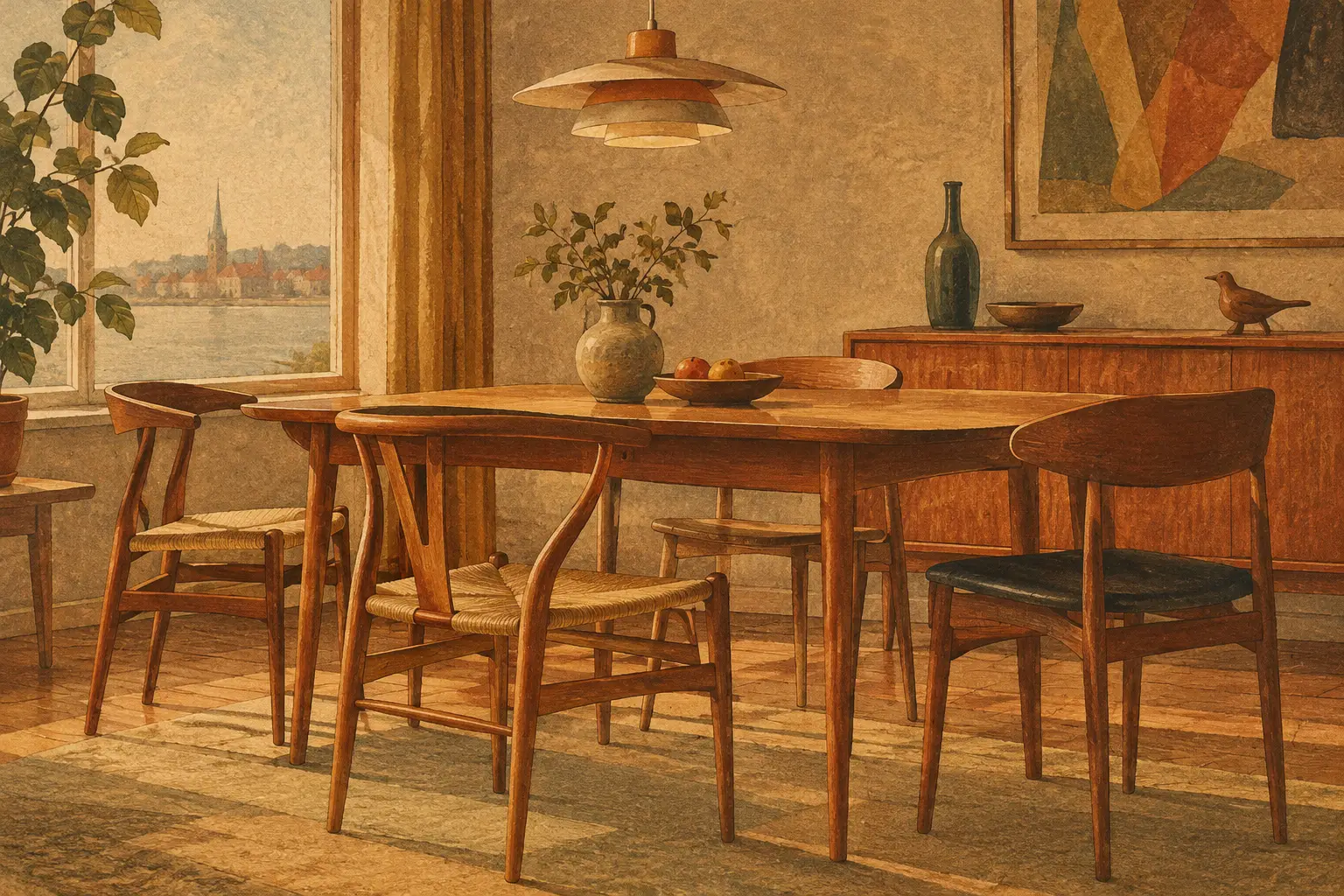
The first test is silhouette. Mid-century modern furniture usually favors clean, architectural lines with very little excess. Legs are often tapered and slender. Cabinets tend to sit low and long. Chairs may have sculptural frames, but they still feel restrained rather than ornate. If a piece relies on heavy carving, decorative appliqué, or exaggerated distressing, it is probably drawing from another tradition.
Proportion also gives a lot away. Mid-century designers paid close attention to visual balance. Even practical storage pieces often appear light on their feet, with enough open space around the frame to keep them from feeling bulky. A sideboard can be generous in scale without looking imposing. That blend of function and visual ease is one of the style’s signatures.
Color and finish matter too. You will often see warm wood tones such as teak, walnut, rosewood, and oak, sometimes paired with black metal, brass details, or subtle upholstery in earthy or muted shades. Bright laminates and molded plastics do appear in some categories, especially later in the period, but the overall effect is usually intentional and controlled rather than loud for its own sake.
Start with the era, not just the style
One of the easiest mistakes is treating “mid-century modern” as shorthand for any furniture with angled legs. Strictly speaking, the period sits roughly from the mid-1940s to the late 1960s, with some overlap into the early 1970s depending on the designer and region. A new piece can certainly be mid-century in style, but it is not a mid-century original.
That distinction matters if you care about authenticity, collectible value, or simply the satisfaction of owning something with a genuine design story. An original piece will usually show age in a believable way. Finishes soften. Brass develops patina. Drawer runners wear naturally. Veneer may show slight movement. None of that should suggest neglect, but it often reveals time in a way replicas struggle to imitate convincingly.
Age alone is not enough, of course. Plenty of old furniture is just old furniture. The question is whether the piece reflects the design language and manufacturing methods of the mid-century period.
Materials that signal the period
Wood choice is one of the strongest clues. Teak is especially associated with Scandinavian and British mid-century furniture, while walnut appears frequently in American production. Rosewood can signal a more luxurious tier of design, though it was never used casually. Oak is less sleek in character but still appears in important mid-century work, particularly where a slightly more organic expression was preferred.
Veneer is not a warning sign in itself. In fact, many excellent mid-century cabinets and tables use veneer beautifully, often arranged to highlight grain patterns with real sophistication. What you are looking for is quality. The veneer should feel intentional, not like a thin decorative skin hiding poor construction. Book-matched grain, well-finished edges, and careful transitions are all good signs.
Other materials can help date a piece. Plywood, bentwood, tubular metal, brass hardware, glass tops, and early plastics all have their place in the period. Upholstered furniture may include wool blends, textured weaves, or vinyl. The point is not that every authentic piece must use the same ingredients, but that the materials should feel appropriate to the design and the era.
Construction tells the truth
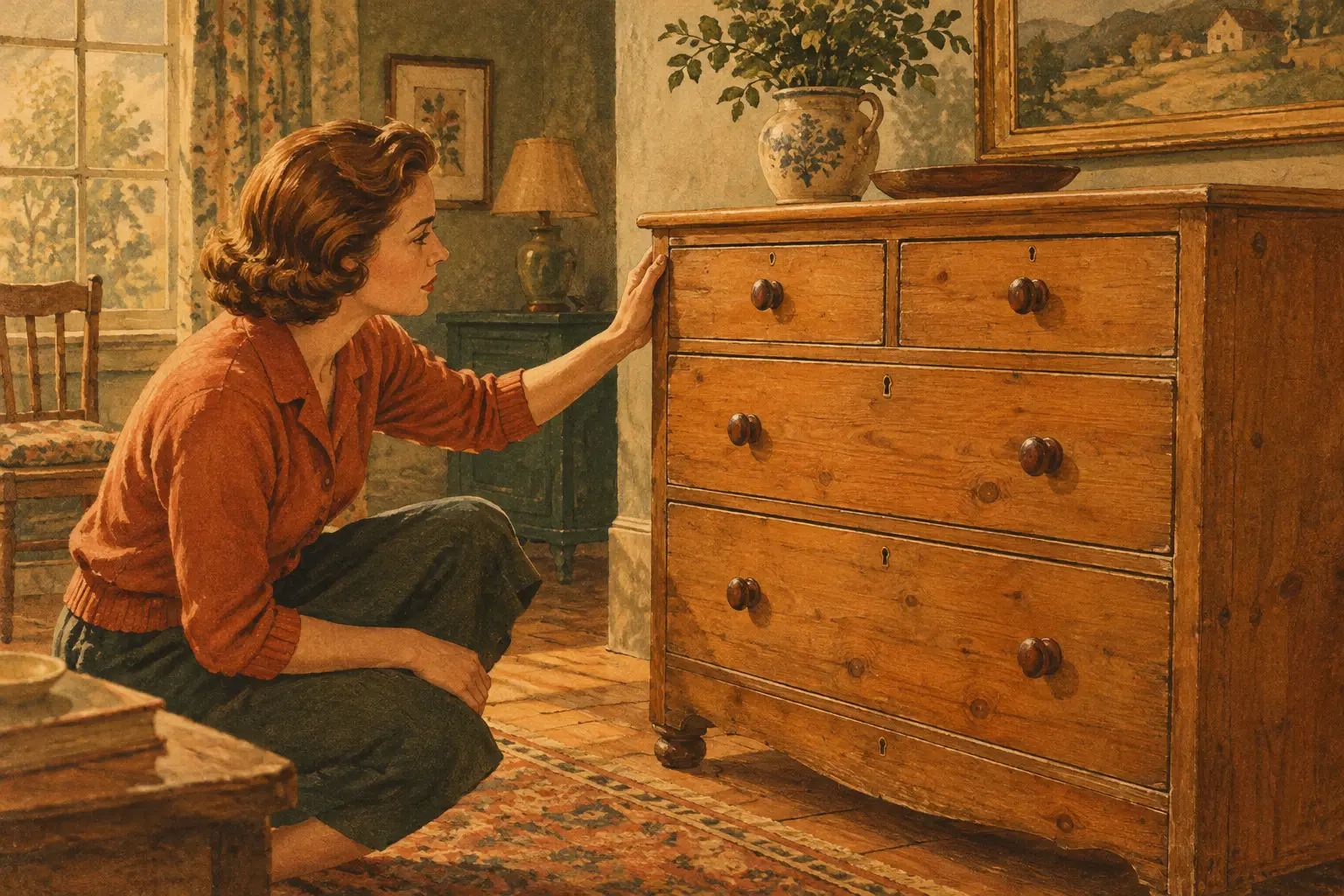
If the shape is the invitation, construction is the proof. Turn the piece around. Open the drawers. Look underneath.
Well-made mid-century furniture often shows thoughtful joinery and practical craftsmanship. Dovetail joints in drawers are common in better case pieces. Drawer interiors may be solid wood even when the exterior uses veneer. Backs are often neatly finished rather than ignored. On chairs and tables, pay attention to how legs are attached. Good original construction tends to look precise, stable, and considered.
Mass-produced pieces from the period do exist, and not every authentic item was made to luxury standards. Still, even factory-made mid-century furniture often carries a certain honesty in how it is put together. By contrast, a modern reproduction may reveal staple-heavy construction, overly uniform materials, synthetic backing boards, or fittings that look too contemporary.
Screws and hardware can be revealing as well. Replaced hardware is common and not always a problem, but if every fitting looks shiny and brand new, pause. The same goes for undersides that appear suspiciously untouched while the top shows dramatic wear. A convincing piece should make sense as a whole.
Labels, makers, and stamps
If you are fortunate, the piece still has its maker’s label, stamp, or retailer tag. These can be immensely useful, though they are not present on everything. Mid-century furniture was often labeled discreetly, underneath drawers, behind cabinets, or on the back panel.
Well-known names naturally attract attention, but lesser-known makers can be just as rewarding. In fact, many excellent mid-century pieces are valued for design quality rather than celebrity attribution. A label should support what the piece is already telling you, not rescue a doubtful object.
It also helps to recognize regional differences. Scandinavian pieces often emphasize refined joinery and elegant restraint. American mid-century design may feel slightly broader in scale, especially in walnut case goods. British examples can combine practicality with a gentler modernism. Knowing these variations makes identification more precise and more interesting.
Wear should feel natural, not staged
Authentic age is usually uneven. The top of a coffee table may show light scratching, while its underside remains cleaner. Drawer pulls might have softened edges from use. Sun can alter the tone of wood, especially on surfaces exposed over time. Upholstery may have been replaced, but the frame should still carry the piece’s age honestly.
Artificial distressing often gets this wrong. It can appear too theatrical, too evenly applied, or focused on the wrong places. A sideboard covered in random dents but fitted with crisp new hinges and a chemically darkened finish may be trying too hard. Real wear has logic. It reflects use, movement, cleaning, light, and time.
That said, restoration is not the enemy. Sensitive restoration can preserve a piece beautifully. A professionally cleaned finish, repaired veneer, or reupholstered seat may make furniture more usable without diminishing its integrity. What matters is whether the work respects the original design rather than overwriting it.
How to identify mid century modern furniture without being fooled by trends
The popularity of the style has created a strange middle ground. Many new pieces borrow mid-century cues because they sell well. Some are perfectly decent furniture, but they are not collectible mid-century design. They tend to simplify what made the originals successful.
Reproductions often exaggerate the obvious signals – tapered legs, walnut stain, minimal hardware – while missing the subtle parts. The proportions may be slightly clumsy. The grain may look flat. The finish may feel overly uniform. Instead of the calm confidence of a well-designed period piece, you get a furniture shorthand for “retro.”
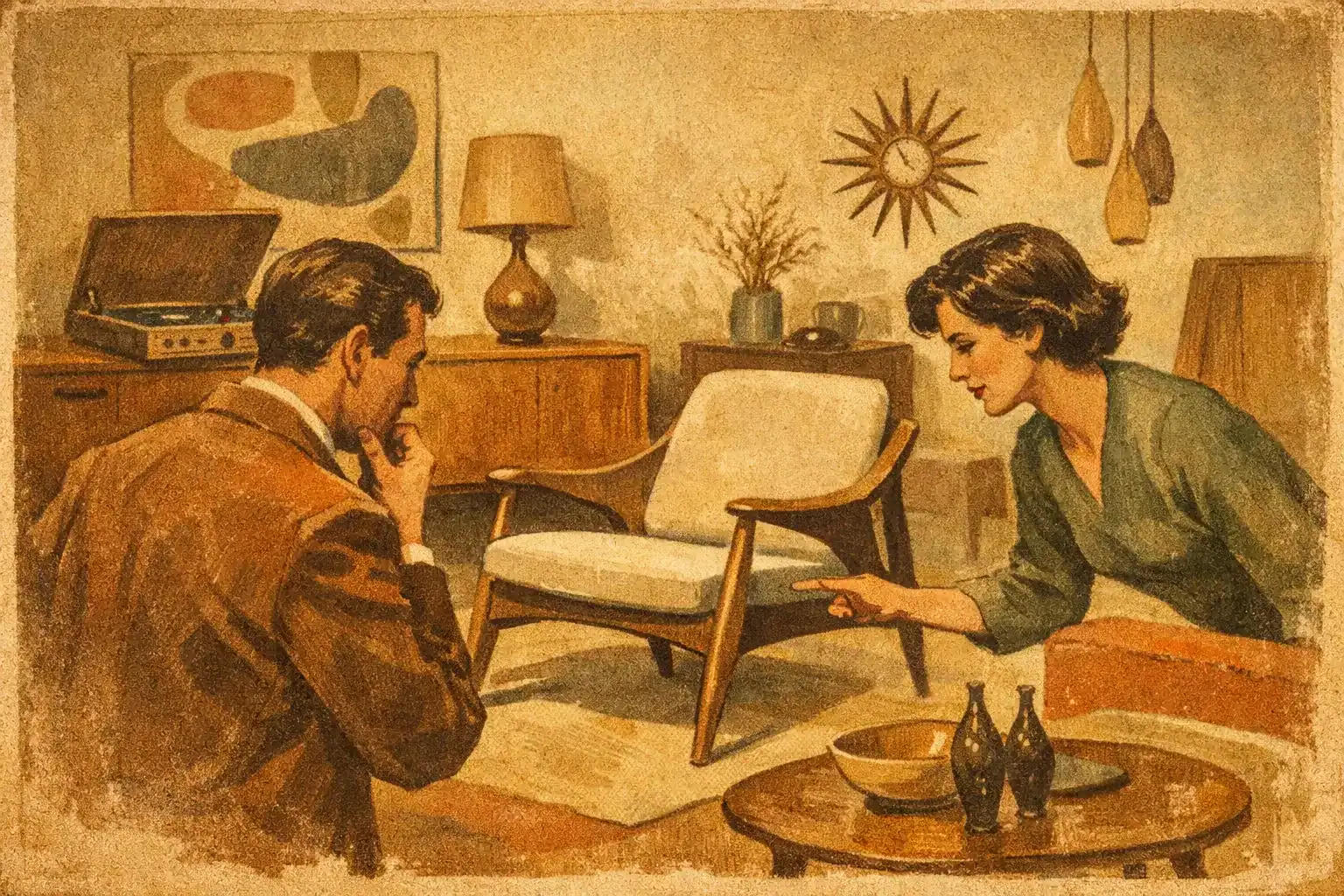
This is where experience sharpens your eye. Looking at authentic examples regularly helps you notice the difference between furniture that belongs to the period and furniture that references it. A curated dealer can be especially useful here, because presentation, attribution, and condition notes give context that online marketplaces often lack.
When it is worth asking questions
If you are buying from a dealer, ask about provenance, restoration, and any replaced elements. A trustworthy seller should be comfortable discussing condition in practical terms. Was the finish revived or fully refinished? Are the handles original? Has the upholstery been updated? These are not awkward questions. They are part of buying well.
Photographs can only tell you so much, especially with wood tones and surface texture. If you are shopping locally in places such as Stevenage, Hitchin, or the wider Hertfordshire area, viewing in person can be invaluable. You can judge scale properly, inspect the joinery, and see whether the piece has the visual depth that photographs sometimes flatten.
For buyers building interiors with lasting character, the goal is not to memorize every designer or factory mark. It is to develop a feel for authenticity. The right mid-century piece usually announces itself quietly. It is useful, beautifully resolved, and made with enough care to keep speaking decades later. Trust the details, take your time, and let craftsmanship lead your decision.