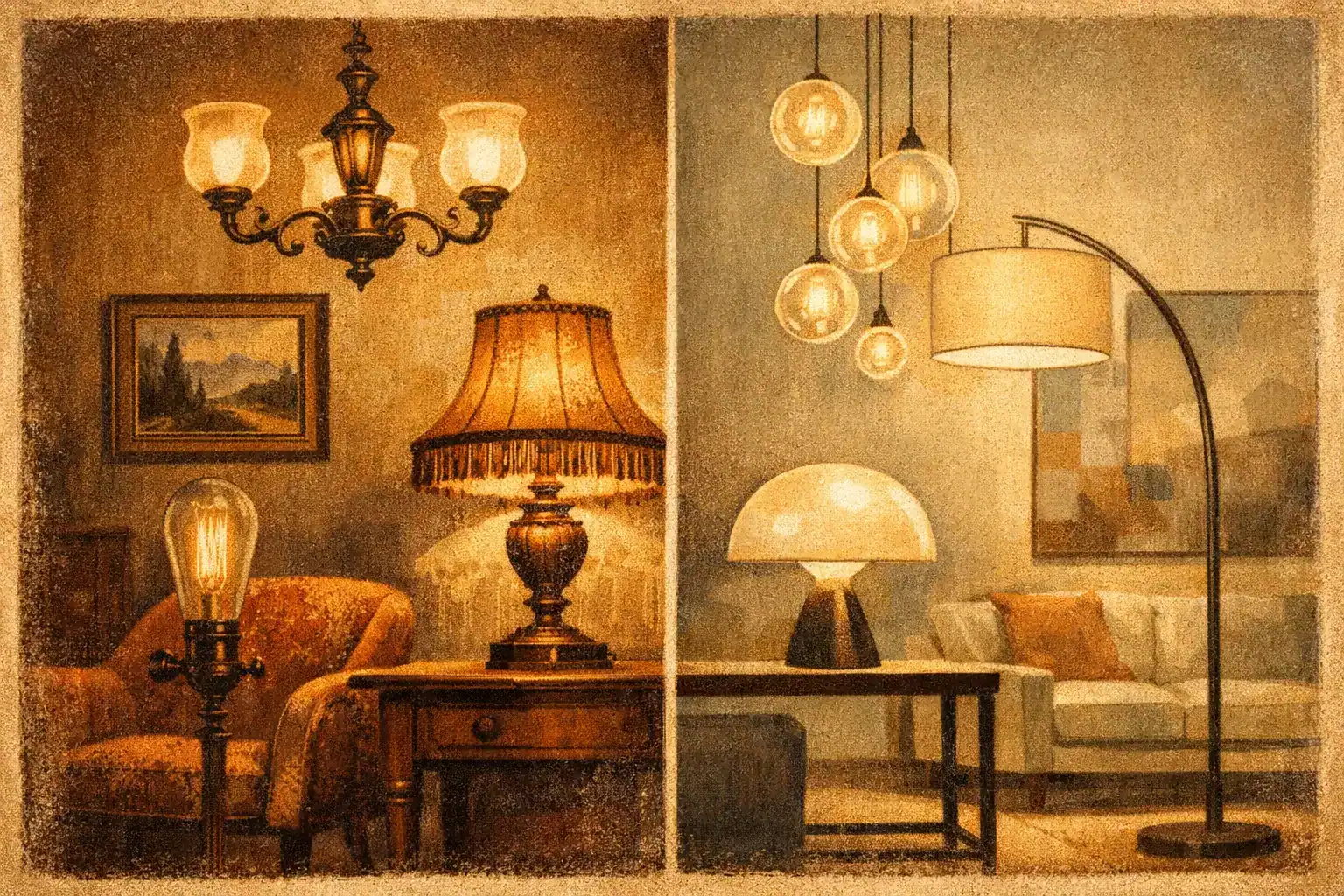
A light fitting can change the entire reading of a room. Replace a plain ceiling pendant with a 1960s glass shade, a brass wall light or a sculptural ceramic lamp, and suddenly the furniture, artwork and even the proportions of the space feel more deliberate. The question of vintage lighting vs new is therefore not simply about whether you prefer old things. It is about atmosphere, material, safety, function and the kind of home you want to create.
For some rooms, a new fitting is the sensible answer. For others, an original piece brings a depth that a freshly made reproduction cannot quite supply. The strongest interiors often make room for both.
Vintage lighting vs new: the difference is felt
New lighting is designed to solve a clear practical brief. It is usually available in repeat quantities, made to current electrical standards, and offered in a controlled range of finishes and sizes. If you need six matching bathroom wall lights, a slim-profile kitchen pendant, or a fitting for a particularly awkward ceiling height, that consistency is useful.
Vintage lighting has a different sort of appeal. It carries evidence of its making and its life: hand-worked brass, figured timber, thick moulded glass, painted metal with a softened finish, or the satisfying weight of a well-made switch. A 1930s opaline shade and a mid-century teak table lamp were not created to be visual background. Their materials and forms tend to have presence even when switched off.
That presence can make a room feel collected rather than furnished all at once. An original lamp may introduce a gentle irregularity beside contemporary joinery, or give a newer sofa a more settled, personal character. For buyers drawn to vintage interiors in Hertfordshire, this is often the point: a home should reflect a considered eye, not a page from a catalogue.
What vintage lighting offers that new pieces rarely do
Material, patina and design history
Many earlier fittings were made when metal, glass and ceramic components were expected to last. This does not mean every old lamp is superior to every contemporary one, but it does explain why a good vintage example can feel substantial. Spun aluminium, aged brass, cast iron, walnut, fibreglass and hand-finished ceramic all respond beautifully to light and use.
Patina matters too. A little wear at the edge of a brass base or a fine variation in a glazed ceramic lamp is not necessarily a flaw. It can be part of the object’s visual truth. The key is to distinguish honest age from damage that compromises use or appearance. A carefully sourced piece should be described clearly, including any chips, marks, repairs or replacement parts.
Vintage also gives you access to distinct design languages. An Arts and Crafts copper lantern, Italian-inspired 1970s mushroom lamp, French industrial wall light or Danish-style mid-century pendant brings a specific period sensibility. Rather than borrowing a vague ‘retro’ look, you can choose an object with genuine proportion, construction and provenance.
A more individual room
Mass-produced lighting is not inherently characterless, but it is designed to be widely repeated. Vintage pieces are less predictable. Even where a model was once produced in volume, surviving examples vary in finish and condition. This makes them particularly effective in entrance halls, reading corners, dining rooms and bedrooms, where one memorable light can establish the mood.
A single vintage floor lamp beside an otherwise simple armchair can do more for a sitting room than several small decorative purchases. Likewise, a pair of period wall lights can frame a fireplace or bed with a sense of permanence. The effect is considered without becoming overly styled.
Longevity beyond a trend cycle
A well-chosen original fitting need not be tied to a period-perfect scheme. Mid-century lighting works especially well with modern plaster walls and contemporary furniture because its shapes are clean and its materials are warm. Older glass pendants can add softness to a minimal kitchen. Architectural salvage pieces bring useful contrast to newer extensions.
The aim is not to turn every room into a museum. It is to choose designs with enough integrity to remain interesting as the rest of the interior evolves.
Where new lighting has the advantage
Practical requirements should lead the decision in bathrooms, utility spaces and heavily used family areas. New fittings are often easier to specify by IP rating, brightness, colour temperature and dimming compatibility. In a bathroom or outdoor position, these details are not decorative extras. They are essential to safe installation.
New lighting can also be the better route when you need a very particular performance. A kitchen island may need even task lighting over a long run, while a home office may benefit from glare control and a consistent, neutral-white light output. Original vintage fittings were often designed around incandescent bulbs and different expectations of illumination. Their shades can be beautiful, but they may cast light downwards or create a pool of atmosphere rather than light a whole room.
Cost is another genuine consideration. A new pendant may offer a lower initial price and a manufacturer’s warranty. Vintage prices reflect rarity, condition, materials and design significance. A scarce model by a recognised maker is a collectible as well as a light fitting, so its price may sit well above a modern equivalent.
Electrical safety is not optional
An appealing old lamp should never be judged by appearance alone. Original wiring, old plugs, brittle cable, damaged lampholders and unsuitable repairs all require attention. Before using a vintage light, have its electrical condition properly assessed. Rewiring by a competent professional can retain the integrity of the fitting while making it suitable for modern use.
Ask whether the flex, plug, bulb holder and switch have been replaced, and whether the fitting has been tested before sale. If a metal lamp requires earthing, that should be dealt with correctly. Ceiling lights and wall lights should be installed by a qualified electrician, particularly where fixed wiring is involved.
LED bulbs have made vintage lighting easier to live with. They produce far less heat than traditional incandescent bulbs and are available in warm colour temperatures that flatter aged brass, timber and coloured glass. For living spaces, a warm 2200K to 2700K bulb usually gives a gentler result than the cooler, bluish light sometimes associated with early LEDs.
Be mindful of the shade’s shape and the bulb’s visibility. A clear filament-style LED can suit an industrial pendant, while an opal bulb may be kinder behind a translucent glass shade. If using a dimmer, check that both the bulb and dimmer are compatible. Small technical choices make a considerable difference to how a vintage fitting performs.
How to choose for each room
Start with the job the light must do, then consider the object you want it to be. Over a dining table, a vintage pendant can be a natural focal point, provided it is hung at the right height and leaves clear sightlines across the table. In a sitting room, table lamps and floor lamps are often the easiest way to add vintage character because they create pools of light rather than relying on one central fitting.
Bedrooms benefit from softer, lower-level light. A pair of mismatched but complementary ceramic lamps can feel more relaxed than a rigidly coordinated set. In a hallway, choose something with enough scale to be noticed on arrival, but not so large that it crowds the ceiling or obscures a door swing.
For kitchens and bathrooms, consider a hybrid approach. Use new, high-performance task lighting where it is needed, then bring in vintage through a pendant above a table, a lamp on a sideboard, or a carefully selected wall light in an appropriate location. This preserves the character without asking an old fitting to meet every modern technical demand.
Value, restoration and buying with confidence
The value of vintage lighting is not always financial, though recognised designers and scarce models can hold strong collector interest. More often, its value is decorative and lasting: it gives a room an element that cannot be replicated by ordering another box of identical fittings.
Condition should inform both price and expectation. Minor surface wear may be desirable; cracks in structural components, significant corrosion, missing shade galleries or poorly executed alterations deserve closer scrutiny. Restoration should be sympathetic. Replacing unsafe wiring is sensible. Stripping away an original finish merely to make a piece look factory-new can erase much of what made it special.
At MN Interior Antiques, carefully selected vintage lighting is valued for this balance of beauty, function and history. The most rewarding pieces are not necessarily pristine. They are the ones with strong form, honest materials and enough quality to earn their place in a home for many more years.
When choosing between vintage and new, resist the urge to make every fitting match. Let new lighting handle the demands of safety and performance where necessary, then choose one vintage piece with real presence for the room that deserves a story to tell.