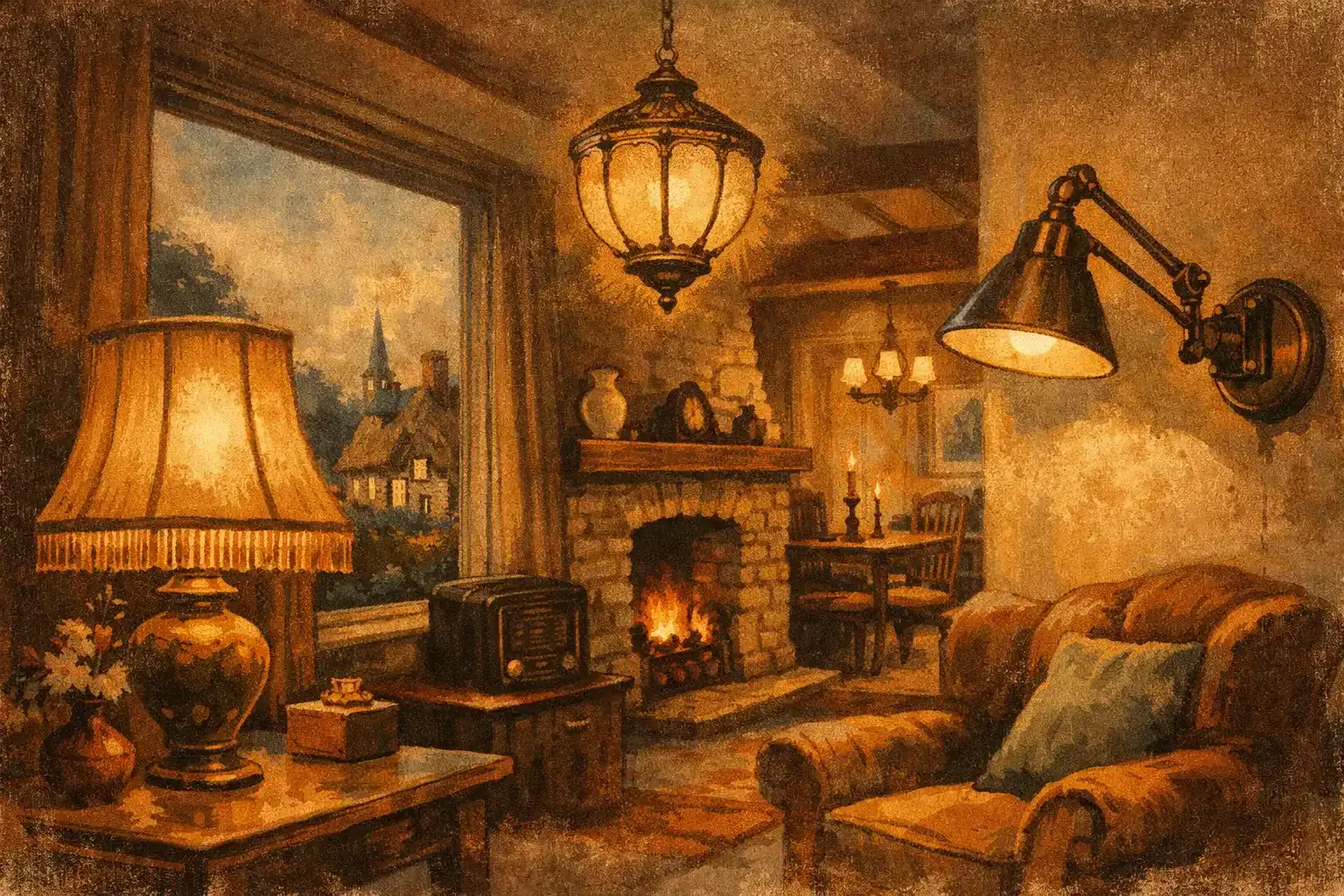
A good light fixture changes more than the brightness of a room. It sets the mood before the furniture has a chance to speak. For those seeking vintage lighting Hertfordshire homes can genuinely live with, the appeal lies in that combination of function and atmosphere: a hand-finished shade, a patinated brass arm, a sculptural ceramic base, or the soft pool of light cast by old glass.
Unlike a newly made fixture designed to suit every room, a vintage lamp has a point of view. It may be elegant, industrial, playful, restrained, or wonderfully eccentric. Choosing well means finding a piece with enough visual presence to add character, while still giving the room the light it needs.
Why Vintage Lighting Earns Its Place
Lighting is one of the most effective ways to introduce age and depth into an interior without changing the architecture. A mid-century table lamp can bring warmth to a streamlined living room. A painted metal pendant can give a newer kitchen a more settled feel. A pair of wall lights can make a hallway feel considered rather than merely practical.
The materials matter. Older lighting often features solid brass, spun aluminum, hand-painted metal, blown or molded glass, ceramic, teak, and well-made fabric shades. These surfaces develop character with time. A little oxidation on brass or gentle wear to enamel is not automatically a flaw. In the right setting, it is evidence of a life well lived and part of the fixture’s decorative value.
There is also the pleasure of rarity. Vintage pieces are not manufactured in endless runs, so the light you choose is unlikely to appear in every neighboring home. That sense of individuality is especially valuable when furnishing a home around collected furniture, art, ceramics, and objects rather than buying a room in one transaction.
Choosing Vintage Lighting in Hertfordshire by Room
The best fixture depends on its role in the room. Decorative impact is essential, but lighting should still work hard enough for daily life.
Living rooms: build layers, not glare
A living room rarely benefits from one powerful ceiling light. It feels more inviting with several lower-level sources: a floor lamp beside a chair, a table lamp on a sideboard, and perhaps a pendant or ceiling fixture for general illumination. This layered approach creates depth and allows the room to shift from practical daytime use to a more relaxed evening setting.
A substantial ceramic lamp base works beautifully with wood furniture, textured upholstery, and books. Brass or chrome lamps are often a natural fit for mid-century interiors, especially when paired with simple linen or parchment-style shades. If the lamp has an unusual base, keep the shade shape fairly quiet so the original design remains the focus.
Dining rooms: respect the table’s proportions
A pendant above a dining table is both a source of light and a central visual object. It should relate to the table below it. A small, delicate pendant can disappear above a long farmhouse table, while a large industrial shade may overwhelm a compact round table.
As a starting point, allow enough clearance for people to see one another across the table and to stand without hitting the fixture. The exact height depends on the ceiling, shade shape, and table size, but the aim is consistent: light the surface, not the tops of diners’ heads. Vintage opaline glass, pleated shades, and metal pendants all offer different moods. Opaline glass gives a softer, gentler glow, while enameled or aluminum shades direct more purposeful light downward.
Bedrooms: favor warmth and symmetry
Bedside lighting should feel calm but remain useful for reading. A matching pair of vintage lamps creates order, though an intentionally mismatched pair can be more personal if the scale, color, or era connects them. Wall-mounted lights save space on smaller nightstands, while compact ceramic or brass table lamps bring a softer presence to larger rooms.
Choose shades that diffuse light rather than exposing a harsh bulb. Warm-toned bulbs are usually more forgiving in bedrooms and better suited to the mellow character of older materials.
Kitchens and hallways: let utility be beautiful
Industrial and schoolhouse-inspired lighting has lasting appeal in kitchens, utility rooms, and entryways because it was originally made to perform. Holophane-style glass, metal factory pendants, and simple opaline shades give focused illumination while adding architectural interest.
In a hallway, the fixture should not impede movement or compete with a low ceiling. A flush mount, compact pendant, or well-positioned wall light may be more suitable than a dramatic chandelier. This is where scale matters most: a beautiful fixture is only successful if the space can carry it comfortably.
What to Check Before You Buy
Age alone does not determine quality. A carefully restored 1960s lamp may be a more practical choice than an older piece with extensive alteration or damage. The most rewarding purchases balance originality with safe, dependable use.
Start with the overall condition. Look for chips, cracks, dents, missing fittings, damaged glass, and repairs that affect stability. Surface wear can be attractive, but structural problems deserve closer attention. On metal fixtures, check that arms, joints, galleries, and ceiling fittings feel secure. On ceramic bases, inspect the neck and base closely, as hairline cracks can be easy to miss.
Wiring deserves equal attention. Vintage electrical fittings may have been rewired already, but buyers should always confirm the condition and suitability of the cable, plug, switch, bulb holder, and ceiling hardware. A qualified electrician should inspect and install a hardwired fixture, particularly an older chandelier, sconce, or pendant. Rewiring can be a sensible part of preserving a piece, not a compromise to its authenticity.
It also helps to ask what is original. An original shade is desirable when it is sound and proportionate, but fabric shades often need replacement after decades of use. A sympathetic new shade can make an antique or vintage base more usable without losing its character. Similarly, replacement chains, ceiling roses, and fittings may be necessary for safe installation.
Style, Era, and the Art of Mixing
A room does not need to be period-perfect to carry vintage lighting well. In fact, contrast is often where the interest begins. A 1950s Italian-style brass lamp can bring softness to a contemporary sofa. A simple 1970s ceramic lamp can ground an antique chest. An industrial pendant can sharpen the lines of a traditional kitchen.
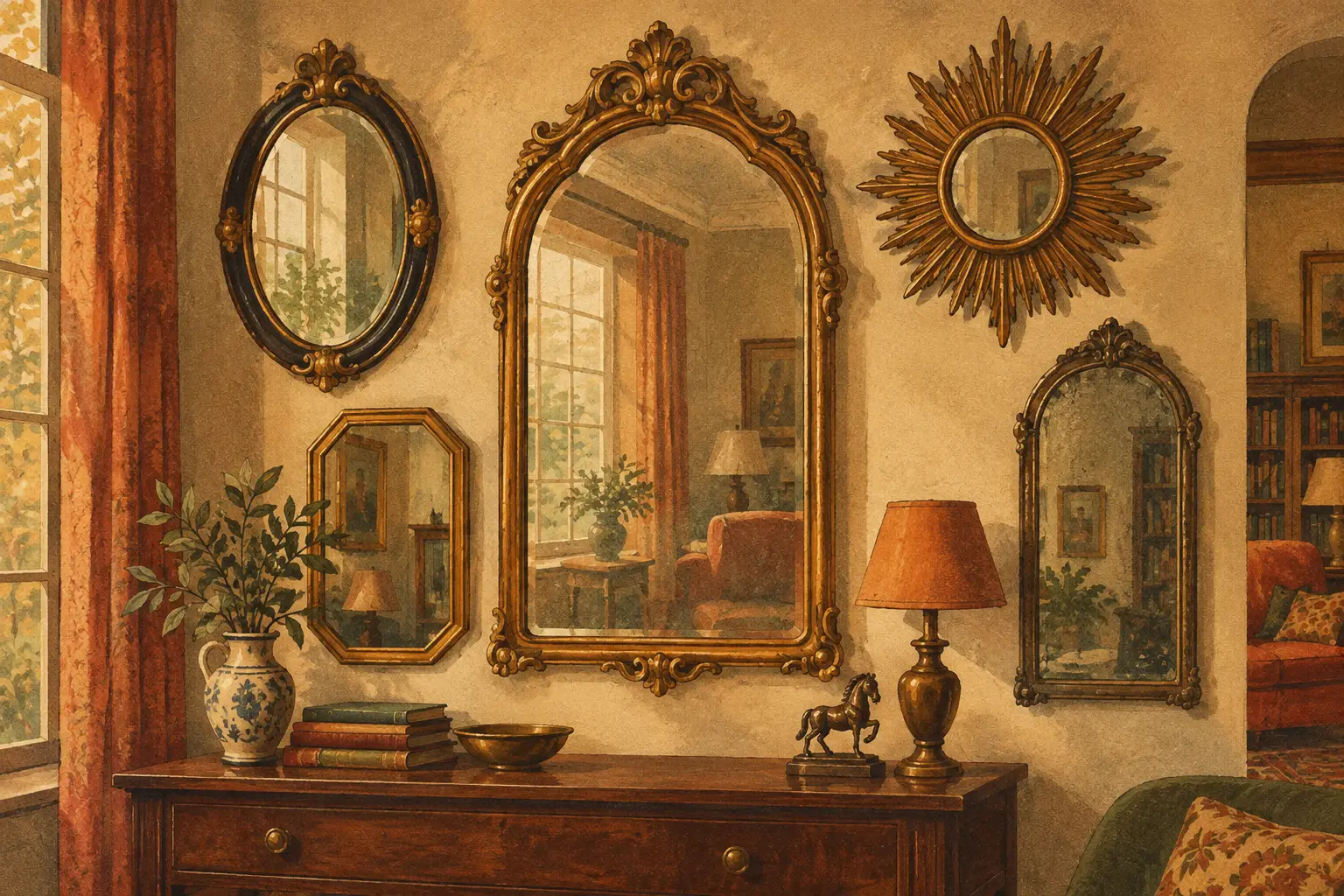
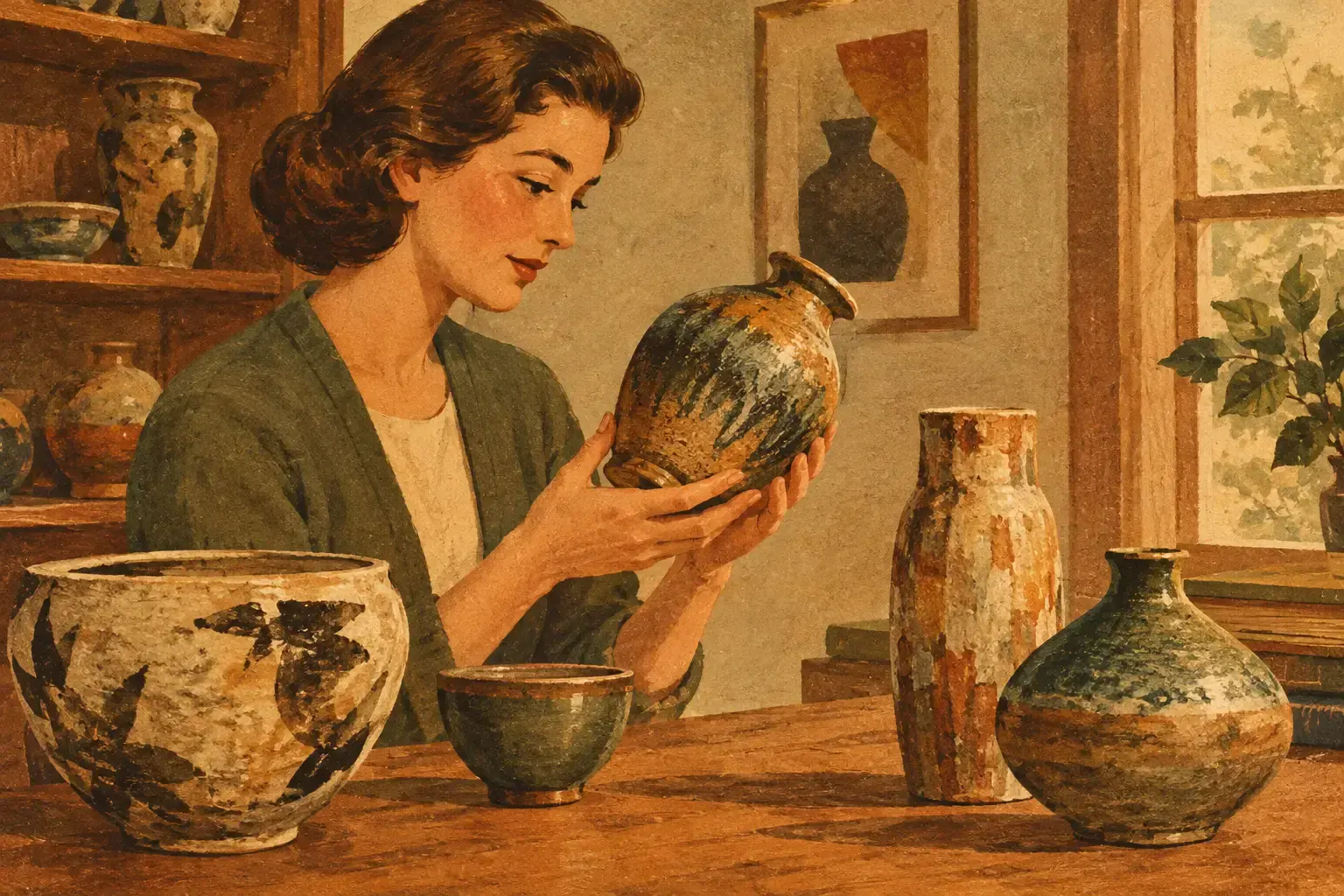
The key is to repeat something quietly. It may be the warm tone of brass echoed in a mirror frame, the dark line of black metal repeated in chair legs, or the earthy glaze of a lamp reflected in a vase. This gives the room continuity without forcing everything to match.
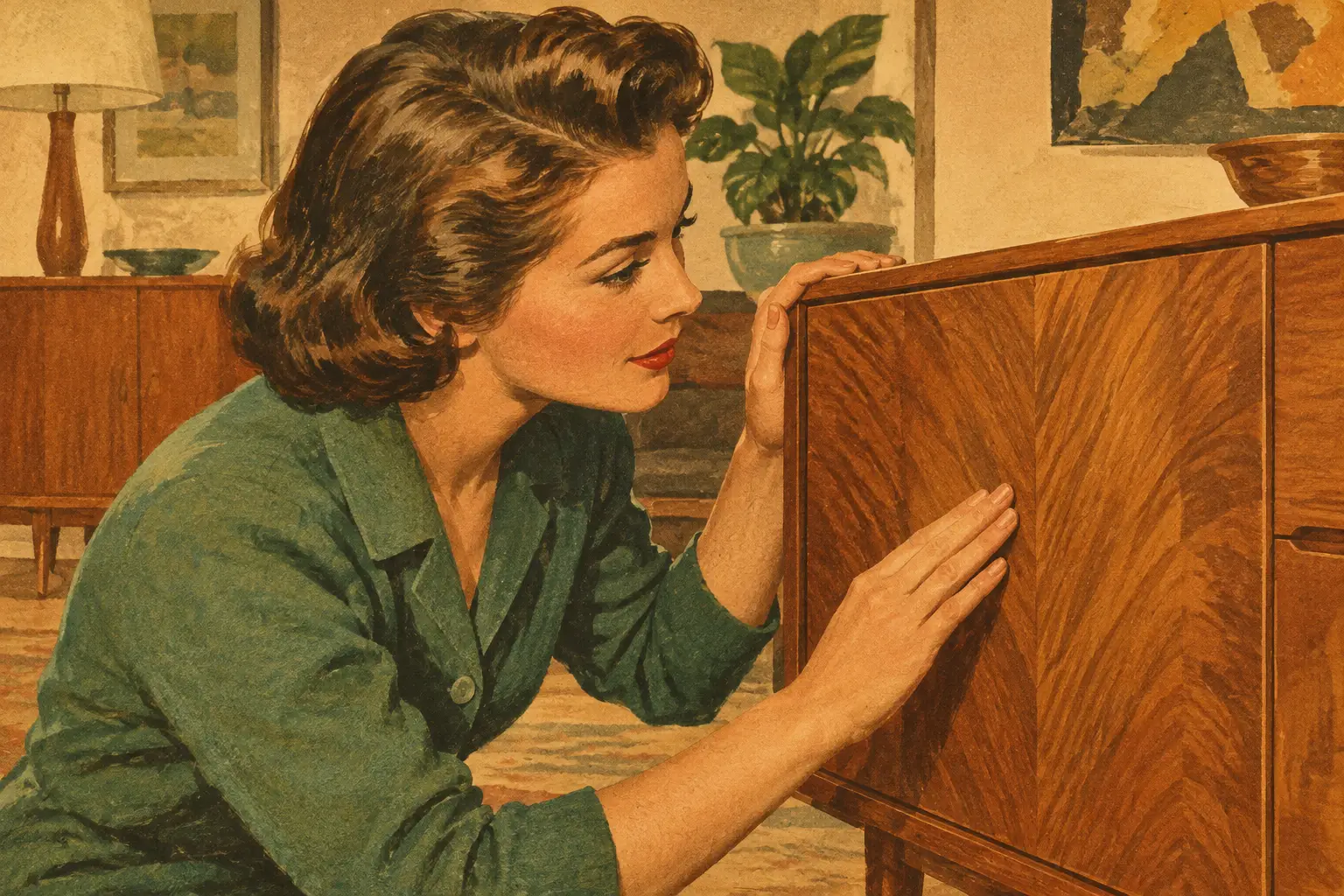
For collectors of mid-century furniture, lighting from the same broad period can make a setting feel complete, but it need not be identical in origin. Danish-influenced teak, West German pottery, smoked glass, and sculptural ceramic bases can sit together naturally when their colors and forms are in conversation. A home should look assembled over time, not staged as a museum display.
The Difference a Shade Can Make
The shade is not an afterthought. It controls the quality of light and can alter the apparent size of the base. A shade that is too narrow makes a lamp look top-heavy; one that is too wide can swallow the design. As a general visual guide, the shade should relate to the lamp’s height and widest point, while leaving enough of the base visible to appreciate its form.
Linen, card, parchment-style paper, and pleated fabric each soften light differently. A cream or natural shade usually flatters brass, wood, and ceramics, while a darker shade creates a more intimate, directional effect. Glass shades are often the right choice for pendants and wall lights where a more durable, easily cleaned finish is needed.
When a fixture retains an original shade, preserve it if it is safe and handsome enough to use. Its slight fading or irregularity may be exactly what gives the piece its integrity. If replacement is needed, select a form that respects the era rather than chasing a trend that will date quickly.
Finding Pieces With Real Decorative Value
The strongest vintage lighting is not simply old. It has proportion, material quality, and a design that still holds attention. At MN Interior Antiques, the focus is on curated antiques with a story to tell, from distinctive table lamps and period pendants to decorative pieces that bring a room into focus.
For buyers in Stevenage, Hitchin, Welwyn Garden City, and across Hertfordshire, local sourcing can be particularly useful when judging scale, finish, and condition in person. Yet a well-presented online listing should still make the decision clearer, with accurate measurements, photographs from several angles, notes on materials and condition, and straightforward details about wiring or restoration.
Give a vintage light a practical job, then let it be beautiful. Whether it sits beside a favorite chair, hangs above a long table, or welcomes guests in the hallway, the right piece brings more than illumination. It gives the room a history, a focal point, and a warmer way to be lived in.