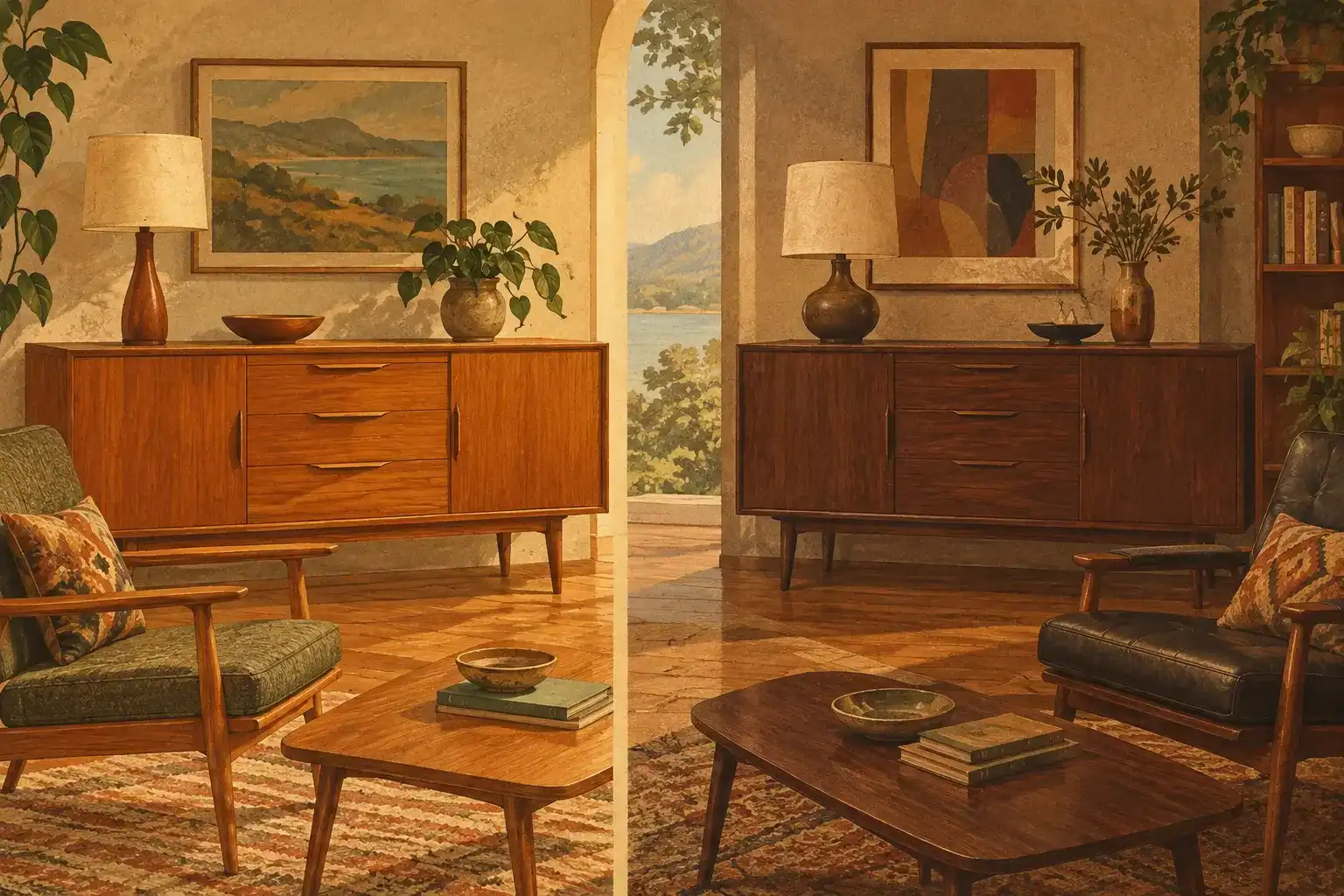
A Danish teak sideboard can make a room feel lighter before anything is placed on it. A walnut cabinet, by contrast, often brings immediate depth – its darker grain can anchor a pale wall, a contemporary rug or a collection of ceramics. When considering teak versus walnut furniture, the better choice is rarely about which timber is objectively superior. It is about the particular piece, its condition, its period and the atmosphere you want it to create.
For buyers drawn to vintage and antique interiors, both woods offer real design history. Teak is closely associated with clean-lined mid-century furniture, while walnut has a longer and broader decorative lineage, from Georgian cabinets to twentieth-century modernist dining furniture. Understanding their differences helps you buy for lasting pleasure rather than simply following a familiar look.
Teak versus walnut furniture: the visual difference
Teak usually has a warm honey, golden-brown or softly reddish cast. Its grain can be straight, gently wavy or marked with darker lines, but it tends to read as calm and even from a distance. This visual restraint is one reason it became such a defining material in Scandinavian and British mid-century furniture. It complements the neat proportions, recessed handles and floating forms of the period without competing for attention.
Walnut is generally darker, ranging from mellow brown to deep chocolate, sometimes with grey, purple or golden undertones. Its grain is often more expressive, with rippling figure, knots and tonal contrast that give a surface movement and richness. A well-made walnut piece can feel tailored and architectural, particularly when paired with brass, black leather, smoked glass or richly coloured upholstery.
Neither wood should be judged by a single photograph. Natural light, aged polish and previous restoration can alter colour dramatically. Teak often deepens and mellows over decades. Walnut may become warmer or develop a softer patina where it has been handled. A genuine vintage surface with small signs of age can be far more appealing than an overly stripped finish that has lost its original character.
Why teak became a mid-century favourite
Teak contains natural oils, making it notably resistant to moisture and historically valued for marine and outdoor use. In domestic furniture, that quality contributes to a stable, practical timber for dining tables, sideboards and desks. It is also comparatively easy to live with: a carefully waxed or oiled surface can tolerate everyday use well, though it is not immune to heat marks, scratches or rings from a wet glass.
The best mid-century teak furniture is not simply fashionable because it is teak. Its appeal lies in the meeting of material and making. Look for solid timber edging, balanced drawers, neatly joined corners and carefully shaped legs. Many period makers used teak veneer over a stable core for broad cabinet panels, and that is not automatically a compromise. Quality veneer allowed designers to showcase an uninterrupted run of grain while using solid teak where strength mattered most.
Teak suits rooms that need warmth without heaviness. It sits comfortably with pale oak floors, linen, woven textures, cream walls and vintage lighting. A compact teak chest can also work exceptionally well in a smaller hall or flat, where a dark piece might feel visually weightier.
What to inspect on vintage teak
Check sideboards and cabinets for fading caused by strong sunlight, particularly if one door appears lighter than the other. Inspect veneer edges and corners for chips, lifting or past water damage. Open every drawer: it should run reasonably freely, allowing for the modest movement expected in older furniture.
Pay attention to the finish. A dry-looking surface may only need sympathetic conditioning, but pale patches, black marks or a thick modern varnish deserve closer examination. Good restoration should preserve the furniture’s lines, joinery and sense of age rather than make it look factory-new.
The enduring character of walnut furniture
Walnut has long been valued as a cabinetmaker’s timber because it is strong, workable and capable of a beautiful finish. It is often associated with more formal antique furniture, but it is equally compelling in mid-century design. British makers, continental modernists and American designers all used walnut to give simple forms a sense of luxury and permanence.
Where teak feels bright and composed, walnut often feels intimate and dramatic. A walnut dining table can make a room more convivial; a low walnut sideboard can bring gravity to a minimal sitting room. It is a particularly good choice if your interior already includes warm metals, earthy textiles, dark-framed art or antique ceramics.
Walnut is sometimes described as more delicate than teak, but the reality depends on construction and finish. It is a hard, durable furniture wood, yet its surface will show wear if it is repeatedly exposed to heat, water or direct sun. This is not necessarily a drawback. A gentle patina, especially on a well-made older table or bureau, can add a quiet record of use.
What to inspect on vintage walnut
Because walnut’s figure is so distinctive, repairs and replacement veneer can be easier to spot. Look across the surface rather than straight at it: inconsistent sheen, abrupt changes in grain direction or suspiciously uniform colour may indicate later work. This is not always a reason to walk away, but it should be reflected in the condition and price.
Check for sun bleaching, especially on tops and areas formerly covered by mats or ornaments. Also examine joints closely. Walnut furniture may have survived several generations, and a sound repair is preferable to a loose original joint. The key question is whether the piece remains structurally honest and visually coherent.
Choosing by room, use and mood
A decision between teak and walnut becomes easier when you start with the role the furniture must play. For a family dining table that will see daily meals, homework and occasional entertaining, teak can be a forgiving and welcoming choice, especially with an established finish. For a formal dining room or a space where the table is also a focal point, walnut may offer the depth and occasion you want.
For storage, consider scale as much as species. A long teak sideboard can visually recede, making it useful in a room already filled with colour and pattern. A walnut sideboard tends to announce itself more readily, which is ideal when you want one exceptional piece to lead the scheme. In a north-facing room, teak may lift the available light; in a bright room with white walls, walnut can prevent the space from feeling cold or insubstantial.
Mixing the two is entirely possible. Homes assembled over time are usually more convincing than rooms matched timber-for-timber. Let one wood take the lead and repeat a shared element elsewhere: the curved profile of chair backs, a black ceramic lamp base, brass handles or the warm tone of aged leather. A teak table and walnut chairs can work beautifully when their proportions and eras are sympathetic.
Solid wood, veneer and provenance
The phrase “solid wood” is often used as shorthand for quality, but vintage furniture requires a more considered view. Solid teak or walnut is desirable for legs, frames, drawer fronts and areas subject to wear. Veneer is often the correct and original construction for large panels, offering stability and allowing makers to book-match attractive grain.
What matters is quality of execution and truthful description. A carefully made veneered walnut cabinet with original handles and a sound structure can be a more rewarding purchase than a poorly made all-solid piece. At MN Interior Antiques, the most memorable furniture tends to reveal this balance: good materials, intelligent construction and details that locate the object in its design moment.
Provenance also adds value beyond paperwork. Original labels, maker’s stamps, period hardware and an unaltered configuration can help identify a piece and explain its price. They do not make an item beautiful by themselves, but they provide confidence that the story attached to the furniture is real.
Caring for teak and walnut without overdoing it
Both timbers respond best to steady, uncomplicated care. Keep furniture away from radiators, fireplaces and prolonged direct sunlight where possible. Use coasters, wipe spills promptly with a soft cloth and avoid silicone sprays, harsh household cleaners and aggressive polishing. These can leave residues, create uneven shine or complicate later restoration.
Use a product appropriate to the existing finish rather than applying oil automatically. Oiling a sealed or lacquered surface will not nourish the wood; it may simply leave it sticky. If a piece is dry, scratched or marked, it is often wiser to seek advice before attempting a home treatment. Vintage furniture earns its character slowly, and restraint is usually the most sympathetic form of care.
The right choice is the piece you will continue to notice after the room is finished: teak for its quiet warmth and modern ease, walnut for its depth and expressive grain. Trust the construction, condition and proportion in front of you, then let the timber tell the more personal part of the story.