A walnut chest with a rich, even surface may look ready to place in a hallway. Yet that glow could come from a careful wax finish, an over-enthusiastic strip and stain, or a complete replacement veneer. Restoration before buying antiques is not simply a question of whether an object has been repaired. It is about understanding what has been done, why it was necessary, and whether the work respects the object’s age, materials and character.
For buyers drawn to furniture, lighting and decorative pieces with genuine history, restoration is often part of the appeal. A sensitively repaired chair can be stronger, safer and more useful than one left untouched. A rewired lamp can be enjoyed every evening rather than admired from a shelf. The aim is not to demand perfection or to avoid every repair. It is to recognise the difference between conservation that prolongs a piece’s life and alteration that erases the very qualities that make it worth owning.
What restoration before buying antiques should tell you
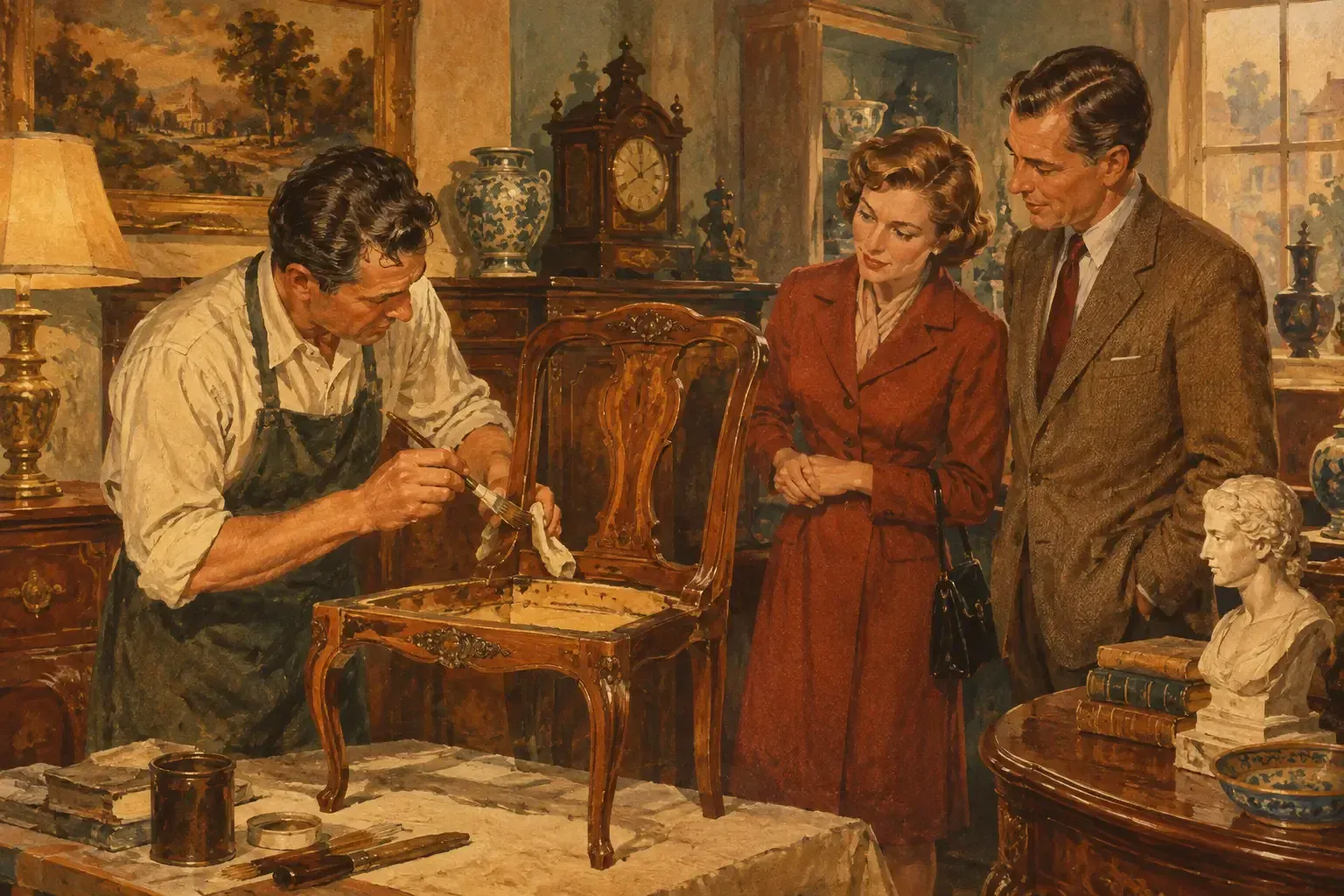
Good restoration begins with restraint. It stabilises a loose joint, treats active woodworm, replaces a missing screw with an appropriate equivalent, or carefully cleans a surface obscured by grime. It preserves as much original material as possible and makes the piece fit for use without trying to make it look newly manufactured.
Poor restoration tends to announce itself. Thick varnish can flatten the texture of old timber. Harsh sanding may remove softened edges, tool marks and patina built over decades. Freshly painted surfaces can conceal structural issues or disguise a later marriage of unrelated parts. None of these treatments automatically makes a piece undesirable, particularly when buying for a decorative scheme rather than a collection. But they should affect how the item is described, valued and expected to age.
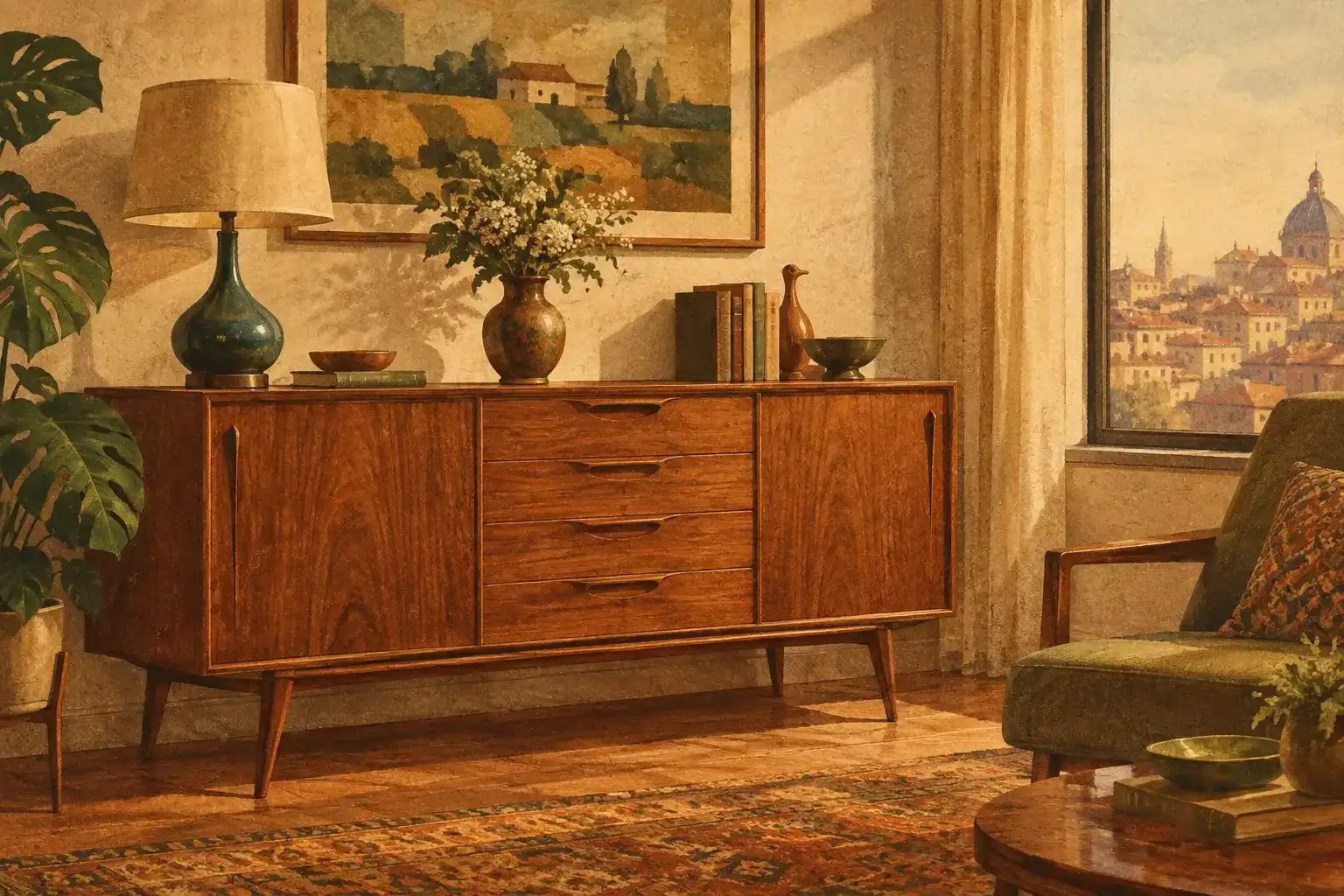
The most successful antique interiors combine honest wear with practical readiness. A repaired farmhouse table may still show old marks and colour variation, but it should stand squarely and take daily use. A mid-century sideboard may retain a small mark to its top while its drawers glide properly and its structure is sound. Those details are not contradictions. They are evidence that a piece has had a life before it entered yours.
Start with the material, not the shine
Before assessing repairs, identify what you are looking at. Solid oak, walnut veneer, brass, cast iron, ceramic glaze and Bakelite all react differently to age, cleaning and repair. A surface that appears imperfect may be entirely appropriate for its material. Equally, a polished finish may be right for a formal Victorian cabinet but jarring on a rustic painted cupboard.
Wooden furniture and veneers
With antique furniture, examine the structure first. Open drawers, look underneath, and check the backboards and interior surfaces where possible. Original drawer linings, dovetails, old fixings and consistent timber can tell a clearer story than a beautifully finished front. A drawer that sticks slightly is not necessarily a concern; a drawer front that does not match its construction may deserve a closer look.
Look for repairs around legs, chair rails, handles and hinges, as these are natural points of wear. A clean, stable repair is often preferable to a wobbly original joint. Veneer needs particular attention. Small, sensitively filled losses are common, while large areas of replacement veneer, mismatched grain or an unusually uniform stain can alter both the appearance and collector interest of a piece.
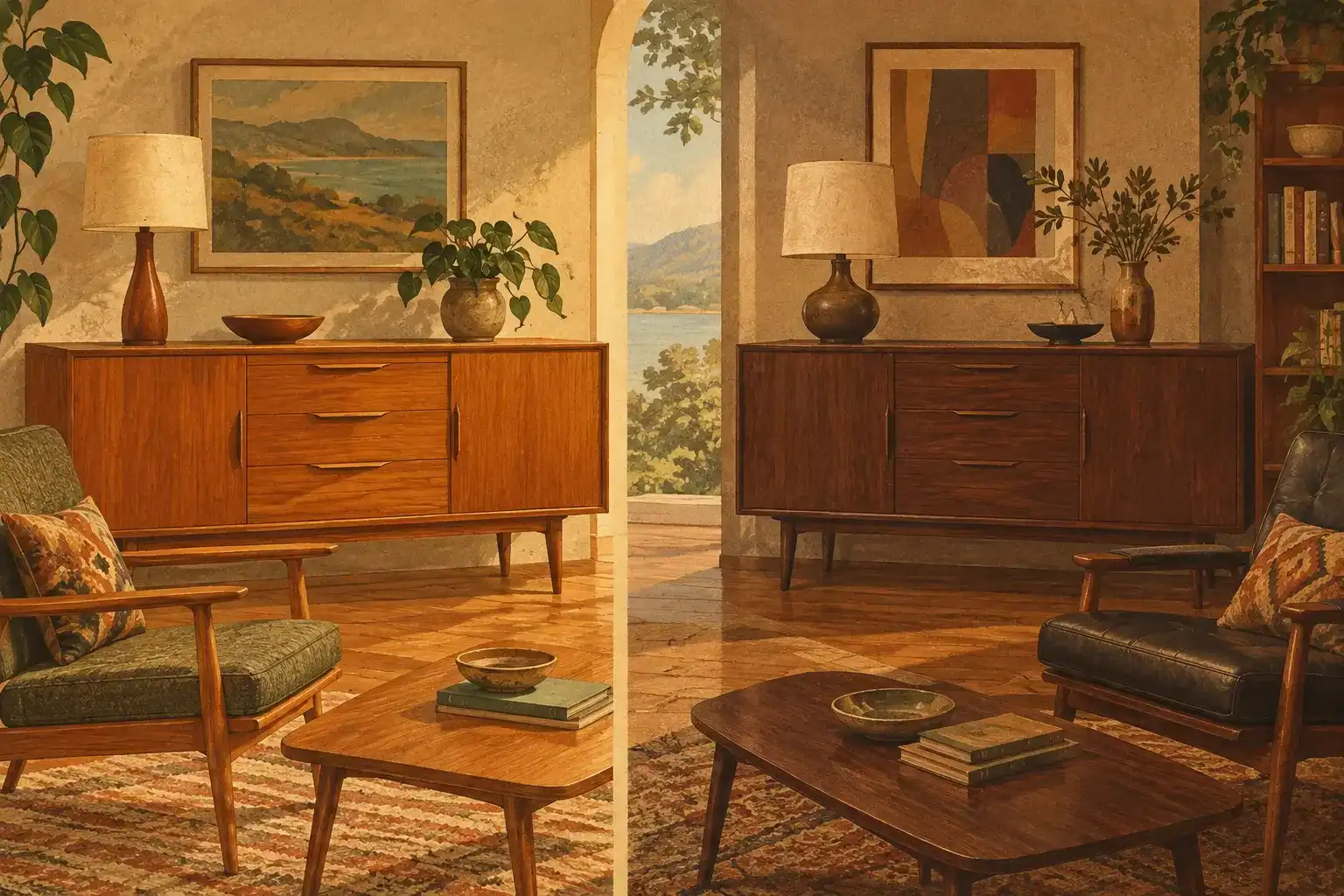
For mid-century furniture in Hertfordshire homes, where teak, rosewood and walnut designs are often chosen for their warm grain, original finish matters greatly. Gentle cleaning and a light revival can enhance the timber. Sanding through the thin face of veneer cannot be reversed.
Painted, gilded and decorative finishes
Old paint can be as significant as old wood. Layers of colour, visible brushwork and gentle craquelure may be part of an object’s charm and provenance. A later paint finish is not always a disadvantage, especially if it suits a kitchen, boot room or relaxed country interior, but it should be recognised as later decoration rather than presented as original.
The same principle applies to gilt frames, lacquered boxes and folk art. Retouching may improve a display piece, yet extensive repainting can change its character entirely. Ask whether losses have been stabilised, touched in or fully repainted. The answers help you decide whether you are buying an antique surface, a decorative object with antique origins, or something between the two.
Ceramics, glass and smaller collectables
Restoration on ceramics can be hard to spot without informed handling. Run a finger gently around rims, handles and spouts, where chips and repairs are most common. Look at a piece under good light for changes in sheen, hairline cracks or areas where colour and glaze appear slightly different. Professional repair can be remarkably discreet, but it should still be disclosed.
A carefully restored piece of West German pottery may be a sensible decorative purchase if its scale, glaze and form work beautifully in a room. For rarer studio pottery or antique ceramics, condition is usually more influential on value. The decision rests on rarity, price and purpose: are you seeking a striking vase for a mantelpiece, or an example valued for collector condition?
Bakelite jewellery deserves similar care. Light polishing can bring out its depth of colour, while aggressive buffing can soften crisp carving or damage detail. Check clasps, hinges and fittings for suitability and replacements, and expect honest wear on a piece that has been worn for generations.
Ask direct questions before you commit
A good dealer should be comfortable discussing condition plainly. Detailed descriptions and clear photographs are useful, but buyers should still ask about anything that affects use, originality or value. Is the item structurally sound? Has it been refinished, reupholstered, rewired or re-glazed? Are there replaced parts? Is the finish original, cleaned, refreshed or later? These are practical questions, not challenges to a dealer’s judgement.
For upholstered seating, establish what is old and what is new. A chair may have an original frame but recent webbing, stuffing and fabric. That can be exactly the right outcome if you want reliable seating, particularly when the upholstery has been completed with sympathetic materials and proportions. However, a full rebuild should be reflected in the description and price.
Lighting deserves an especially careful conversation. Vintage lighting in Hertfordshire can introduce sculptural shape and atmosphere to a room, but antique wiring is not a decorative detail to overlook. Ask whether a lamp has been rewired and tested, whether fittings suit current UK use, and whether shades, switches or ceiling roses are replacements. Rewiring is usually a sensible and desirable intervention. It makes a historic object usable without asking it to perform with tired electrical components.
Match the level of restoration to how you will live with it
There is no universal rule that original condition is always best. A collector may reasonably prefer untouched surfaces, original upholstery and visible age. A household with children, pets and busy mealtimes may value a professionally restored table that can be used without anxiety. A period home may call for a worn pine cupboard with old paint, while a contemporary room may benefit from the clean lines of a carefully revived mid-century cabinet.
Price should reflect this balance. Restoration involves skilled labour, suitable materials and time, so a sound, ready-to-use item can command more than an untouched project. Conversely, extensive repairs, replaced components or lost original finish may reduce collector value. Decorative value can remain high, but it should not be confused with rarity or originality.
It also helps to distinguish between repair and reinvention. Replacing a damaged chair rail is repair. Turning a nineteenth-century chest into a bathroom vanity, cutting down a table or fitting modern decorative hardware is reinvention. Such alterations can create a useful, attractive object, but they usually change the antique’s future options. Buy them because you love the result, not because you assume they carry the same significance as an intact example.
Choose pieces with an honest story
The best antiques are rarely flawless. They carry softened corners, repaired joints, mellowed metal and small reminders of the rooms they once inhabited. What matters is whether those traces feel coherent and whether any restoration has allowed the piece to continue its story with integrity.
At MN Interior Antiques, a curated piece is valued not only for its date or decorative appeal, but for the quality of its making and the honesty of its condition. Take time to look beyond a polished surface. When restoration is thoughtful, disclosed and appropriate, it does not diminish an antique. It gives a well-made object the chance to be useful, beautiful and lived with again.