A teak sideboard can look extraordinary on a sales floor and strangely adrift once it reaches home. That is usually the real question behind how to style mid century modern furniture – not whether the piece is beautiful, but how to give it context. The best rooms do not treat mid-century furniture as a museum set. They let its clean lines, rich woods, and sculptural forms sit comfortably with older pieces, softer textures, and the rhythms of everyday living.
Mid-century modern furniture has enough presence on its own. It rarely needs heavy styling or obvious period references. What it does need is balance. A room made entirely of low-profile walnut, tapered legs, and crisp silhouettes can begin to feel flat or overly rehearsed. A room with one or two strong mid-century anchors, by contrast, often feels more personal and far more livable.
How to style mid century modern furniture without making it feel staged
Start by identifying what the hero piece is doing in the room. A Danish chest, a rosewood dining table, or a pair of vintage lounge chairs each asks for a slightly different supporting cast. If every item competes for attention, the room feels busy. If everything is too restrained, the character of the furniture gets lost.
Scale matters more than people expect. Mid-century pieces are often visually lighter than traditional furniture because of their raised frames and slender legs. That lightness is part of their appeal, but it also means they can seem undersized in large rooms with high ceilings or oversized contemporary sofas. In those spaces, grounding the furniture with a larger rug, substantial artwork, or a generously scaled lamp helps the room feel settled.
The wood tone is another early decision. Mid-century interiors are often associated with teak, walnut, oak, and rosewood, but matching every timber exactly is not necessary. In fact, it can look forced. What works better is a room where the wood tones relate rather than repeat. Warm walnut can sit beautifully with slightly lighter oak if there is a shared warmth running through the palette. A cooler ash or blond wood can also work, but it usually benefits from a few connecting elements, such as leather, brass, or woven natural fibers.
Begin with shape, then soften the room
One of the most useful ways to style mid-century furniture is to think in terms of silhouette first. These pieces are known for clean geometry, long horizontal lines, organic curves, and elegant proportions. If the whole room echoes only straight edges, it can feel severe. This is where contrast does the heavy lifting.
A curved ceramic lamp, a round mirror, a wool rug with a softer pattern, or a generously upholstered chair can temper the angularity. Even something as simple as linen drapery changes the atmosphere. The goal is not to hide the furniture’s form, but to give it a softer setting so the lines feel intentional rather than rigid.
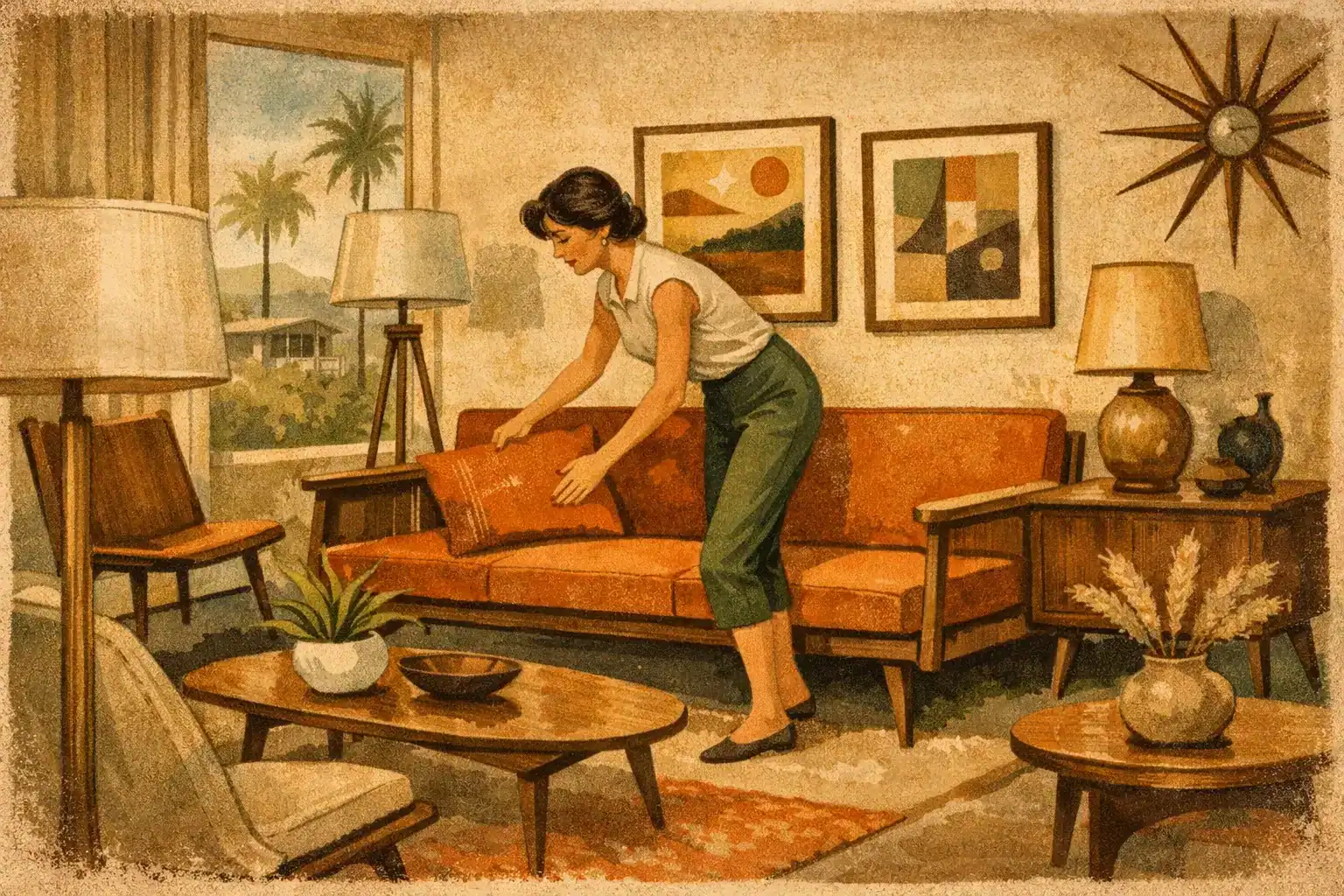
This is especially true in living rooms. A low-profile vintage coffee table often looks best with seating that does not all belong to the same visual language. A mid-century sofa paired with a more traditional armchair, or a modern sectional balanced by a pair of vintage wood-framed chairs, usually feels more collected than a strict matching suite. Good interiors rarely look as if they were bought all at once.
Colour works best when it respects the wood
Mid-century furniture tends to carry its own colour through timber, upholstery, and patina. That means wall colour and accessories should support rather than overpower it. Warm whites, muted greens, clay tones, soft grays, and earthy blues usually sit well with vintage woods. Stark white can work in some homes, but it often makes older timber feel isolated unless the room has enough texture to offset the contrast.
If you enjoy stronger colour, use it with placement in mind. Olive, rust, ocher, deep blue, and burnt orange all have a natural affinity with mid-century design, but they are most effective when they appear as accents or in one confident gesture. A painted wall behind a sideboard, a ceramic grouping, or upholstered dining chairs can be enough. Too many retro-coded colours at once can tip the room into theme rather than style.
Pattern follows the same rule. Graphic prints can look striking with mid-century furniture, but they need breathing room. If your furniture already has strong grain, bold joinery, or distinctive upholstery, a quieter rug or simpler drapery may give a better result. It depends on whether you want the room to feel architectural, decorative, or somewhere in between.
Mix periods for a room with more depth
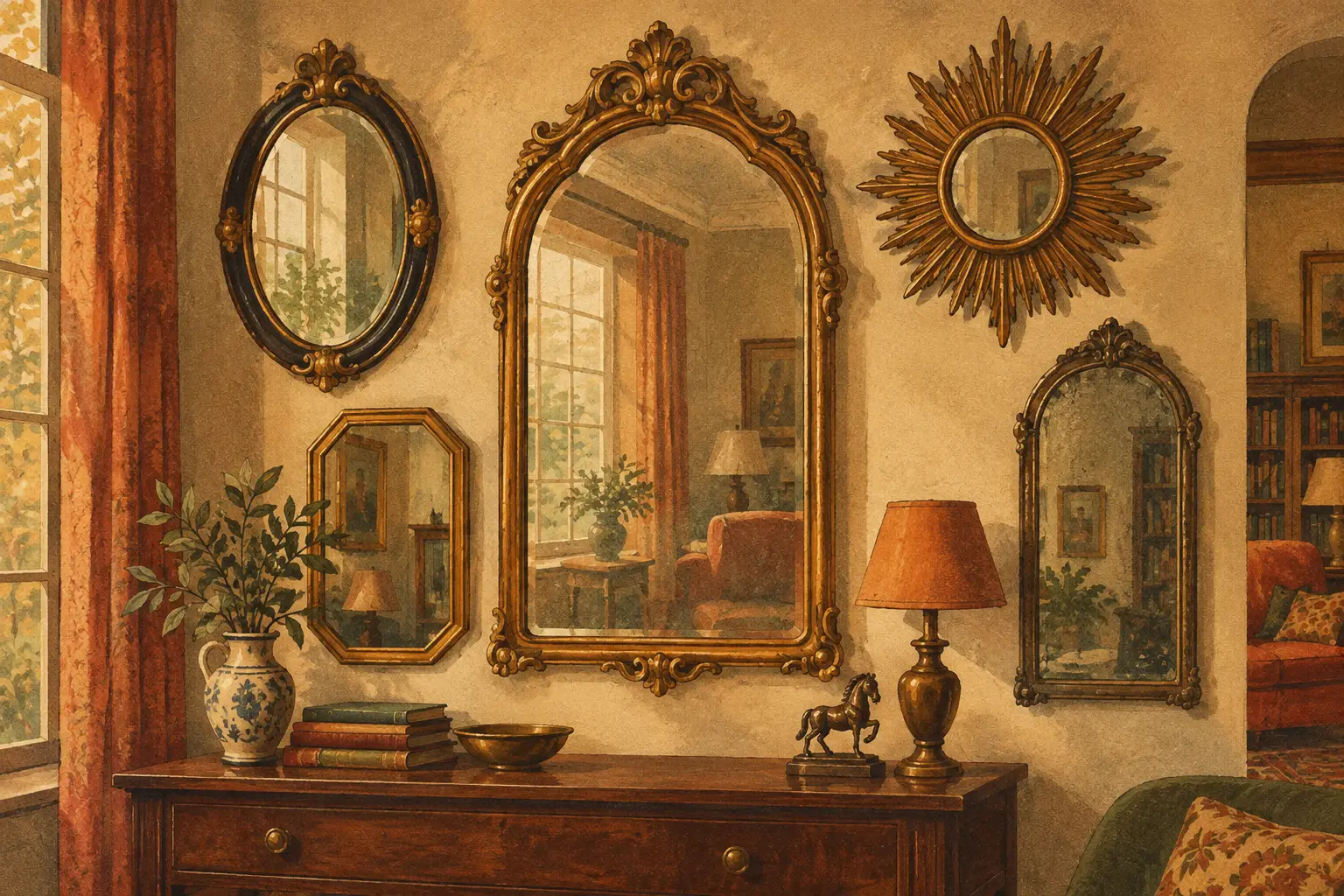
The most interesting mid-century interiors are rarely pure mid-century interiors. They borrow. A Georgian mirror above a 1960s console, a folk art object on a sleek cabinet, or a ceramic lamp beside an architectural chair can create exactly the sort of tension that makes a room memorable.
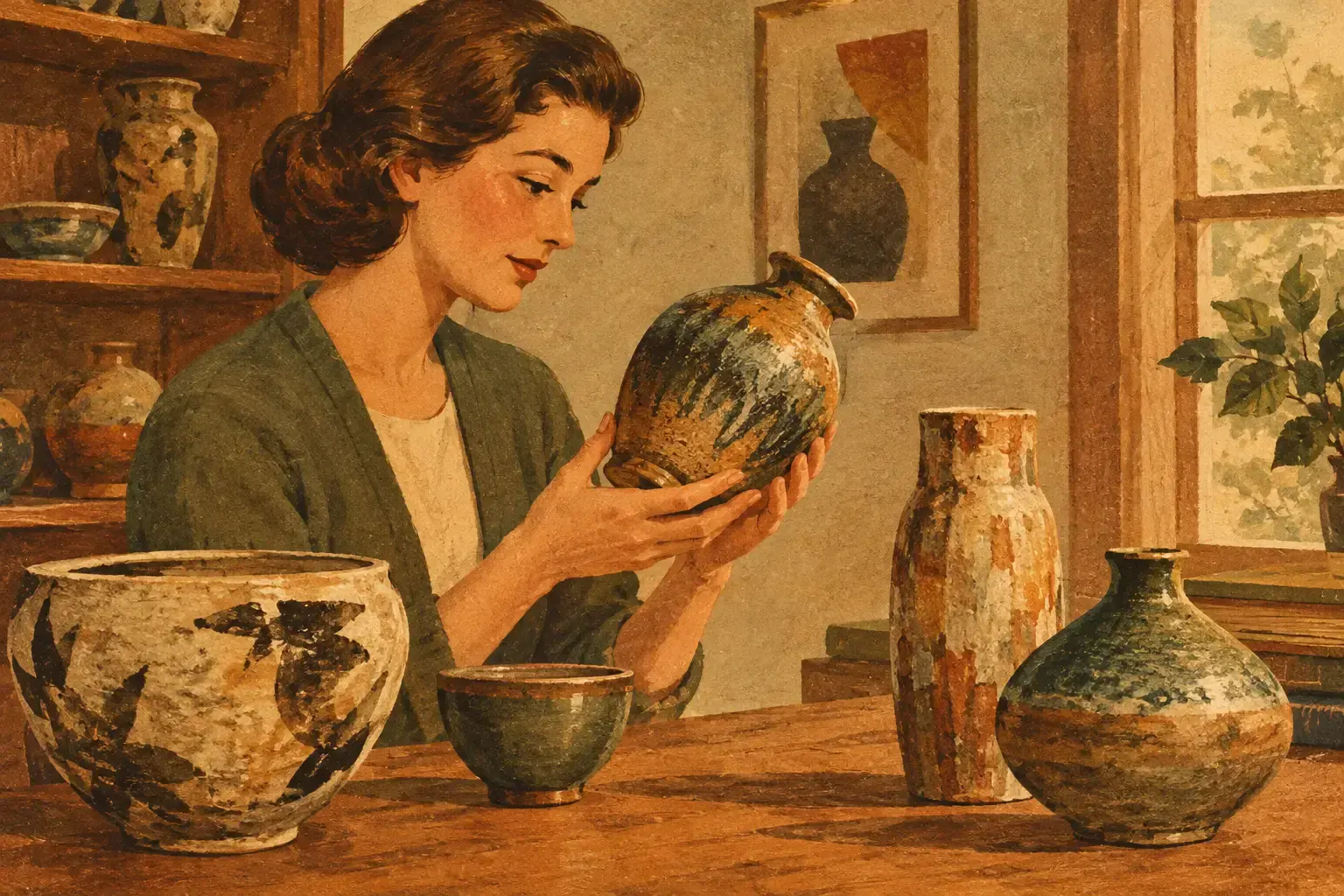
This is where antique and vintage sourcing becomes especially valuable. Older objects bring surface variation, wear, and a sense of history that can prevent mid-century schemes from feeling too polished. A hand-thrown vase, a framed textile, or a weathered stool introduces irregularity. Those details matter because mid-century furniture is often so resolved in its design. It benefits from being around pieces that are a little less controlled.
There is, however, a trade-off. If you mix too freely without a common thread, the room can become confused. The thread might be material, palette, scale, or mood. For example, if you pair a clean-lined sideboard with rustic accessories, repeat that rustic note elsewhere through a woven shade, antique pottery, or aged brass. Repetition is what turns contrast into cohesion.
Lighting is part of how to style mid century modern furniture
Lighting is not a finishing touch in these rooms. It is central to how the furniture reads. Mid-century pieces are often at their best in warm, directional light that picks up the grain of the wood and the profile of the form. Overhead lighting alone flattens them.
Use layered light instead. A floor lamp beside a lounge chair, a table lamp on a credenza, and a smaller accent light on shelving can make the room feel far more dimensional. Vintage lighting is particularly effective here because it shares the same attention to line and material. Brass, ceramic, opaline glass, and pleated shades all work, depending on the room.
Bulb temperature matters as well. Cooler light can make beautiful old timber feel lifeless. A warm bulb gives walnut and teak their depth back and helps textiles and ceramics feel richer. It is a small decision with a noticeable effect.
Style surfaces with restraint
Mid-century furniture often has broad, elegant surfaces – sideboards, coffee tables, dining tables, and open shelving among them. The temptation is to fill them. Usually, they look better with less.
Think in small groupings rather than scattered decoration. A stack of art books, a sculptural bowl, and one substantial vase will often do more than ten separate objects. Ceramics work especially well because they add shape and texture without visual clutter. Glass can be beautiful too, though too much reflective surface can make a room feel cooler than intended.
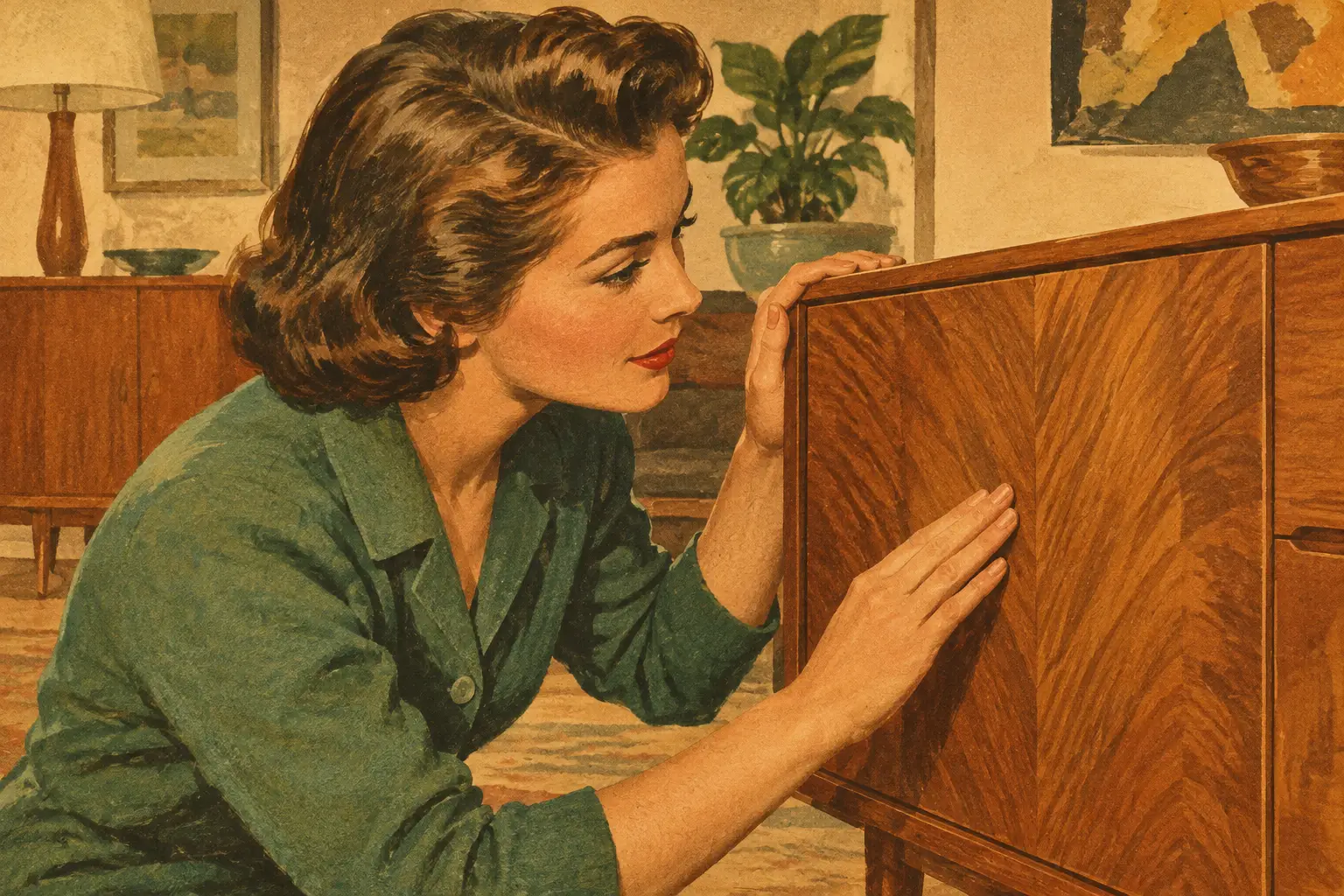
When styling shelves or cabinets, vary height and material, but leave negative space. Mid-century furniture relies on proportion. Covering every inch of it misses the point. If a piece has exceptional grain, elegant handles, or fine joinery, let those features remain visible.
Upholstery and textiles keep the room human
One reason some mid-century rooms feel austere is that the furniture is asked to carry all the personality. Textiles should share the job. Wool, bouclé, linen, leather, and cotton all sit naturally with the period, and they help soften the visual precision of wood frames and crisp silhouettes.
A rug is often the bridge that makes the arrangement work. If your furniture has many exposed legs, the rug prevents the room from feeling too sparse. Flat weaves, low-pile wool rugs, and subtle geometric patterns are reliable choices, but this is also a place where a more traditional or hand-knotted rug can create welcome tension. That contrast often makes the furniture feel less predictable.
Pillows should be chosen carefully. A few well-made cushions in tactile fabrics can warm a sofa or chair, but overstuffing a clean-lined piece changes its character. Mid-century design values clarity. The styling should respect that.
Let authenticity lead the room
If you are buying vintage or antique pieces, condition and provenance should shape your styling choices as much as color or layout. A professionally restored chair with original lines deserves a setting that allows those details to be seen. A sideboard with age marks or gentle wear may be better paired with pieces that share some lived-in quality, rather than surrounded by pristine newness.
This is one reason curated sourcing matters. A room comes together more easily when the furniture has integrity to begin with. At MN Interior Antiques, that editorial approach is part of the appeal – pieces are selected not simply because they fit a category, but because they bring craftsmanship, decorative strength, and history into the home.
The most successful spaces do not ask mid-century furniture to perform as a trend. They let it be what it is: thoughtful design with lasting visual discipline. If you style it with contrast, warmth, and a little restraint, the room will feel less like a set and more like a place you genuinely want to live in.