A Victorian locket with a softly worn edge, a geometric Art Deco brooch, or a warm Bakelite bangle can change the character of an outfit or a dressing table in an instant. Antique jewellery is appealing not because it is simply old, but because it carries evidence of another hand, another taste, and often another life. The best pieces feel personal long before they become yours.
For collectors and design-conscious buyers, jewellery offers a wonderfully compact route into the past. It can reveal the materials, social customs and decorative ideas of its era, while remaining useful in the present. Choosing well calls for a little curiosity, a clear eye for condition, and the confidence to favour character over perfection.
What Gives Antique Jewellery Its Lasting Appeal?
Unlike newly made accessories designed around a passing season, an antique piece has already proved its visual staying power. Its value may lie in precious metal or gemstones, but equally in a distinctive clasp, hand-cut stone, carved motif or unusual patina. A modest silver pendant with a beautiful proportion can be more compelling than an expensive piece with little design presence.
Age alone does not make jewellery desirable. Craftsmanship, condition, rarity and the integrity of the design matter more. A late Victorian brooch may have been made in significant numbers, for example, yet be especially attractive because its enamel remains vivid and its original pin fitting is intact. Conversely, a heavily altered piece can lose some of the details that make its period visible.
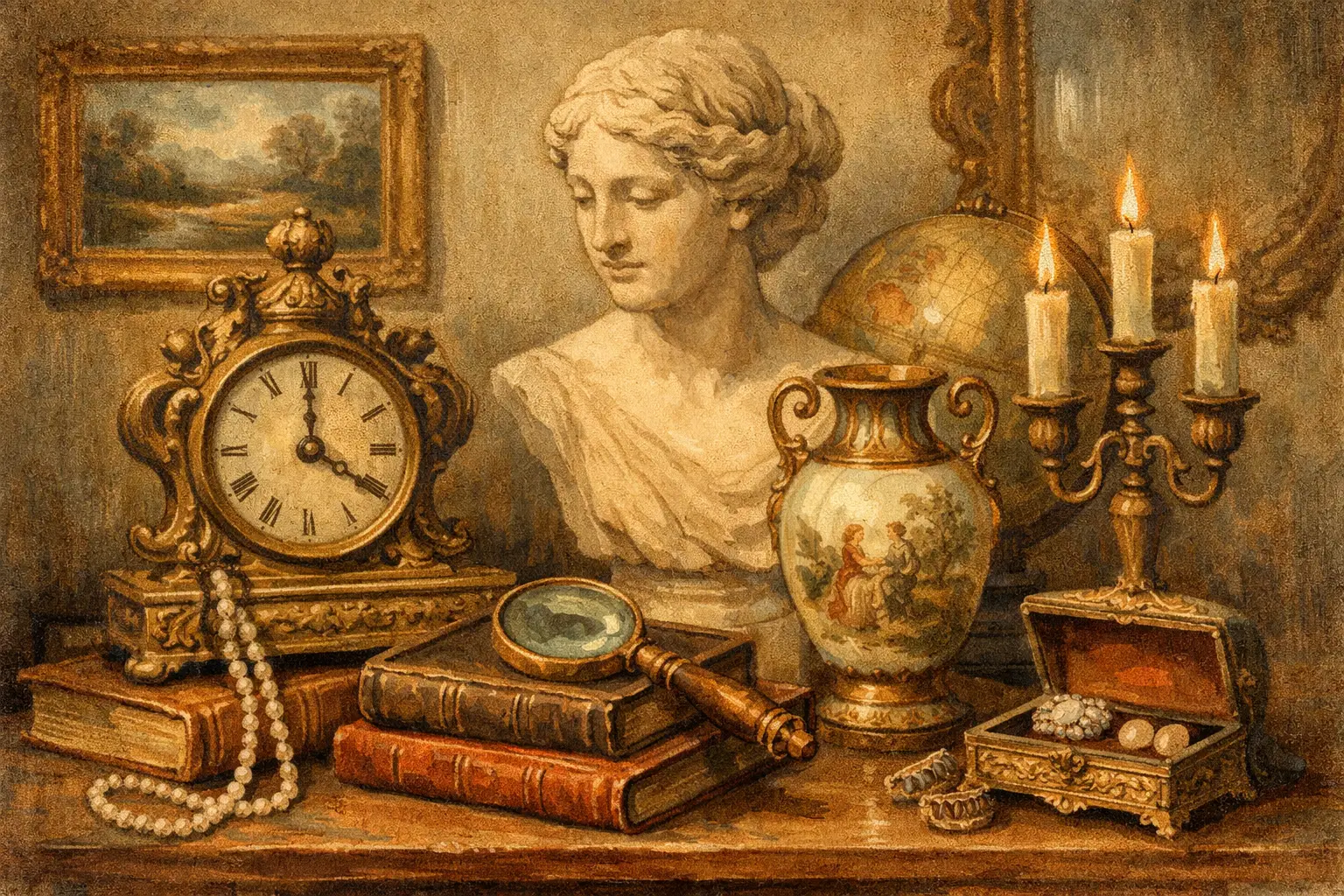
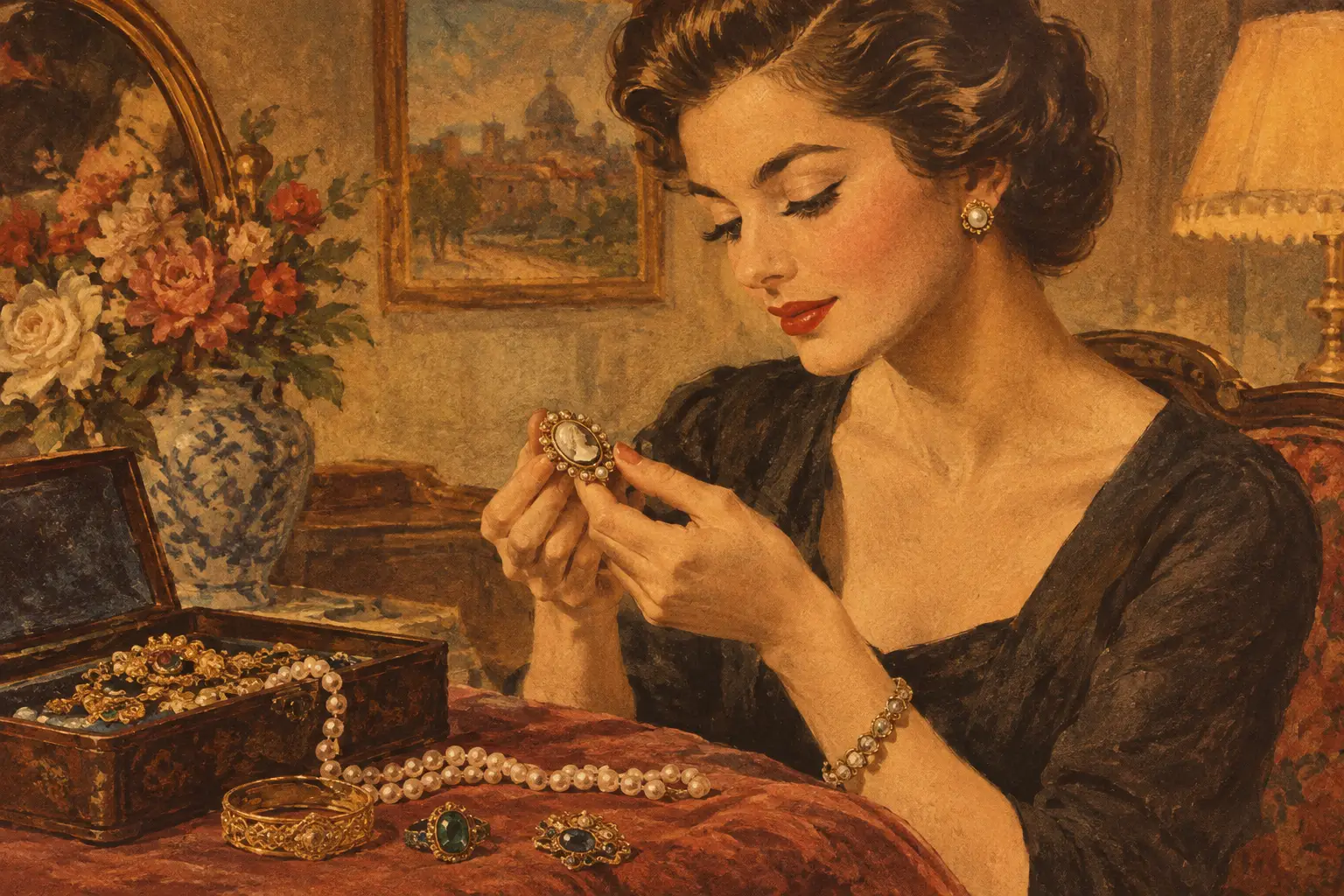
There is also a decorative pleasure in jewellery as an object. A small collection displayed in a glazed box, on a velvet-lined tray or beside antique ceramics brings texture and intimacy to a bedroom or dressing area. For those furnishing a home with collected character, these details are often what make a room feel lived in rather than simply styled.
Start with an Era You Genuinely Respond To
You do not need to build a museum-like collection. The most satisfying purchases are usually led by a natural response to form, colour and material. Still, recognising broad periods helps you understand what you are seeing and whether a piece suits your taste.
Victorian jewellery often ranges from sentimental lockets and mourning pieces to ornate goldwork, seed pearls and nature-inspired motifs. It can be richly detailed, romantic and occasionally sombre. Edwardian designs tend towards delicacy, with bows, garlands, fine platinum settings and pale stones creating a light, elegant effect.
Art Deco jewellery, broadly associated with the 1920s and 1930s, is prized for its geometry, symmetry and contrast. Look for strong linear forms, onyx, marcasite, coloured glass and sharply defined settings. Mid-century pieces are generally bolder still, with sculptural gold-tone forms, colourful costume jewellery and playful materials that sit beautifully with modern interiors.
Bakelite jewellery deserves particular attention. Its solid colour, warm surface and graphic silhouettes make it highly collectable, from carved bangles to chunky beads and dress clips. Condition and authenticity are essential here, as later plastics and reproductions can look convincing at first glance. For buyers seeking Bakelite jewellery in Hertfordshire, a carefully described, well-presented piece is far more useful than a vague claim of age.
How to Assess Condition Without Expecting Perfection
Antique and vintage jewellery should show some signs of age. Light surface wear, gentle tarnish on silver and a softened finish on metal can add warmth rather than detract from the piece. The question is whether wear is consistent with age and whether it compromises use, stability or beauty.
Begin by examining the setting. Stones should sit securely, with no obvious movement, major chips or cracks. Pearls should be checked for loss of nacre, while enamel should be inspected for noticeable losses around edges and high points. On brooches, ensure the pin and clasp function properly. With necklaces and bracelets, look closely at links, catches and areas where repeated movement creates strain.
Repairs are not automatically a reason to walk away. A sympathetic, well-executed repair can preserve a piece for many more years of wear. However, replacement stones, rewired necklaces, new findings or substantial polishing should be clearly described, particularly when they change the original appearance. Honesty around restoration is part of responsible antique dealing.
Costume jewellery needs the same thoughtful assessment as precious jewellery. Missing stones, discoloured plating and verdigris around fittings can affect both appearance and longevity. A rare design may still be worth choosing despite minor flaws, but it depends on whether you want an object to wear regularly, display, or add to a specialist collection.
Hallmarks, Materials and Provenance
Hallmarks can provide useful evidence of metal quality, assay office, maker and date, though not every older piece will carry a full set of marks. Some are faint through wear, some are placed in difficult-to-see areas, and imported or continental pieces follow different conventions. A hallmark is reassuring, but it is one part of the wider picture.
Look for descriptions that distinguish clearly between solid gold, gold-filled, rolled gold, gilt metal and plated finishes. The difference affects value, care and durability. Sterling silver, silver plate and continental silver should likewise be identified accurately. If gemstones are named, a good description should make clear whether they are natural, cultured, synthetic or imitation where this is known.
Provenance can be as simple as a known maker, original box, family history or an old retailer’s mark. It does not need to be dramatic to be meaningful. A labelled jewellery case or period presentation box can add charm and context, although the box and the item may not always have started life together. Where certainty is not possible, thoughtful wording matters more than overconfident claims.
Choosing Pieces You Will Actually Wear
A beautiful antique jewel should not feel trapped in a drawer. Consider scale before buying: a substantial brooch may be striking on a wool coat or blazer but disappear on fine knitwear, while a small pendant may become an everyday favourite. Older rings can be resized in many cases, although intricate settings, engraved bands and certain materials require specialist advice.
Think about your existing wardrobe as well. A paste necklace can bring light to a simple black dress; a silver Arts and Crafts pendant works naturally with linen, knitwear and earthy colours; a pair of mid-century clip-on earrings can bring polish to an otherwise pared-back outfit. Mixing periods is entirely acceptable when the pieces share a sense of proportion.
For daily wear, choose secure fittings and materials suited to your routine. Delicate enamel, foiled-back stones and fragile Georgian settings are better reserved for occasional use. A sturdy silver bangle, a well-made gold locket or a sound Bakelite brooch is often a more practical choice for regular enjoyment.
Caring for Antique Jewellery at Home
Gentle handling protects both the object and its history. Store pieces separately where possible, ideally in soft-lined compartments or small fabric pouches, so metal and stones do not rub together. Keep jewellery away from damp conditions, direct sunlight and sudden temperature changes, particularly pieces with pearls, enamel, tortoiseshell or early plastics.
Put jewellery on after perfume, hairspray and hand cream have settled. Wipe metal gently with a soft dry cloth after wearing, but avoid aggressive polishing that strips away the soft patina accumulated over decades. Never soak pieces unless you are certain of their materials and construction. Pearls, glued stones, foil-backed jewellery and Bakelite all call for particular care.
When a clasp fails or a stone loosens, seek a jeweller experienced in older work rather than treating it as a quick repair. The right restoration respects original materials and preserves the details that made you choose the piece in the first place.
Antique Jewellery as Part of a Collected Home
Jewellery belongs as naturally in a considered interior as a small brass candlestick, a framed miniature or a piece of West German pottery. A single brooch displayed on a linen-covered tray can introduce colour and shape; a collection of bangles in a shallow bowl becomes a quiet study in material and form. The key is restraint. Let a few well-chosen objects have room to be noticed.
At MN Interior Antiques, the appeal of a carefully sourced jewel is much the same as that of a fine antique chair or unusual vintage lamp: it brings a story, a material presence and a detail that cannot be replicated by mass production. Choose the piece that continues to catch your eye after the first glance. That is usually the one with a story worth carrying forward.