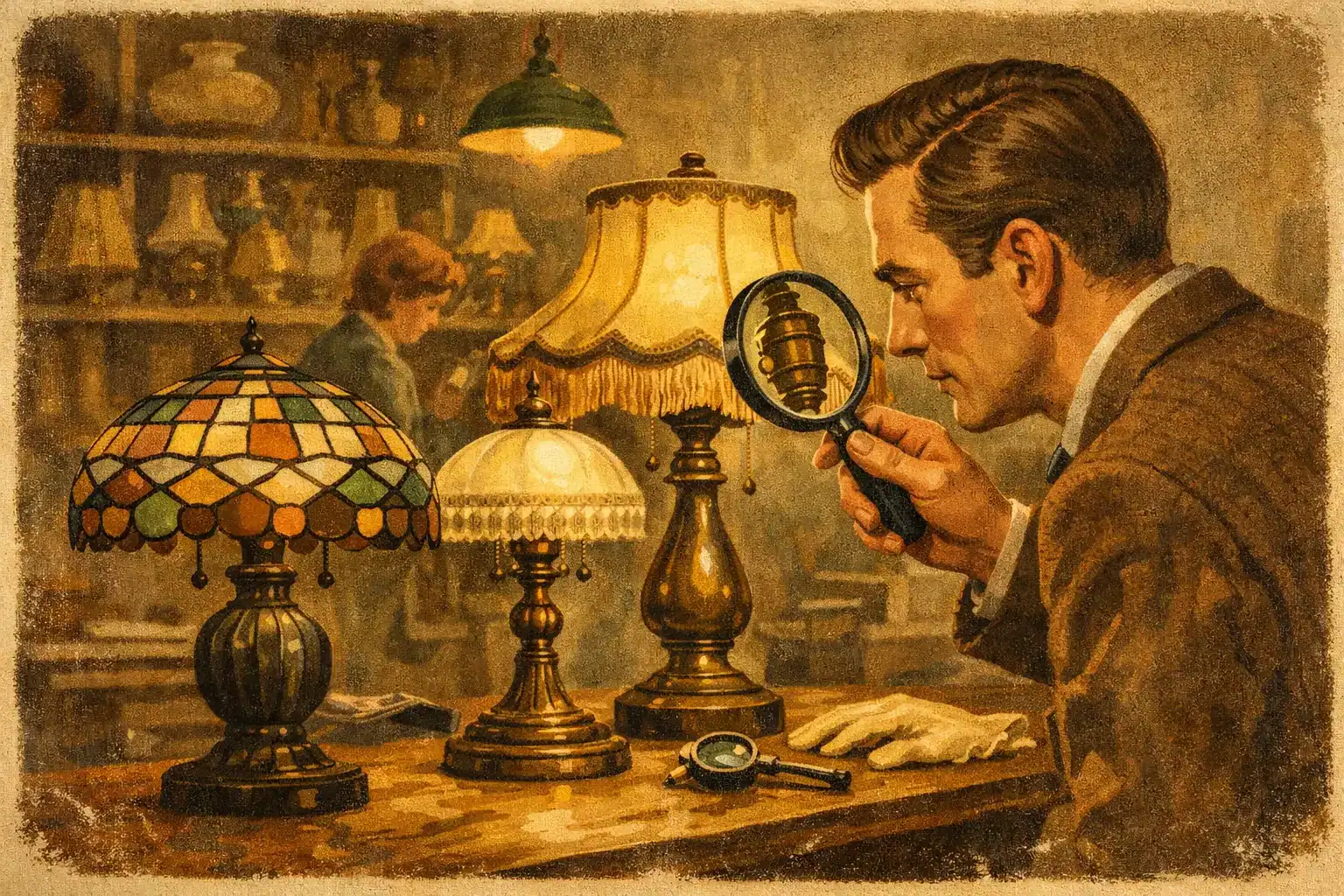
A convincing vintage lamp can change the character of a room in one switch of light. It can also be one of the easier decorative objects to misread: a new shade on an old base, an imported reproduction with an aged finish, or a genuine period lamp altered so extensively that its history has become blurred. Knowing how to authenticate vintage lamps helps you buy for both beauty and substance.
The aim is not to find an untouched object. Vintage lighting was made to be used, and sensible restoration is often essential. Instead, look for an honest relationship between the lamp’s design, materials, construction and stated age. When those details tell the same story, you are usually on firm ground.
Start by identifying the lamp’s likely era
Authentication begins with observation, not the maker’s name. Stand back and consider the overall silhouette. A tall, elegant brass floor lamp with a restrained stem and weighted base may suggest the 1940s to 1960s. A heavy ceramic table lamp with volcanic glazes, bold relief decoration or earthy colours may point towards West German production of the 1950s through to the 1970s. Chrome, opaline glass and geometric forms can indicate Art Deco influence, though that style has been reproduced repeatedly.
Ask whether the form belongs naturally to its supposed period. Mid-century lamps often favour clean geometry, teak, walnut, spun metal, textured glass and sculptural ceramic bases. Earlier pieces may reveal more traditional metalworking, turned wood, cast brass or hand-painted ceramic decoration. The answer is rarely absolute, as designs overlap and makers revisited older styles, but era-appropriate proportions provide a valuable first test.
Be cautious with descriptions that use broad terms such as “Art Deco style” or “mid-century inspired”. They may be entirely accurate, but they do not mean the lamp was made during the Art Deco or mid-century period. A reputable description separates style from age.
How to authenticate vintage lamps through markings
A maker’s mark is useful evidence, but it should be read as one part of a wider picture. Check the underside of the base, inside the shade carrier, beneath a felt pad, on the bulb holder and around any metal fittings. You may find a stamped name, a printed paper label, a model number, an impressed mark in ceramic, or a small country-of-origin label.
Known manufacturers often used distinctive marks, and these can help date production within a fairly narrow range. However, labels can fall away, fade or be removed during cleaning. Their absence does not automatically make a lamp suspect. Conversely, a label alone is not proof. A loose modern sticker can be added to an older object, while a genuine base may have been paired with later components.
Look closely at how a label has aged. Paper labels should sit convincingly with surrounding wear rather than appearing sharply new on a heavily oxidised base. Impressed ceramic marks should be part of the body itself, not shallow additions that interrupt the glaze. Where a model number is present, it should make sense alongside the maker, material and design.
For ceramic lighting, the base is especially informative. West German pottery, for example, may carry a form number and height measurement as well as a factory mark. These details are more persuasive when the glaze, weight and shape correspond with known work from that period.
Treat a signature as evidence, not a verdict
Designer names add value and invite imitation. If a lamp is attributed to a celebrated Scandinavian, Italian or British maker, examine the attribution with care. Is there a label or documented model number? Does the construction match the maker’s usual methods? Are the fittings, shade proportions and materials consistent with examples from the relevant decade?
An unsigned lamp can still be an excellent and authentic period piece. It is better to buy a beautifully made, honestly described 1960s lamp than an uncertain “attributed” example priced solely on a desirable name.
Read the materials and construction
Age is visible in the details that are difficult to fake consistently. Turn the lamp over, if it is safe to do so, and examine the base, joins and underside. Genuine period pieces commonly show purposeful construction: screws rather than decorative imitation fixings, substantial castings, neatly formed metal sections and materials that make sense for the design.
Brass may show soft oxidation in recessed areas, while chrome can develop fine pitting. Older painted metal may have small knocks or wear at edges, not a uniformly distressed finish. Timber bases can darken unevenly from light exposure and handling. Ceramic glaze may show slight crazing, firing marks or variation in colour, particularly where it was made by hand or in smaller production runs.
Wear should be logical. The underside of a base, switch area, stem and shade fitting are places that receive handling. Random scuffs in inaccessible places, artificial green patina spread evenly across brass, or a finish that looks deliberately rough all over can suggest recent ageing. This is not a reason to dismiss a lamp immediately, but it is a reason to look more closely.
Construction can also reveal later marriages. A very old vase base fitted with a modern lamp holder may be charming, but it should be sold as a converted object rather than an original lamp. Likewise, a period base with a replacement harp or shade carrier can remain authentic, provided the alteration is clearly disclosed.
Separate original wiring from safe wiring
Electrical components are one area where originality is not always desirable. Vintage flex, old plugs and brittle bulb holders can be historically interesting, but they may not be safe for regular use in a British home. A quality rewire is often the right decision and should not be treated as a flaw.
When examining a lamp, ask whether it has been professionally rewired or whether the cable and fittings appear serviceable. A modern three-pin plug, fabric-covered flex chosen to suit the period, and a correctly fitted bulb holder can be signs of thoughtful restoration. For metal lamps, proper earthing is particularly relevant.
Do not use a lamp with cracked insulation, exposed conductors, loose fittings, overheating, or a plug that appears damaged. Authentication and condition are separate questions: a lamp may be genuinely old yet unsuitable for use until it has been checked by a qualified electrician. If you are buying online, clear photographs of the plug, cable, bulb holder and base should be part of the listing.
Consider the shade, but do not let it decide the date
Lampshades are frequently replaced. Silk, parchment, fabric and plastic all degrade with heat and sunlight, so a new shade on a vintage lamp is normal and often improves its usability. The same applies to shades that have been recovered using sympathetic materials.
A period shade can add interest, especially when its form is specific to the lamp, but it is rarely the strongest evidence of age. Focus on whether the shade is proportionate to the base and whether the fixing suits the lamp’s construction. A modern oversized shade can obscure a fine original base, while an inappropriate clip-on fitting may indicate a later improvisation.
For a considered interior, the better question is often whether the shade respects the lamp’s character. A fresh linen shade can bring a 1960s ceramic base into a contemporary room without pretending to be original.
Ask for provenance and clear condition details
Provenance does not need to be grand to be useful. A receipt from an estate sale, a family history, an old photograph, a dealer’s acquisition note or a previous collection label can strengthen confidence. Even a straightforward account of where the lamp was sourced and what restoration has been undertaken is valuable.
Good provenance supports what your eyes already suggest; it does not replace it. Be wary of dramatic stories that cannot be connected to the object itself. More useful is a transparent description that states the approximate date, identified maker where known, dimensions, materials, condition, replacements and electrical status.
This is why buying from a specialist vintage shop can reduce uncertainty. Curated lighting should be photographed from several angles and described with enough specificity for a buyer to understand both its decorative appeal and its practical condition. At MN Interior Antiques, the enduring appeal of vintage lighting lies in precisely this balance: a piece should carry its history honestly while being ready to live well in a modern home.
Know when to seek a second opinion
For a rare designer lamp, a high-value pair, or a piece with unusual provenance, independent advice is sensible before committing. Compare dimensions and construction with documented examples, and seek an opinion from a dealer who regularly handles that category. This matters particularly with sought-after Italian lighting, early twentieth-century British lamps and recognised mid-century designs, where reproductions can be remarkably convincing.
For everyday collecting, confidence grows through handling objects. Visit a vintage shop in Hertfordshire or a specialist dealer near St Albans, look underneath pieces, feel the weight of different materials and compare finishes. The more genuine lamps you encounter, the easier it becomes to recognise the quiet signs of authenticity.
The most rewarding vintage lamp is not necessarily the one with the grandest label. It is the piece whose design, wear, craftsmanship and restoration are honestly aligned – a light with a real past, chosen because it still has something distinctive to bring to your home.