A well-made teak sideboard can change the temperature of a room. Its long, low proportions create calm beneath a picture rail; its warm grain softens painted walls and stone floors; its drawers carry the pleasing evidence of a life before yours. That is the appeal at the heart of a Hertfordshire guide to mid century furniture: these are not simply old pieces in a fashionable shape, but useful objects made during a period when material, proportion and everyday function were given real consideration.
For homes across Hertfordshire, mid-century furniture has particular appeal. It sits comfortably in Victorian terraces, 1930s semis, garden-city houses and newer builds alike. The key is buying with an eye for authenticity and scale, rather than trying to recreate a showroom from 1963.
What mid-century furniture really means
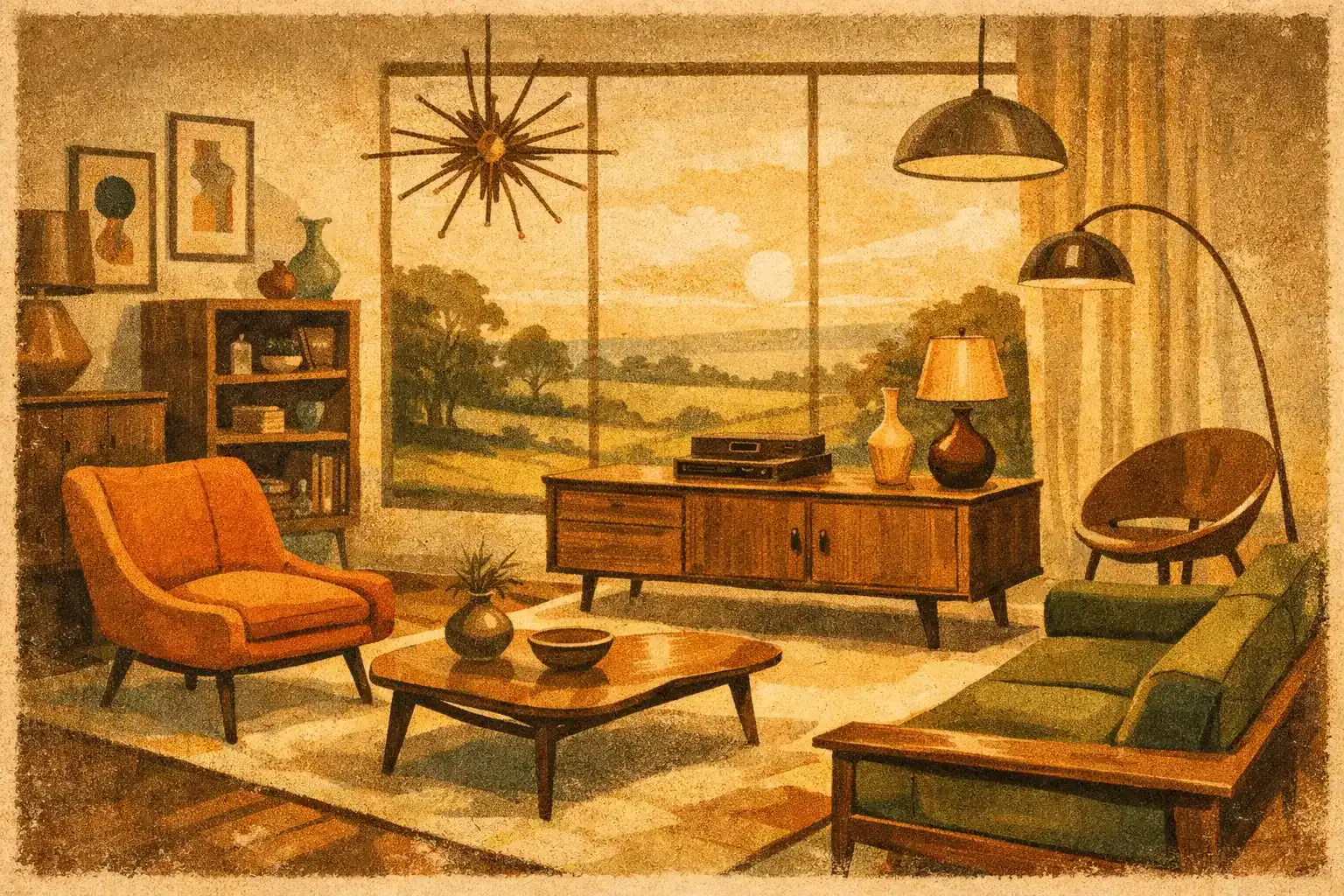
In broad terms, mid-century furniture refers to designs produced from the late 1940s through to the early 1970s. In Britain, the look often combines clean lines with practical joinery: teak and walnut veneers, tapered legs, recessed handles, slim frames and useful storage. Scandinavian influence was strong, but British makers interpreted it in their own way, often creating furniture designed for smaller post-war homes.
A sideboard with sliding doors, a compact chest of drawers or a nest of tables may look restrained beside more ornate antique furniture. Look more closely, however, and there is plenty of character in the timber selection, the curve of a handle and the precision of the joinery. Good design does not need excessive decoration to feel distinctive.
It is also worth separating genuine period furniture from later pieces marketed as ‘mid-century style’. A contemporary cabinet may borrow the silhouette, but it will not necessarily offer the same construction, timber quality or sense of history. That does not make new furniture inherently wrong, particularly where budget or a precise size is the priority. It does mean it should be priced and described honestly.
A Hertfordshire guide to mid-century furniture by room
The best starting point is not a label or a maker’s name. It is the question of what your room genuinely needs. Mid-century design was rooted in utility, and the most satisfying purchases still earn their place through daily use.
The living room: start with one anchor piece
A sideboard is often the natural foundation. It offers generous storage without the visual weight of a large modern media unit, and its horizontal line can make a modest room feel broader. Teak is a familiar choice, but walnut can bring a darker, more formal note, while oak works especially well in homes where a lighter, more textural scheme is preferred.
Measure carefully before falling for a piece. Account for skirting boards, door swings and the clearance needed to open drawers or cabinet doors. A sideboard that looks modest in a photograph can be surprisingly commanding in a narrow reception room.
For seating, original lounge chairs are compelling but deserve scrutiny. Comfort varies enormously, and older foam, webbing and upholstery may require attention. A chair with a sound frame and excellent lines can justify professional restoration. One with a loose structure, damaged veneer and compromised upholstery may become an expensive project unless it is a particularly rare design.
The dining room: favour proportion over matching sets
Extendable dining tables were one of the great practical successes of the period. Many are beautifully compact when closed and generous enough for guests when opened. Check that extension leaves are present, that the mechanism runs smoothly and that the colour match between leaves and main top remains acceptable. Some variation is expected after decades of sunlight and use.
A complete set of matching chairs is increasingly difficult to find, but perfection is not always essential. Four original chairs with a complementary pair at either end can look considered rather than compromised, especially when unified by fresh upholstery. Look for stable joints, sound seat frames and evidence that previous repairs have been carefully carried out.
The bedroom and hallway: make practical pieces feel intentional
Tallboys, dressing tables and compact chests bring mid-century character into rooms where storage matters most. In a bedroom, a well-proportioned chest can be more useful than a delicate occasional table, while a dressing table can work as a desk if its knee space and height are comfortable.
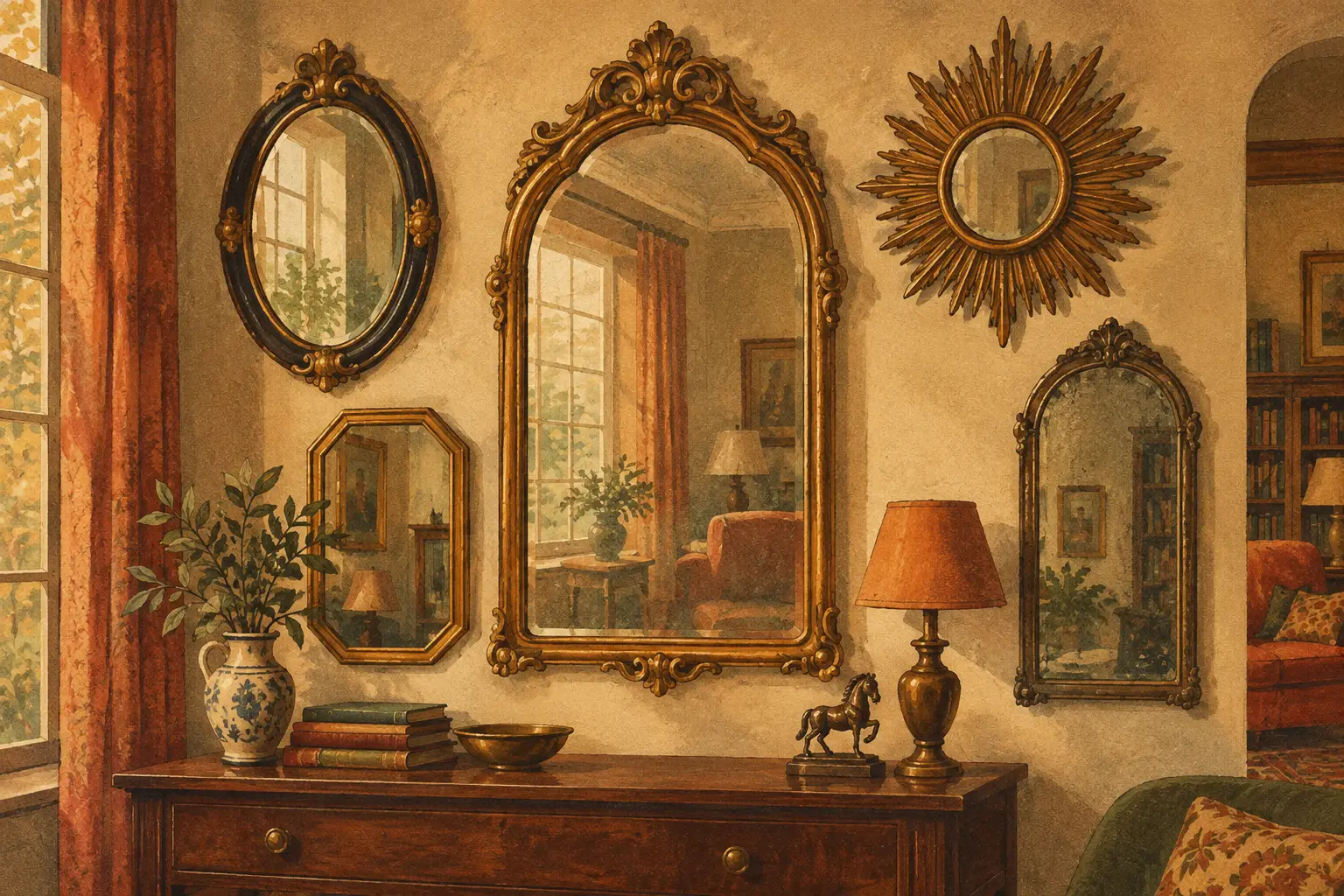
Hallways benefit from slimmer forms: a telephone table, small cabinet or wall mirror can offer a period note without creating an obstacle. This is also a good place for a carefully chosen lamp. Vintage lighting in Welwyn Garden City and across the county is sought after for its sculptural quality, but electrical safety must always come first. Older fittings should be checked and, where necessary, rewired by a qualified professional before use.
How to recognise quality and condition
Age alone is not a guarantee of quality. Mid-century furniture was made at many price points, from highly accomplished cabinetmaking to economical mass-market production. A thoughtful inspection tells you more than a vague claim of vintage status.
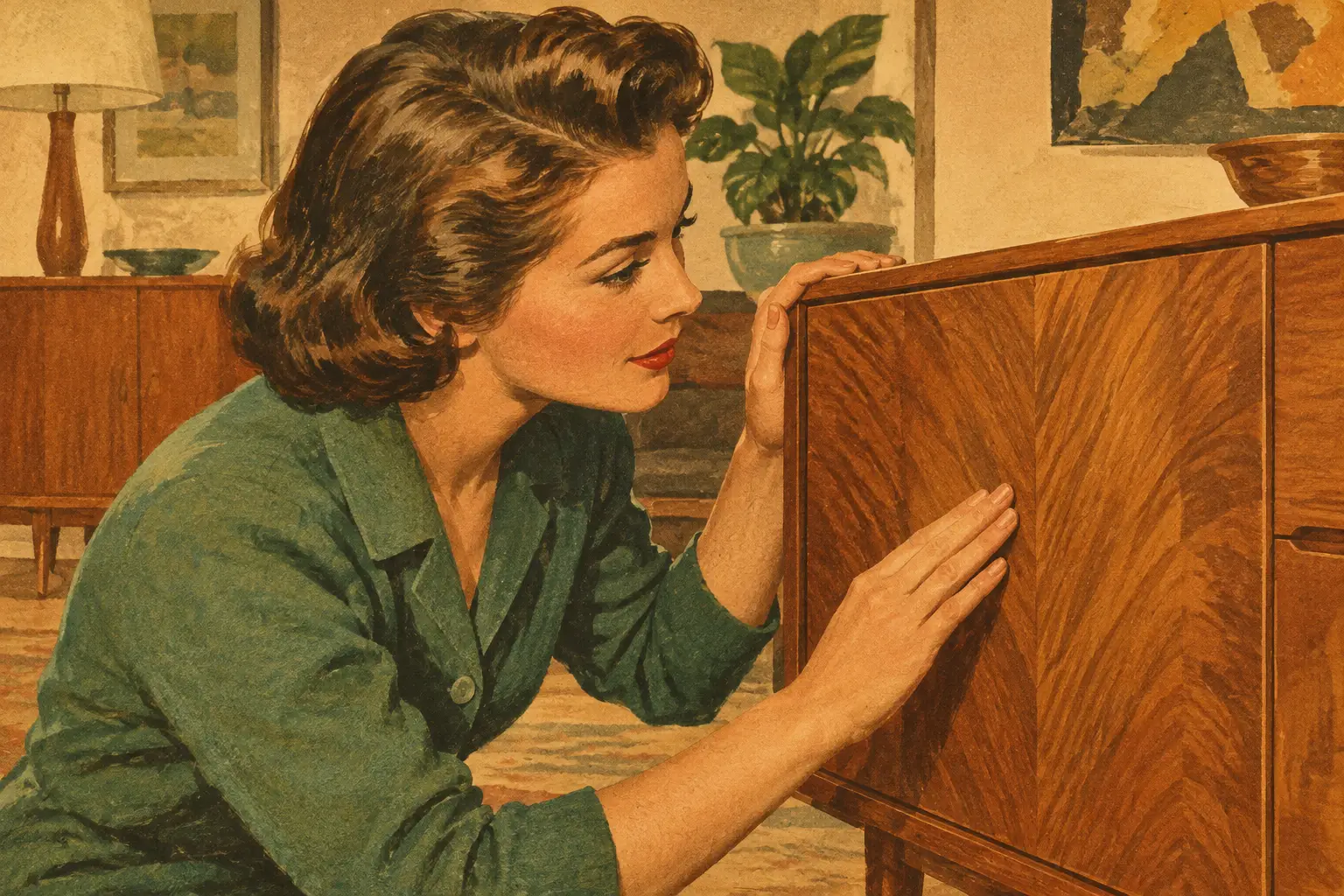
Start with the structure. Drawers should run reasonably well, doors should sit square and legs should feel firm. Minor stiffness, light surface scratching and a little unevenness are normal signs of an object that has been used. Wobble, major splits, lifting veneer and a strong damp smell require closer assessment.
Then look at materials. Solid timber may be used for legs, rails and drawer interiors, while the visible surfaces are often veneered. Veneer is not a flaw. It allowed makers to use beautiful figured timber economically and consistently. The concern is damage: deep chips, bubbling, missing sections or sanding that has cut through the surface cannot always be repaired invisibly.
Original handles, labels and maker’s stamps add interest and can support attribution, but they should not be the only reason to buy. A beautifully made unlabelled chest is often a better acquisition than a branded example in poor condition. Equally, a famous name does not excuse a price that leaves no room for necessary restoration.
Restoration should preserve, not erase
A sympathetic restoration brings a piece back into useful life while retaining its age and character. Cleaning, stabilising loose joints, polishing a dulled finish, renewing damaged webbing or reupholstering tired seats are all sensible interventions when carried out well.
Over-restoration is different. Heavy sanding can remove a veneer’s warmth and soften crisp edges. Thick varnish can leave a plastic-looking shine that was never part of the original design. Replacing every mark and fitting may make a piece look newer, but it can also strip away the evidence that makes it interesting.
Ask what you need from the item. A collector may prefer a lightly worn original finish, while a busy family household might rightly choose a professionally restored dining table that can withstand regular meals and homework. There is no single correct answer, provided the work is disclosed and the price reflects it.
Mixing mid-century pieces with older and newer interiors
The most convincing rooms rarely belong to one decade. Mid-century furniture is at its best when it creates conversation with other periods: a teak sideboard beneath an antique oil painting, a Danish-style chair beside a salvaged industrial lamp, or a plain ceramic vase placed on a Georgian chest.
Avoid filling every wall with low teak cabinets simply because the style is recognisable. Give each piece room to be read. A single excellent sideboard, a chair with a strong profile and a table lamp with a considered shade can carry more presence than a room full of similar objects.
Colour and texture help tie the scheme together. Mid-century timber responds beautifully to chalky plaster, deep green, tobacco, rust and soft stone shades. Wool, linen, ceramics and aged brass prevent the room from feeling too polished. If your home has original period details, do not feel obliged to hide them. A 1950s cabinet can look remarkably at home against Victorian floorboards or a 1930s fireplace.
Buying locally with confidence
When viewing mid-century furniture in person, take dimensions of the route into your home as well as the room itself. Stair turns, narrow doorways and low ceilings have defeated many otherwise perfect purchases. Ask about condition, restoration, delivery arrangements and whether shelves, keys or extension leaves are included.
A specialist vintage shop in Hertfordshire should be able to describe more than a piece’s colour and approximate date. Useful details include materials, construction, notable repairs, maker where known and any limitations worth understanding before purchase. This is where careful curation matters: the aim is not to make every old item sound rare, but to help the right object find the right home.
MN Interior Antiques approaches period furniture with that balance in mind, selecting pieces for their decorative strength, honest condition and continued usefulness. Whether you are looking for mid-century furniture in Hitchin, an accent piece for a Stevenage home or a considered addition to a growing collection, patience usually pays off.
Choose the piece whose proportions feel right, whose workmanship rewards a closer look and whose small signs of age you can appreciate rather than tolerate. It will not merely fill a space. It will give the room a history of its own.