A good Fat Lava vase changes a room before it holds a single stem. Its presence comes from the surface: volcanic craters, pooled glaze, sharp ridges, and colors that seem to have been pulled from a 1960s painter’s palette. For those seeking Fat Lava in Stevenage, Hertfordshire, the appeal lies in finding ceramics with that expressive character while understanding what makes a piece worth bringing home.
These are not quiet, background objects. West German Fat Lava pottery was made to be noticed, and that is precisely why it continues to sit so comfortably in homes that favor collected, personal interiors over matchy-matchy décor.
What Fat Lava Pottery Really Means
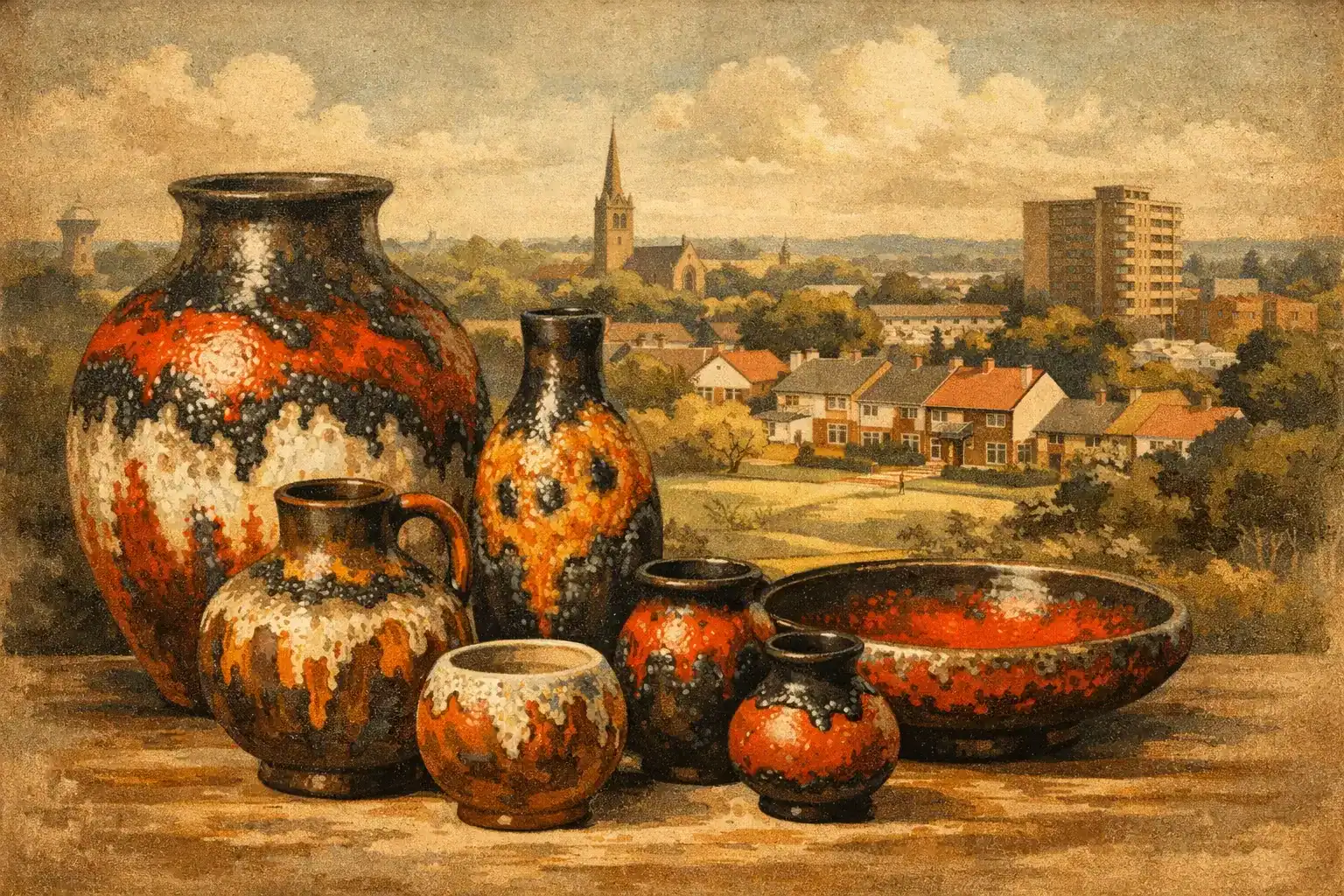
Fat Lava is the collector’s term for heavily textured, usually West German art pottery made predominantly from the 1950s through the 1970s. The name refers to its thick, cratered, lava-like glaze rather than one single maker, factory, or shape. A vase with a red-and-black volcanic surface may be Fat Lava, but so may a sculptural vessel in moss green, mustard, cobalt, cream, or brown, provided the glaze and era support the description.
The category is broad. Some pieces are boldly rustic, with rough clay bodies and dramatic bubbling. Others are refined and architectural, using controlled bands of color, raised patterns, or matte and glossy surfaces in contrast. That range is one reason the category rewards a careful eye. Two vases may carry similar dates and forms, yet one has the visual authority of a centerpiece while the other is best appreciated as part of a larger arrangement.
Many celebrated West German producers worked in this field, including Scheurich, Bay Keramik, Carstens, Dümler & Breiden, Jopeko, Ruscha, and Strehla. Factory markings are useful, but a mark alone does not make a piece exceptional. Glaze, scale, condition, rarity, and proportion matter just as much.
Why Fat Lava Still Works in Modern Interiors
The most successful rooms rarely rely on one period alone. A Fat Lava vase introduces a different surface language into a space dominated by smooth plaster, contemporary upholstery, glass, or painted cabinetry. It gives the eye something tactile to rest on.
Its decorative strength is especially clear in neutral rooms. A single ocher-and-black vessel on a mantel, shelf, or sideboard can provide depth without asking for a complete mid-century scheme. In a more layered interior, it can sit naturally beside antique wood, folk art, vintage lighting, and framed works on paper. The pottery’s handmade appearance helps bridge those styles.
Scale is worth considering before color. A substantial floor vase makes sense in a wide fireplace opening, beside a low chair, or on a deep console. A smaller form can be more effective on a bedside table, bookshelf, or grouped on a tray. Large pieces are often harder to find in good condition, but they should not be purchased simply because they are large. The silhouette needs to earn its place.
Fat Lava is also appealing because it does not require perfection to feel alive. Slight irregularities in glaze application, tiny firing marks, and variations in texture belong to the process. That said, honest age is different from damage. A well-curated piece should retain its decorative confidence without requiring a buyer to overlook major flaws.
Finding Fat Lava in Stevenage, Hertfordshire
For collectors and homeowners in and around Stevenage, buying locally offers a practical advantage: the chance to appreciate the scale, color, and texture of a piece in person. Photography can show a glaze pattern, but it may not communicate how deeply textured the surface is, whether a brown leans warm or gray, or how a vase balances when viewed from across a room.
A curated source is often more valuable than a broad assortment of loosely identified pottery. Fat Lava is a category where accurate descriptions matter. Buyers should expect clear measurements, photographs from more than one angle, notes on marks and makers where known, and transparent condition reporting. These details help distinguish a decorative purchase from a considered addition to a collection.
At MN Interior Antiques, the interest is not in filling shelves with lookalikes. The pleasure is in presenting distinctive vintage ceramics with a story to tell: pieces selected for their glaze, form, maker, and ability to bring character to an interior.
How to Assess a Piece Before You Buy
Look beneath the glaze
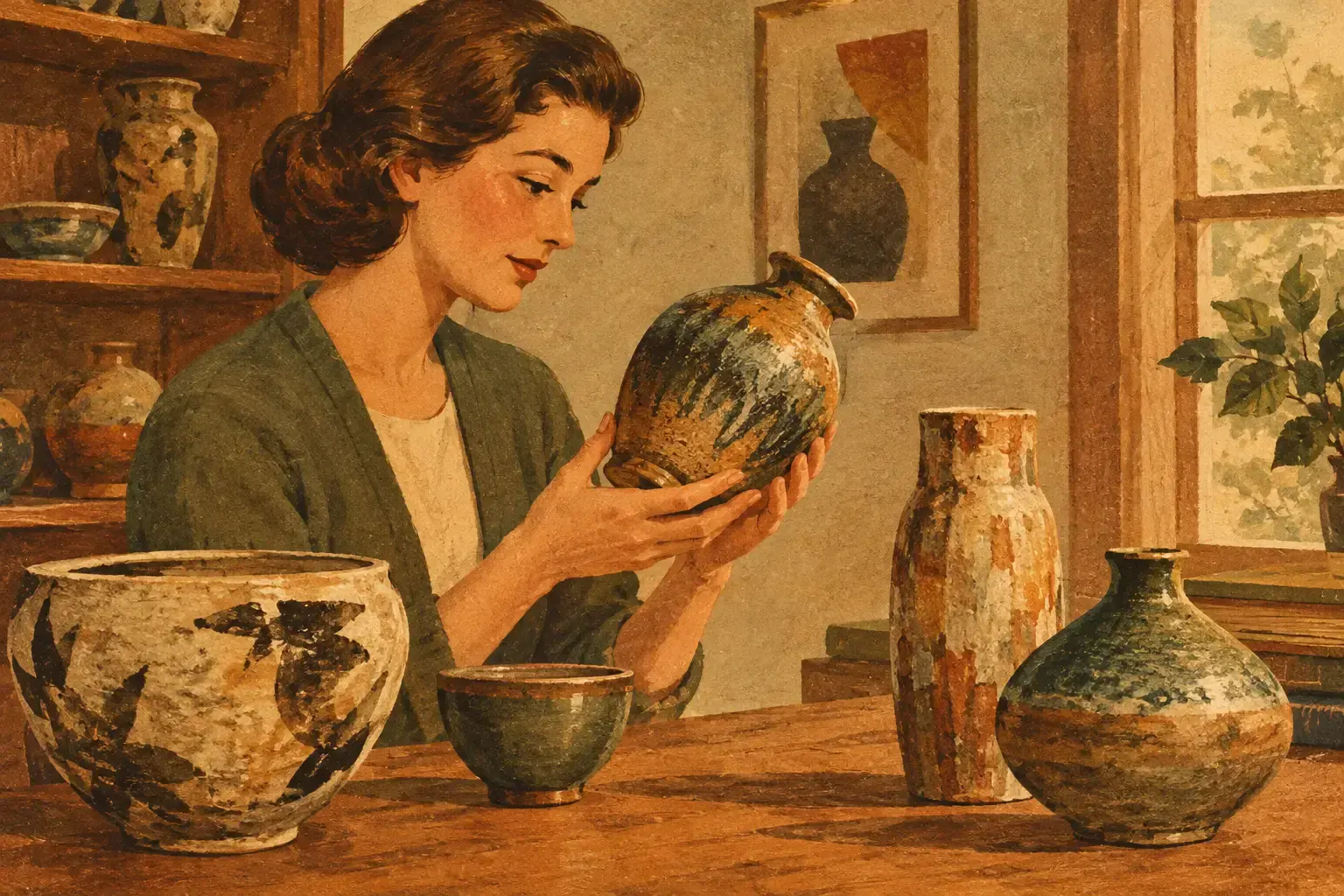
Turn the vase over. Many West German pieces have an impressed or molded base mark that identifies the factory and, frequently, a shape or form number. Marks can be partially obscured by glaze, and not every genuine piece is clearly marked, so absence of a visible mark is not automatic cause for rejection. It does, however, mean the description should be more cautious about attribution.
A number on the base may indicate the form, while another may refer to height or model. These codes vary between manufacturers. Treat them as useful clues rather than a shortcut to value.
Read condition with a collector’s eye
Examine the rim, base, handles, and any raised decoration. Small chips on the underside may have limited effect on a vase intended for display, particularly if they are stable and invisible in use. A chip on the rim, a hairline crack, a repair, or a patch of glaze loss on the front is more consequential.
Crazing deserves context. Fine glaze crazing can occur naturally with age and is sometimes visually unobtrusive. If it has darkened significantly, feels unstable, or is accompanied by cracks, it deserves closer scrutiny. As with antique furniture, condition should be weighed against rarity, price, and the role the object will play in your home.
Favor form and finish over labels alone
Well-known makers can be highly desirable, but a factory name should not override your own response to the object. A lesser-known vessel with an exceptional glaze and sculptural profile may be more satisfying than a common example from a familiar producer. Conversely, a sought-after design can justify a stronger price when it has an unusual finish, excellent condition, and documented attribution.
For a first purchase, choose a piece you would enjoy seeing every day. Collector value is meaningful, but decorative conviction is what keeps an object in a room rather than packed away in a cabinet.
Styling Fat Lava Without Making It Feel Themed
The temptation is to group every piece of West German pottery together. That can be effective for an established collection, particularly on a large open shelf, but restraint often creates a stronger result in a living space.
Try one substantial vase against a pale wall, or pair two forms with a shared color but different heights. A deep red crater glaze beside a black ceramic lamp, aged brass candlestick, and timber sideboard has more impact than a crowded row of unrelated objects. Repetition works best when there is a connecting thread: a shared earthy palette, a repeated curve, or a similar degree of texture.
Fresh foliage suits many Fat Lava forms, though a vase does not need flowers to justify itself. Branches with a loose, architectural line can emphasize a tall bottle shape. Short, abundant blooms work better in wider forms. If using water, check the interior and base first, particularly with older ceramics that may have fine cracks or unglazed areas.
Color matching is rarely necessary. Instead, let the vase introduce a note that appears elsewhere only faintly – the rust in a woven textile, the green of a painting, or the charcoal in an upholstered chair. This is how a collectible object becomes part of the room rather than an isolated display piece.
The Appeal of the Imperfect Object
Fat Lava pottery remains collectible because it resists the polished sameness of mass-produced decoration. Its glazes are often unruly, its forms can be strange, and its appeal is deeply individual. One buyer may be drawn to saturated orange and black volcanic texture; another to a restrained cream vessel with a single raised pattern.
That subjectivity is a strength. The right piece does not need to follow a trend or coordinate perfectly with everything you own. It simply needs to bring texture, color, and a little more history to the space it inhabits.