A desk sets the character of a study long before a book is opened or a letter is written. The best antique desks for studies bring something that new furniture rarely can: a sense of purpose, material warmth and evidence of skilled hands. A well-chosen piece can make a compact spare room feel considered, or give a library, bedroom corner or home office the quiet authority it deserves.
The right choice is not always the grandest desk. It is the one with a workable height, enough useful surface area and a form that suits the way you actually work. Whether the priority is laptop space, deep drawers for papers or simply a beautiful place to write, these are the antique desk types worth seeking.
1. Georgian Writing Tables: Quietly Versatile
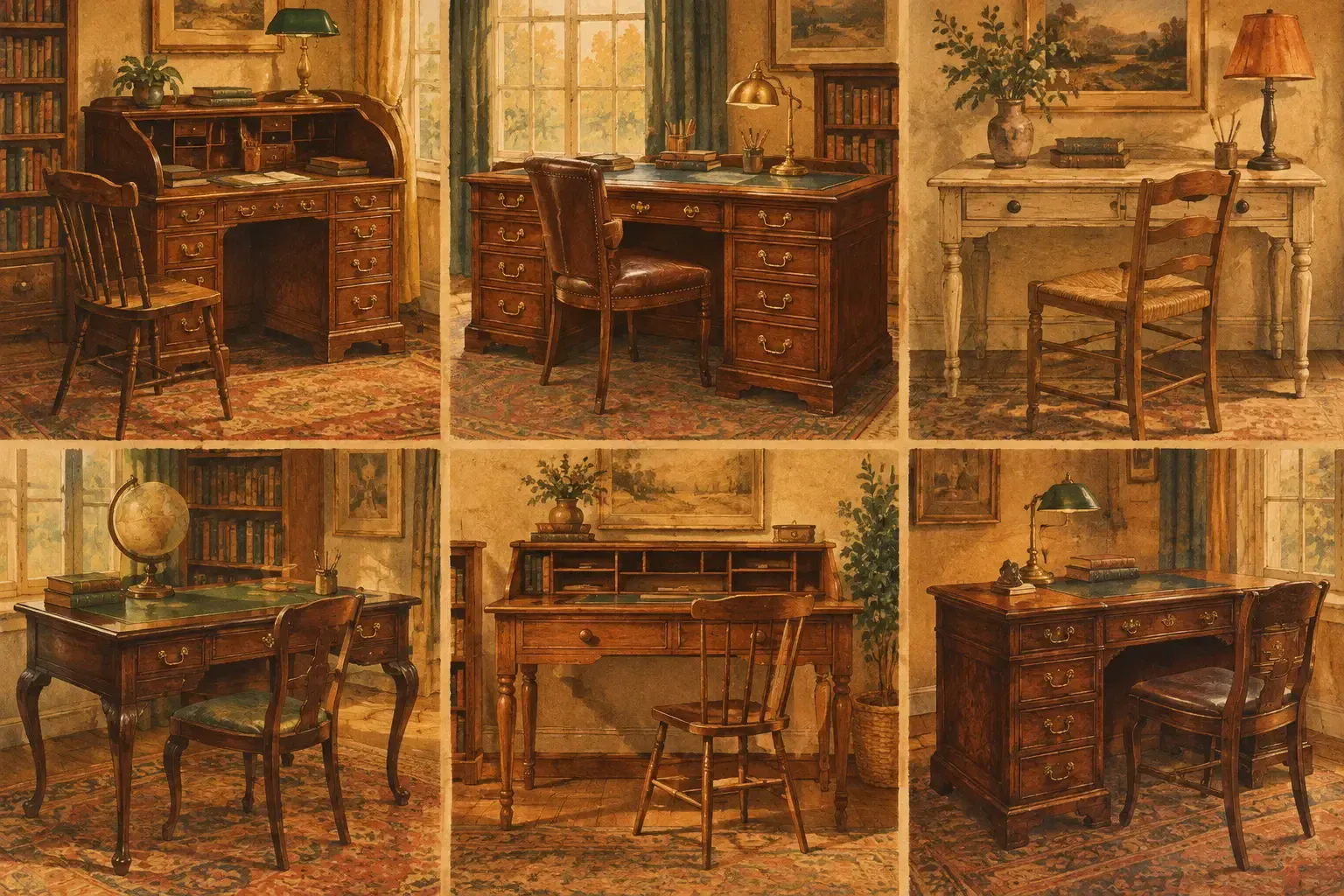
A Georgian writing table is among the most adaptable choices for a study. Typically made in mahogany, oak or walnut, it has a restrained silhouette: a rectangular top, slim drawers and tapered or turned legs. It is formal enough for a traditional interior, yet light enough in appearance to sit comfortably beside more contemporary furniture.
Its real appeal lies in proportion. Many Georgian tables were made for correspondence rather than large office equipment, so they tend to be narrower and less visually heavy than later Victorian desks. This makes them especially useful in a bedroom study or the end of a sitting room where a substantial pedestal desk would dominate.
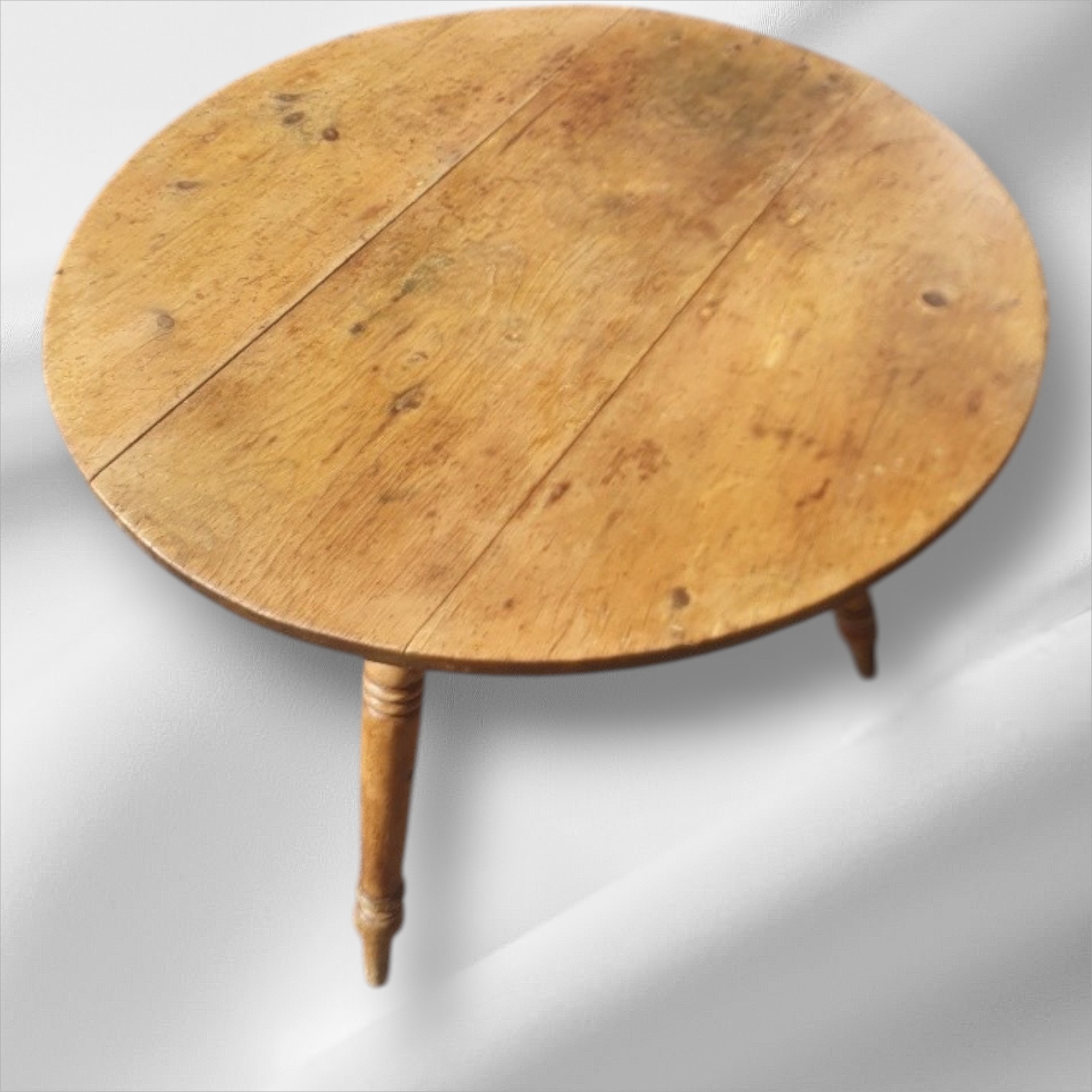
Check the knee clearance before buying. A central drawer can reduce legroom, particularly on smaller examples. It is also sensible to expect marks, gentle fading and an uneven patina on a two-hundred-year-old top. These are often signs of honest use rather than defects, provided the structure is sound and the drawer runs are intact.
2. Victorian Pedestal Desks: Storage With Presence
For a dedicated home office, a Victorian pedestal desk offers generous storage and unmistakable presence. The familiar arrangement of a broad writing surface over two banks of drawers was designed for serious paperwork. In oak or mahogany, it can anchor a larger room and provide a practical home for files, stationery and the everyday clutter that otherwise gathers around a workspace.
Many examples have a tooled leather inset top. Original leather, even when rubbed and darkened, carries considerable character. A replacement surface may be tidier and more forgiving of a computer mouse, but it should be disclosed clearly and reflected in the price. Neither is automatically better: it depends on whether originality or daily utility matters more to you.
Consider access as carefully as appearance. Pedestal desks often separate into three sections, which is useful for delivery through narrow hallways and staircases. Their depth, however, can make them unsuitable for a small study. Measure the room, allow space for a chair to move back, and avoid placing such a desk where it blocks natural light.
3. Arts and Crafts Desks: Honest Timber, Useful Form
Arts and Crafts desks suit studies where craftsmanship is part of the decorative scheme. Oak is the defining material, often finished to emphasise grain and joined with visible pegs, simple panels or hand-worked metal fittings. The style has a directness that feels at home in period houses, but it also provides a welcome contrast in cleaner, more modern spaces.
Look for a bureau, small writing desk or library table with a sturdy top and uncomplicated drawer layout. The best pieces balance utility with a satisfying weight and texture. They work particularly well with a woven rush chair, pottery or a shaded reading lamp, creating a room that feels collected rather than furnished all at once.
Oak is resilient, though it is not indestructible. Examine the top for excessive warping and ensure that any drop-front mechanism closes neatly. A little movement in old timber is normal, especially in centrally heated homes, but persistent wobble or a strained fall-front deserves professional attention.
4. Edwardian Inlaid Desks: Elegance for Smaller Rooms
Edwardian desks often offer a lighter, more decorative alternative to Victorian furniture. Satinwood, mahogany and rosewood veneers appear alongside delicate inlay, stringing and refined brass handles. Their proportions can be surprisingly compact, making them a strong choice for a study tucked into a landing, dressing room or alcove.
These desks reward close inspection. Fine veneer and marquetry are vulnerable around edges, drawer fronts and feet, where knocks and repairs are common. A careful old restoration is not a reason to dismiss a piece. In fact, sympathetic repair may have preserved a fragile desk for another century. What matters is that replacement sections do not overwhelm the original decorative work.
Because Edwardian desks can look visually light, they pair well with bolder surroundings. A deep wall colour, antique ceramics or a single piece of vintage lighting can give one presence without sacrificing the room’s airiness.
5. Campaign Desks: Practical Character in Compact Form
Campaign furniture was made for transport, usually in the nineteenth century, and its construction still makes sense in a home that needs flexibility. Brass corner mounts, recessed handles and sectional design give campaign desks a crisp, architectural look. Smaller writing tables and chests used as desks can be excellent in studies where storage is needed but floor space is limited.
A genuine campaign desk should show thoughtful construction rather than decorative imitation. Look for flush brass fittings designed not to catch during travel, strong corner protection and drawer fronts that sit well within the carcass. Mahogany examples are particularly sought after, though oak and teak versions can be equally attractive depending on period and origin.
The trade-off is workspace. Many campaign desks are narrower than a modern office desk, so they are best for a laptop, notebook and focused daily tasks rather than multiple screens. For some homes, that limitation is a virtue: it encourages the study to remain a place of reading and concentration, not a dumping ground for equipment.
6. Mid-Century Desks: A Softer Line for Modern Studies
Not every study calls for a nineteenth-century statement piece. Mid-century furniture brings a different kind of history, with clean lines, practical drawers and warm timbers such as teak, walnut and beech. A 1950s or 1960s desk can sit naturally in a modern Hertfordshire home while still offering the individuality and quality that make vintage interiors so rewarding.
Freestanding desks with finished backs are particularly useful. They can stand away from a wall, dividing an open-plan room without showing an unfinished rear panel. Look for well-resolved details: sculpted handles, tapered legs, dovetailed drawers and a layout that places storage within easy reach.
When assessing a mid-century desk, inspect the veneer closely under changing light. Water damage and lifting veneer can be expensive to correct, while a few surface scratches are often part of a desk’s lived-in appeal. A desk with a sensitively restored top may be the better working piece, even if a pristine collector’s example holds stronger rarity value.
What to Check Before Choosing an Antique Study Desk
The most beautiful desk is of little use if it is uncomfortable. Desk heights vary, and many antique examples sit slightly higher or lower than current office furniture. If possible, compare the height with a chair you already find comfortable. Your forearms should rest naturally at the working surface, without shoulders raised or knees pressed into a drawer.
Condition should be judged as a whole. Original handles, locks and drawer linings add value and narrative, but a missing key is seldom a major concern. More significant issues include woodworm that is active rather than historic, loose joints, severe splits, damp odours and crude structural alterations. A patinated top, old ink marks and minor signs of use can be exactly what gives antique furniture its conviction.
It is also worth planning for modern working habits without compromising the piece. A discreet cable route behind the desk, a low-profile desk pad and a good task lamp can make an antique surface practical for everyday use. Avoid drilling through an original backboard or cutting into a drawer unless the desk has already been substantially altered.
For buyers seeking antique furniture in Stevenage and across Hertfordshire, choosing through a knowledgeable, curated dealer offers the reassurance of accurate descriptions and considered condition reporting. At MN Interior Antiques, the aim is not to make every desk look new, but to recognise the difference between desirable age, sympathetic restoration and damage that affects how a piece will live in the home.
A study desk need not be flawless to be exceptional. Choose one with sound bones, a surface you will enjoy returning to and enough history to make the work done there feel a little more considered.