A well-chosen piece of antique silver changes the character of a table or mantel without asking to be the loudest thing in the room. It catches candlelight, carries the soft evidence of use, and brings a pleasing weight to everyday rituals. Whether it is a Georgian sugar bowl, an Arts and Crafts spoon, or a modest Victorian photograph frame, antique silver offers the kind of detail that makes a home feel collected rather than simply furnished.
For buyers drawn to objects with history, silver is especially rewarding. It can be useful, decorative and deeply personal at once. Yet it is also a category where materials, marks, condition and price matter. Knowing what you are looking at makes the search far more enjoyable.
What Gives Antique Silver Its Appeal?
Silver has always occupied an interesting place in the home. It was made for ceremony, hospitality and domestic use, but the best pieces were also designed with real visual intelligence. A plain early nineteenth-century cream jug can have a more compelling silhouette than a heavily ornamented later example; a hand-hammered Arts and Crafts bowl may sit beautifully beside mid-century furniture precisely because its surface feels honest and tactile.
Unlike new decorative metalware, antique silver has already developed its own finish. Fine scratches, gentle wear to a handle, and a darker tone in engraved details can all add depth. This is patina, not neglect. It gives the object a softness that cannot be convincingly manufactured.
There is also an element of continuity. A set of teaspoons may have served countless teas before arriving in a contemporary kitchen. A silver-backed mirror may retain the quiet glamour of a former dressing table. These are practical fragments of social history, made to be used and appreciated rather than kept at a distance.
Antique Silver or Silver Plate?
The first question is usually whether an item is solid silver or silver plate. Both can be beautiful and both deserve consideration, but they are not the same thing.
Solid silver refers to an object made principally from a silver alloy, commonly sterling silver in Britain. Sterling is 92.5 per cent silver, with other metals added for strength. British sterling pieces are normally identified through hallmarks, which can reveal the maker, assay office and, in many cases, the year of assay.
Silver plate is base metal, often brass or nickel silver, coated with a layer of silver. It was developed to make the appearance of silver accessible to more households, and many plated objects were made to a very high standard. Victorian tea services, cake stands and entrée dishes are often found in plate, with intricate decoration that would have been prohibitively expensive in solid silver.
The trade-off is clear. Solid silver has inherent material value and is usually more resilient to polishing over time. Plated pieces can offer more scale for the budget, but once the plated surface is worn through, restoration is more complicated. A little rubbing is not automatically a reason to reject an object, particularly if it is decorative, but it should be reflected in the price and description.
Reading hallmarks with confidence
Hallmarks are one of the great pleasures of buying British silver. On a fully hallmarked piece, look for the standard mark denoting silver purity, an assay office symbol, a date letter and often a maker’s mark. London, Birmingham, Sheffield, Edinburgh and Chester each used distinct assay marks over different periods.
Marks can be tiny, worn or partially obscured, especially on spoons and small boxes. They may be found underneath a base, inside a lid, or along the back of a handle. A clear hallmark is useful evidence, but condition, construction and design still matter. It is possible to find an unremarkable solid-silver item with excellent marks, and a superb plated object that earns its place through workmanship alone.
Be cautious with vague descriptions such as “silver tone”, “white metal” or “possibly silver” if you are buying for material value. These phrases are not necessarily misleading, but they should prompt questions. An experienced dealer should be clear about whether an item is sterling, foreign silver, plated or unmarked.
Choosing Pieces You Will Actually Live With
The most satisfying silver is not always the grandest. Start with the way you entertain, decorate and move through your home. If you enjoy laying a table, a pair of candlesticks, serving spoons or a small sauce ladle can make ordinary meals feel more deliberate. If your home leans towards layered vintage interiors, a tray, a small bowl or a framed mirror may provide the right note of reflection without adding clutter.
For a first purchase, small domestic pieces are often ideal. A silver napkin ring, scent bottle, toast rack or cream jug has presence and usefulness, yet does not demand a large budget or a formal setting. Sets are appealing, but mismatched spoons and individual tablewares can look more relaxed and personal.
Scale deserves attention. A large Victorian centrepiece may be impressive in a period dining room, but it can overwhelm a compact table. Conversely, a tiny trinket box can disappear on a broad console. Consider where the piece will sit, what it will be paired with, and whether it will be seen close up or across a room.
At MN Interior Antiques, the appeal of a curated object lies as much in its decorative character as its age. That is a useful principle for any purchase: choose the piece whose form, surface and story genuinely belong in your home, rather than buying a category for its label alone.
Styling Antique Silver in a Contemporary Home
Antique silver does not require a traditionally furnished room. In fact, its cool surface can bring balance to timber, linen, painted walls and richly coloured ceramics. A Georgian or Victorian piece often looks particularly good against simple forms because the contrast lets its craftsmanship show.
On a dining table, use silver sparingly but purposefully. A pair of candlesticks can anchor a simple linen cloth; a small bowl filled with seasonal fruit can replace a more formal centrepiece. Grouping every silver object together can make the arrangement feel overly themed. One or two pieces, given enough breathing space, are usually more convincing.
In a living room, silver works well with age-worn wood, antique ceramics and textured textiles. A small tray on an ottoman or side table can gather a candle, matches and a favourite book. A chased box adds detail to a shelf without the visual heaviness of a larger object. Silver’s reflective quality is useful in darker corners too, especially during the months when natural light is brief.
Mixing eras is often where an interior becomes memorable. The clean line of mid-century furniture can sharpen the profile of an ornate Edwardian frame. West German pottery, with its earthy glazes, gives polished silver a more grounded setting. The relationship should feel considered, not matched. Contrast in period and material creates tension; repeating every finish and era can flatten a room.
Condition, Repairs and the Value of Wear
Antique silver was made to be handled, so signs of use are expected. Light surface scratches, minor dents and small areas of rubbing are part of the category. The question is whether they compromise the object’s appearance, function or structural soundness.
Check that handles are secure, lids close properly, feet sit level and hinges work without strain. On candlesticks, examine the base for splits or filling that may have become unstable. On plated items, look for exposed base metal on high points such as handles, rims and corners. On hollow-handled knives, be aware that blades can be replaced or handles may have repairs.
Engraving can be divisive. A family crest or monogram gives a piece a specific history and can be visually charming. It may, however, narrow resale appeal for some buyers. If you love the object, a discreet inscription is rarely a reason to walk away. If you are paying a premium for rarity, collectability or pristine condition, it becomes more relevant.
How to Care for Antique Silver
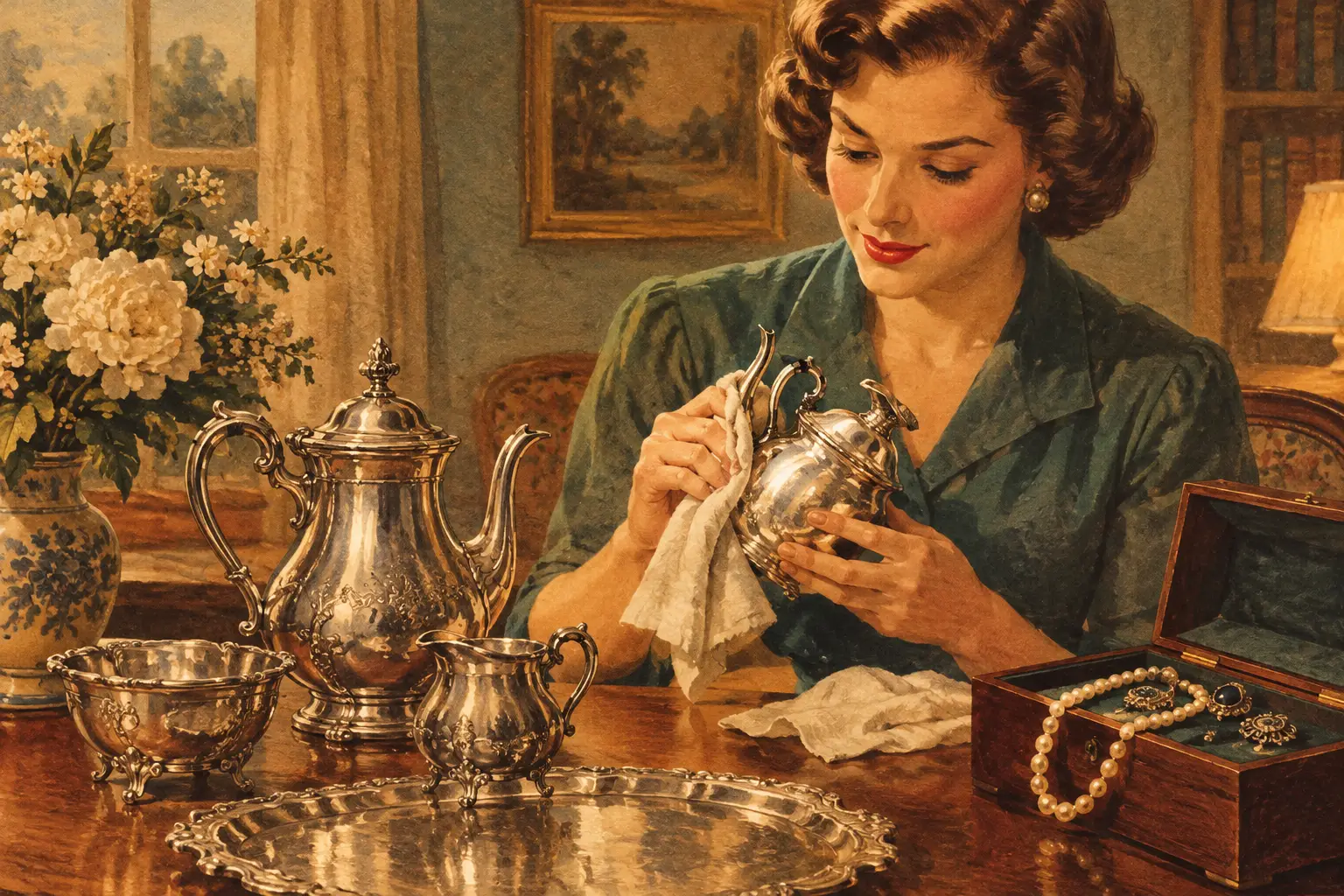
Silver needs less polishing than many people think. Frequent aggressive polishing can soften crisp decoration and, in the case of plate, gradually remove the silver layer. Let the object’s natural colour guide you. Some owners prefer bright polish; others value a gentler, greyed patina. There is no single correct finish, provided the piece is clean and stable.
For routine care, dust with a soft, dry cloth and handle pieces with clean hands. Wash usable tableware promptly after use in warm water with mild washing-up liquid, then dry it thoroughly. Avoid dishwashers, bleach, rubber gloves and prolonged contact with salty or acidic foods, all of which can mark silver.
Use a reputable silver polish only when needed, applying it lightly with a soft cloth and avoiding unnecessary pressure around engraved or raised details. Never use abrasive scourers. Store silver in a dry place, ideally wrapped in acid-free tissue or a soft anti-tarnish cloth rather than sealed in damp conditions.
A beautifully made object earns its place through use as much as display. Choose antique silver that you want to pick up, pass across a table or notice in the evening light. The marks of a past life are not a barrier to living with it now. They are the reason it has something more to offer.