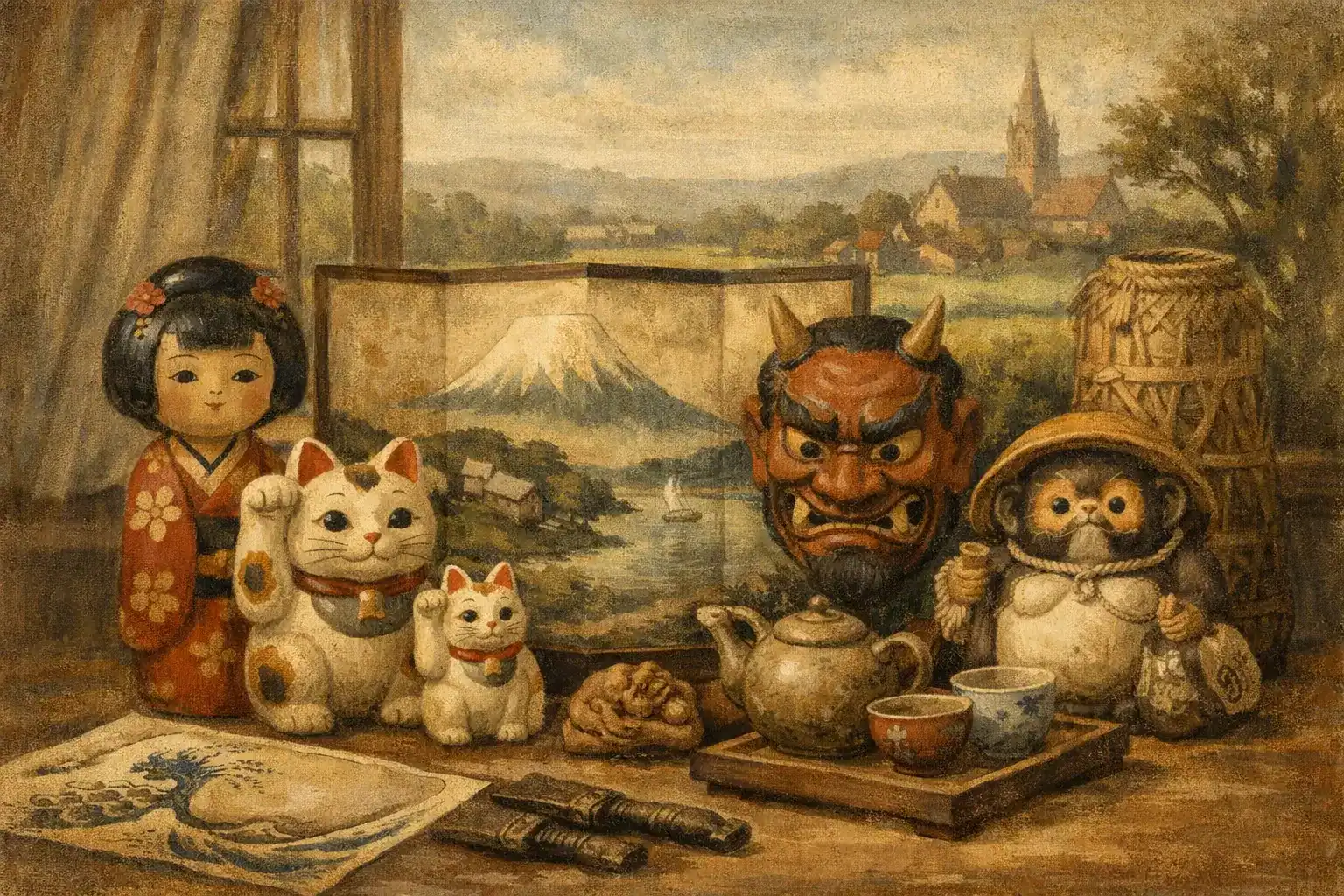
A hand-thrown bowl with an ash-glazed surface, a weathered wooden tray, a small indigo-dyed textile: these are not objects that need to shout across a room. Yet they hold attention. That quiet assurance goes a long way towards explaining why Hertfordshire collectors love Japanese folk art. In homes filled with period furniture, mid-century lighting and well-chosen ceramics, Japanese folk pieces bring texture, integrity and a welcome sense of restraint.
For collectors, the appeal is not simply that these objects are Japanese, old or rare. It is that they often show the hand of the maker, the use of good material and a beauty that has deepened through everyday use. A modest cup can carry more presence than a highly decorated ornament if its form, glaze and wear feel right.
Why Hertfordshire collectors love Japanese folk art
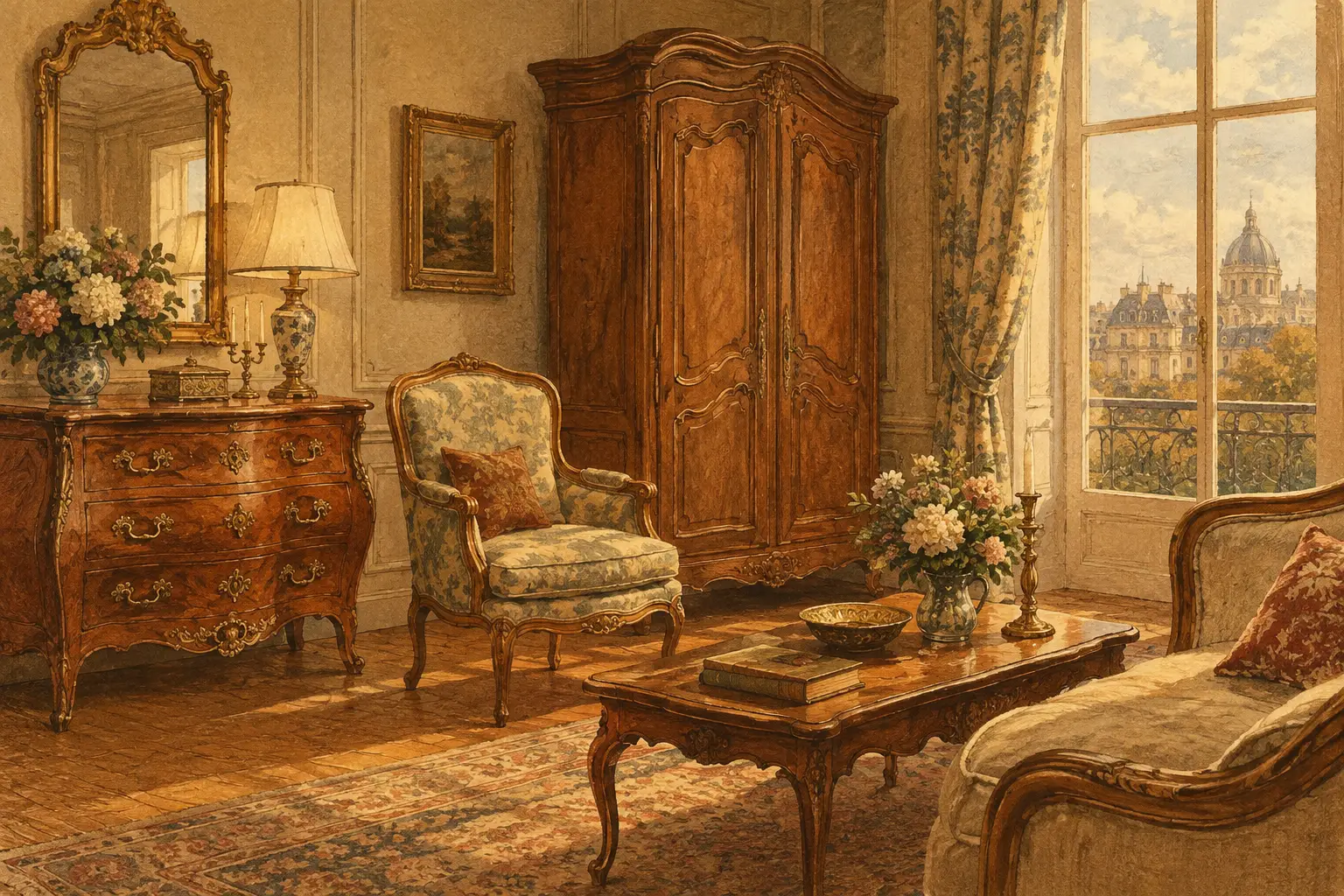
Hertfordshire has a strong appetite for interiors with character. From Georgian houses near St Albans to modern spaces in Stevenage, homeowners are often looking for pieces that soften a room without making it feel themed or over-styled. Japanese folk art does this particularly well.
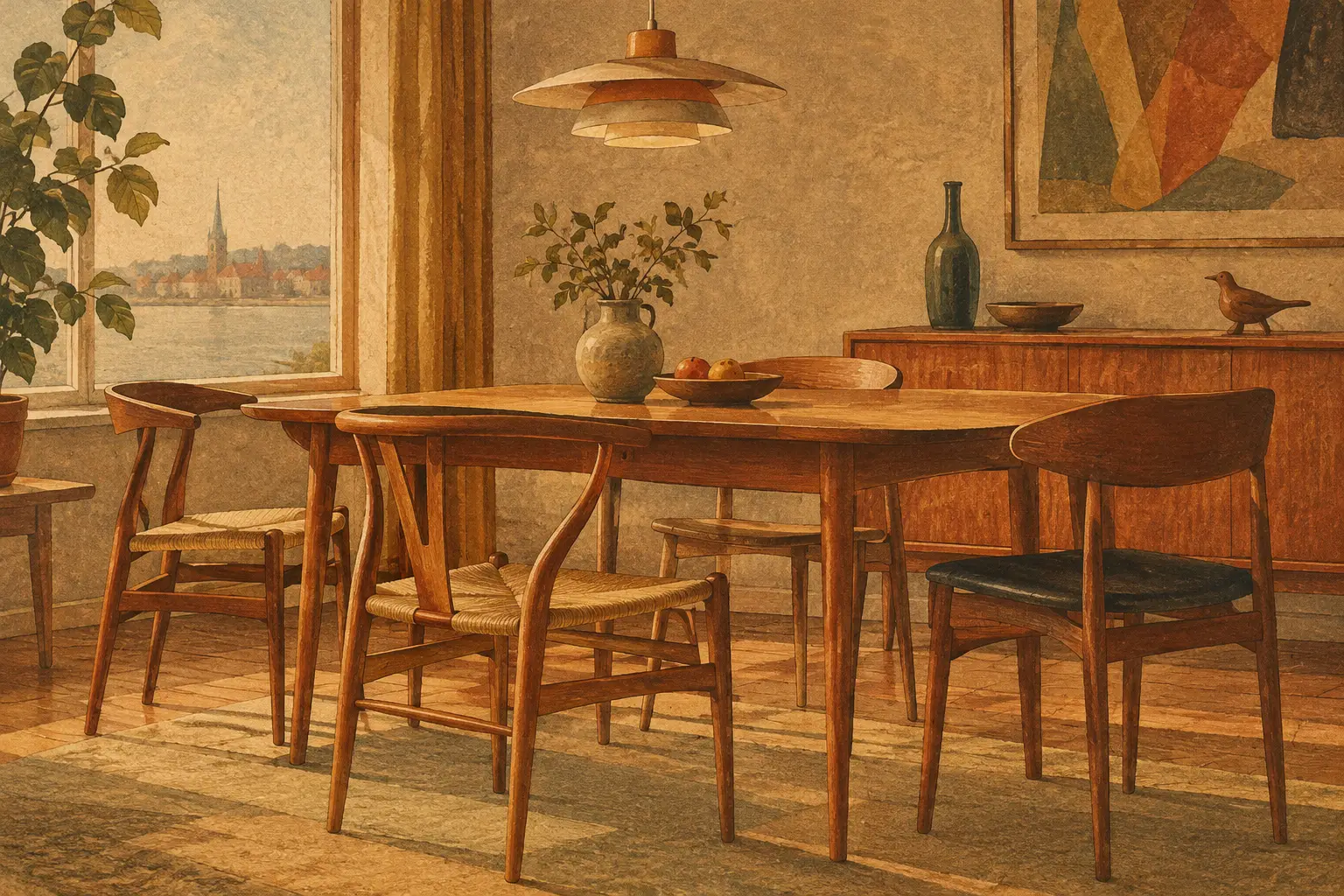
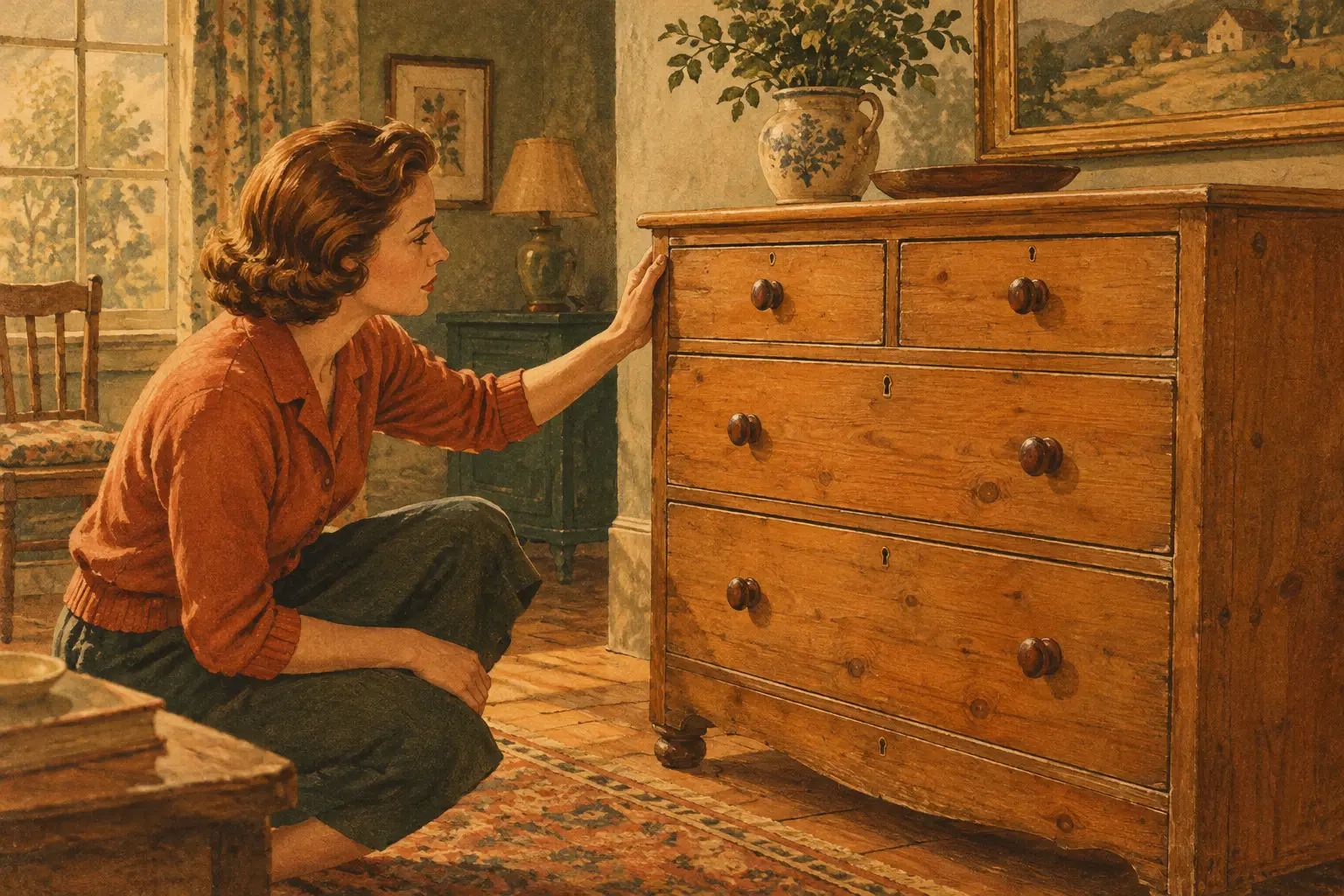
It sits comfortably beside English oak, Victorian pine, Danish teak and architectural salvage because it shares a respect for material. The grain of wood, the irregularity of a hand-finished glaze and the slight fading of a handwoven cloth are not flaws to be corrected. They are part of the object’s visual record.
There is also a practical appeal. A folk pottery jar can be displayed on a mantelpiece, but it can equally hold branches on a dining table. A woven basket may be an artful accent in a hallway while still being useful. Collectors increasingly value this kind of decorative flexibility, especially when furnishing homes for real life rather than a photograph.
The lasting pull of mingei
The Japanese folk craft movement is often discussed through the idea of mingei, a term associated with objects made for ordinary use by skilled, often anonymous craftspeople. It is a useful starting point, although it should not be used as a catch-all label for every handmade Japanese item.
At its heart, mingei asks us to look again at the overlooked. A storage jar, tea bowl, brushwood basket or indigo textile may have been made for a practical purpose, but its usefulness does not diminish its beauty. In many cases, it is the reason for that beauty. Forms evolved through repeated handling and making, rather than being designed merely to impress.
This philosophy feels refreshing in a market saturated with factory-made décor. Folk art rewards a slower eye. The glaze may pool unevenly around the foot of a bowl. A carved figure may be asymmetrical. A textile may carry repaired areas or signs of age. Those details make an object individual, and they create a connection that pristine reproduction pieces rarely achieve.
Honest materials make a room feel settled
Japanese folk art often relies on a reduced palette: clay, timber, bamboo, paper, cotton, iron and natural dyes. This makes it especially easy to introduce into an established interior. A dark indigo fragment can ground a pale wall. A warm brown storage vessel can bring depth to a painted cupboard. A simple paper-covered box can add a tactile note to a desk or shelving arrangement.
The key is contrast without competition. A large, sculptural studio vase might work beautifully alongside mid-century furniture in Hitchin, while a group of smaller vernacular ceramics may be more at home on an antique dresser. There is no need to fill every surface. One exceptionally good piece, given room around it, usually has more impact than a crowded assortment.
Collectors also respond to the way these materials age. Patina is not an instant finish. It comes from handling, light, storage and use over time. The softened edge of a wooden scoop or the fine crazing on an older glaze can bring a room an atmosphere that cannot be bought off the shelf.
Craftsmanship without unnecessary ornament
Much Japanese folk art is deceptively simple. Its forms appear inevitable because they are so well resolved. A bowl feels balanced in the hand. A basket is woven for strength as well as appearance. A small cabinet is made with an understanding of proportion, joinery and daily use.
That simplicity is a major part of its decorative strength. In a home containing ornate antique furniture, it can offer a pause. In a pared-back contemporary room, it prevents the scheme becoming cold. The best pieces have enough visual interest to stand alone, but they do not demand constant attention.
This is where collecting becomes more rewarding than simply buying by category. Not every Japanese ceramic is compelling, and not every old object has the qualities that make it worth living with. Condition, proportion, colour, provenance and the confidence of the making all matter. A beautifully formed vessel with a small, stable firing crack may be far more desirable than a technically perfect piece with little character.
A natural companion to British antiques
Japanese folk art is sometimes presented as a dramatic departure from British collecting, but the relationship is often more natural than it first appears. Both traditions can prize utility, skilled workmanship and the evidence of age. A country-made English stool and a Japanese wooden rice measure may come from different histories, yet each can make sense in the same room.
The connection becomes particularly effective when the interior is built gradually. Rather than trying to create a strictly Japanese scheme, collectors can place a folk vase on an English side table, fold an indigo textile over the arm of a vintage chair, or use a rustic platter among creamware and stoneware. These combinations feel personal because they are led by material and mood, not by a rigid period rule.
For those drawn to antique furniture in Stevenage or vintage lighting around Welwyn Garden City, Japanese folk objects can also provide scale. Furniture and lighting establish the architecture of a room; smaller handmade pieces provide the intimacy. They give the eye somewhere to rest at closer range.
What to look for when buying
A good collection does not need to begin with a museum-level piece. It begins with careful looking. Seek objects with a clear purpose, good proportions and surfaces that reward close inspection. Ask how an item has been used, whether it has repairs, and if those repairs are stable and honestly described.
With ceramics, examine the rim, foot and body for restoration, cracks or chips. Old repairs can be part of an object’s story, but they should be reflected in its value and suitability. With textiles, check for fragility, sun fading and signs of insect damage. Wood and bamboo should be assessed for structural movement, old wormholes and later alterations.
Provenance matters, although it varies greatly. Some pieces will have a clear collecting history, labels or a known workshop attribution; others will be appreciated chiefly for their age, construction and decorative quality. Be wary of overly confident labels attached to ordinary objects. Terms such as ‘mingei’, ‘Meiji’ and ‘wabi-sabi’ are regularly used too broadly in the antiques trade. A trustworthy description should distinguish between what is known, what is likely and what remains uncertain.
It also pays to buy fewer, better things. An object that feels slightly unusual at first can become a favourite when it has real presence. Conversely, purchasing several loosely related pieces simply to create a look can leave a collection feeling generic.
Living with the imperfect
The most satisfying Japanese folk objects make a home feel collected rather than decorated. Their irregularities encourage a less precious approach to interiors, while their craftsmanship asks us to treat them with proper care. That balance is part of their charm.
A hand-thrown vessel on a windowsill, an indigo panel framed above a chest, or a humble wooden utensil placed beside a favourite ceramic can change the character of a room without changing everything else. Choose the piece that you want to handle, look at and keep noticing. That is usually where a meaningful collection begins.