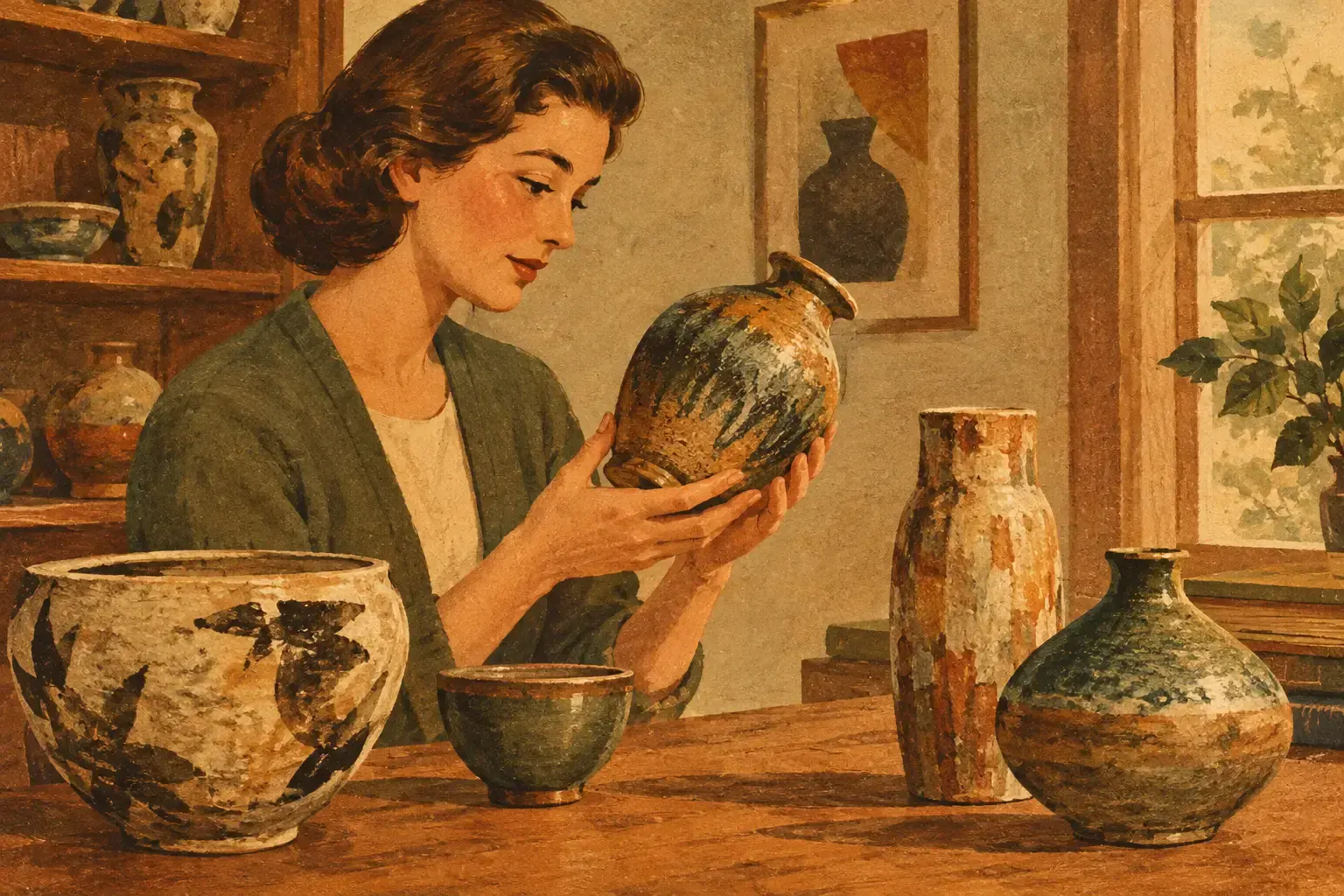
A hand-thrown vase can look quietly at home on a mantelpiece, yet carry the same maker-led significance as a piece displayed behind glass. What makes studio pottery collectible is not simply its age or an impressive signature. It is the meeting point of a potter’s individual hand, a compelling design language, honest condition and a story worth preserving.
For collectors and interiors enthusiasts alike, studio pottery offers something mass-produced ceramics cannot: variation with intention. A slightly uneven rim, an unpredictable ash glaze or a thumbprint beneath the foot may be evidence of process, not imperfection. The best examples bring visual depth to a room while rewarding a closer look.
What Makes Studio Pottery Collectible?
Studio pottery is generally made in small batches, often by a named individual or small workshop rather than an industrial manufacturer. That alone does not make every piece rare or valuable. Collectibility develops when workmanship, authorship, period, condition and desirability align.
The question is also personal. One buyer may seek a sculptural 1960s vessel to sit alongside mid-century furniture; another may collect a particular British potter, regional workshop or glaze technique. Decorative appeal matters, but it is strengthened by knowledge of who made the piece and why it belongs to a particular moment in ceramic history.
The maker’s hand and recognisable style
A named maker is often the clearest starting point. Established potters with distinctive forms, glazes or firing methods tend to attract sustained interest because their work is identifiable. A maker’s mark, monogram, impressed seal or handwritten label can transform a handsome object into a documented example of an individual practice.
Recognition need not mean celebrity. A talented regional potter with a loyal following can be more interesting than a generic, widely available name. Look for consistency of vision: perhaps strong bottle forms, wax-resist decoration, tenmoku glazes, rough-textured stoneware or a particular use of earthy local clay. The work should feel purposeful, even where the firing has introduced chance.
That said, unsigned pottery should not be dismissed. Some early or experimental pieces were never marked, and labels are easily lost. An unmarked vessel may still be desirable for its form and quality, but it should be valued for what can be confidently established rather than given an optimistic attribution.
Craftsmanship that holds up to close inspection
Studio pottery is made to be handled. Examine the balance of a jug, the comfort of a cup handle, the finish of the foot ring and the relationship between body and glaze. A good pot often has a sense of resolve: the form is neither accidental nor overworked.
Handmade does not mean careless. Minor variations are expected, while poorly attached handles, unstable bases, crude finishing or an unattractive glaze may limit appeal. Some makers deliberately embraced roughness and asymmetry, especially in post-war British ceramics influenced by Japanese traditions. Context is everything. What matters is whether the irregularity feels integral to the maker’s aesthetic.
Glaze, Surface and the Drama of the Kiln
Glaze is frequently the first quality that draws someone to a piece. A rich reduction-fired surface, crystalline run, satin-matt ash glaze or deeply pooled cobalt can make a simple form memorable. On the finest studio pottery, glaze and vessel work together rather than compete.
Kiln effects also ensure that no two examples are exactly alike. Wood firing can leave flashing and ash deposits; salt firing may create an orange-peel texture; raku can produce dramatic crackle and smoky markings. These processes bring individuality, although they can also make condition assessment more complicated. Crazing that is inherent to a glaze is different from a crack caused by damage.
Colour has a place in collectibility, particularly for the confident volcanic finishes associated with West German pottery. However, studio pottery is usually valued less for a fashionable shade than for the quality and integrity of its surface. A restrained stoneware bowl can be every bit as compelling as a flamboyant vase when the material and firing are exceptional.
Form, period and design relevance
A pot’s silhouette can place it in a design conversation. Tall, angular vessels, tactile tableware and sculptural lamp bases often appeal to buyers furnishing mid-century or modernist interiors. Earlier Arts and Crafts pieces may have softer profiles and a more visibly handmade presence, while later twentieth-century work can be spare, architectural or boldly experimental.
The most collectable pieces tend to feel of their time without becoming trapped by it. They remain useful or visually persuasive in a contemporary home. A single substantial bowl on a dining table, a cluster of small vases on open shelving or a quietly glazed lamp beside antique furniture can create contrast without turning a room into a period set.
Rarity Matters, but So Does Demand
Limited production can support value, especially when a potter made only a short run of a particular form or worked for a brief period. Early works, exhibition pieces and unusual one-offs may be particularly sought after. Yet scarcity alone is not enough. An obscure object that few people want will not necessarily be more collectable than a relatively available work by a respected maker.
Demand is shaped by exhibitions, publications, auction results, collector communities and changing tastes. It can rise quickly, so it is wise to buy the work you genuinely want to live with rather than treating ceramics as a guaranteed investment. The pleasure of daily use and visual companionship should remain part of the decision.
For a considered collection, it is often more satisfying to buy fewer, better examples. A strong piece with an excellent glaze, clear mark and good provenance will usually have more lasting appeal than several merely decorative pots of uncertain origin.
Provenance Gives a Pot Its Place
Provenance is the record of a piece’s ownership, exhibition history or maker connection. It might be as formal as a gallery invoice, catalogue entry or exhibition label, or as modest as a reliable family history and original purchase receipt. This supporting detail can be especially useful where a mark is hard to read or where similar-looking makers worked in the same period.
Documentation also protects the buyer from vague descriptions. Terms such as “attributed to” or “in the style of” should be treated carefully. They can be reasonable when based on informed comparison, but they are not the same as confirmed authorship. A trustworthy dealer will distinguish between known facts, informed opinion and uncertainty.
At MN Interior Antiques, that curatorial approach matters as much with ceramics as it does with furniture or lighting. A well-presented piece should be described with attention to its maker, materials, era, marks, dimensions and any condition points, allowing its next owner to buy with confidence.
Condition: Character Versus Compromise
Condition can have a significant effect on both value and usefulness. Look closely for hairline cracks, chips, restored breaks, glaze losses and repairs. Hold a vase to the light, inspect the rim and base, and run a fingertip gently around exposed edges. A dull sound when lightly tapped can sometimes suggest a crack, although this should never be treated as the only test.
Not every flaw is fatal. Honest wear beneath a base, light shelf marks and small firing flaws are normal on older handmade pieces. A beautifully rare pot with a discreet historic repair may still be worth owning, particularly if it is intended for display. But a repaired vessel should be priced and described accordingly, and it should not be relied upon for holding water unless confirmed as sound.
Consider scale too. Large vessels and lamps are harder to find intact, while delicate cups and slender-necked bottles are naturally vulnerable. Exceptional condition becomes more meaningful when the form is fragile or technically demanding.
Buying Studio Pottery for a Home, Not Just a Shelf
Collecting does not require a cabinet full of matching marks. Begin with a piece whose shape, surface or maker genuinely speaks to you, then learn from it. Notice how it sits with timber, linen, brass, books and vintage lighting. Ceramics often bring the tactile counterpoint that prevents a carefully furnished room from feeling overly polished.
If you are drawn to antique ceramics in Hertfordshire, seek clear photographs, accurate measurements and candid condition notes before buying. Ask whether a piece is watertight if you hope to use it as a vase, and whether a mark has been photographed or identified. These practical questions are part of collecting well, not a sign of hesitation.
The most rewarding studio pottery has presence beyond price. It records decisions made at the wheel, glaze bench and kiln, then carries those decisions into the home decades later. Choose pieces with integrity, learn their stories where possible, and allow your collection to grow at the pace of your own eye.