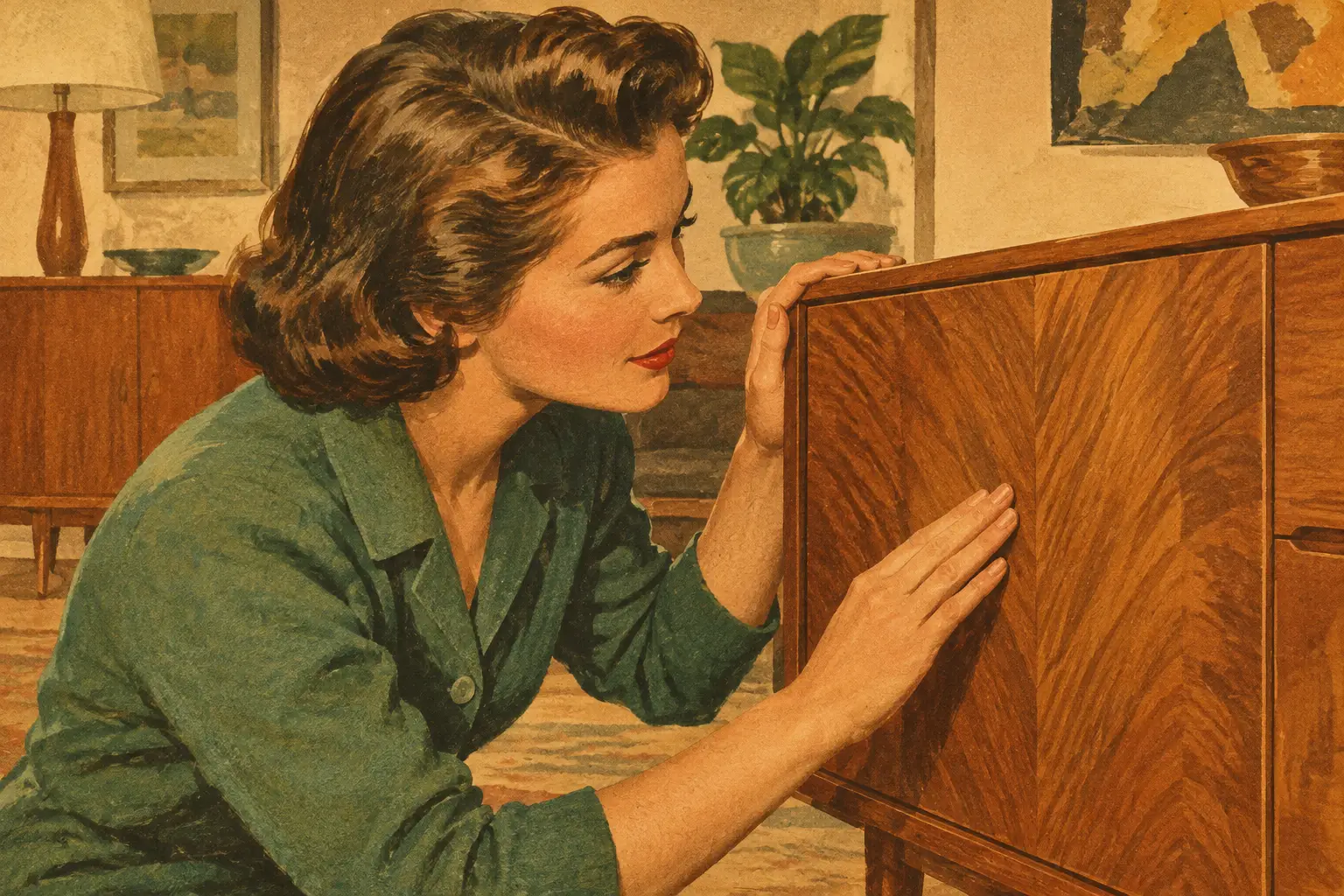
A teak sideboard with crisp, tapered legs asks a very different question of a room than a Georgian chest of drawers with softened oak and original brass handles. Yet both can bring a home far more character than a newly made alternative. When weighing up mid-century vs antique, the right choice is rarely about following a rule. It is about the atmosphere you want to create, how you live with furniture, and which details make you stop and look twice.
At MN Interior Antiques, we see homes become more personal when they combine pieces chosen for their form, craftsmanship and story. Understanding the distinction between these two broad categories helps you buy with confidence – whether you are looking for a statement dining table, a useful occasional chair or a small object that gives a shelf real presence.
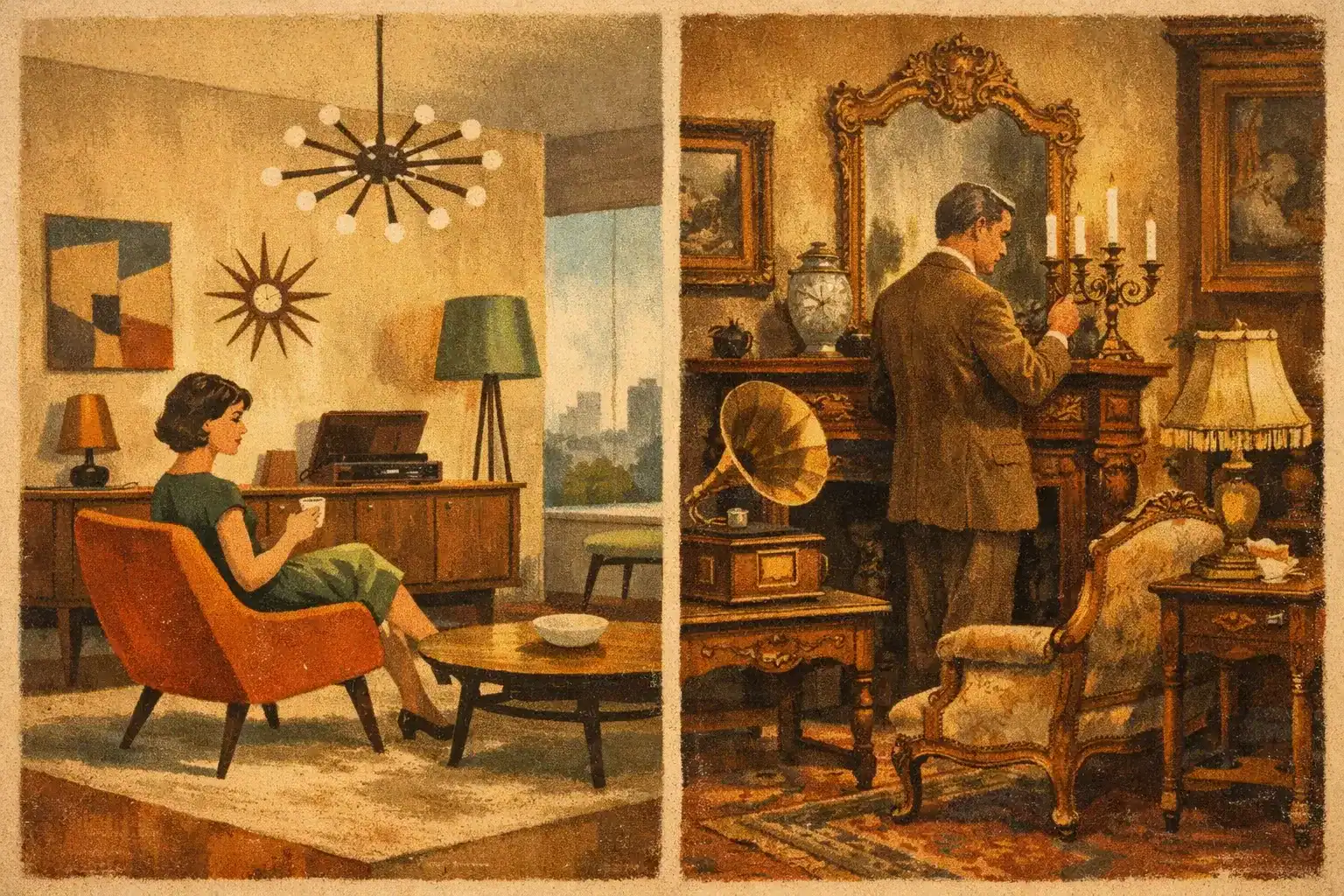
Mid-century vs antique: the essential difference
The simplest distinction is age. In the antiques trade, an item is generally considered antique once it is at least 100 years old. That can encompass Georgian, Regency, Victorian, Edwardian and Arts and Crafts furniture, along with earlier periods. Each era carries its own construction methods, decorative language and proportion.
Mid-century furniture usually refers to design made from roughly the 1940s through to the 1970s, although the term is often used more broadly in modern interiors. It is vintage rather than antique. The best examples reflect post-war optimism and practical modern living: clean lines, honest materials, efficient forms and a close relationship between furniture and architecture.
There are exceptions worth recognising. A 1960s reproduction of a classic design is not the same as a period original, while an early twentieth-century piece may be antique by age but have a notably simple, modern appearance. This is why provenance, construction and condition matter as much as a label.
What antique furniture brings to a room
Antique furniture has a visual depth that is difficult to imitate. Timber has mellowed over decades, hand-cut joints reveal the maker’s skill, and small variations in carving or veneer give an object life. A well-proportioned Victorian pine cupboard, a Regency card table or a nineteenth-century oak settle brings a sense of permanence without needing an entire room to be traditionally furnished.
The appeal is not simply that an item is old. It is that it has survived because it was made well enough, useful enough or beautiful enough to be kept. Signs of careful use – a softened drawer pull, a faint mark beneath a polished surface, the gentle movement of old boards – can be part of that appeal. They are evidence of a real past, not defects to be disguised.
Antiques also offer decorative variety. Some pieces are richly detailed, while others are wonderfully restrained. Country furniture, vernacular stools, painted cupboards and architectural salvage can sit comfortably in contemporary homes because their materials feel grounded and their scale is often practical.
There are trade-offs. Earlier furniture can be heavier, deeper or more formal in proportion than modern equivalents. It may need specialist restoration, a sympathetic repair or care around central heating and direct sunlight. A good antique dealer will describe repairs, alterations and condition clearly, allowing you to decide whether the character of the piece suits your expectations.
Craftsmanship and construction
Look inside an antique piece, not only at its façade. Drawer linings, dovetails, backboards, locks, timber selection and wear patterns often tell more of the story than an ornate front. Hand-cut dovetails and irregular tool marks may indicate earlier workmanship, but age cannot be judged from one feature alone.
Original surfaces are particularly valuable. Over-cleaning, stripping or aggressively refinishing furniture can remove the patina that makes it compelling. Sensitive restoration should preserve as much historic material as possible while ensuring the piece remains usable.
Why mid-century design still feels current
Mid-century furniture has endured because it solves practical problems elegantly. A teak chest offers storage without visual bulk. A Danish-inspired dining chair may have a sculptural profile but still be comfortable enough for everyday meals. Slim legs expose more floor, helping a compact room feel lighter.
The era embraced new approaches to design alongside traditional cabinet-making. Teak, walnut, beech, rosewood and chrome were used with confidence, while moulded plywood, glass and new upholstery forms created silhouettes that still look fresh. British makers produced highly functional sideboards, dressing tables and bookcases, while Scandinavian and continental influences shaped a broader taste for warm woods and purposeful simplicity.
Mid-century lighting is another lasting strength. Adjustable reading lamps, opaline glass pendants, brass wall lights and bold ceramic bases can introduce period character without committing to a complete redesign. A single well-chosen lamp often does more for a room than several generic accessories.
That said, not all mid-century pieces are equal. The popularity of the style has led to plentiful later copies, revived designs and vague descriptions. Assess the quality of the timber, the crispness of the joinery, the originality of handles and feet, and whether the overall form has the balanced proportions associated with the period. With vintage lighting, electrical safety and rewiring should always be considered before use.
Choosing between antique and mid-century furniture
Start with the role the item must play. For a hallway that needs a narrow storage piece, a mid-century console or compact chest may offer the cleaner footprint. For a dining room that feels a little flat, an antique farmhouse table can bring texture, weight and an immediate focal point. Function gives you useful boundaries before style enters the conversation.
Next, consider the architecture of your home. Mid-century furniture suits many twentieth-century houses naturally, particularly where rooms have lower ceilings, large windows or simple joinery. But it can look equally striking in a Victorian terrace, where its clean geometry offers contrast. Antiques bring warmth to newer homes that might otherwise feel a little anonymous, and they can add a welcome counterpoint to minimal contemporary interiors.
Your appetite for visible age matters too. If you want even colour, straight edges and a tidier finish, mid-century pieces may feel easier to live with. If you appreciate patina, repairs and the occasional irregularity as part of an object’s identity, antique furniture may be more rewarding. Neither preference is more sophisticated. The important thing is to avoid buying an old piece while expecting it to behave like something made yesterday.
The most interesting rooms use both
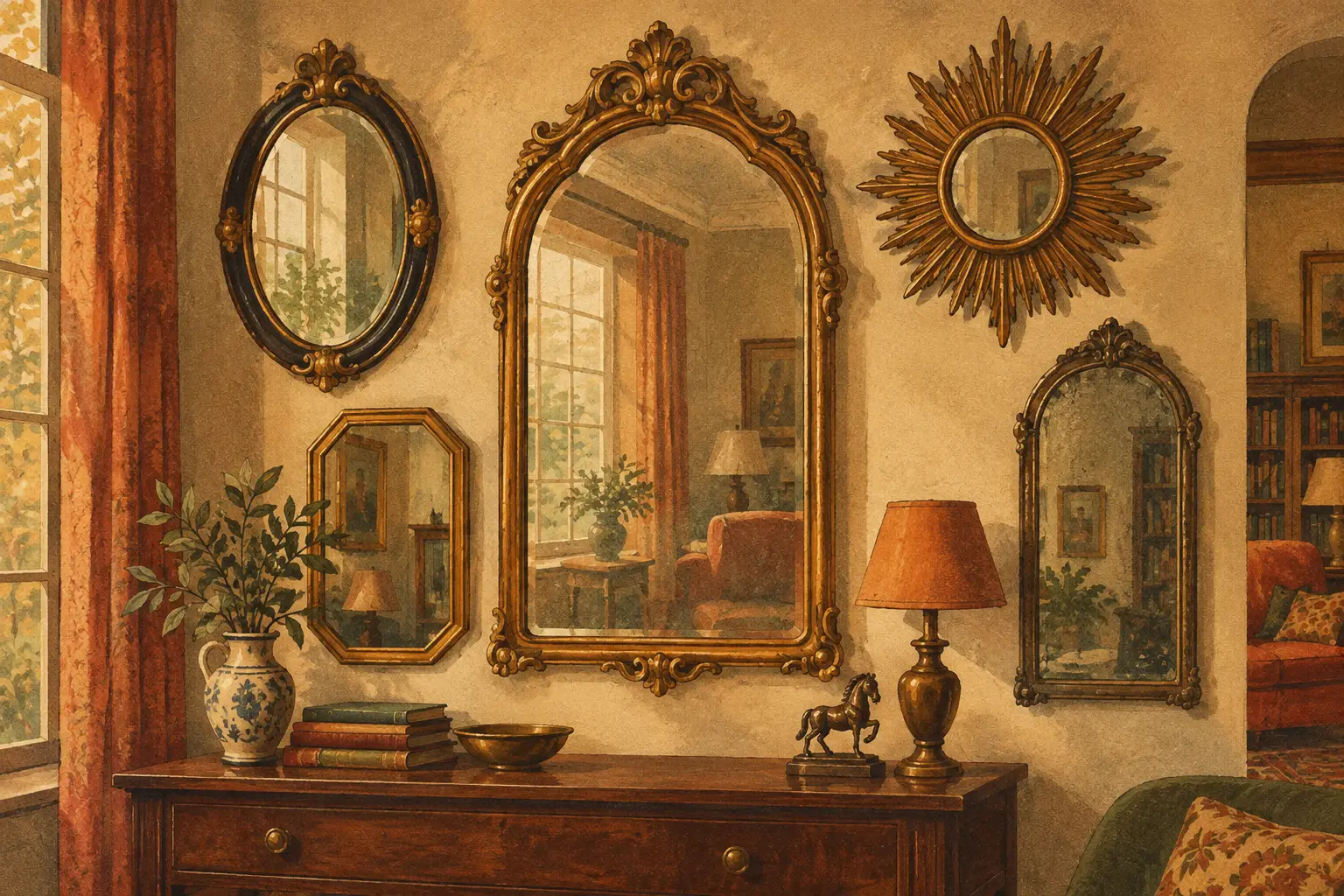
Treating antique and mid-century as opposing camps can lead to interiors that feel overly staged. The most memorable rooms often use contrast with care. A twentieth-century teak sideboard beneath an older gilt mirror creates balance between warmth and refinement. A Victorian pedestal table with modernist chairs feels collected rather than themed. West German pottery can add colour beside an eighteenth- or nineteenth-century wooden cabinet without competing with it.
The thread that holds mixed periods together is usually repetition. Repeat a timber tone, a metal finish, an accent colour or a curve. If an antique chest is dark and substantial, choose mid-century seating with similarly warm timber rather than cool pale ash. If a room has a strong geometric rug, a plainer antique piece can prevent the scheme becoming too busy.
Leave space around the objects that deserve attention. A rare chair, beautifully figured cabinet or unusual piece of vintage lighting should not have to fight a crowded room. Curation is as much about what you leave out as what you bring in.
Buying with confidence: age, condition and value
A persuasive silhouette should be the beginning of your assessment, not the end. Ask whether a piece is period-made, later vintage, restored or adapted. Examine photographs for veneer losses, chips, old repairs, fading, movement in joints and changes to hardware. These are not automatic reasons to walk away, but they should be reflected in the description, price and your intended use.
For antiques, desirable condition often means honest condition rather than untouched perfection. An old repair can be entirely appropriate if it is stable and sympathetically done. For mid-century furniture, original finish, intact legs and correct fittings can make a significant difference to collectability. Reupholstery is common and may be sensible, particularly for seating, but it is worth knowing whether the fabric and foam are original or later replacements.
Measure carefully before purchasing. Doorways, stairwells, alcoves and ceiling height can matter as much as the floor area. Consider where a cabinet door or drawer will open, and whether a lamp needs a plug close by. These practical details protect the pleasure of finding something exceptional.
For buyers seeking antique furniture in Stevenage or mid-century furniture near Hitchin, viewing curated pieces in person can be especially useful. You can see the timber colour under natural light, judge scale properly and appreciate the quiet evidence of handwork that photographs cannot always convey.
A home does not need to declare loyalty to one period. Choose the piece whose materials, proportions and history make the room feel more like yours. The right object will not merely fill a gap; it will earn its place over time.