A room can feel flat even when every piece is technically “right.” Then one sculptural teak sideboard arrives, or a brass floor lamp with a linen shade, and suddenly the whole space has rhythm. That is the lasting appeal of mid century modern furniture and lighting – not just because it looks good, but because it brings structure, warmth, and character in equal measure.
For buyers furnishing with intention, this category offers something many newer interiors lack: shape with restraint, craftsmanship without fuss, and objects that still feel current decades after they were made. Good mid-century pieces were designed to be used, lived with, and seen from every angle. The best examples still do exactly that.
What defines mid century modern furniture and lighting?
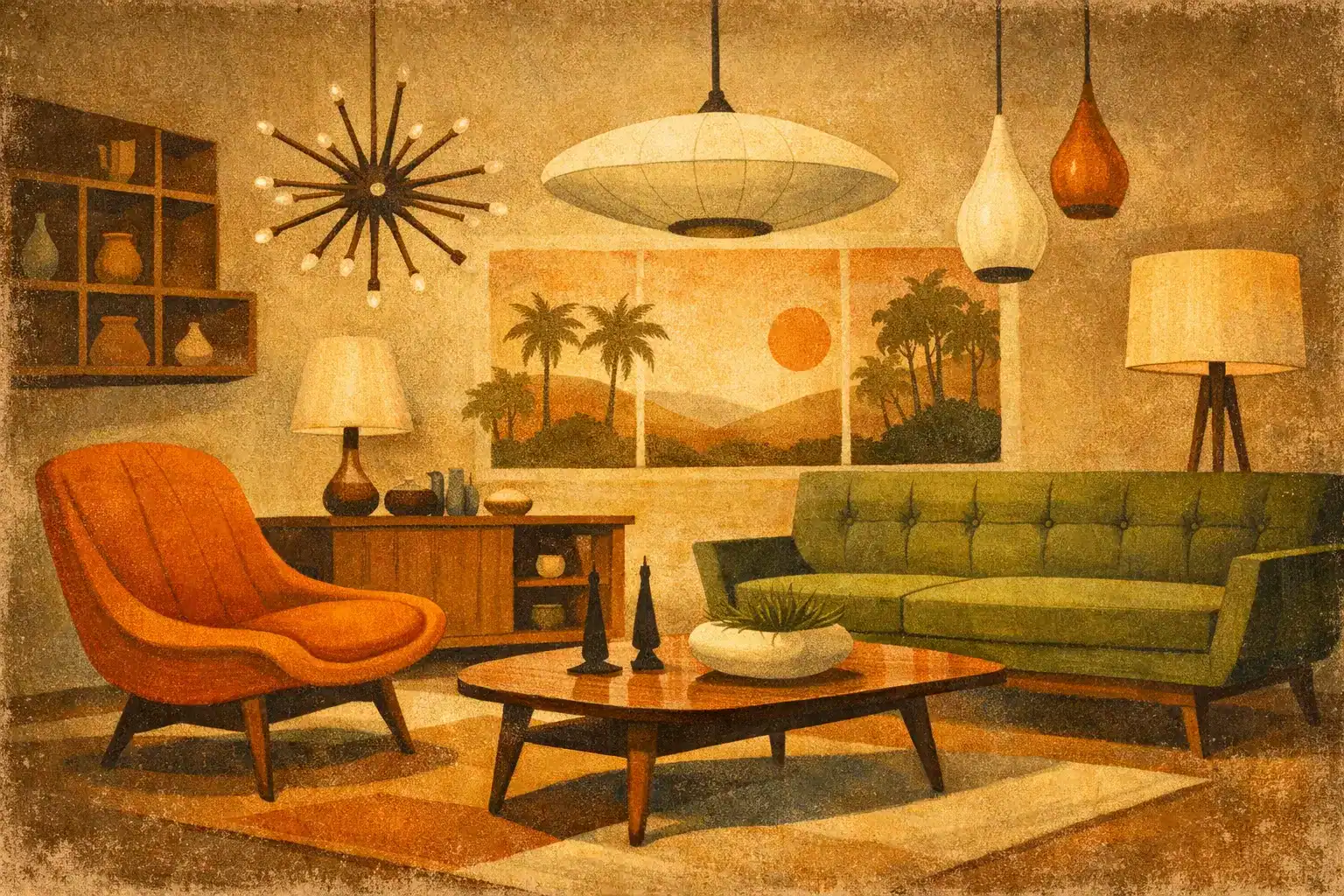
Mid-century modern design is often reduced to a few familiar signals – tapered legs, teak, clean silhouettes, brass details. Those features matter, but they are only part of the story. The style emerged from a period that favored practical living, lighter interiors, and well-made domestic objects that balanced beauty with utility.
In furniture, that often means low, elegant profiles; thoughtful joinery; and materials that age gracefully. Teak, rosewood, walnut, oak, cane, leather, and molded elements all have a place within the movement, depending on the maker and country of origin. A sideboard should feel visually grounded without looking heavy. A lounge chair should offer comfort while still holding a crisp line.
Lighting, meanwhile, plays a different but equally important role. Mid-century modern lamps and pendants often introduce contrast – metal against wood, opaline glass against darker finishes, a soft shade against a more architectural base. The best lighting from the period is rarely decorative for its own sake. It shapes atmosphere while adding sculptural interest, especially in rooms that need height, reflection, or a softer edge.
Why the style still works in contemporary homes
Part of the enduring appeal is proportion. Mid-century design tends to sit well in modern spaces because it avoids both excessive ornament and cold minimalism. A well-made chest or pendant from the period can carry presence without overwhelming the room.
It also layers beautifully. That matters for people who want homes with personality rather than a one-note look. Mid-century modern furniture and lighting can live comfortably beside antique folk art, studio ceramics, contemporary upholstery, or architectural salvage. In fact, rooms often feel more convincing when every piece is not from the same era.
There is also the matter of quality. Vintage mid-century furniture was frequently made with better materials and more careful construction than much of today’s fast furniture. Drawers tend to glide with purpose. Veneers have depth. Timber develops patina rather than simply wear. Even when restoration is needed, the underlying object is often worth the effort.
That said, it depends on the piece. Not every vintage item is automatically superior, and not every newer reproduction is poor. The distinction lies in construction, material honesty, and design integrity.
How to buy with a sharper eye
If you are shopping for original mid-century pieces, start with proportion before finish. People are often drawn first to wood tone or a striking brass detail, but the real question is whether the piece holds the room properly. A dining table may be beautiful in isolation and still feel too slight for the setting. A floor lamp may have a wonderful form but cast light too narrowly for daily use.
Condition comes next, and this is where experience matters. Surface wear is part of the appeal of vintage interiors, but there is a difference between patina and damage. Fading, small marks, and age-related softening can be entirely acceptable. Warped tops, unstable joints, poorly matched repairs, or rewiring that has been done carelessly deserve closer scrutiny.
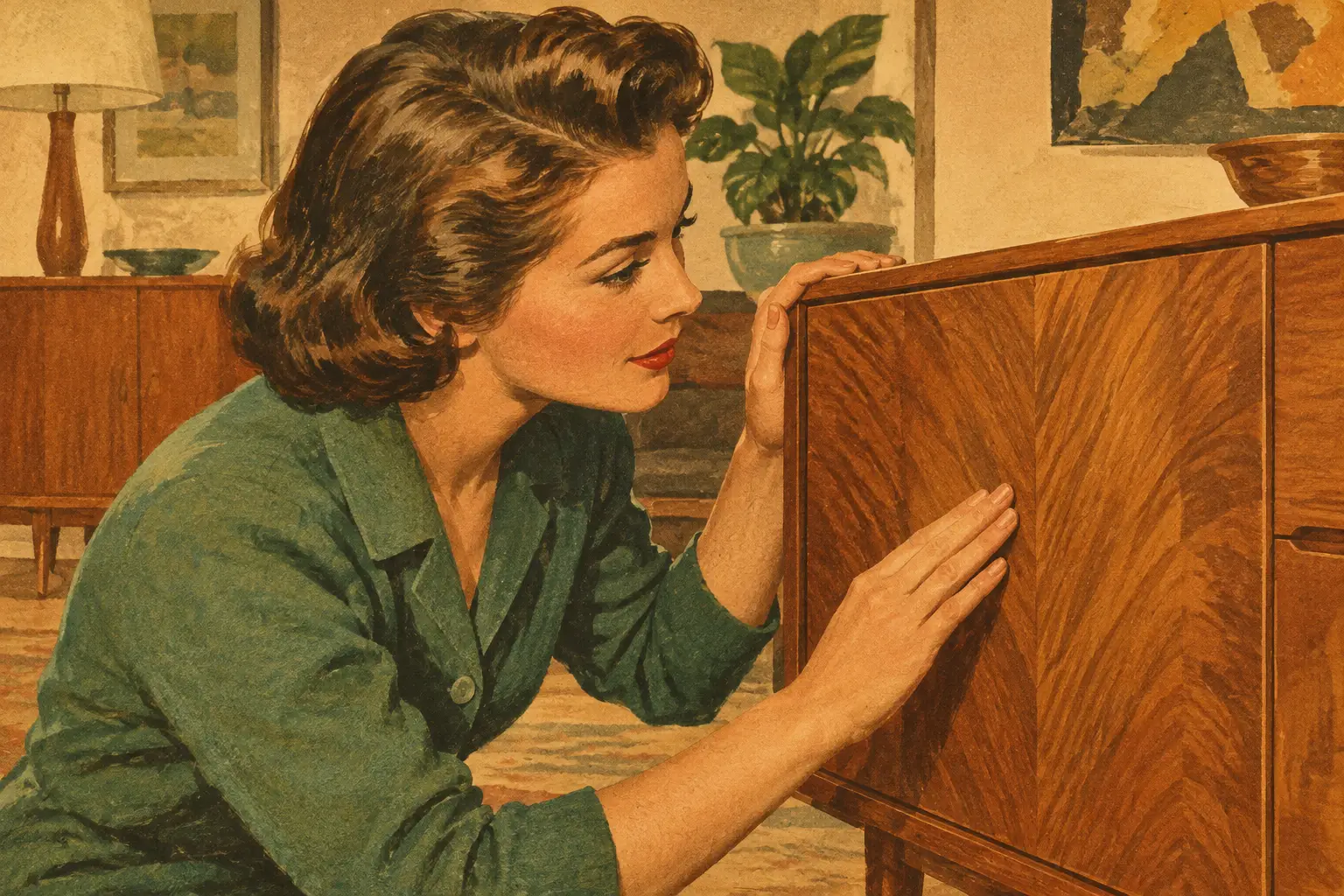
With cabinets and sideboards, open the drawers if possible. Look at the interior as well as the front elevation. Original handles, clean lines, and strong craftsmanship often tell you more than a polished exterior does. With seating, consider whether upholstery is usable as it stands or whether reupholstery should be part of the budget.
For lighting, always think about both form and function. A table lamp might be visually exceptional, but shade size, bulb compatibility, and scale relative to the surface beneath it all affect whether it truly works at home. Rewired vintage lighting can be an excellent choice, but buyers should still expect clarity around condition and electrical updates.
The pieces that earn their place
Some categories are especially versatile. Sideboards remain one of the strongest entry points into mid-century collecting because they combine storage with presence. In a dining room they anchor the space; in a living room they can hold ceramics, books, and lighting with ease. Their long, low form also suits many newer homes, where visual clutter can quickly become an issue.
Coffee tables and occasional tables are more dependent on context. The best ones offer an elegant silhouette and a sense of material balance, but they need enough surrounding space to be appreciated. In smaller rooms, a compact nest of tables or a single lamp table may perform better than a large statement piece.
Seating is where comfort becomes non-negotiable. A classic frame may be desirable, but if the chair is not pleasant to use, it risks becoming decorative rather than lived-in. This is one of those areas where personal preference matters more than category prestige.
Lighting is often the category that transforms a room fastest. A pair of table lamps can make a bedroom feel composed. A smoked glass pendant can sharpen a dining area. A brass or chrome floor lamp can bring needed verticality to a seating arrangement. Because lighting affects mood as much as appearance, it is often the element that makes vintage furniture feel fully integrated rather than simply placed.
Mixing mid-century with antiques and collected interiors
Homes with real depth rarely rely on a single style. Mid-century pieces are especially effective when they are allowed to play against older or more tactile objects. A streamlined Danish desk can sit beautifully with a weathered stool. A ceramic lamp with a clean-lined base can soften a room filled with darker antique case pieces.
The key is tension, not conflict. If every surface is polished teak and every line is neat, the room can feel staged. If every item is ornate or heavily textured, the scheme may lose clarity. Mid-century modern furniture and lighting often work best as the balancing note – refined enough to bring order, warm enough to avoid sterility.
Material variation helps here. Wood, linen, brass, pottery, leather, and glass create a room that feels layered rather than themed. This is especially useful for buyers building interiors gradually, piece by piece, instead of ordering an entire room at once.
Authenticity, restoration, and the value of curation
For many buyers, the most difficult part of shopping vintage is confidence. Photographs can flatter. Descriptions can be vague. A piece may look right stylistically while lacking the quality that gives it staying power.
That is where curation matters. A carefully sourced selection does more than save time. It reduces guesswork around condition, era, materials, and decorative value. Buyers who want distinctive interiors are not just purchasing utility; they are investing in atmosphere, character, and objects with a history of use.
Restoration is part of that conversation. Sensitive restoration protects the life of a piece without stripping away what makes it interesting. A refreshed finish, repaired joint, or professional rewire can make a vintage object more practical for contemporary living. Over-restoration, on the other hand, can flatten the very qualities collectors value.
For readers shopping from Hertfordshire, Stevenage, or nearby market towns, there is also a quiet advantage in working with a dealer who understands both the object and the home it may live in. MN Interior Antiques reflects that approach – selective rather than crowded, and focused on pieces that offer decorative strength as well as period character.
Mid century modern furniture and lighting as a long-term choice
Trends tend to exaggerate. Mid-century design has survived because it generally does the opposite. It is measured, well proportioned, and adaptable. A good lamp from the 1950s or 1960s does not need to announce itself loudly to change a room. A well-made sideboard does not need novelty to remain relevant.
That is why these pieces continue to appeal to collectors and first-time vintage buyers alike. They offer beauty, certainly, but also usability and a sense of permanence that mass-produced interiors often struggle to match.
If you are choosing carefully, start with the piece that will be used and seen every day. Let it set the tone. The rest of the room usually follows.