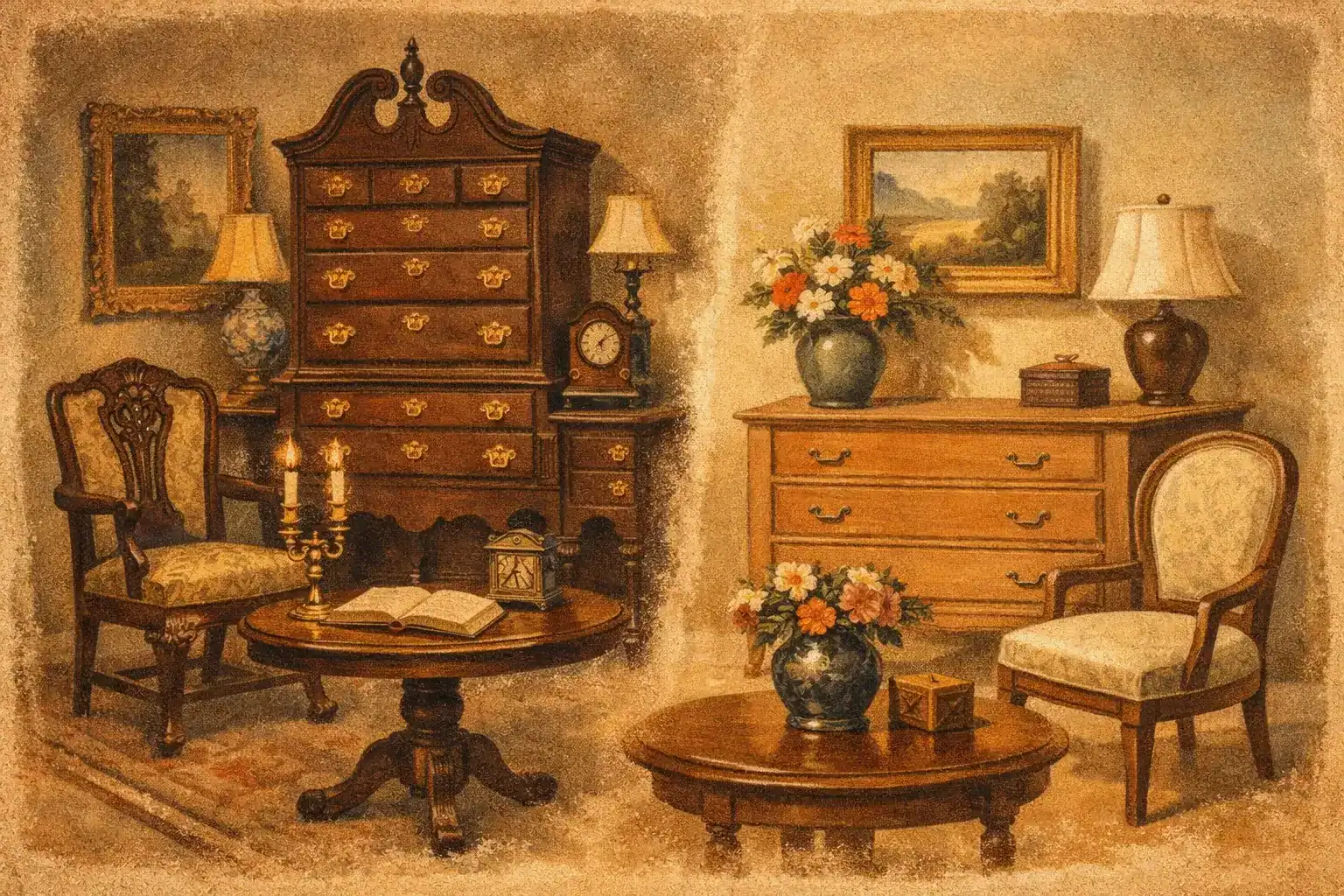
A beautifully made oak chest, a Regency mirror, or a well-worn farmhouse table should not feel like a museum exhibit. The real pleasure of learning how to style antique furniture is allowing its age, material, and craftsmanship to bring depth to a room that still feels entirely yours. A home becomes more interesting when every piece does not come from the same decade, showroom, or design trend.
Antiques work particularly well in modern interiors because they introduce what newer furniture often lacks: patina, visual weight, and a sense of permanence. The goal is not to recreate a period room. It is to give a significant piece enough space and the right company to tell its story.
Start With One Antique Furniture Focal Point
The easiest way to make an antique feel intentional is to let it lead rather than compete. Choose one piece with presence – perhaps a carved sideboard, painted cupboard, pedestal table, or leather armchair – and build the room around it.
Consider its practical and visual role. A substantial Victorian chest can anchor an entryway beneath a contemporary mirror. An eighteenth-century table may become the working heart of a clean-lined dining room. A small giltwood console can lend distinction to a quiet hallway where it is paired with a simple lamp and one strong artwork.
Avoid filling every corner with equally ornate furniture. Antiques need contrast and breathing room. When a room has one dominant historical piece, its profile and surface can be properly appreciated. Add a second antique only when it serves the composition, such as matching the warmth of the wood, repeating a curved silhouette, or balancing the room from across the space.
Let scale decide the placement
Before choosing accessories, assess scale. A tall cabinet needs wall height around it, while a low chest benefits from art, a mirror, or lighting above it. A delicate occasional table can disappear beside an oversized sectional, but it may look superb between two tailored chairs.
This is where many rooms go wrong. An antique is sometimes treated as a decorative afterthought, then crowded by furniture that is too large or too visually busy. Give it the same consideration you would a sculpture: clear sightlines, enough surrounding space, and a relationship to the room’s overall proportions.
Mix Periods Through Contrast, Not Costume
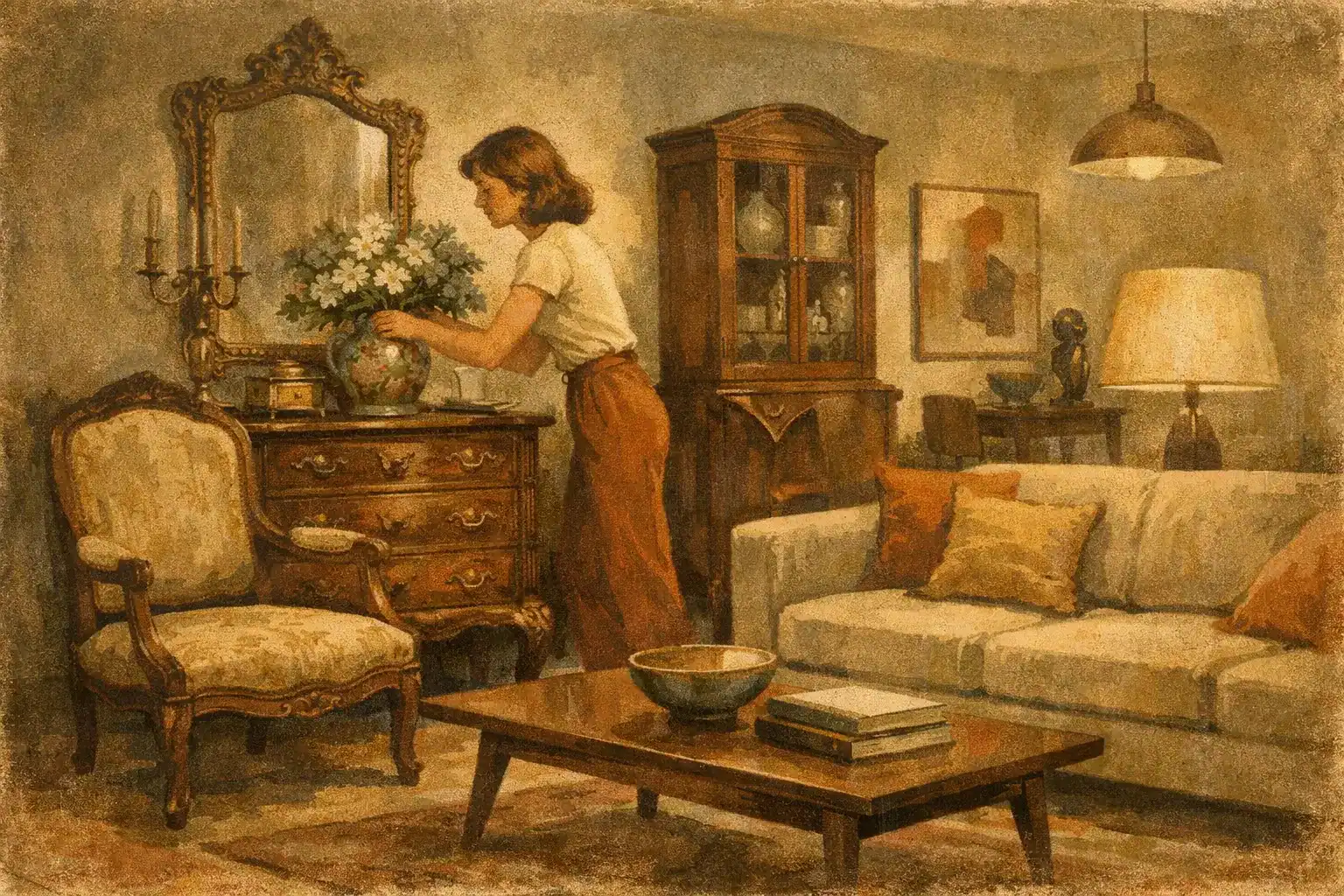
A convincing interior is rarely defined by one era alone. Pairing antique furniture with contemporary pieces creates tension in the best sense, drawing attention to both. The contrast can be in line, finish, material, or mood.
A Georgian mahogany table beside modern dining chairs is a classic example. The table provides richness and history, while chairs with simple upholstery or slim metal frames keep the setting from becoming overly formal. Likewise, an ornate French mirror can look unexpectedly fresh above a minimal plaster fireplace, and a rustic pine cupboard gains sophistication against smooth walls and restrained textiles.
The most successful combinations share at least one quiet connection. This might be a repeated black accent, warm timber tones, brass hardware, or a similar curve echoed in a lamp base. Without that thread, mixing can feel accidental rather than collected.
Respect the piece, but do not overmatch it
A common instinct is to surround an antique with accessories from its exact period. This can be right for a committed historic scheme, but it often makes a room feel staged. Instead, select a few companions that acknowledge its character without imitating it.
For example, a dark wood bureau might be styled with a contemporary ceramic vessel, a framed drawing, and a low-profile lamp. The contrast makes the bureau feel relevant, while the smaller objects add scale and function. Keep the arrangement edited. An antique with intricate marquetry or carving already has plenty to say.
Use Color and Texture to Bring Out Patina
Antique furniture is rarely a flat, uniform color. Wood grain, faded paint, oxidized metal, repaired surfaces, and softened edges are part of its appeal. Your palette should support those nuances rather than obscure them.
Deep olive, tobacco, chalky blue, warm white, clay, and charcoal all work beautifully with old wood and aged brass. Pale walls can make a dark chest or cabinet feel sculptural. Conversely, a richly colored room can give a light painted piece welcome definition. Neither approach is automatically better. It depends on whether you want the antique to stand apart or settle quietly into the room.
Texture matters just as much. Linen upholstery, wool rugs, hand-thrown ceramics, woven shades, and natural stone provide a tactile setting for historic furniture. They create a layered, lived-in quality without requiring a large number of decorative objects.
Be cautious with overly glossy surfaces and overly coordinated finishes. A room full of polished chrome, high-shine lacquer, and perfectly matched furniture can make an antique seem stranded. A few softer, matte, or handmade elements bridge the gap.
Style the Surface With Purpose
Tables, chests, sideboards, and desks invite styling, but their surfaces should remain useful. Start with objects that introduce different heights and textures: a lamp, a framed picture, a small stack of books, a ceramic vessel, or a bowl. Then remove anything that is only there to fill space.
On a large sideboard, a mirror or artwork can provide vertical structure, while two lamps or a pair of vessels may add balance. Symmetry suits formal furniture and architectural rooms, but it is not required. A more relaxed arrangement of one lamp, one sculpture, and a low bowl can make a substantial antique feel less ceremonial.
Let objects earn their place. A piece of West German pottery, a folk-art carving, or an old brass candlestick has more effect when displayed with room around it. A dense collection can be wonderful, but only when the objects relate through color, material, or subject. Otherwise, the furniture beneath them disappears.
Add lighting that flatters age
Lighting is one of the most effective ways to make antiques feel at home after dark. Warm pools of light reveal timber grain, glazed ceramics, and the irregular texture of old finishes far better than a single harsh overhead fixture.
Table lamps are especially useful on desks, sideboards, and consoles. Choose shades that diffuse light rather than expose a bare bulb. Vintage lighting can add another layer of history, but a simple contemporary lamp often provides the necessary contrast. The key is proportion: a tiny lamp on a large chest looks tentative, while an oversized shade can hide the furniture’s form.
Make Antiques Useful in Everyday Rooms
The most appealing antique interiors do not treat old furniture as untouchable. A sturdy farmhouse table can host weekday meals and creative projects. A linen press can store bedding. A small chest can serve as a bedside table. When an antique has a clear job, it becomes part of daily life rather than an isolated decorative statement.
That said, use should be informed by condition. A rare or fragile piece may be better suited to lighter duty, particularly if it has an original surface, delicate veneer, or historic hardware. Felt pads, coasters, and sensible placement away from radiators and direct sunlight help preserve the finish without making the home feel precious.
For buyers seeking antique furniture in Stevenage or beyond, condition notes are worth reading closely. Honest signs of age – minor repairs, wear to paint, old marks, and variation in color – often contribute to authenticity. Structural instability, active woodworm, or lifting veneer are different considerations and should be understood before a piece becomes a hardworking household fixture.
Trust Your Eye More Than a Rulebook
There is no requirement for every antique to be grand, rare, or heavily decorated. Often, the piece that transforms a room is a modest stool with a beautiful silhouette, a time-softened painted chair, or a small cabinet with original hardware. These objects introduce character precisely because they feel discovered rather than prescribed.
Keep adjusting until the room feels balanced: old and new, polished and worn, useful and beautiful. If a piece seems out of place, it may need a different setting, more open space, or simply a better companion. A carefully chosen antique does not need to match the room to belong there. It only needs to be given the attention its history and craftsmanship deserve.