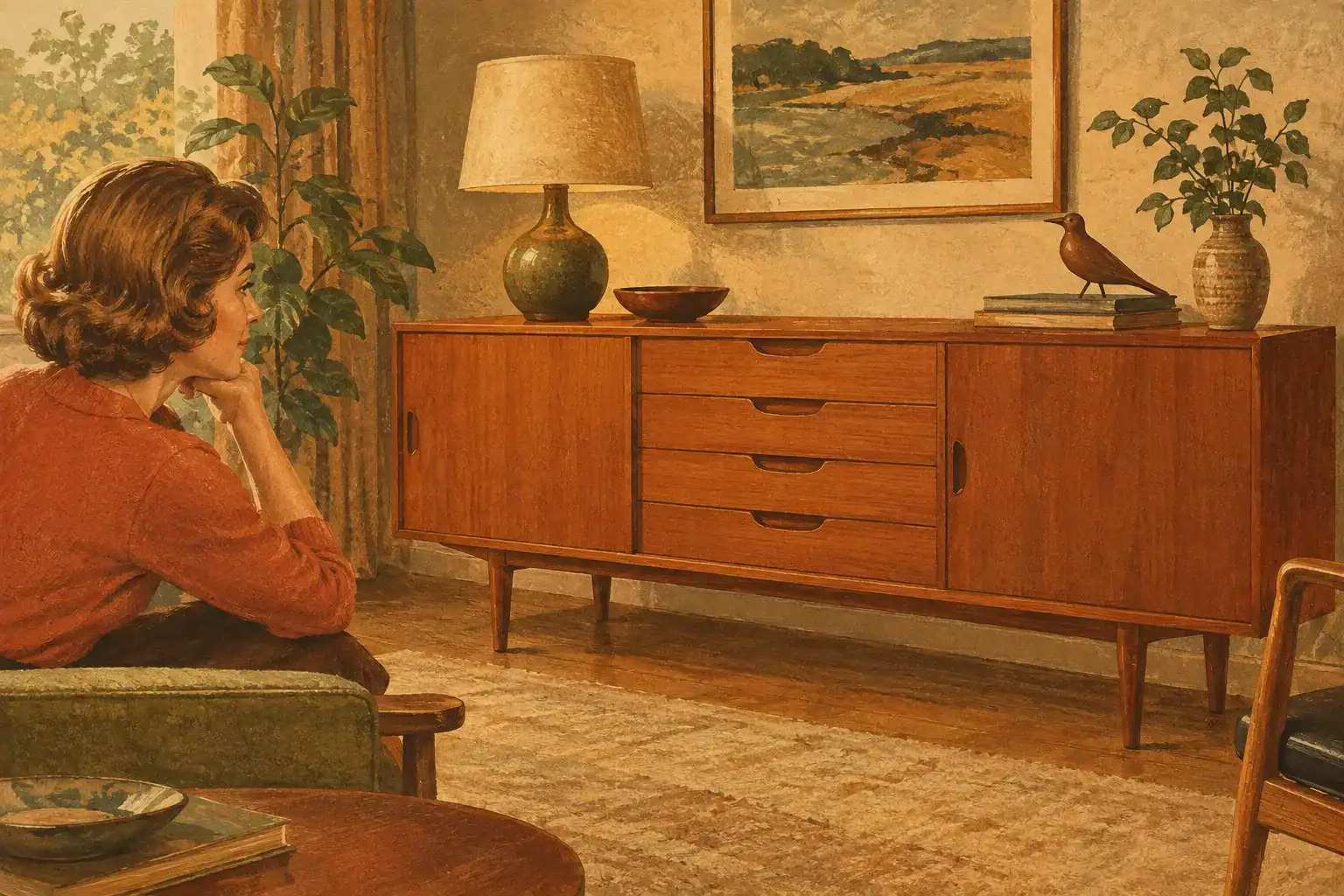
A well-chosen Danish teak sideboard does more than store glassware, records or table linen. It brings a calm, architectural presence to a room: warm timber, precise proportions and workmanship that rewards a closer look. For buyers drawn to mid-century furniture with genuine character, it is one of the most useful and enduring pieces to seek out.
Its popularity has also made the term rather broad. Not every long, low teak cabinet is Danish, and not every piece described as Danish is of the same quality, period or condition. Understanding the details helps you buy for lasting pleasure rather than a passing silhouette.
What Defines a Danish Teak Sideboard?
Danish modern furniture developed a distinctive international identity in the decades after the Second World War. Designers and cabinetmakers placed practical living at the centre of the design, favouring clean lines, carefully considered storage and materials that improved with use. Teak was particularly valued for its dense grain, rich golden-brown colour and natural resistance to movement.
A proper Danish teak sideboard is usually restrained rather than showy. Its beauty is found in balance: slim legs that give visual lightness, softly rounded edges, uninterrupted grain across a run of doors, and handles that feel integral to the whole design. Sliding doors, tambour fronts and finely fitted drawers are common, often concealing adaptable interiors for dining-room service.
The best examples are not merely minimal. They are full of small decisions that reveal cabinetmaking skill. Look at the way a door meets its frame, the neatness of the drawer interiors and the confidence of the proportions. A sideboard should look composed from across the room and feel equally convincing when opened.
Makers, labels and the value of attribution
Pieces by recognisable Danish makers and designers can carry particular collector interest. Names associated with the period include Gunni Omann, Johannes Andersen, Arne Vodder, Ib Kofod-Larsen and H.W. Klein, while respected manufacturers such as Omann Jun, Skovby and Brouer Møbelfabrik produced excellent furniture. A label, stamp or branded mark can be useful evidence, but its absence does not automatically make a piece inferior.
Attribution needs care. Retail labels can be lost, and many fine sideboards were made by smaller workshops. Equally, a vague claim of designer authorship should not be accepted without supporting details. Construction, dimensions, timber choice and documented provenance matter more than an optimistic description.
Assessing Condition Before You Buy
Age is part of the appeal of vintage furniture, and a little honest wear is often preferable to aggressive restoration. The aim is not a sideboard that appears newly manufactured, but one that remains structurally sound, practical and true to its period.
Begin with the top. This is where rings from plant pots, fading from sunlight and scratches from everyday use tend to show first. Fine surface marks may soften with appropriate care, but deep black water staining, lifted veneer or a heavily sanded surface require more consideration. Teak has a distinctive grain and colour; removing too much material can flatten the very qualities that make it desirable.
Open every drawer and door where possible. Drawers should run freely without excessive wobble, and sliding doors should sit comfortably in their tracks. Check the back, base and joints for signs of damp, warping or old repairs. A faint scent of age is normal, but a persistent musty smell can suggest unsuitable storage conditions.
Solid teak, veneer and sensible expectations
Many mid-century sideboards combine solid teak details with teak veneer panels over a stable core. This is not necessarily a compromise or a fault. Veneer allowed makers to select and arrange beautiful grain across large surfaces while limiting movement in the timber. It was a considered and widely used construction method.
What matters is quality and condition. Well-laid veneer with clean edges and no lifting can be entirely desirable. Be cautious where veneer has chipped away, bubbled, or been covered with a thick dark varnish to disguise damage. Solid teak drawer fronts or lipped edges are often a reassuring detail, but they should be assessed as part of the whole piece rather than treated as the only measure of value.
Choosing the Right Proportion for Your Room
A Danish teak sideboard can be substantial, so dimensions deserve as much attention as style. Measure the intended wall, then consider clearance for doors, drawers and the route into the house. Victorian hallways, narrow staircases and modern flats can all present practical limits that photographs do not reveal.
Long sideboards, often around 180 to 220 centimetres, make a strong focal point in a dining room or generous sitting room. They offer useful capacity and a long surface for ceramics, lamps and framed artwork. In a smaller space, a compact two-door cabinet or a narrower model with sliding doors may give the same warmth without overwhelming the room.
Height changes the effect too. Lower sideboards suit the relaxed horizontal lines of mid-century interiors and leave room above for a large artwork or mirror. Taller models can work especially well in dining areas where extra storage is needed, but should be balanced with breathing space around them.
There is no requirement to recreate a period room. A teak sideboard is often most interesting when placed alongside pieces from other eras: an antique oil painting, a contemporary lamp or a hand-thrown West German vase. The contrast allows the craftsmanship of each object to register rather than turning the space into a set.
Styling a Danish Teak Sideboard With Character
The top of a sideboard is a display surface, but it benefits from editing. One substantial lamp, a grouping of ceramics and a small stack of art books can be enough. The richness of teak provides its own visual interest, so objects with texture and shape tend to work better than an overly busy collection of small accessories.
For a softer scheme, pair the warm timber with chalky walls, woven textiles and aged brass. If your room has stronger colours, teak sits handsomely with olive, tobacco, rust, inky blue and oxblood. Its orange-brown undertones can look particularly handsome beside cream, stone and muted green, while bright cool white may make the timber appear more orange than intended.
Lighting deserves thought. A vintage ceramic table lamp or sculptural pendant can bring out the depth of the grain in the evening, when a sideboard becomes less about storage and more about atmosphere. Buyers looking for vintage interiors in Hertfordshire often find that this single combination – useful furniture, considered lighting and a few well-chosen objects – gives a room far more individuality than matching sets ever could.
Care That Respects the Original Finish
Teak needs modest, consistent care rather than frequent intervention. Dust with a soft dry cloth and deal with spills promptly using a lightly damp cloth, then dry the surface. Avoid silicone polishes, harsh household sprays and heavy applications of oil, which can leave a sticky sheen and attract dust.
Keep the piece away from radiators, persistent direct sunlight and damp external walls where possible. Central heating can dry timber, while strong sun can create uneven fading. If a sideboard has a tired finish or a repair is needed, specialist restoration is often worthwhile. A sensitive restorer can stabilise loose veneer, revive a dull surface and retain the evidence of age that gives vintage furniture its credibility.
Buying With Confidence
A Danish teak sideboard should earn its place through more than a fashionable label. Ask about dimensions, known maker marks, the condition of the top and interior, any restoration undertaken, and whether the piece has been photographed clearly from several angles. These details establish whether it will work in your home and whether its condition matches its price.
At MN Interior Antiques, the most compelling mid-century pieces are chosen for their design integrity as much as their decorative appeal. A beautifully made sideboard has already served a lifetime of meals, gatherings and changing homes. Chosen carefully, it can now become the quiet, useful anchor for the next chapter of yours.