A room rarely becomes memorable because every piece came from the same shop. It becomes memorable when a well-made object carries its own presence: the mellow grain of an old elm table, a brass reading lamp with a pleasingly weighty switch, or a chair whose proportions have outlived several fashions. These furniture sourcing examples show how individual antique and vintage pieces can be chosen for both their story and their everyday place in the home.
Sourcing is not simply buying old furniture. It is the considered process of finding pieces with sound construction, honest condition and a decorative role worth preserving. The best results come from looking beyond a label or a single era, then judging an object by material, scale, provenance and the way it will live alongside what you already own.
Furniture sourcing examples that feel collected, not staged
A Victorian chest of drawers in a contemporary bedroom
A Victorian pine or mahogany chest is one of the most useful starting points for a bedroom. It offers real storage, visual weight and a patina that flat-pack furniture cannot imitate. In a room with plain walls and contemporary linen, its moulded edges and aged timber create contrast without making the scheme feel period-bound.
When sourcing, open every drawer. Look for solid timber drawer bases, sensible movement, original handles where possible and evidence that any repair has been made carefully. Small signs of age are part of the appeal: a faded patch, old keyholes or a gentle variation in colour can all add character. Structural problems, active woodworm or drawers that have been crudely rebuilt deserve closer scrutiny.
A chest need not be perfect to be worthwhile. It does, however, need to be stable, practical and properly proportioned for the room. Measure the available wall space, but also account for drawer clearance. A beautiful piece that prevents a door opening fully is less charming after the first week.
A mid-century dining table as the everyday anchor
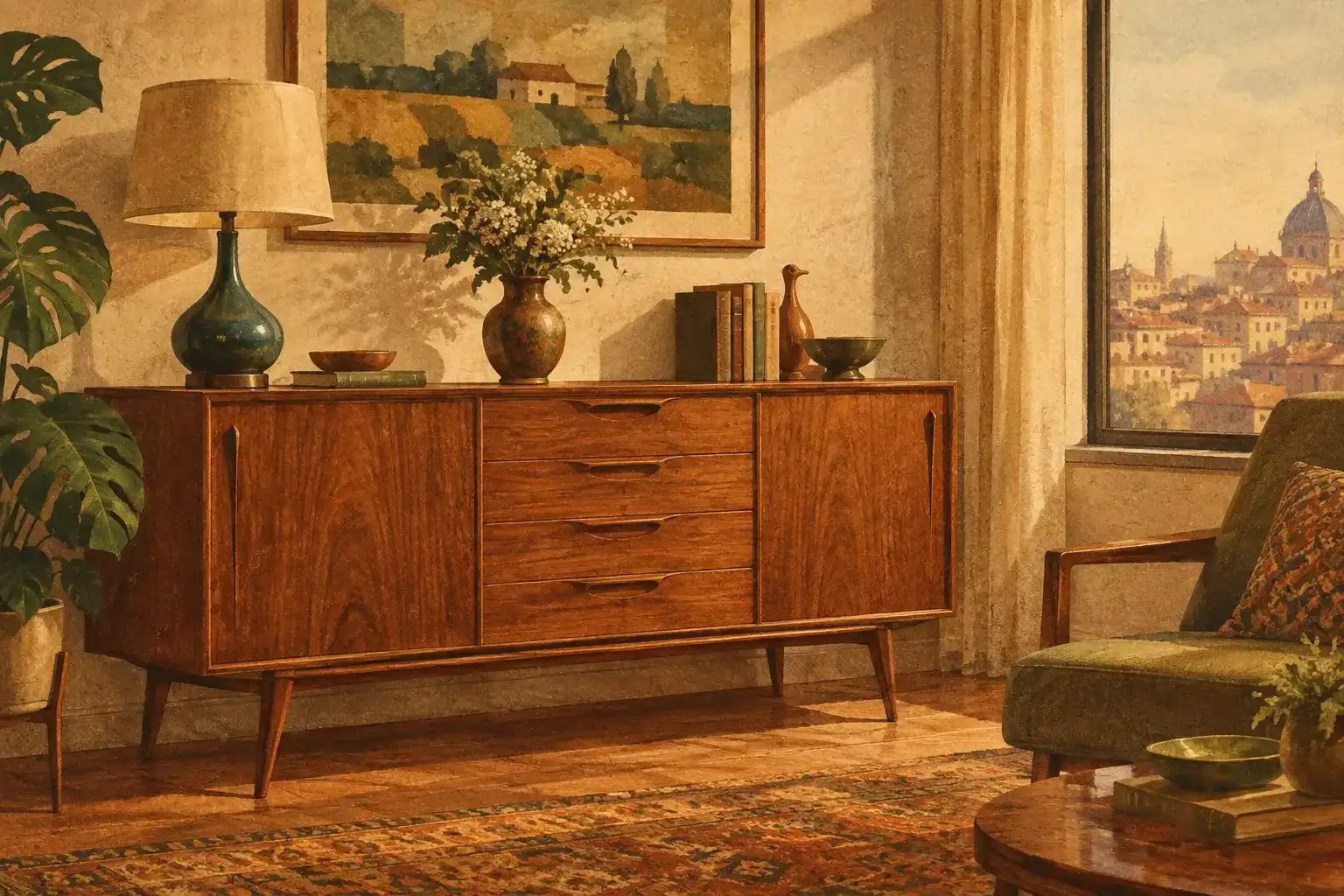
A 1950s or 1960s teak dining table provides a particularly strong example of functional sourcing. Good mid-century furniture was designed around daily use, often with clean joinery, restrained lines and extension leaves that make sense in real homes. A round pedestal table can soften a square dining room, while a rectangular table with tapered legs leaves more visual space than a heavy traditional alternative.
The trade-off is condition. Teak tops may show water marks, sun fading or minor scratches, and not every mark needs restoration. A light surface patina can be attractive and honest. Deep rings, lifting veneer or a warped extension mechanism may affect value and usability. Ask whether the finish is original, cleaned or refinished, because this changes both appearance and future care.
For buyers seeking mid-century furniture in Hertfordshire, a table is often more successful when it is treated as part of a mixed room rather than the beginning of a strict period set. Pair it with rush-seat country chairs, modern upholstered seating or a single sculptural pendant. The table supplies the line and warmth; the surrounding pieces keep it personal.
A pair of bedside tables that were never intended as bedside tables
Some of the most convincing interiors rely on furniture used differently from its original purpose. Two compact oak filing cabinets, small painted cupboards or matching occasional tables can become bedside storage with far more interest than standard bedroom furniture. This is a useful route when a narrow room cannot accommodate conventional tables.
Consistency matters more than perfect matching. A pair can share a material, height or silhouette without being identical. Two small cupboards in related dark woods, for example, will feel deliberate beside a bed even if their handles differ. Aim for tops that sit close to mattress height and check that each piece has enough surface for a lamp, book and glass of water.
This approach also gives overlooked furniture a second life. A modest 1930s cabinet may not command attention in a large hall, but beside a bed it gains purpose and intimacy. Such decisions make a home feel assembled over time rather than ordered in one afternoon.
Architectural salvage as useful furniture
Architectural salvage can offer some of the richest sourcing opportunities, especially for houses with awkward spaces or original period features. An old workbench can serve as a kitchen island or hall console. A stripped pine door may become a dining table top when fitted with a carefully made base. A bank of shallow drawers from a workshop can store linens, tools or papers while becoming a focal point in its own right.
These pieces ask for more planning than a conventional sideboard. Check height, depth, weight and access before committing. A salvaged counter can be wonderfully tactile but too high for dining; an old door may need stabilising before it becomes a table. Restoration should respect the piece’s history while making it safe and reliable for its new role.
There is also a difference between useful wear and neglect. Old paint, scars and maker’s marks often give salvage its charm. Damp damage, unstable joints and hazardous finishes do not. A good dealer will describe condition plainly and distinguish cosmetic imperfections from issues that require work.
What these furniture sourcing examples have in common
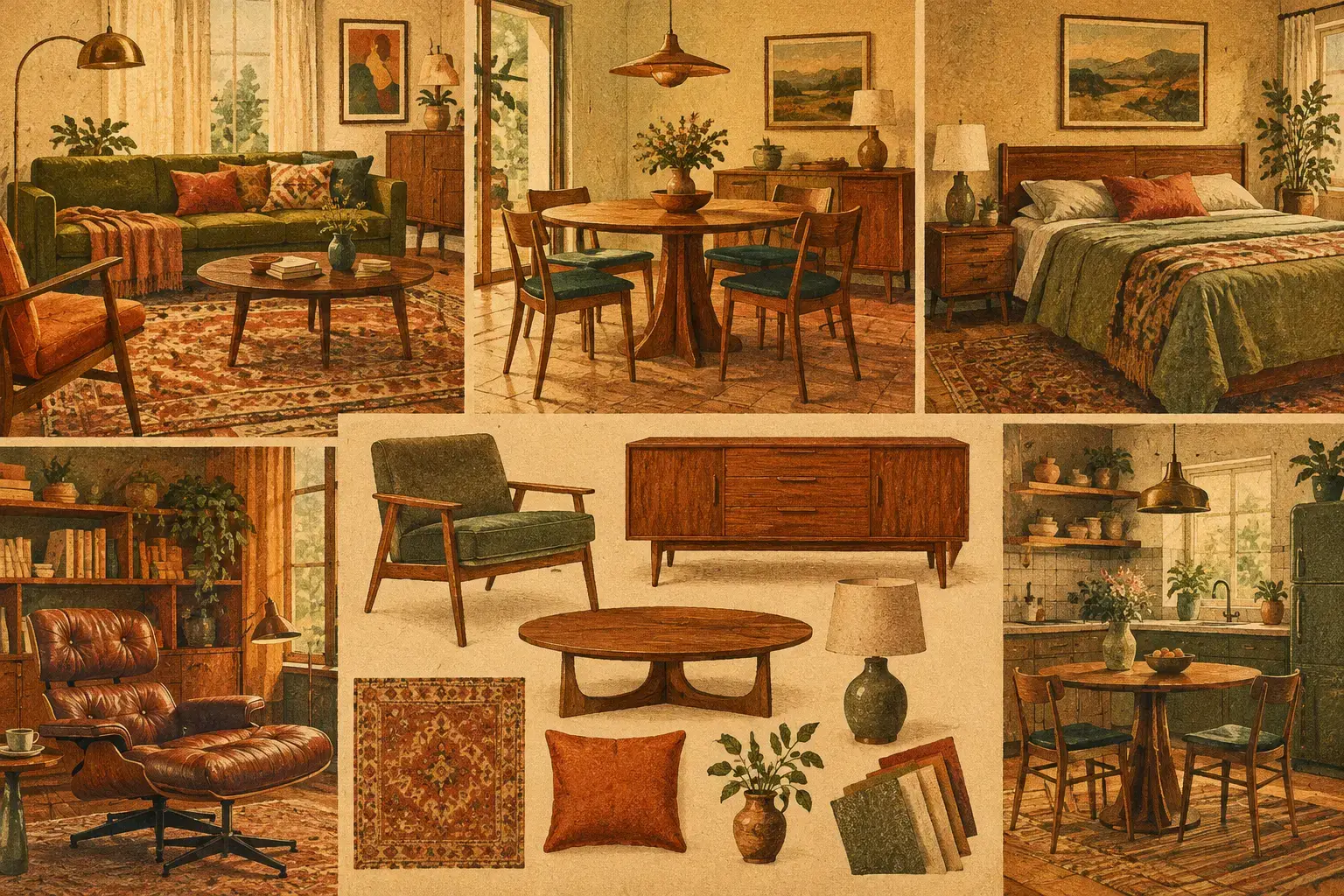
The common thread is not a particular decade. It is discernment. Each piece earns its place through some combination of craftsmanship, material quality, adaptability and visual character. A carved Georgian occasional table, a 1970s chrome floor lamp and a humble painted kitchen dresser can coexist when their scale and colour are considered.
Start with one object that genuinely matters to you. It may be a walnut cabinet with elegant handles, a set of ladder-back chairs, or a ceramic lamp base with a distinctive glaze. Let that piece establish a direction, then add furniture that either supports it or provides a useful counterpoint. A room filled only with one era can look overly arranged; a room with no relationship between its pieces can feel unsettled.
Colour is often the quiet link. The honey tone of oak may be echoed in a woven shade, a gilt frame or the warm brown of leather. Similarly, the earthy reds and deep browns found in West German pottery can bring a mid-century timber setting together without requiring matching furniture. Repetition should be subtle enough that the room still feels discovered rather than designed to a formula.
How to source with confidence
Before buying, ask a few direct questions: what is it made from, what is original, what has been restored, and how will it function in my space? Provenance can be valuable, but it does not have to mean a famous maker or grand estate. A documented local history, an original trade label or a recognisable workshop detail can all deepen an object’s interest.
Photographs should show more than the best angle. Look for images of the top, sides, interior, feet, joints and any notable marks. For seating, consider frame strength, upholstery condition and whether the dimensions will be comfortable for daily use. For cabinets, inspect locks, shelves and backboards. The more clearly a seller presents these details, the easier it is to buy thoughtfully at a distance.
It also helps to decide where compromise is acceptable. You may happily accept a patched veneer on an occasional table but not on a dining surface used every day. You may want original upholstery on a collector’s chair, yet prefer a sympathetic re-cover for a family sitting room. There is no universal rule. The right choice depends on how the piece will be used and what you value most: untouched history, decorative impact or long-term practicality.
At MN Interior Antiques, this is the value of curation: objects are chosen not merely because they are old, but because their form, condition and story still merit a place in a present-day home. Whether you are looking for antique furniture in Stevenage or a singular accent for a more modern room, clear descriptions and honest condition notes make the search more rewarding.
The most satisfying find is not always the rarest or the most expensive. It is the piece you continue to notice years later: useful enough to keep, distinctive enough to enjoy, and made with the kind of care that invites another chapter of life.