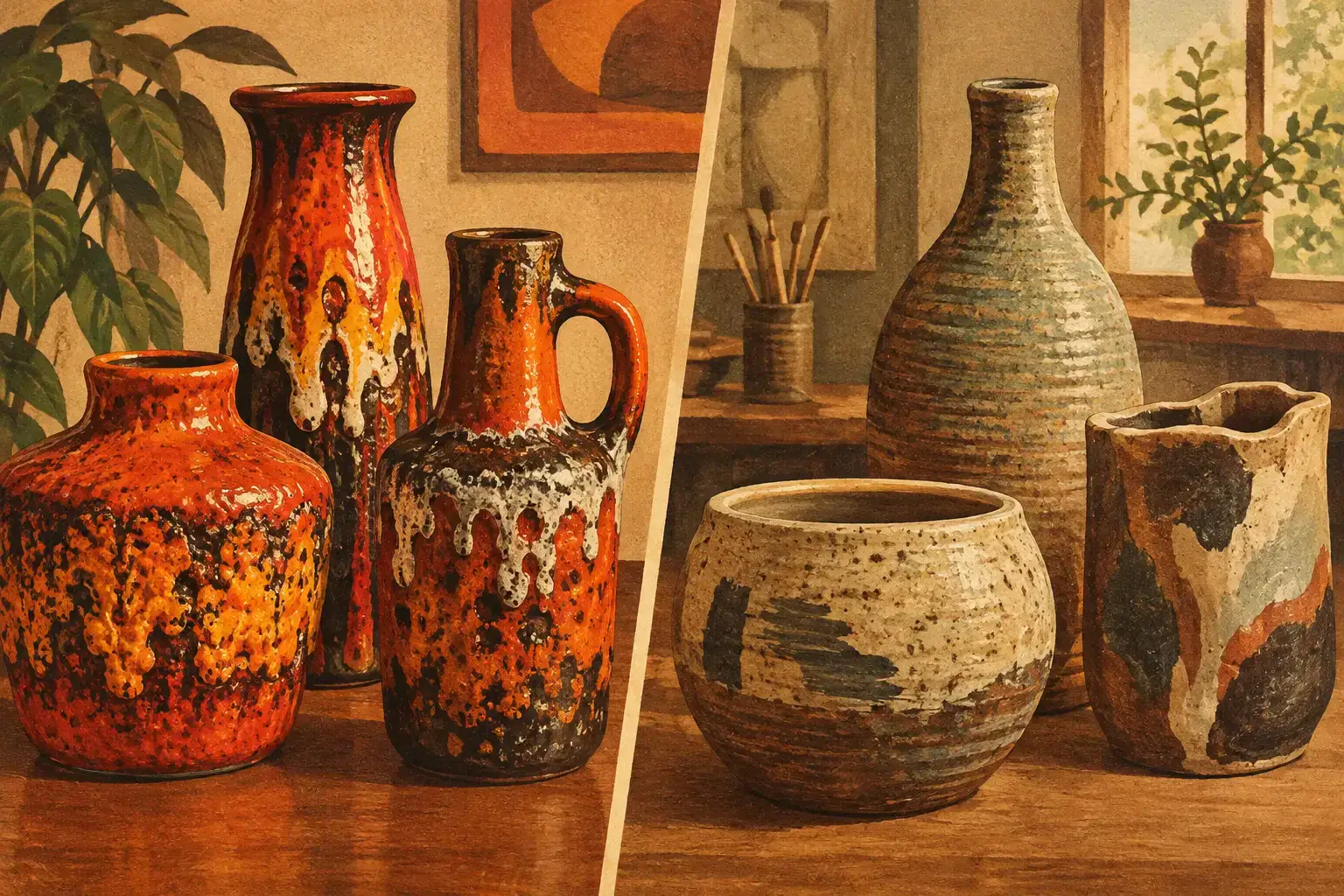
A volcanic orange glaze, a sharply fluted form and an emphatic handle can make a shelf come alive. Yet when choosing Fat Lava vs studio pottery, it helps to look beyond the broad appeal of handmade-looking ceramics. These categories have different histories, production methods and collecting traditions – and understanding those differences makes it far easier to buy a piece that genuinely belongs in your home.
Both can bring texture, colour and a welcome sense of individuality to a room. A vintage West German vase may supply graphic, mid-century confidence; a British studio bowl may offer quieter presence and the unmistakable touch of its maker. Neither is inherently better. The right choice depends on whether you are drawn to bold decorative design, pottery as an expression of craft, or the compelling contrast created by living with both.
What Is Fat Lava Pottery?
Fat Lava is the collector’s term most often applied to dramatic West German art pottery made from the late 1950s through the 1970s. Its name refers to thick, cratered, foaming or lava-like glazes rather than to a single factory, potter or formal artistic movement.
Pieces associated with the style were commonly produced by established German ceramics manufacturers, including names such as Scheurich, Bay, Dümler & Breiden, Jasba, Carstens and Roth. Many were made in significant quantities, though designs varied greatly between factories, ranges and years. This was commercial pottery with real imagination: accessible objects designed for post-war homes, often made using moulds and finished with exuberant glaze effects.
The most recognisable examples are instantly architectural. Think of tall bottle vases, squared forms, pinched necks and deeply tactile surfaces in lava red, mustard, cobalt, moss green, brown and black. A single vase can feel like a small piece of 1960s interior design, especially when its glaze catches low evening light.
Why marks and shape matter
Most Fat Lava pieces carry useful clues on the base. A moulded or impressed shape number, a factory name, a paper label, or the familiar West Germany mark can help identify the maker and period. Marks are valuable, but they are not the whole story. Form, glaze, condition and scale are equally relevant when assessing a vase.
Collectors often seek particular factory ranges, unusual colourways and large statement forms. At the same time, an unmarked vase should not be dismissed automatically. Labels can be lost, and some marks are faint beneath a heavily glazed base. It simply requires more care when describing it and setting expectations about attribution.
What Defines Studio Pottery?
Studio pottery is defined principally by how and by whom it was made. It generally refers to pottery created by an individual potter or a small workshop, rather than a large industrial manufacturer. The piece may be wheel-thrown, hand-built, altered by hand or produced in a limited run, with the maker’s decisions visible in the finished object.
In Britain, studio pottery has a particularly rich history. Twentieth-century potters responded to traditions from East Asia, rural vernacular wares and modernist design, creating work that ranged from restrained stoneware to expressive, experimental glazing. A studio pot can be humble and functional – a mug, jug or bowl made to be used – or sculptural and resolutely decorative.
The term covers a wide field, so there is no single studio pottery look. Some makers value quiet surfaces, natural ash glazes and balanced proportions. Others favour bold brushwork, rich lustres, carved decoration or intentionally irregular silhouettes. What connects the category is the maker-led process and the character that process gives each object.
Signatures are helpful, not a guarantee of value
A maker’s stamp, monogram or painted signature is an important starting point. It may reveal the individual, the workshop and sometimes the date. However, a mark alone does not make a piece desirable, just as an unsigned work is not necessarily without merit.
For collectors, value often rests on the reputation of the potter, the quality and rarity of the form, the date, condition and connection to a recognised period of work. For a home, the more immediate question is often simpler: does the piece have proportion, tactility and a presence you will continue to enjoy?
Fat Lava vs Studio Pottery: The Essential Differences
The clearest distinction is production. Fat Lava is usually factory-made West German art pottery, designed in ranges and often formed from moulds. Studio pottery is usually made in smaller quantities by a named potter or workshop, where throwing, hand-finishing and firing introduce greater variation.
Their visual language is different too. Fat Lava tends towards strong silhouettes, vivid glaze combinations and an overtly decorative surface. Studio pottery can certainly be colourful, but it often rewards closer looking: a finger mark beneath a handle, a softly pooling celadon glaze, a trimmed foot ring or the gentle asymmetry that comes from a potter’s hand.
There is also a difference in the kind of story each object tells. A Fat Lava vase speaks of post-war European manufacturing, changing domestic taste and the optimism of mid-century interiors. Studio pottery more often preserves a direct relationship with an individual maker, their materials and their approach to form.
These distinctions are useful rather than absolute. Some factory potteries employed highly skilled decorators and produced limited artistic ranges. Some studio potters used moulds, worked with assistants or made repeatable forms. The best descriptions avoid flattening either category into a simplistic label.
How to Choose for Your Interior
If your room needs a decisive focal point, Fat Lava is often the natural choice. Its graphic glazes sit particularly well with teak, walnut, smoked glass, chrome and other mid-century furniture. A large, dark-ground vase on a sideboard needs very little company. Give it breathing room, then let the scale and surface do the work.
Studio pottery is especially effective where an interior needs softness and depth. A group of stoneware vessels can temper the clean lines of contemporary joinery; a single handmade bowl can make a dining table feel considered without becoming precious. It works beautifully alongside antique timber, linen, aged brass and architectural salvage because these materials share an appreciation of irregularity and patina.
Mixing the two is often more interesting than choosing sides. The contrast between a glossy, high-colour West German vase and a matte studio vessel brings a collected quality to a mantelpiece or open shelf. Keep the palette disciplined, however. If the Fat Lava piece is loud in orange and black, choose studio pottery in charcoal, cream or warm earth tones rather than competing colour.
Scale matters as much as style. Small pots disappear when grouped with oversized vessels, while several busy glazed forms can make a shelf feel crowded. Begin with one substantial piece, add a quieter companion, and leave a little blank space around them.
Buying With Confidence
Condition deserves close attention in both categories. Examine rims, handles, feet and necks for chips, hairlines, restoration and glaze loss. Crazing can be part of a piece’s age and character, particularly on older decorative ceramics, but it should be described honestly. For vessels intended to hold water, test only when appropriate and remember that old ceramic bodies and glaze flaws may make them better suited to dried stems.
With Fat Lava, look for clear photographs of the base and an accurate account of any factory marks or labels. With studio pottery, seek images of the maker’s stamp alongside details of texture, firing marks and any notable imperfections. A considered seller will distinguish confirmed attribution from an informed suggestion.
It is also worth buying the best condition and strongest example your budget allows, rather than chasing a label alone. A modestly priced vase with exceptional form and glaze can be more satisfying than a famous name in compromised condition. For collectors of West German pottery in Hertfordshire and beyond, that eye for character is often what turns a decorative purchase into a lasting favourite.
A Ceramic Choice With a Story
Fat Lava offers the confidence of colour, texture and mid-century design; studio pottery offers the intimacy of a maker’s hand and the depth of a slower craft tradition. Place either well, and it becomes more than an accessory. Choose the piece whose form makes you pause, whose surface changes in the light, and whose story you will be pleased to keep in view.