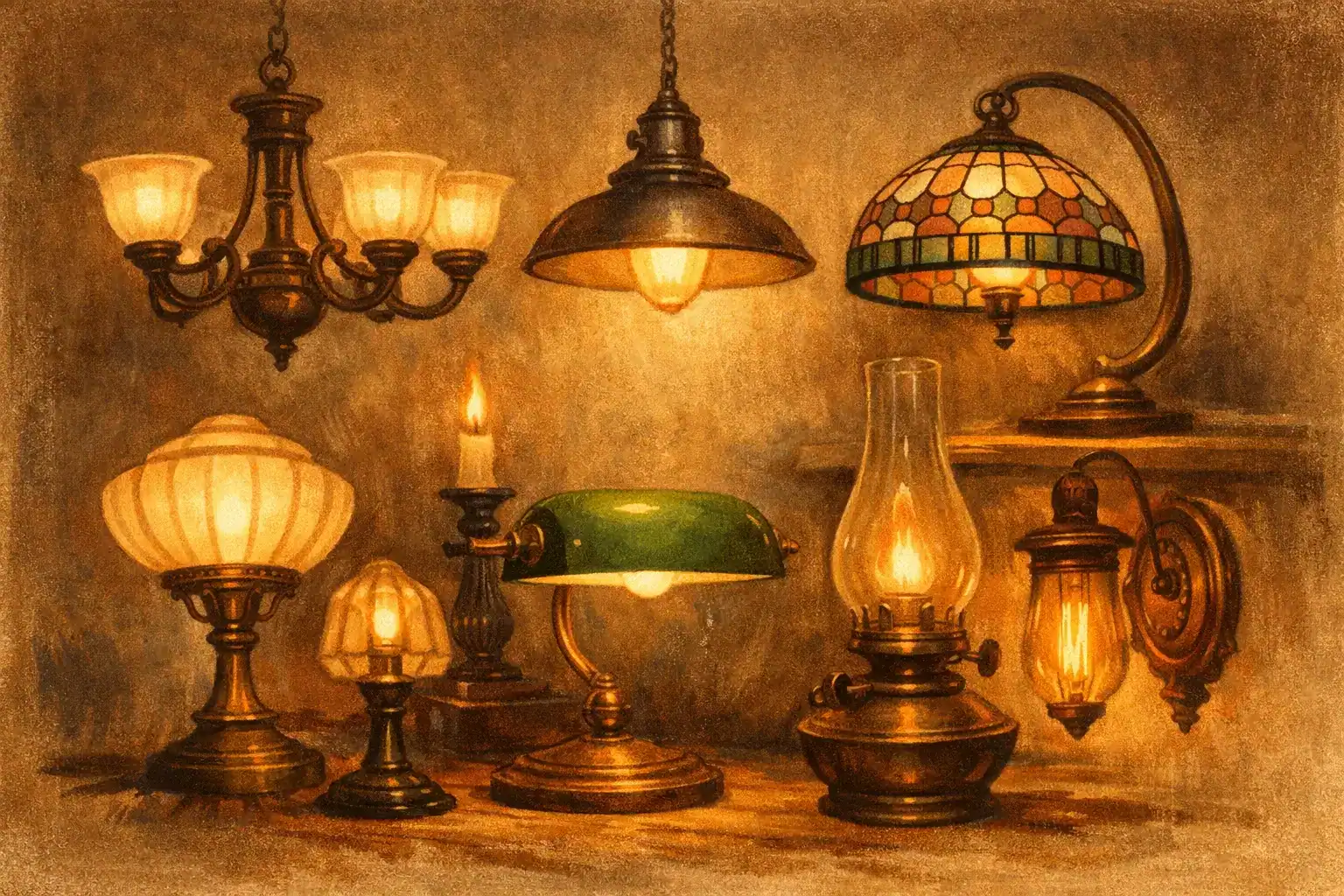
A well-chosen vintage light does more than brighten a room. It changes its temperature, rhythm, and sense of age. The best vintage lighting styles bring sculptural interest even when switched off, while their pools of light make modern rooms feel considered rather than newly furnished. The key is not to recreate a period set. It is to choose a piece with enough presence, proportion, and material character to belong in your home.
For collectors and first-time buyers alike, lighting is often the most rewarding place to introduce antique or vintage design. A lamp requires less space than a cabinet, yet can reveal an era through its glass, metalwork, shade, and silhouette. These seven styles offer distinct possibilities, from quiet traditional warmth to bold mid-century form.
The Best Vintage Lighting Styles to Know
1. Art Deco glass and chrome
Art Deco lighting has a controlled glamour that works particularly well in entryways, dining rooms, and bathrooms. Look for geometric shades in frosted, etched, or opaline glass, often paired with polished chrome, nickel, or stepped metal fittings. The style emerged in the 1920s and 1930s, so its forms tend to feel architectural: sunbursts, fans, fluting, and clean symmetry are all part of the visual language.
A Deco pendant can sharpen a soft, traditional room, while a pair of wall sconces lends a sense of occasion to a plain hallway. The trade-off is that highly reflective chrome and crisp geometry can look too formal beside heavily distressed furniture. Soften the contrast with warm plaster walls, dark wood, or a patterned textile rather than trying to make every object match the period.
Original glass deserves close inspection. Small bubbles and gentle variations are often signs of age and manufacture, while chips at the fitter edge may matter less once installed. Cracks, however, should always be considered carefully.
2. Mid-century modern pendants and lamps
Mid-century lighting is admired for good reason: it makes a strong visual statement without relying on ornament. Designs from the 1950s through the 1970s often use spun aluminum, brass, teak, painted steel, acrylic, or opal glass. Think cone shades, globe lights, adjustable arms, and low, wide pendants that direct light with confidence.
This is a natural choice for homes with clean-lined furniture, but it is not limited to mid-century interiors. A brass-and-opal-glass pendant above a farmhouse table can create a compelling tension between simple country materials and modern form. Likewise, a colorful 1960s desk lamp can animate a more restrained study.
Scale matters more than strict period purity. A large multi-arm chandelier needs visual breathing room and adequate ceiling height. In a smaller room, a single sculptural pendant or adjustable wall lamp can deliver the same era-defining character without overwhelming the space.
3. Industrial and workshop lighting
Factory pendants, enamel shades, machinists’ lamps, and articulated task lights carry an honesty that is hard to imitate. Their appeal lies in practical construction: heavy-gauge metal, enamel finishes, protective cages, cast fittings, and joints designed to move. Original wear – rubbed paint, oxidized metal, or a maker’s mark – gives these pieces the character that new reproductions often lack.
Industrial lighting is especially effective over kitchen islands, utility tables, home offices, and dining tables with substantial timber tops. It can also make a useful counterpoint in a more decorative setting. A single workshop pendant over a marble-topped console, for example, prevents an entryway from becoming overly polished.
Do not assume every large industrial shade produces generous ambient light. Many were designed to cast a concentrated downward beam. That can be ideal for a work surface, but a dining room may need wall lights or floor lamps nearby to avoid shadowy corners. The original interior finish of a shade also matters: white enamel reflects more light than dark green, black, or weathered metal.
4. Traditional brass and library lamps
Traditional brass lighting offers a quieter kind of richness. Swing-arm wall lamps, banker-style desk lamps, bouillotte lamps, and shaded floor lamps have a practical elegance rooted in late 19th- and early 20th-century interiors. They suit rooms where reading, conversation, and layered evening light matter more than a dramatic overhead fixture.
Aged brass is particularly forgiving. Its warm, softened surface sits comfortably with antique wood, framed art, leather, and handwoven rugs, yet it can also give a contemporary room a sense of permanence. Avoid polishing every piece to a high shine. A gentle patina is often part of the object’s visual history, and excessive polishing can erase the depth that makes vintage metal appealing.
Green glass shades are a classic choice for desks and studies, but pleated silk, parchment, or linen shades can make brass lamps feel less literal and more adaptable. When buying a lamp with a fabric shade, regard the shade as a decorative element that may need replacement. The base, fittings, and proportions are usually the lasting value.
5. Italian and Hollywood Regency statement lighting
For rooms that need drama, Italian glass, gilt metal, and Hollywood Regency forms offer plenty of theater. Murano-style glass chandeliers, leaf-form sconces, gilt tole fixtures, and crystal-accented lamps bring movement and glamour through layered materials and elaborate silhouettes. Many examples from the 1940s through the 1970s feel almost like jewelry for the room.
These pieces are most successful when allowed to lead. A leaf-form chandelier above a simple dining table or a pair of ornate sconces on an otherwise spare wall can be unforgettable. Surrounding them with too many competing patterns, metallic finishes, or decorative objects risks losing their impact.
Condition is especially important here. Check for missing glass elements, mismatched drops, repairs to delicate arms, and signs of corrosion around wiring points. Replacement components can sometimes be sourced, but a complete, well-preserved fixture will generally have stronger decorative and collectible appeal.
6. Ceramic and folk-art table lamps
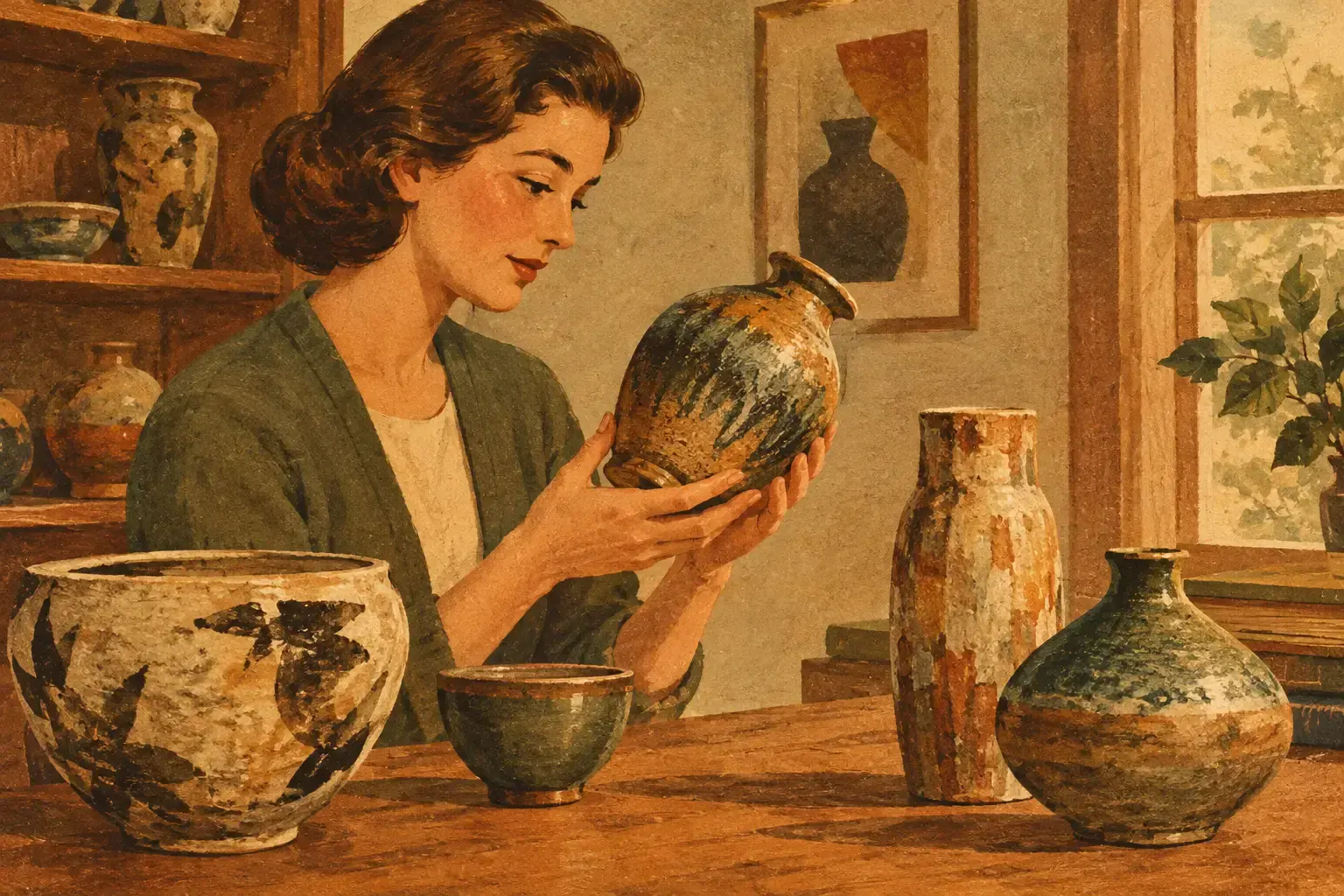
Ceramic lamps bring color, texture, and a more personal, collected quality to a room. Mid-century studio pottery, West German Fat Lava bases, hand-painted folk-art lamps, and richly glazed ceramics each offer a different kind of presence. Their value is not only in their age but in the hand of the maker: uneven glazes, incised marks, and lively surfaces make them feel individual.
A ceramic lamp is often the easiest way to introduce vintage lighting into a living room or bedroom. Its scale is approachable, and a new shade can be chosen to suit the surrounding palette. A clean linen drum shade keeps attention on a striking glaze; a gathered or patterned shade adds softness to a simpler base.
Consider the full height once shaded, not just the ceramic body. On a bedside table, the light source should sit at a comfortable reading level. On a console, a pair of lamps should feel substantial enough to frame a mirror or artwork without blocking the view across the room.
7. French country and rustic lighting
French country lighting favors warmth over precision. Wrought iron chandeliers, painted wood lamps, tole shades, and weathered brass fittings can make a room feel established without becoming overly formal. The best examples have graceful proportions and evidence of handwork, whether that is a twisted iron arm, a hand-painted finish, or a softly aged surface.
This style works beautifully with old pine, stone, linen, and natural pottery, but it can be equally effective in a newer house that needs texture. A modest iron chandelier above a breakfast table gives definition without asking the room to become a full rustic scheme. Keep the palette edited and let the fixture provide the historic note.
Choosing Vintage Lighting for the Way You Live
The right fixture depends on what the room needs after dark. Overhead lighting establishes general brightness, but table lamps, floor lamps, and sconces create the depth that makes a home feel welcoming. A good room often has at least two or three light sources at different heights, rather than one ceiling fixture working too hard.
Before committing to a piece, measure the room, ceiling height, table width, and the drop available for a pendant. For a dining table, the fixture should feel related to the table rather than the entire room alone. For bedside lamps, consider where the switch falls and whether the shade will cast useful reading light.
Authenticity and condition deserve equal attention. Original fittings, maker’s labels, period glass, and honest patina add value, but old electrical components may not meet modern safety expectations. Rewiring by a qualified professional is often sensible and does not diminish the decorative importance of a vintage fixture. In fact, careful restoration allows a historic piece to be enjoyed safely every day.
At MN Interior Antiques, the most memorable lighting is chosen not as an afterthought but as a piece of functional sculpture. Let the room’s architecture, existing materials, and the quality of light you want guide you. The right vintage lamp or pendant will not simply fill a gap overhead or beside a chair – it will give the room a story worth living with.