A reclaimed pine door with its original paint, a set of cast-iron air bricks or a weathered stone trough can alter the character of a room more completely than a newly made statement piece. The appeal lies in irregularity: the softened edge, the hand-cut joint, the evidence of decades of use. This architectural salvage buying guide is designed to help you choose pieces with genuine presence while avoiding the costly mistakes that can come with buying old materials.
Architectural salvage is not simply decoration rescued from a building. It was made to perform a job, whether that meant admitting light, carrying water, ventilating a wall or marking an entrance. That practical history is part of its value, but it also means condition, proportions and installation deserve as much attention as style.
Architectural Salvage Buying Guide: Start With the Space
Before falling for a particular piece, measure the setting carefully. This is especially vital with doors, fireplace surrounds, garden statuary and large sections of panelling. Record not only the height and width but also the depth of the available opening, skirting height, ceiling clearance and route into the house. A beautiful Victorian overmantel is of little use if it cannot clear a tight stairwell or overwhelms a modest sitting room.
Think about the role the piece will play. A salvaged door may become a working internal door, a headboard or a decorative screen. An old shop sign can anchor a hallway, while a set of brass drawer pulls can quietly lift a chest of drawers. The most successful rooms tend to use salvage as a considered focal point or a repeated material note, rather than scattering unrelated fragments throughout the space.
Scale matters as much as age. A substantial Georgian pediment can look extraordinary over a fireplace in a high-ceilinged house, yet feel theatrical in a compact flat. Conversely, smaller finds – a ceramic house number, an iron hook or an old apothecary drawer – offer history without demanding a complete redesign.
Learn What You Are Looking At
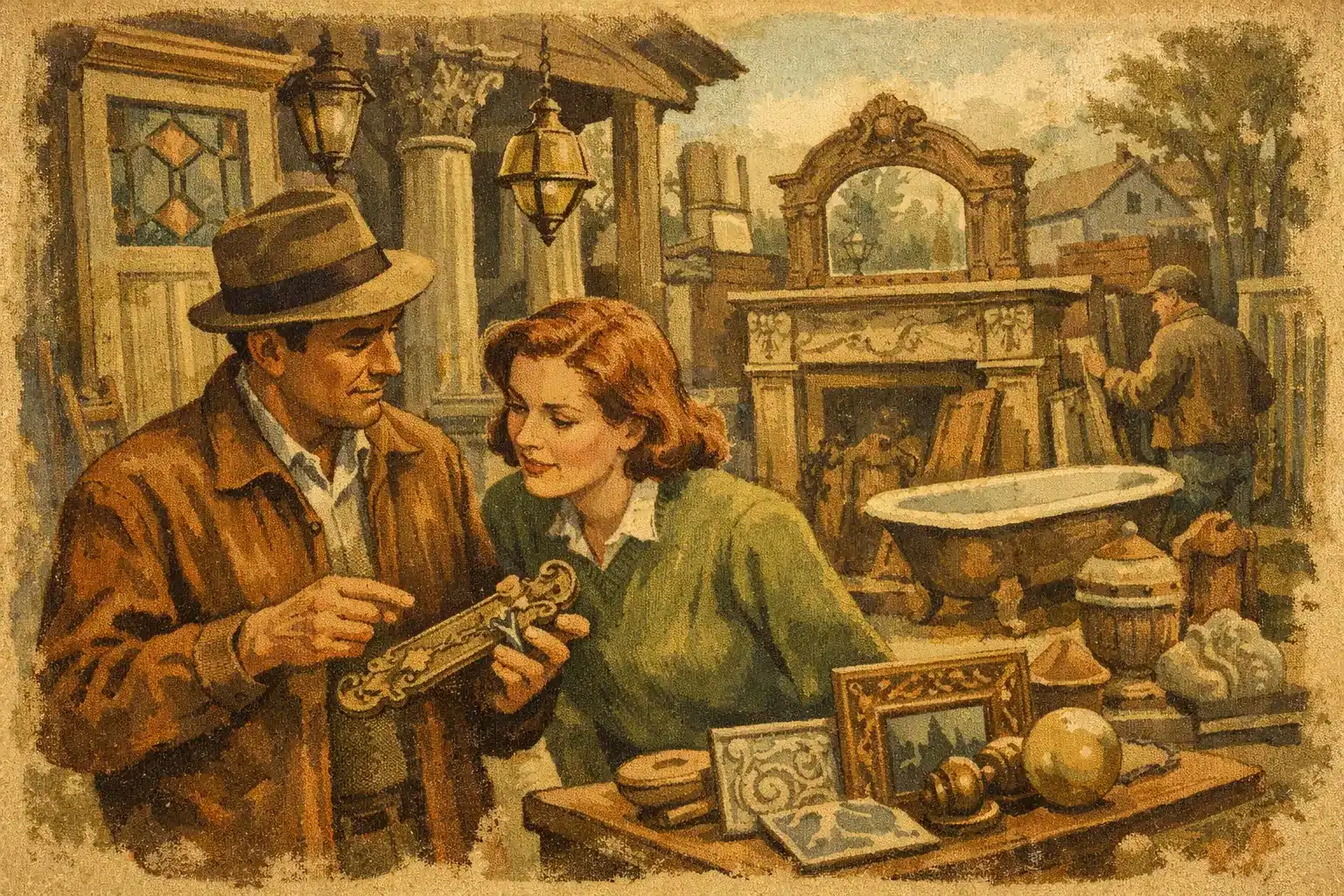
The term architectural salvage covers a wide field. It may include timber doors and shutters, stained glass, encaustic tiles, cast-iron radiators, fire surrounds, railings, garden urns, period lighting and decorative building fittings. Some objects are genuinely old; others are later reproductions, assembled pieces or materials altered for a new purpose. None is automatically unsuitable, but the description and price should reflect what it is.
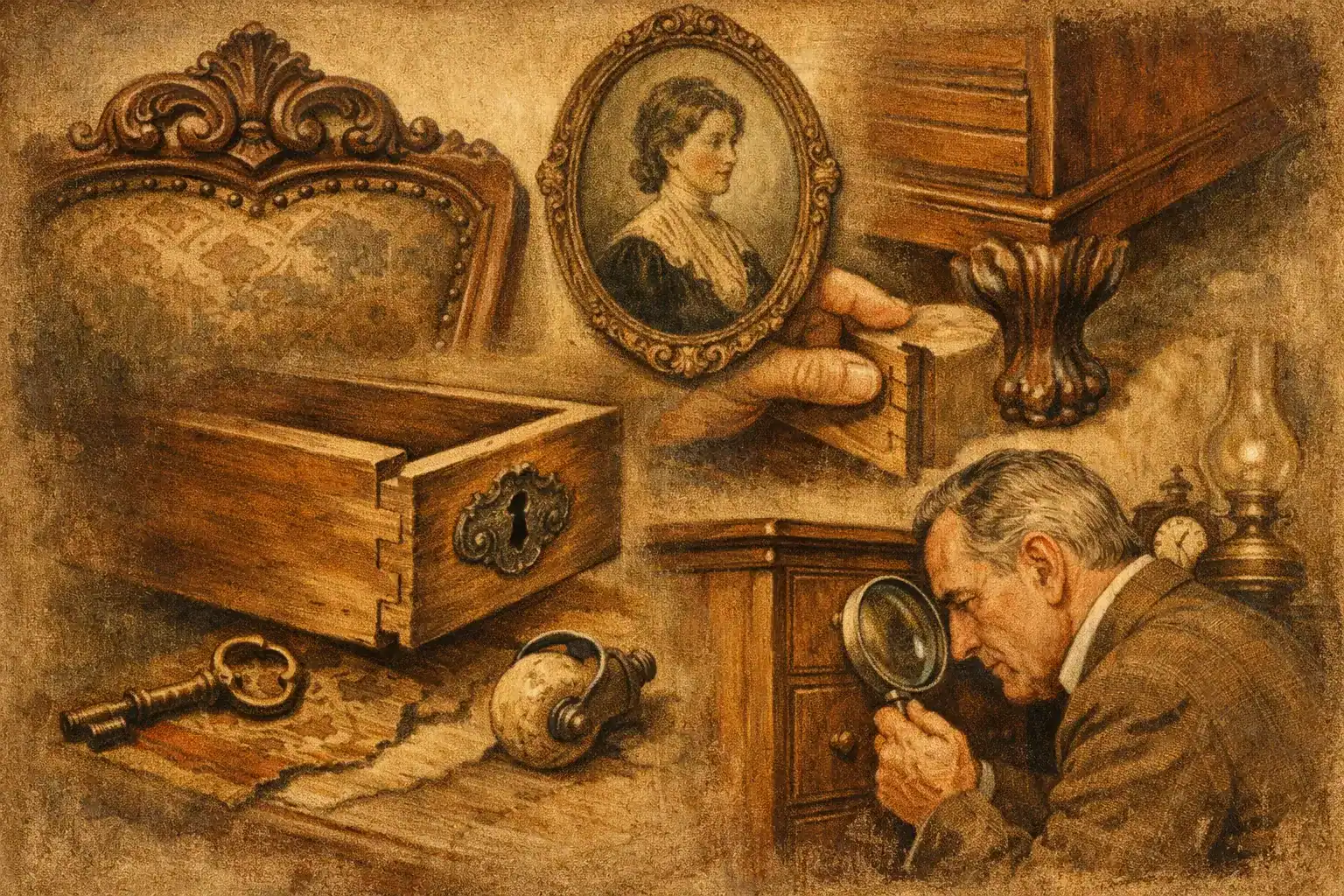
Look for evidence of honest construction. On timber, this might be old peg holes, hand-planed surfaces, repair patches, historic paint layers and wear around handles or hinges. Cast pieces often have slight irregularities, maker’s marks or a pleasingly softened surface acquired over time. Stone may show weathering, lichen staining or chips consistent with its former position.
Age alone does not guarantee quality. A well-made twentieth-century industrial pendant can be more useful and visually persuasive than a badly damaged nineteenth-century fitting. Equally, a heavily restored object may still be the right choice if it is structurally sound, sympathetically repaired and clearly described. Provenance, craftsmanship and condition should be weighed together.
Ask Direct Questions About Provenance
A reputable dealer should be able to explain what is known about a piece: its likely date, original purpose, material, dimensions and any restoration. For architectural elements, ask whether the item came from a domestic property, civic building, workshop, school or church. A full history is not always available, but vague claims of great age without supporting detail should invite caution.
If an object is described as reclaimed, establish whether it has been removed from an older building or made from reclaimed materials. There is a meaningful difference between an original Edwardian door and a newly constructed table using old boards. Both can be attractive, but they belong to different categories and should be priced accordingly.
Check Condition With Use in Mind
Patina is desirable. Rot, structural movement and unsafe wiring are not. The key is to distinguish the character that comes with age from damage that will make the piece impractical or expensive to own.
With timber, inspect for active woodworm, soft areas, deep splits and distortion. Old flight holes may be historic and inactive, especially if the timber has been stored indoors for years, but fresh dust around holes is a warning sign. Doors and shutters can often be repaired, though a badly twisted door may never sit correctly in a frame.
For stone, terracotta and cast iron, look closely for cracks that compromise stability. Surface chips and worn edges can be entirely appropriate; a fracture through a heavy urn or a loose section of a fireplace surround requires professional assessment. With decorative tiles, expect variations in tone and some losses to glaze. What matters is whether you have enough matching material for the intended area.
Electrical items need particular care. Vintage lighting should be inspected and, where necessary, rewired by a qualified professional before installation. Original fittings are part of the charm, but safe modern cabling, suitable lamp holders and correct earthing are essential. When choosing vintage lighting for a period home in Welwyn Garden City or further afield, allow for the ceiling height, light output and the practical demands of the room, not simply the silhouette of the shade.
Consider Restoration Before You Buy
Restoration can preserve an object and make it usable, but over-restoration can erase the very details that made it interesting. A stripped pine door may appear cleaner, for example, yet lose its layered paint history and mellow finish. Similarly, aggressively polishing old brass can remove the darker surface that gives it depth.
Ask what has already been done and what work remains. Small repairs, consolidation, cleaning and careful waxing are often sensible. Major joinery, replacement glazing, masonry repairs or bespoke metalwork can add considerably to the final cost. If the piece requires extensive attention, decide whether its rarity and visual impact justify the investment.
It also pays to match the level of restoration to the room. A pristine, fully refinished mantel may suit a formal scheme, while a softly weathered cupboard door can bring warmth to a more relaxed kitchen. There is no single correct finish. The right answer depends on whether you want the object to blend with its surroundings or retain the unmistakable character of a reclaimed element.
Plan for Fitting, Weight and Compliance
Architectural salvage is often heavier, less standardised and more demanding to install than modern equivalents. A cast-iron radiator, stone sink or large mirror needs appropriate structural support. Doors may need reframing, trimming or custom-made linings. Antique glass can be beautiful but may not meet the requirements for certain locations, particularly where safety glazing is expected.
Factor in delivery before committing. Measure access points, identify awkward turns and check whether the item will need a two-person carry or specialist handling. For large pieces, the cost of transport and fitting can exceed the purchase price, so it is best treated as part of the initial budget rather than an afterthought.
Where building regulations, insulation or safety are relevant, seek advice from a competent installer. Period pieces can often be incorporated beautifully, but a salvaged exterior door may need discreet draught-proofing, while old railings or balustrades must be fixed securely. The goal is not to make historic material behave exactly like a new product. It is to use it responsibly and with respect for its limitations.
Buy Fewer Pieces, With More Intention
The strongest interiors do not resemble a salvage yard. They give each object enough room to be appreciated. One richly coloured stained-glass panel can transform a landing; a pair of old hospital lights can bring graphic presence to a kitchen; a carefully chosen carved corbel can lend a shelf real architectural authority.
Consider materials already present in the house. Warm oak, aged brass, terracotta and painted timber sit naturally alongside many Victorian and Edwardian interiors, while steel, industrial enamel and utilitarian drawers can create a thoughtful contrast in newer spaces. For buyers drawn to antique furniture in Stevenage, architectural details can be especially effective when they echo the finish or era of an existing cupboard, table or chest rather than competing with it.
A curated selection is usually more convincing than a large collection bought in haste. Let the object earn its place through proportion, material and a story you genuinely enjoy living with. The best salvage pieces do more than fill a gap: they make a home feel as though it has gathered its character over time.