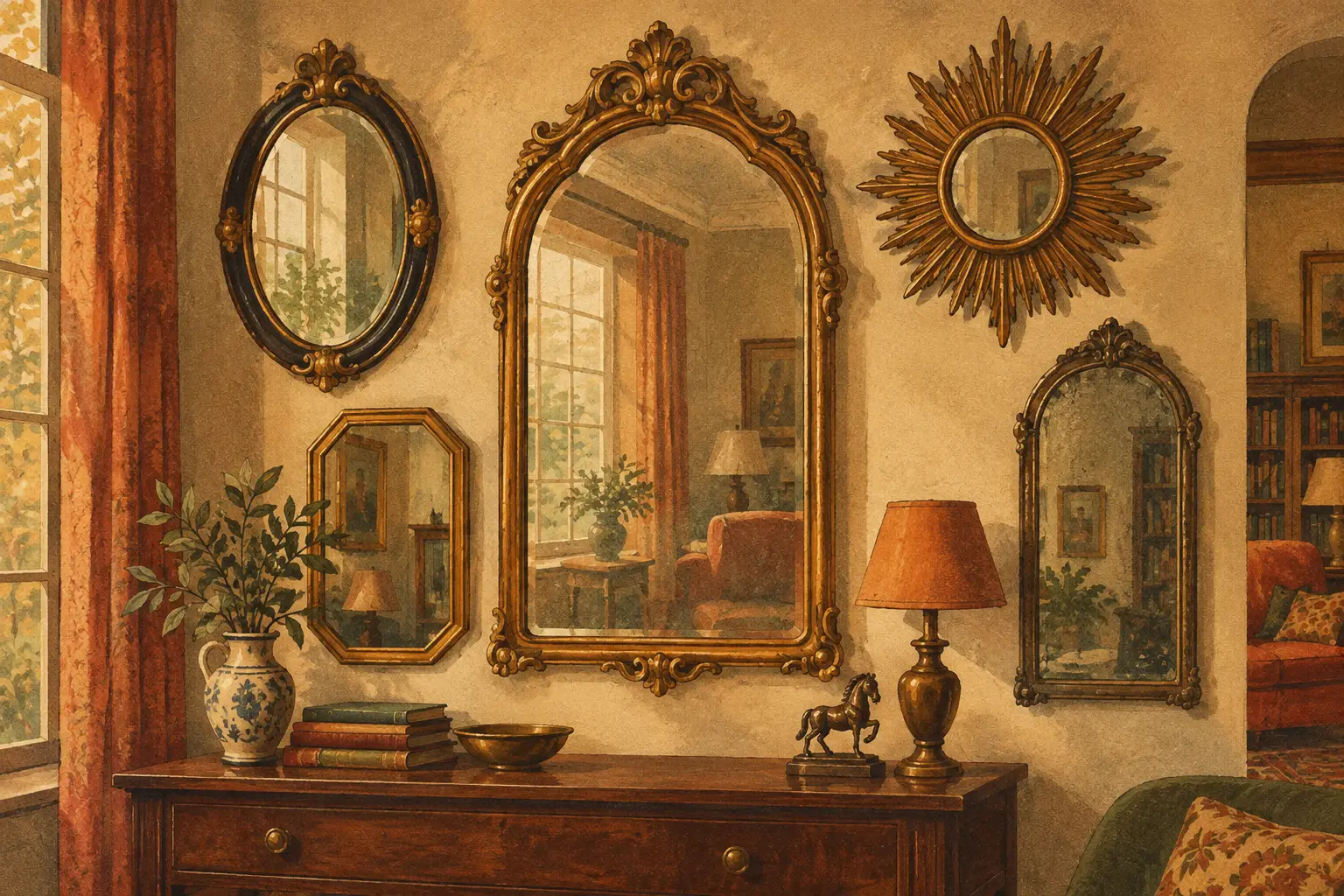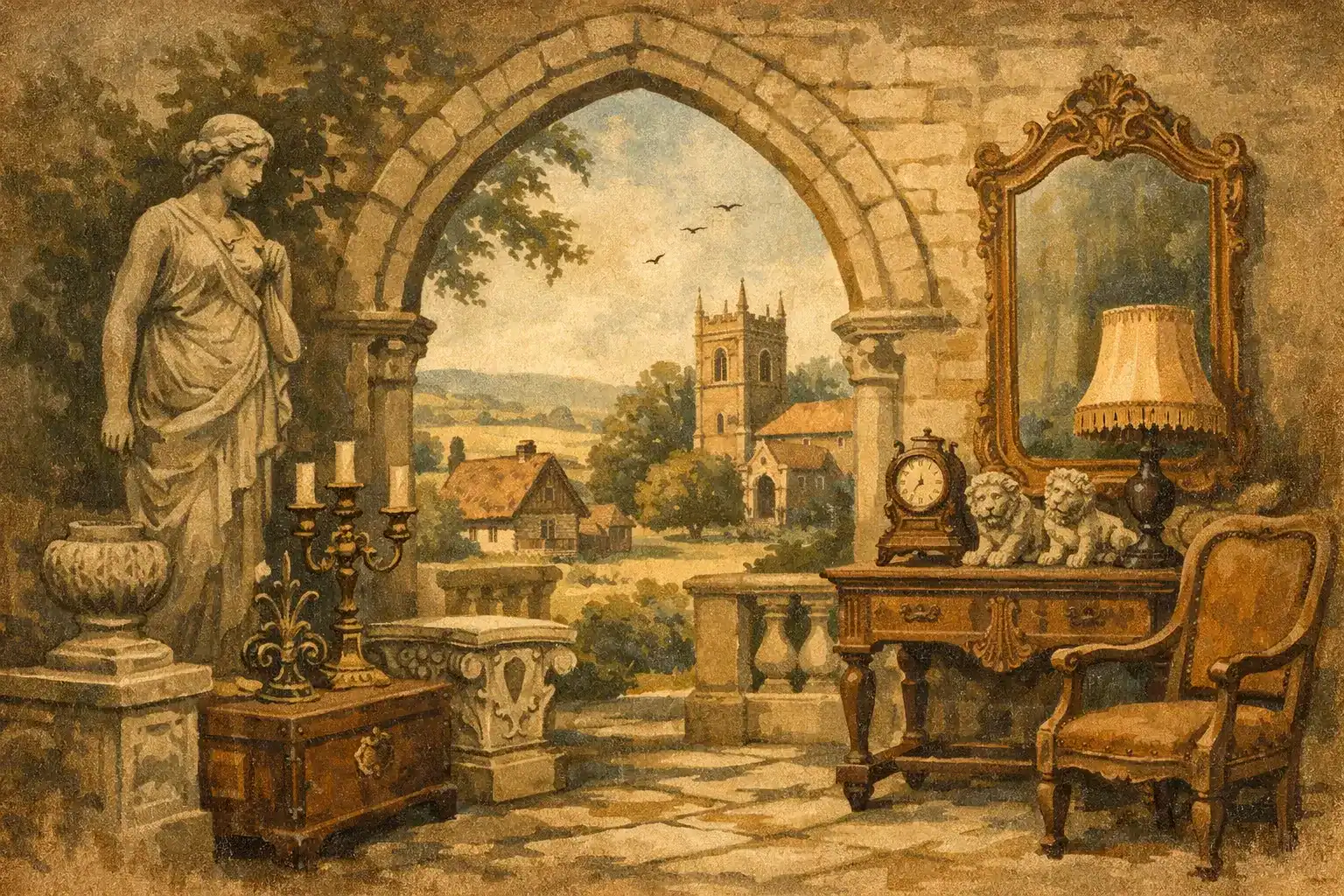
A worn oak door with a hand-forged latch can change the feeling of a hallway before a single piece of furniture is added. The same is true of a cast-iron radiator, an original fireplace surround, or a run of encaustic tiles whose gentle variation cannot be replicated by a new box of flooring. For buyers seeking architectural antiques for home in Hertfordshire, the appeal lies in more than age. These are working fragments of buildings, made with materials and details that bring permanence, texture, and a sense of place into a room.
Architectural salvage asks us to look beyond the obvious. A reclaimed panel may become a headboard, a stone trough may find a second life as a planter, and an old shop fitting can provide storage with real presence. The most successful choices retain respect for the object’s original purpose while allowing it to serve a useful role in a modern home.
Why architectural antiques give a home its identity
Many contemporary interiors are finished with clean lines and new surfaces. Architectural antiques introduce a needed counterpoint: patina, irregularity, and evidence of skilled hands. Old timber carries marks from decades of use; brass develops warmth where it has been touched; handmade tiles vary slightly in tone and depth. Those imperfections are not defects to erase. They are the details that make a home feel assembled over time rather than furnished all at once.
There is also a practical argument for buying well. Traditional joinery, dense old-growth timber, solid cast iron, and natural stone were often made to endure. Condition still matters, of course. A beautifully aged door may need its frame adjusted, and a period radiator may require professional pressure testing before installation. But when an item has been assessed and restored thoughtfully, it can offer far more longevity than a decorative imitation.
For period properties around Hertfordshire, original-looking architectural elements can help bridge gaps left by previous renovations. In newer homes, the contrast can be equally effective. A Victorian overmantel in a pared-back living room or a set of reclaimed pine cupboards in a modern kitchen creates character without forcing the entire interior into a historical style.
Architectural antiques for home in Hertfordshire: what to look for
The right piece begins with proportion and purpose. Architectural antiques are often more substantial than they appear in photographs, so measurements should be treated as part of the design process, not an afterthought. Consider door swings, ceiling height, wall depth, delivery access, and the visual weight of the material before falling for an object.
Reclaimed doors, shutters, and panels
A salvaged door is one of the most transformative architectural finds. Four-panel Victorian doors, glazed internal doors, painted cottage doors, and French shutters all offer a strong vertical line and a built-in history. They can be fitted as intended, but they also work beautifully as sliding doors, room dividers, headboards, or wall-mounted decorative panels.
Look closely at structure. Old paint, small repairs, and a softened surface are usually part of the charm. Significant warping, active woodworm, loose joints, or extensive rot deserve a closer inspection. Restoration should stabilize a piece without sanding away the surface that made it worth saving in the first place.
Fireplaces and mantels
A fireplace surround gives a room an immediate focal point, whether it is carved stone, slate, painted cast iron, or richly grained timber. It is worth matching the scale to the room rather than simply choosing the most ornate example. A modest early 20th-century tiled insert may suit a compact bedroom better than a grand surround designed for a formal drawing room.
Installation can be more involved than it first appears. Chimney condition, fireplace regulations, heat clearance, and the weight of stone all require professional consideration. A non-working fireplace can still be a beautiful feature, but it should be installed safely and honestly rather than made to look functional when it is not.
Ironwork, hardware, and smaller details
Sometimes the smallest architectural antique has the greatest daily impact. A set of brass door knobs, an iron coat hook rail, a letter plate, cabinet pulls, or a bell pull adds a tactile note to rooms that might otherwise feel anonymous. These details are especially useful when a full structural project is not practical.
Original hardware is rarely perfectly uniform. That is part of its appeal, but it means checking sizes carefully. Backplates, spindle lengths, keyholes, and screw positions may not correspond with modern fittings. A sympathetic installer can often adapt them, though some pieces are better reserved for decorative use.
Tiles, stone, and garden salvage
Reclaimed quarry tiles, encaustic tiles, paving, curbs, and stone troughs bring a grounded quality to kitchens, entryways, and gardens. Their weathering is hard earned. A patchwork of compatible old tiles can look more convincing than an overly matched floor, especially in a utility room or porch where a little visual variation feels natural.
Not every old tile should be used underfoot. Check for cracks, surface wear, and thickness differences, then allow for a suitable substrate and professional fitting. Outdoors, frost resistance and drainage matter as much as appearance. A stone planter that has lasted a century can still crack if water is allowed to sit in it through winter.
How to mix old architectural pieces with a livable interior
The strongest rooms do not turn every surface into a salvage display. One large architectural element can lead the scheme, while the rest of the room remains calmer. For example, pair a substantial reclaimed oak door with plain plaster walls and simple linen curtains, or let a tiled fireplace sit alongside a mid-century chair and a hand-thrown ceramic lamp.
Material balance is useful here. If a room already has exposed brick, dark beams, and aged floorboards, a lighter painted cupboard or glazed door can prevent it from becoming heavy. Conversely, a bright new-build room may benefit from one deeply patinated element, such as a painted pine bench or an iron garden gate used as wall art.
Color should follow the object rather than compete with it. A faded blue door, green glazed tile, or warm brass fitting can guide a restrained palette. This approach feels more personal than choosing antique pieces merely because they are old. The aim is not to recreate a particular era exactly, unless that is your intention. It is to build a home in which different periods sit comfortably together.
Questions to ask before you buy
Provenance is valuable, but it does not always mean a complete documented history. Ask what is known about the item’s age, material, origin, and any restoration it has received. A reputable dealer should be clear about repairs, replacements, and condition, rather than presenting every mark as romantic patina.
It is also sensible to ask whether the piece is ready for its intended use. Lighting should be checked and rewired where needed by a qualified professional. Doors may need trimming or new hinges. Cast iron can be heavy enough to alter both delivery planning and installation costs. These considerations do not lessen an object’s worth. They help ensure its next chapter is a lasting one.
For collectors and homeowners in Stevenage, Hitchin, St Albans, and the surrounding area, viewing scale and finish in person can be especially helpful when possible. MN Interior Antiques selects pieces for their material character, decorative strength, and ability to live well beyond their original setting. A carefully chosen antique should feel considered, not precious.
Let the object keep some of its history
There is a temptation to make reclaimed pieces look new before bringing them indoors. Often, a lighter touch is better. Clean away dirt, address instability, and protect the material, but leave the softened paint, old plug marks, and slight tonal shifts that reveal a life well lived. Those traces are what distinguish architectural antiques from newly manufactured copies.
Choose the piece that makes you pause, then give it a role that allows it to be seen and used. A home gains depth not from filling every corner with old things, but from making room for a few exceptional objects to carry their stories forward.