A room becomes memorable when it contains something that could not have arrived in a flat-pack box. A walnut chest with softened corners, a hand-thrown vase with a volcanic glaze, or a brass lamp with a little honest wear gives a home an immediate sense of life. The most compelling antique home decor trends are not about recreating a period room. They are about choosing objects with material presence, good proportions, and a story to tell.
For homeowners and collectors, this shift is especially welcome. The goal is no longer to make every surface look newly finished or perfectly matched. Instead, interiors are becoming more personal: layered with furniture from different decades, sculptural decorative objects, and practical pieces that have already proved they can endure.
Antique Home Decor Trends Moving Beyond the Look
The appetite for antiques has grown alongside a broader rejection of disposable interiors. Many people want rooms that feel settled rather than staged, and historical pieces offer a shortcut to that feeling. Their value is not simply age. It is evident in solid joinery, hand-finished surfaces, original hardware, and materials that develop character with use.
This does not mean every antique is automatically right for a modern home. An imposing Victorian sideboard may be beautifully made but overwhelm a compact dining room. A fragile porcelain figure may be better displayed in a cabinet than placed beside an active family’s sofa. The strongest choices balance decorative appeal with scale, condition, and the way a household actually lives.
Rather than treating antiques as a separate category reserved for traditional interiors, current decorating favors contrast. A streamlined contemporary sofa can look more considered beside an oak gateleg table. Clean-lined kitchens gain warmth from an antique pine stool or a weathered breadboard. A single older object often does more than a room full of reproductions.
Patina Is Part of the Appeal
Patina is one of the defining qualities behind today’s interest in historic design. It may appear as mellowed brass, small marks in a tabletop, fading on painted wood, or the gentle crazing of an old ceramic glaze. These signs of age add visual depth that new materials often struggle to imitate convincingly.
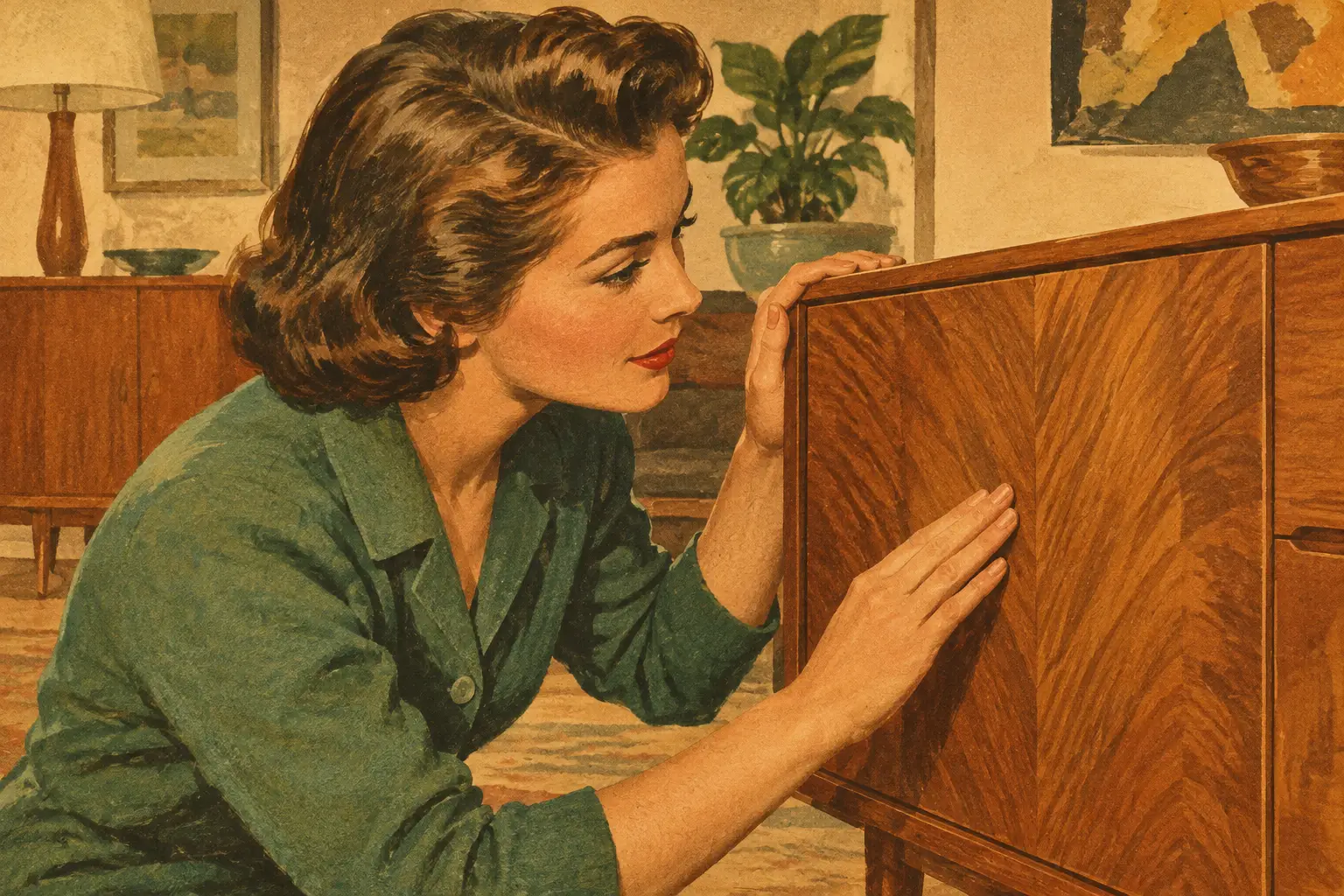
There is a distinction, however, between attractive wear and damage that affects an item’s function or stability. Minor scratches, a darkened finish, or light oxidation can be part of an object’s character. Loose joints, active woodworm, broken wiring, structural cracks, or unstable veneers deserve closer attention. An accurately described piece allows the buyer to decide whether its condition suits their home and expectations.
Over-restoration can erase the very qualities that make an antique special. A sympathetic repair should preserve as much original surface and detail as possible while making the piece safe and usable. For furniture, that might mean securing a drawer runner or tightening a chair frame rather than stripping away a century of finish. For vintage lighting, safety comes first: older fittings may need professional rewiring before use.
Collected Rooms, Not Matching Sets
The matching furniture suite has given way to rooms that develop over time. This does not mean filling every corner with unrelated finds. A collected interior still needs a visual thread, whether that is warm timber, a repeated metal finish, a shared color family, or a consistent attention to form.
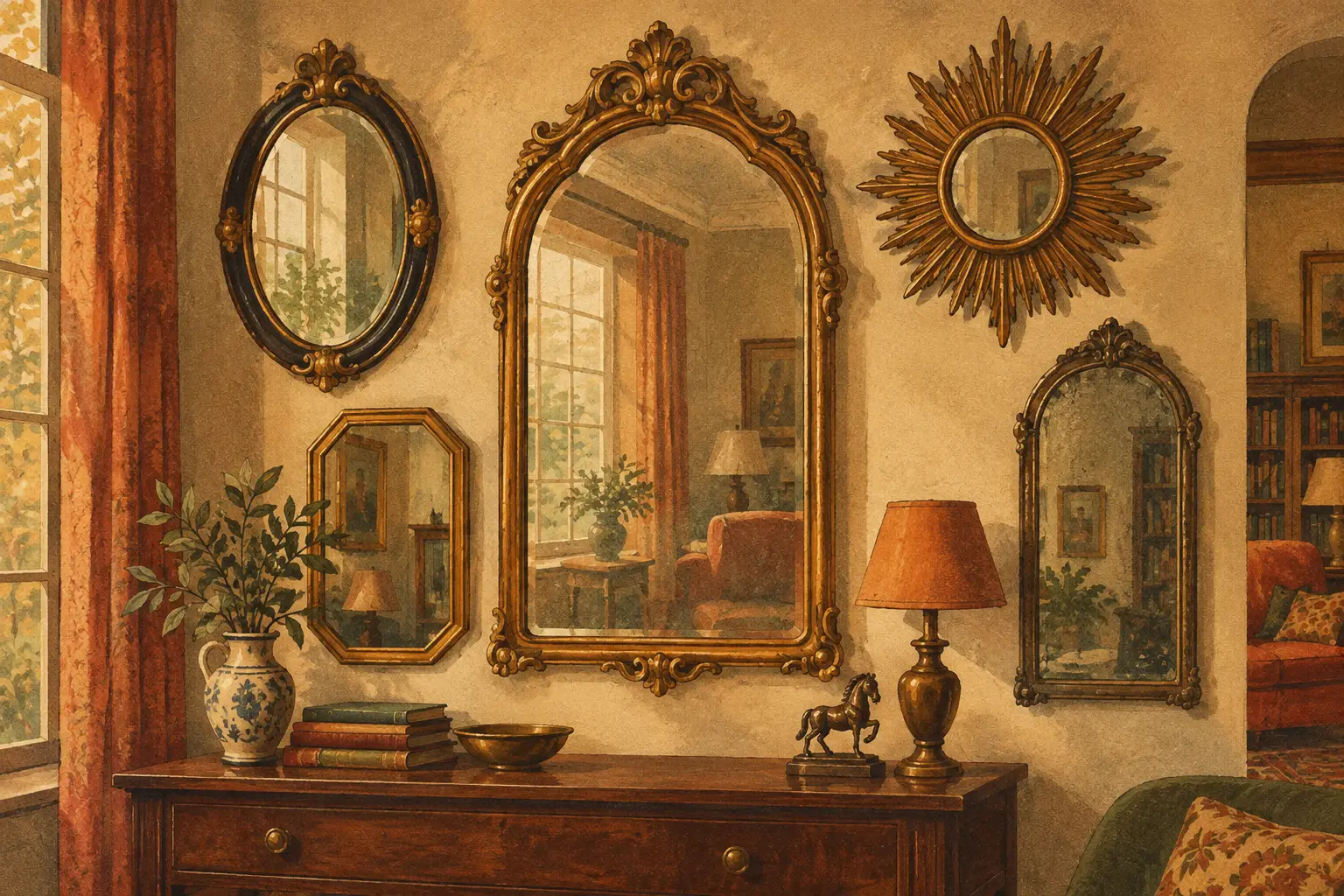
Start with one anchor piece that has real presence. It might be a mid-century sideboard, an English oak chest, a painted cupboard, or a sculptural vintage floor lamp. Build around it with quieter supporting pieces. An antique mirror can add height and reflected light above a modern console, while a low pottery vessel or stack of worn books gives the arrangement weight at eye level.
The best rooms also allow objects to breathe. A small group of ceramics on a shelf is more persuasive than a crowded row of every vase available. One exceptional carved box, Bakelite piece, or folk-art object can hold its own against plain walls and contemporary upholstery. Collecting is as much about editing as acquisition.
Mixing periods with confidence
Mixing periods works when the relationship is intentional. Pairing a 19th-century mahogany table with tubular steel chairs, for example, highlights the craftsmanship of both. A brutalist ceramic lamp can introduce useful texture beside a traditional upholstered chair. The contrast should feel like conversation, not conflict.
Pay close attention to proportion. A delicate Regency occasional table may disappear beside a deep sectional, while a heavy carved cabinet can make a narrow hall feel closed in. Before buying, measure the available space, including doorways, stairwells, and clearance for drawers or cabinet doors. Antique furniture was often made for rooms with different dimensions and expectations, so practical planning matters.
Decorative Ceramics Are Becoming More Sculptural
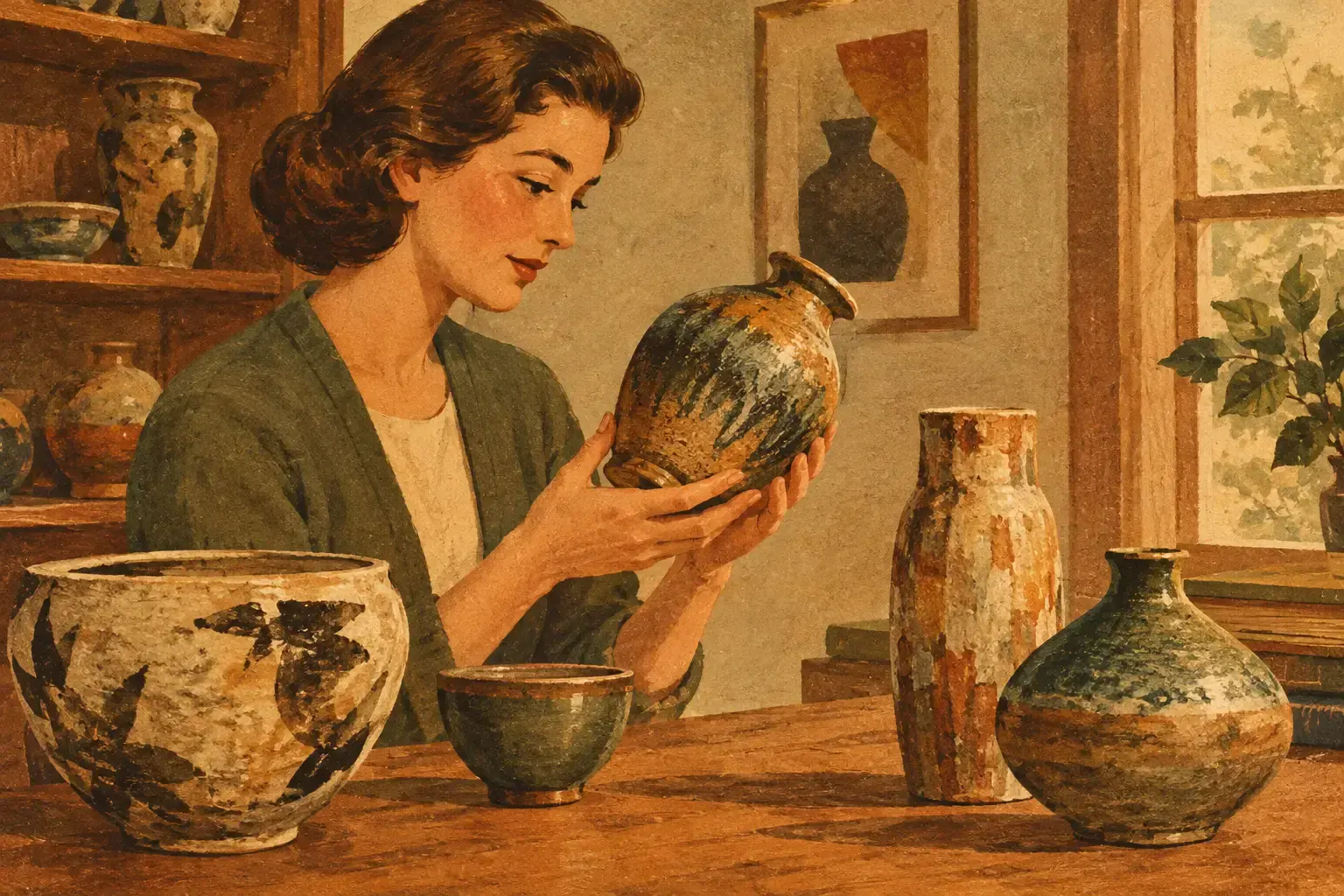
Ceramics are central to the return of expressive, tactile interiors. West German pottery, including the bold glazes often associated with Fat Lava, remains appealing for its texture, rich earth tones, and graphic shapes. These pieces work particularly well in homes that need color without the permanence of a painted wall.
A large handled vase can stand alone on a mantel or console. Smaller vessels become stronger when grouped by color, shape, or glaze rather than by exact origin. Mixing a rough, mid-century volcanic surface with a refined antique stoneware jug creates a layered display that feels collected, not cataloged.
Condition is especially significant with ceramics. Inspect rims, handles, bases, and interiors for chips, hairlines, repairs, and restoration. Some signs of age are expected, particularly in older handmade pieces, but transparency protects both the object’s value and the pleasure of owning it. A well-chosen repaired vessel may still be an excellent decorative purchase, while a pristine example may matter more to a dedicated collector.
Vintage Lighting Brings Warmth and Shape
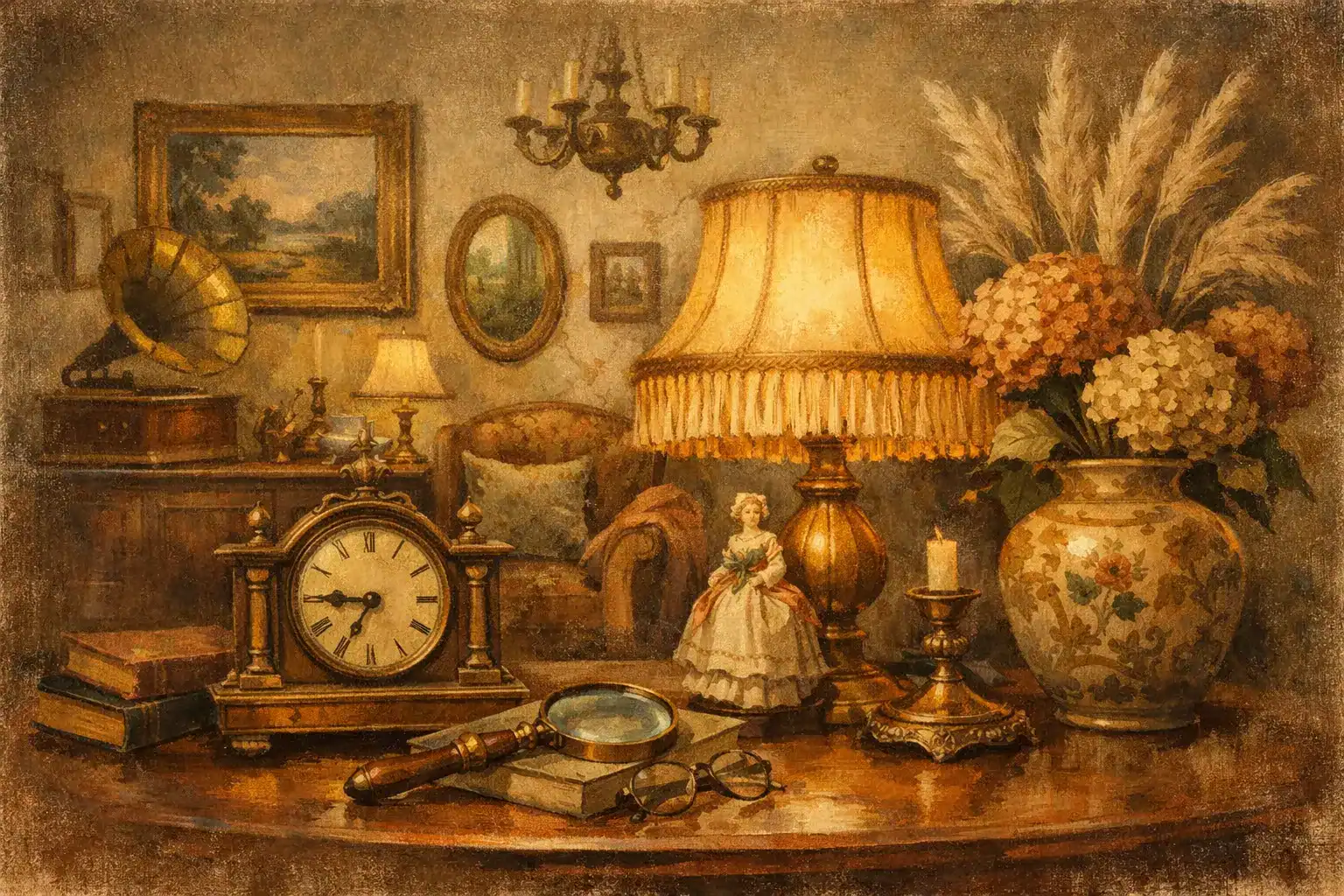
Lighting is often where antique and vintage pieces make their most immediate contribution. A pleated shade, a turned wood base, a brass pharmacy lamp, or a mid-century ceramic table lamp changes the mood of a room even before it is switched on. During daylight, it also functions as a sculptural object.
The trend is moving away from relying on a single overhead fixture. Rooms feel more inviting when light is layered at different heights: a table lamp on a sideboard, a reading lamp beside a chair, and a smaller accent lamp in a darker corner. Vintage lighting is particularly useful here because it offers shape, material, and a warmer visual language than many new fixtures.
Electrical safety should never be treated as a decorative detail. Confirm whether a lamp has been rewired, check that fittings are appropriate for local use, and use suitable bulbs for the shade and socket. Originality has value, but a safe, sensitively updated electrical system allows the piece to remain part of daily life.
Architectural Fragments Add a Sense of Place
Architectural salvage gives a home permanence without forcing it into a specific historical style. An old corbel, carved panel, iron bracket, or small section of decorative molding can provide the irregularity and craftsmanship that make a plain room feel less generic. These objects are especially effective in entryways, on shelving, and as quiet accents in kitchens and studies.
Their appeal lies in ambiguity. A fragment does not need to serve its original purpose to be worth displaying. It can be appreciated for its material, carving, weathering, or evidence of handwork. The key is to avoid turning every surface into a themed display. One substantial fragment has greater impact than several small pieces competing for attention.
Buy for Character, Then Learn the Details
Design trends can point toward what is resonating, but they should not replace personal judgment. The most successful antique purchase is usually the one that continues to reward attention after the novelty has passed. Look for strong form, good materials, useful scale, and condition that has been clearly represented. Provenance, maker’s marks, and period details can deepen the story, particularly for collectors, but decorative conviction matters too.
At MN Interior Antiques, the aim is not to fill a home with antiques for their own sake. It is to find the chair, lamp, vessel, mirror, or unusual object that makes the rest of the room feel more individual. Choose pieces with enough integrity to live with every day, and let their age show in the ways that make them irreplaceable.