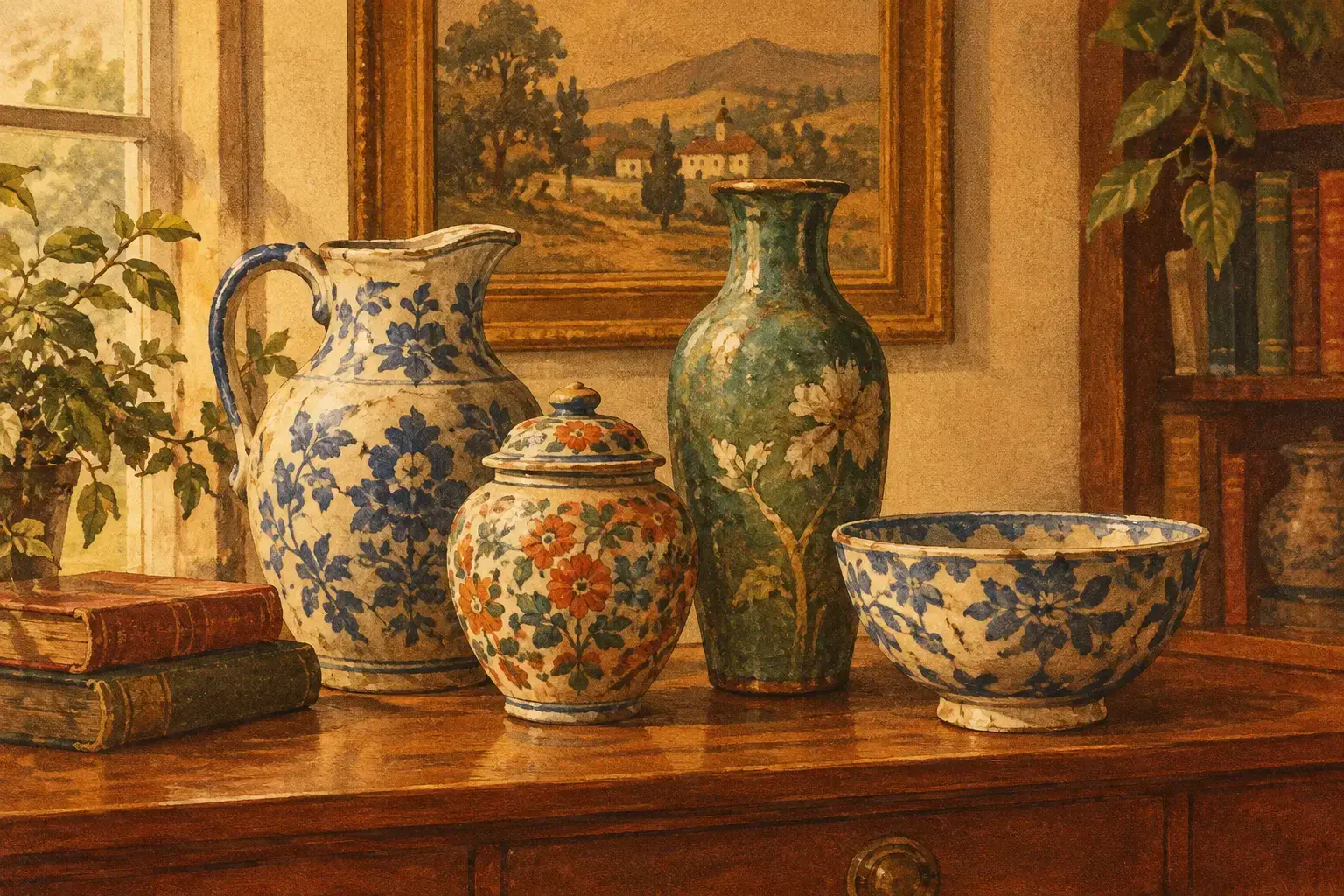
A hand-thrown jug with a softened glaze, a transferware platter marked by years of use, or a wonderfully eccentric studio vase can change the temperature of a room. Antique ceramics bring colour, texture and human character that new decorative objects rarely match. They are practical, collectible and deeply personal all at once – provided you choose with a clear eye for condition, scale and the story behind the piece.
For a home that is layered rather than overly styled, pottery and porcelain are often the details that make a scheme feel lived in. A single substantial bowl can anchor a dining table. A group of smaller vessels can give a mantelpiece rhythm without making it feel crowded. The appeal lies not in perfection, but in the evidence of making: a potter’s thumbprint, a hand-painted border, a fine network of age-related crazing.
What Makes Antique Ceramics Worth Choosing?
Ceramics cover an enormous range, from refined eighteenth-century porcelain to country pottery made for everyday kitchens. Their value is not determined by age alone. A well-made nineteenth-century stoneware jar may offer more decorative presence and usefulness than an ornate but damaged porcelain ornament. Rarity, maker, provenance, condition and visual impact all matter, and their relative importance depends on whether you are buying for a collection, an interior, or both.
The material itself tells part of the story. Earthenware tends to have a warm, slightly porous character and was widely used for domestic wares. Stoneware is harder and more durable, often seen in salt-glazed vessels, storage jars and rustic kitchen pieces. Porcelain is finer, denser and frequently more formal, though English factories produced plenty of appealing everyday tea wares as well.
Decoration can place an object in its period or reveal the taste of its original owner. Blue-and-white transfer printing, lustre glazes, hand-painted floral motifs, slip decoration and the rich mottling of salt glaze all have distinct personalities. The most compelling pieces hold their own even when their maker’s mark is unknown. They have proportion, surface and a quality that rewards a second look.
Antique, vintage and studio pottery are not the same thing
These terms are often used together, but they should not be treated as interchangeable. Generally, an antique is at least 100 years old, while vintage describes objects from a more recent previous era. Studio pottery may be antique, vintage or contemporary, depending on when it was made.
This distinction is useful when building a collection. An early Staffordshire figure, for example, belongs to a different collecting tradition from a 1960s West German Fat Lava vase. Yet the two can sit beautifully together if they share a related colour or a similarly expressive form. At MN Interior Antiques, the pleasure of curation often comes from these conversations across periods rather than from rigidly matching every object.
How to Assess Antique Ceramics Before You Buy
Condition deserves thoughtful attention, but it need not become a reason to avoid every sign of age. A faint firing flaw from production is different from a later crack; gentle crazing may be entirely appropriate, while a stained, unstable crack can affect both value and usability. The key is to understand what you are looking at and whether it matters for the intended role of the piece.
Start by examining the rim, handles, spout, foot and any raised decoration. These are common places for chips and repairs. Hold the object to the light and look for hairline cracks, which can be almost invisible from the front. A repaired handle might be acceptable on a decorative jug with exceptional form, but it should be honestly described and reflected in the price.
Turn the piece over too. A maker’s mark, impressed name, registration number or painted pattern number can offer valuable clues. Marks are not a guarantee of importance, however. Some excellent country pottery was unmarked, while factory marks can be difficult to date precisely because they changed over time. When provenance is available, it adds confidence and context, particularly for named makers, documented collections or regional pieces.
It is also worth considering how an item sounds and feels. A gentle tap can sometimes reveal a dull note associated with a crack, though this is not a definitive test and should be handled carefully. A piece that rocks on a flat surface may have a warped foot or an old restoration. These details do not automatically rule out a purchase. They simply help you buy at the right level of expectation.
Styling Antique Ceramics Without Making a Room Feel Like a Museum
The strongest displays have contrast. Place a hand-painted Victorian plate above a clean-lined oak sideboard, or set a humble salt-glazed jar beside books, framed art and a contemporary lamp. The meeting of old and new lets the ceramic retain its individuality. A room filled only with period objects can be beautiful, but it requires more restraint to avoid feeling overly staged.
Scale is often more useful than matching pattern. A large charger or platter needs breathing room, while a run of small cups, bowls or jugs benefits from being grouped closely enough to read as one collection. A mix of heights creates movement: use a tall vase at the back, a rounded bowl lower down, then a small lidded pot or figure near the front.
Colour is another easy way to connect different eras. Creamware, ironstone and neutral stoneware calm a room with patterned textiles or richly coloured walls. Cobalt blue, bottle green, ochre and oxblood glazes can pull out accents already present in a rug or painting. If you collect bolder pieces such as West German pottery, give them space. Their dramatic volcanic glazes and sculptural handles are most effective when not competing with too many other patterns.
Not every ceramic should be displayed behind glass. A stoneware bowl can hold fruit, a Victorian jug can be used for flowers, and a platter can be propped on a kitchen shelf between use. For food and drink, use caution with older glazes, repaired pieces and decorative wares of uncertain composition. Some older ceramics may contain lead-based glaze, so it is sensible to reserve them for display unless their suitability for food use is known.
Caring for a Collection With Respect
Gentle handling preserves more than aggressive cleaning ever will. Dust ceramics with a soft dry brush or microfibre cloth, supporting the object from underneath rather than lifting it by a handle, finial or spout. Avoid dishwashers, abrasive pads and strong household cleaners. They can dull glazes, loosen old restorations and damage gilt decoration.
For stable, unglazed stoneware or glazed pieces without cracks, a lightly dampened cloth is usually enough. Do not soak objects with crazing or hairline cracks, as moisture can become trapped and encourage staining. Never use bleach to brighten an old ceramic. It may alter the surface irreversibly and remove the honest signs of age that give the object its appeal.
Where you place a piece matters as much as how you clean it. Keep valuable ceramics away from the edge of shelves, radiators, direct harsh sunlight and areas where doors or drawers create vibration. If stacking plates or bowls, use soft felt separators rather than paper towels, which can trap moisture or leave fibres behind. A cabinet is useful for fragile collections, but open shelving can be equally successful when pieces are positioned securely and handled thoughtfully.
Finding Antique Ceramics in Hertfordshire With Confidence
When searching for antique ceramics in Hertfordshire, a curated dealer can offer a more considered starting point than buying solely from an unverified photograph. Clear images, accurate measurements and plain-speaking condition notes help you judge whether a piece will work in your home before it arrives. They also make room for the details that matter: a maker’s mark, an old repair, an unusually rich glaze or the character of a hand-painted surface.
Buying in person has its own advantages. You can assess scale, feel the weight of a vessel and see how a glaze responds to natural light. Online buying offers broader access and the time to compare carefully. Neither route is inherently better. For a serious collector, condition reports and provenance may take priority; for a decorative buyer, the decisive factor may be whether a particular bowl makes the whole room feel more like home.
Choose the ceramic that continues to interest you after the first glance. The best pieces do not merely fill a shelf. They gather meaning through use, conversation and the changing light of the rooms they inhabit.