A reclaimed door can carry more atmosphere than an entire wall of newly fitted joinery. Its layers of paint, softened edges, old keyhole and hand-cut mouldings reveal how it has been used. Good salvage door restoration preserves those marks of life while ensuring the door can work properly in its next setting – whether that is a Victorian terrace, a converted barn or a more contemporary home in need of contrast.
The aim is not to make every old door look factory-fresh. It is to understand what is worth retaining, what needs careful repair, and where modern practicality must take precedence. A beautifully restored door should still look as though it belongs to its age.
Start by reading the door
Before reaching for sandpaper or stripper, look closely at the construction. Is it a solid panelled door, a boarded cottage door, or a glazed internal door? Are the joints pegged, mortised or simply nailed? Older doors were often made from slow-grown pine, oak or elm, materials that can withstand thoughtful repair remarkably well. Their quality is often hidden beneath later paint or unsuitable fittings.
Look for evidence of previous alterations. Filled hinge recesses, extra lock holes and uneven paint lines are not necessarily a problem. They can explain how the door has travelled through different rooms and decades. What matters is whether the structure remains sound: inspect the lower rail for rot, the stiles for splits, and each joint for movement.
A little twist or bow is common in architectural salvage and is not always fatal. The question is where the door will be used. A gently imperfect door may work beautifully as a pantry door, sliding door or decorative screen. For an external entrance or a tightly fitted bathroom door, however, it may need more substantial correction or may simply be the wrong candidate for the job.
Measure more than once
Measure height, width and thickness at several points, rather than relying on the widest or tallest measurement. Old openings are rarely square, and reclaimed doors are often non-standard. Also check the handing, position of hinges, lock stile and direction of any raised panels. These details determine whether a door can be fitted without compromising its design.
This practical assessment prevents one of the most common restoration mistakes: investing time in a door that cannot sensibly be installed where it is wanted. Sometimes the best decision is to choose another door from the start.
Remove paint with restraint
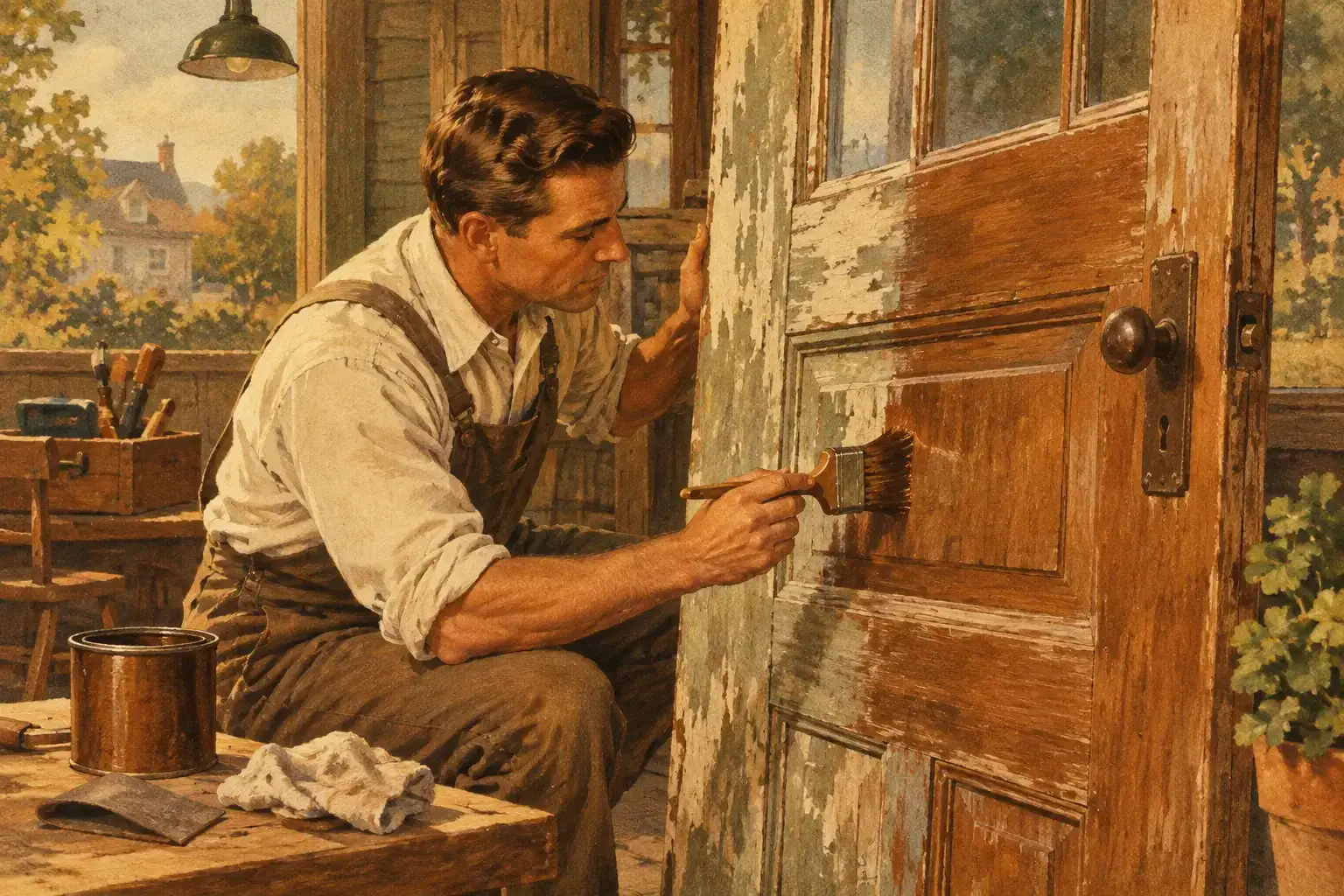
Paint removal is where character can disappear in an afternoon. Thick modern gloss may obscure fine details, but stripping every trace back to bare timber can leave an antique door looking unexpectedly harsh. A worn painted surface, particularly on a country or Victorian piece, may be integral to its appeal.
First establish what you are dealing with. Very old paint can contain lead, so testing and appropriate precautions are essential. Avoid dry sanding unknown coatings, especially indoors. Chemical strippers, infrared tools and careful scraping all have their place, but each demands patience and sensible protection for both the timber and the person doing the work.
Heat guns require particular caution. Excess heat can scorch old wood, crack glass and release unwanted fumes. Aggressive dipping can weaken glue joints, raise grain and strip a door of the quieter evidence of age that made it desirable in the first place. For a door with decorative moulding or old glazing bars, hand work is slower but usually kinder.
If the existing paint has an attractive, time-softened surface and is stable, consider cleaning it rather than removing it. A gentle wash, light de-nibbing and a compatible finish may be all that is needed. The goal is a surface that feels considered, not overworked.
Repair the structure before refining the finish
Cosmetic work should come after structural repairs. Loose mortise-and-tenon joints need to be carefully opened where possible, cleaned of failed adhesive and reglued with cramps. Missing timber at the bottom of a stile or rail can be pieced in using matching old or well-seasoned timber, with the grain running in the same direction.
Small holes from old catches, hooks or later locks often add interest. They do not all need filling. Repair only what will weaken the door, admit draughts, interfere with fittings or distract from the overall appearance. Where filling is necessary, a timber insert is generally more durable and convincing than a large area of filler.
Woodworm holes deserve a measured response. Old, inactive holes are part of a door’s history and do not automatically call for treatment. Fresh dust, known as frass, or new holes may indicate active infestation and should be investigated. Damp is usually the more immediate concern, particularly at the bottom of external doors where failed paintwork and wet thresholds can cause decay.
For external use, make sure rainwater is directed away from the timber. A discreet drip, sound threshold and breathable exterior finish will do more for longevity than repeated cosmetic repairs. Historic timber needs protection, but it also needs the chance to dry.
Keep original hardware where possible
A door’s furniture is often the detail that makes it convincing. Old brass knobs, cast iron rim locks, escutcheons, hinges and thumb latches have a weight and surface that modern replacements rarely match. Even when a lock no longer functions, its faceplate or keyhole cover may be worth retaining as part of the composition.
Clean metal cautiously. Brasso and abrasive wheels can make antique brass look overly bright and erase the darker tone built up in recesses. Warm water, a soft cloth and a small brush are often enough to remove grime. If hardware must be replaced for safety or security, keep any original elements that can remain visible and choose new pieces with a simple, sympathetic profile.
There is a practical compromise for front doors. Modern security may require a contemporary lock, draught sealing and possibly discreet reinforcement. These changes need not turn a period door into a pastiche. A skilled fitting can preserve a rim lock, original knocker or traditional knob while placing newer security measures where they are least visually intrusive.
Choose a finish that suits the door’s next life
The finish should follow the timber, condition and intended room. Wax can enrich dry internal wood and provide a soft sheen, but it is not suitable for exposed exterior joinery. Oils can give a natural appearance, though they require maintenance and may deepen the colour considerably. Painted finishes are often the most historically appropriate option for pine doors and can protect repaired areas without pretending that they were never repaired.
If painting, choose a colour that honours the room rather than one dictated by a trend. Deep greens, muted stone tones, chalky whites and near-black shades can sit comfortably with old timber, brass and aged plaster. For a more modern interior, one well-restored panelled door in a strong colour can become an architectural focal point without making the scheme feel overly period.
Avoid trying to force uniformity. A repaired lower rail may take stain differently; a patch may remain just visible beneath paint. Those slight variations are often preferable to a thick coating intended to hide everything. Salvage is valuable because it has survived, not because it impersonates something newly made.
Fitting matters as much as restoration
A restored door will only feel successful if it opens, closes and sits comfortably within its frame. Allow for seasonal movement, particularly in older homes. Do not plane away large amounts of original timber simply to correct an uneven opening. It may be better to adjust the frame, use appropriate packers or have a joiner make a carefully profiled extension where needed.
For glazed doors, assess the glass before fitting. Wavy old glass is highly desirable, but cracked panes, loose putty and weak glazing bars require attention. Safety glass may be required in particular locations, so ask a professional where building regulations apply. This is one of the occasions when authenticity and safety must be balanced honestly.
Architectural salvage in Hertfordshire offers particular pleasure because local houses span Georgian, Victorian, Edwardian and later periods, often with rooms that reward an original detail. Yet a door does not need to match a property exactly to look right. Contrast can be compelling: an old painted door in a clean-lined kitchen, or a simple pine ledge-and-brace door used to soften a contemporary utility space.
When to call in a specialist
Many doors respond well to patient cleaning, minor repair and careful finishing. Seek experienced help when there is major rot, severe distortion, extensive active woodworm, damaged leaded or old glass, or a need to alter a door for fire or external security requirements. These are not shortcuts to take lightly, particularly with early joinery or unusual decorative work.
The best restoration leaves the door with its dignity intact. Retain the old latch where it can stay, respect the irregularity of hand-worked timber, and repair only as far as the next chapter demands. A salvage door should not look rescued from its past. It should look ready to continue it.